Category: Motor Vehicle Accidents

A legal choice to ride without a helmet does not settle what an insurer will pay after a crash. In a Michigan motorcycle helmet law accident claim, the fight is often about which injuries the missing helmet can explain, and by how much that cuts the recovery.

Schedule a free consultation before you accept a reduced offer tied to helmet non-use.

A Michigan motorcycle helmet law accident claim is not barred because the rider was bareheaded. Some adults may ride without a helmet when they meet the statute. Insurers still use that choice to cut damages for head injury. The percentage comes from modified comparative fault, and noneconomic damages still need a serious injury threshold when a car is involved.

That split is the part riders miss. Who caused the crash is one question. Whether a helmet would have changed a head injury is another. This guide stays on the second question, and on the dollar rules that follow from it.

What a Michigan Motorcycle Helmet Law Accident Claim Actually Argues

The insurer is not usually arguing that the missing helmet caused the collision. The argument is narrower. It says some of the harm, most often a head injury, would have been less severe if a helmet had been worn. That is a damages argument. It can sit next to a clear case that the other driver caused the wreck.

Michigan’s helmet rule is MCL 257.658. Riders and passengers under 21 must wear a crash helmet. A person 21 or older may ride without one only after meeting the endorsement and medical-security conditions in that statute. The details of who qualifies are on the firm’s Michigan motorcycle helmet law accident claim guide. This article does not restate that eligibility list.

Meeting that exception matters, and it is not a shield. A rider who was allowed to go without a helmet has not broken the helmet statute. An adjuster can still say the choice increased the head injury. A rider who was required to wear one, and did not, has handed the insurer both a statute and a damages story.

The same file can contain injuries a helmet would not have changed. A broken leg, a crushed foot, road rash on the arms, or a low-back injury is a poor fit for a helmet argument. When the offer treats the whole claim as a head-injury case, the medical records are the way to pull those injuries back out.
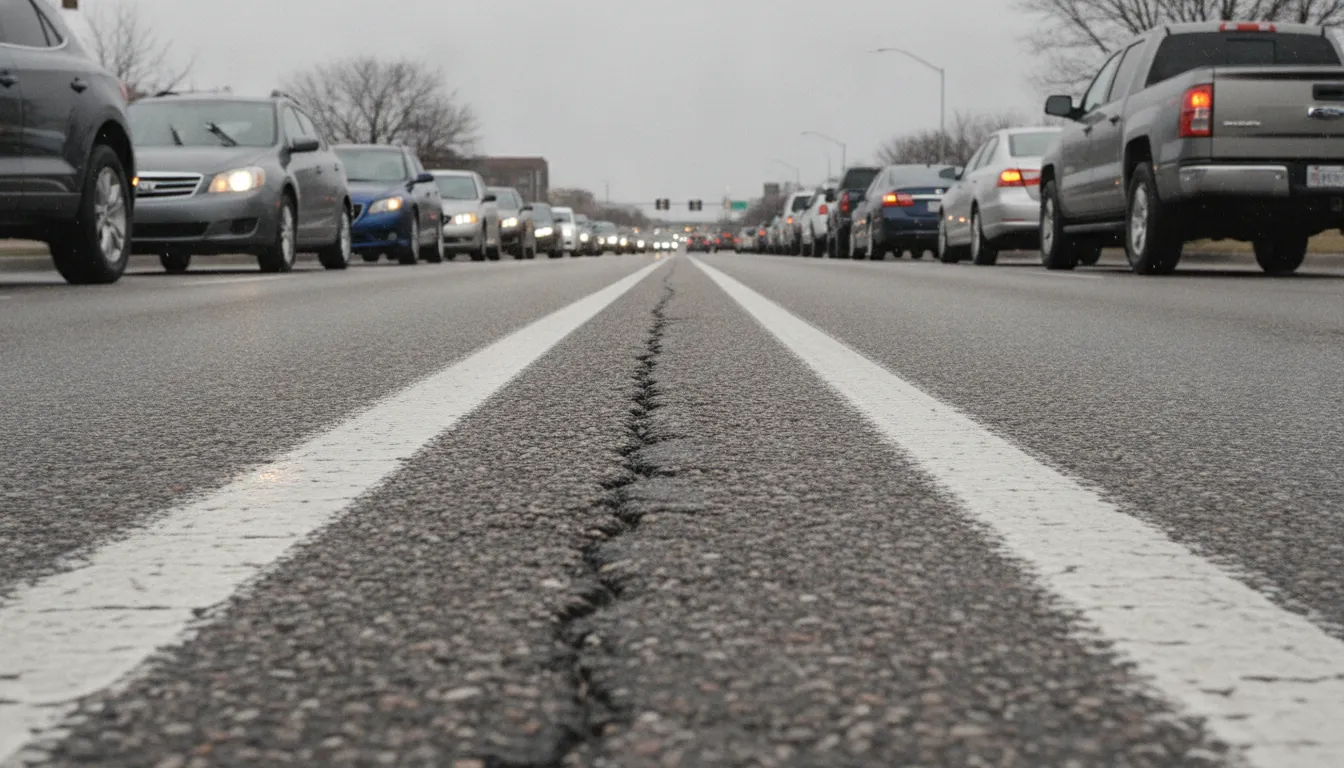
Painted highway lane lines beside rows of stopped cars, the kind of scene where a motorcycle and a car often meet

Which Injuries the Helmet Argument Can and Cannot Reach

Adjusters like a single story. The rider was not wearing a helmet, so the injuries are the rider’s fault. The records usually do not support that story. A helmet sits on the head. It does not brace a femur, and it does not stop a car from crossing a lane.

Carter and colleagues compared Michigan police-reported motorcycle crashes for the 12 months before and after the April 13, 2012 partial repeal. Helmet use in those crashes fell from 93.2 percent to 70.8 percent. Among hospitalized riders, head injuries rose from 43.4 percent to 49.6 percent. Overall fatalities did not change in a significant way, 3.3 percent versus 3.2 percent. The study is The Impact of Michigan’s Partial Repeal of the Universal Motorcycle Helmet Law.

Those numbers are why the argument shows up. They are also why it has a limit. The study ties helmet non-use to head injury, not to every injury on the discharge summary. A demand that separates the head injury from the rest of the body gives the fact finder something to assign a percentage to.

Injury in the records. How a helmet argument usually lands. What still has to be proved.
Closed head injury, skull fracture, or brain bleed. This is the injury insurers try to tie to the missing helmet. Whether a helmet would have changed this injury, and by how much, is a medical question. It is not assumed.
Facial fractures and dental injury Sometimes grouped with the head. A helmet’s coverage of the face varies by design. The treating records should say what was struck and whether the face was the impact point.
Neck and spine injury Often disputed. A helmet can be blamed, and it can also be irrelevant to the mechanism. Imaging and the crash direction matter more than a slogan about helmet weight.
Fractures of the arms, legs, pelvis, or ribs A weak fit. A helmet does not protect these areas. Keep these damages in their own part of the demand so they are not discounted with the head.
Road rash, soft-tissue injury, and orthopedic surgery away from the head Usually outside the helmet story. Photos, operative notes, and wage records still have to connect the loss to the crash.

None of these rows is a verdict. A severe brain injury can still be mostly the other driver’s responsibility if that driver caused the impact. A mild scalp laceration can still be the piece an insurer uses to color the whole file. The table is a way to sort the chart, not a prediction.

How Michigan Motorcycle Helmet Law Accident Claim Damages Get Reduced

Once the injuries are sorted, the percentage decides the dollars. Michigan’s modified comparative fault rule is MCL 600.2959. The court reduces damages by the injured person’s percentage of fault. Then it draws a second line. If that percentage is greater than the combined fault of the other person or persons, economic damages are still reduced by the injured person’s share, and noneconomic damages are not awarded.

Insurers often shorten that rule. They say a bareheaded rider recovers nothing. The statute does not say that. A rider who is found more at fault than everyone else combined can still recover reduced economic damages, such as medical bills and lost wages. What drops off in that higher-fault case is noneconomic damages, such as pain and suffering. If the rider’s fault is equal to or less than the others combined, both kinds of damages can be awarded, each reduced by the rider’s share.

Two files show why the line matters. A car turns left across a rider who was lawfully in the lane and legally riding without a helmet. The rider’s head injury is serious, and the leg is broken. A fact finder could give the driver most of the fault for the crash, and still assign the rider some share of the head-injury harm. Both categories of damages can remain, reduced by that share.

The other file is harder. The rider was under 21, required to wear a helmet, and also speeding. The head injury is the main loss. A fact finder could put the rider over the combined fault of the others. Economic damages would still be reduced rather than erased. Noneconomic damages would not be awarded. The useful reading is the statute, not a letter that says the claim is closed.

There is a second statute when the other vehicle is a car that has the required no-fault security. MCL 500.3135 keeps a driver responsible for noneconomic loss only if the injured person suffered death, serious impairment of body function, or permanent serious disfigurement. The same section assesses damages by comparative fault. Damages must not be assessed for a party who is more than 50 percent at fault. A helmet dispute does not skip that threshold. A head injury may help meet it, and a small cut will not.

Motorcycle medical benefits are a separate coverage question. The helmet statute points at first-party medical security under MCL 500.3103, which insurers must offer in $5,000 increments. How limited no-fault benefits work for riders is covered on the Michigan no-fault lawyer page. It does not decide the percentage of fault for a head injury.

What Has to Be Proved About the Missing Helmet

A helmet argument is a fact, not a conclusion. Someone has to connect this crash, this head, and this helmet choice. General studies are not a substitute for the records in the file.

  1. Separate the crash from the injury. Write down who turned, who had the light, and where the motorcycle was. A lawful lane position is not the same question as helmet use. Photos of the point of impact still matter when the letter is only about the head.
  2. Match each diagnosis to a body region. Ask the hospital chart to list the head injury apart from fractures, spine injury, and skin loss. A demand that copies the adjuster’s single number invites a single discount.
  3. Get a medical opinion on this mechanism. The question is whether a proper helmet would have changed this injury, not whether helmets help riders in general. For a closed-head injury, MCL 500.3135 treats testimony from a physician who regularly diagnoses those injuries as enough to create a jury question on serious neurological injury.
  4. Save the gear that was actually worn. Keep the helmet if one was on the bike, even if it came off. Also keep the jacket, the eyewear, and photos of damage to that gear. An argument about a missing helmet is weaker when the file never shows what was on the rider’s head.
  5. Do not guess in a recorded statement. Speed, lane position, and whether a helmet was strapped are easy to misstate on a call. Review the report and the photos first. A motorcycle accident consultation is a place to sort those facts before the statement.

Lane position can still be its own dispute. Passing between lines of traffic is a different statute from the helmet rule, and it should be analyzed on its own facts. It does not answer whether a helmet would have changed a brain injury.

How an Insurer Turns Helmet Non-Use Into a Number

The letter rarely says the law out loud. It picks a percentage and applies it to the whole demand. The move is to treat helmet non-use as fault for every dollar, including the broken bones and the wage loss.

A careful response does three things. It accepts the documents that are true, such as a report that says no helmet was worn. It refuses the leap from that fact to the whole body. And it asks for the medical basis for the percentage, not a citation to a national study with no tie to this rider.

The 2012 Michigan data is a fair source for the general risk. It is a poor source for a number in one claim. Carter’s study found higher odds of head injury with helmet non-use. It did not find a rule that a bareheaded rider is 50 percent at fault, or any other fixed share. A percentage without a doctor, a crash reconstruction, or both is a negotiating position.

Timing matters because statements get reused. An early comment that “I should have worn a helmet” can be quoted as an admission that the head injury was the rider’s own fault. It is safer to describe what was worn, what the report says, and what the doctors have actually written. Opinions about what a helmet would have done can wait for the people qualified to give them.

Riders looking at how to choose a motorcycle accident lawyer should ask one practical question. Has this lawyer separated a helmet damages argument from the crash itself, in a demand, not only in a blog post. Oakland County motorcycle cases turn on that separation as often as they turn on who had the green light.

Frequently Asked Questions

Can I still file a claim if I was not wearing a helmet in Michigan?

Yes. Michigan does not bar a claim because a rider was bareheaded. Some adults may ride without a helmet under MCL 257.658. Others may have been required to wear one. Either way, an insurer can argue that the choice increased a head injury, and damages are reduced under MCL 600.2959 rather than erased in every case.

Does not wearing a helmet make the rider mostly at fault?

Not by itself. Fault for the crash and fault for the severity of a head injury are different questions. A driver who turns across a motorcycle can still hold most of the fault. The rider’s share, if any, is a percentage tied to the evidence, not an automatic majority.

Which part of the settlement does a helmet argument usually target?

Usually the head injury, and the pain and suffering attached to it. Broken bones, road rash, and wage loss from injuries away from the head are a weak fit for a helmet story. If the rider’s fault is found greater than the combined fault of the others, noneconomic damages are not awarded, while economic damages are reduced.

Do I still have to meet the serious impairment threshold?

When the claim is for noneconomic loss against a driver whose car had the required security, yes. MCL 500.3135 requires death, serious impairment of body function, or permanent serious disfigurement. A significant brain injury may support that showing. Helmet non-use does not replace it, and it does not waive it.

Call 248-599-1607 before a recorded statement treats the missing helmet as the whole case.

Talk Through the Helmet Argument Before the Number Sticks

A helmet dispute gets expensive when one percentage is applied to every injury in the file. Atnip & Associates, PLLC helps injured riders separate the crash, the head injury, and the rest of the damages before an offer treats them as the same thing. The firm offers a free consultation and handles these cases on a contingency fee, so you pay no attorney fee unless there is a recovery.

Call 248-599-1607 or request a free consultation. Bring the crash report, the discharge summary, and any photos of the gear you were wearing. This article is general information about Michigan law, not legal advice for a specific crash. Rules for Michigan motor vehicle accident claims can differ when the other vehicle is a car with no-fault security.

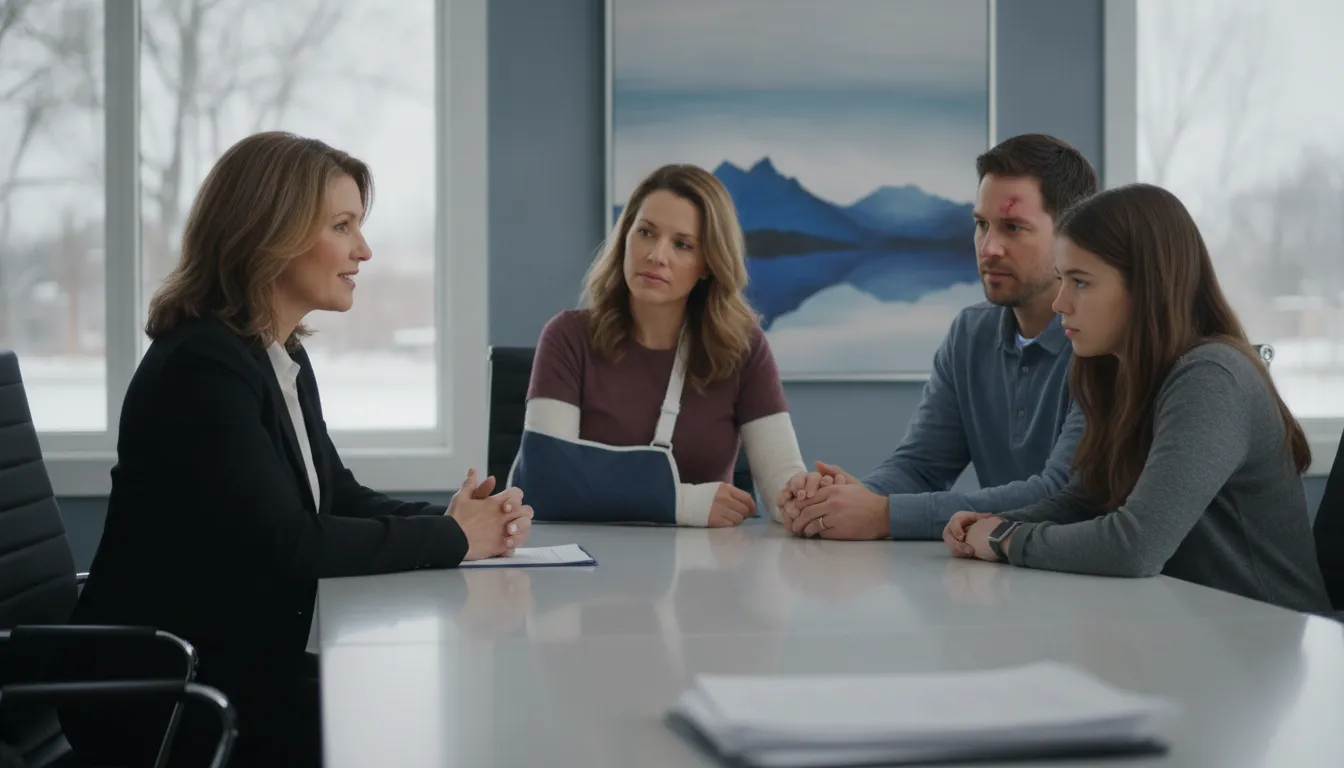
After a serious truck crash, a family may hear that the carrier has a driver qualification file, or DQF. Michigan truck driver qualification file evidence can help show what a motor carrier documented about a driver’s qualifications, but it is only one part of a larger investigation. Understanding what it may contain, and what it cannot prove, can help you ask informed questions without assuming that any single record decides a claim.

Call 248-599-1607 to schedule a free consultation.

In the days after a crash, consider these practical steps:

  • Get necessary medical care and follow the treating professionals’ guidance.
  • Keep crash, medical, and insurance records in one place.
  • Write down what you remember and identify possible witnesses.
  • Ask an attorney promptly about preserving records held by the trucking company or others.

What Michigan truck driver qualification file evidence may show

A driver qualification file is a collection of records a motor carrier maintains to document a commercial driver’s qualifications under applicable federal motor carrier safety rules. The required documents can depend on the driver’s role, the carrier, and any applicable exceptions. A file is not a complete history of every trip or a finding about who caused a collision. It is one category of company records that may help investigators understand what the carrier collected, reviewed, and retained about the driver.

Federal regulations describe qualification-file requirements for covered motor carriers. The Federal Motor Carrier Safety Administration (FMCSA) provides information about federal commercial motor carrier safety rules on its official website. The rules and their application can be technical, so a document’s significance should be evaluated in context rather than from its title alone.

Depending on the circumstances and the requirements that apply, a file may include several kinds of records. These may include a driver’s employment application, records of prior-employer inquiries, a motor vehicle record, documentation of a road test or accepted equivalent, and annual review materials. Some files also contain medical qualification documentation or related records. Not every file will look the same, and an item’s presence or absence does not, by itself, resolve whether a driver or company acted negligently.

It helps to separate three ideas that can otherwise get blended together. First, there are rules describing what a covered carrier must maintain. Second, there is what the carrier actually kept and reviewed in a particular driver’s file. Third, there is whether a documented gap or decision bears on the events that caused a crash. A file may inform the second and third questions, but it does not answer them automatically.

A reviewer comparing driver qualification documents with a commercial truck company record checklist

What can qualification-file evidence show after a Michigan truck crash?

A properly obtained file may help answer focused questions about the carrier’s hiring and qualification process. For example, records may show when the company requested a driving history, whether it documented a required review, or what information it had before assigning a driver. A timeline can matter: the relevant question may be what the carrier knew, or reasonably should have addressed, at the time, not simply what a document says today.

Potential lines of inquiry may include:

  • Completeness: Are expected documents present, and do dates or entries appear to leave gaps?
  • Timeliness: Were records obtained and reviewed at the relevant times?
  • Consistency: Do the application, driving history, and other materials tell a consistent story?
  • Follow-up: Do the records indicate that the carrier noticed a concern and what it did next?
  • Connection to the crash: Does any information relate to a specific safety issue that may have contributed to this collision?

These are questions for investigation, not conclusions. An incomplete-looking file might have an explanation, including a different applicable requirement or a record maintained elsewhere. Likewise, a complete file does not automatically prove that every hiring or supervision decision was reasonable. The facts, rules in effect, and connection between any alleged failure and the collision all matter.

Qualification documents may be especially relevant when the investigation raises a concrete concern about driver history, eligibility, or carrier oversight. They may be less informative about the immediate mechanics of a crash, such as vehicle position, braking, or a road hazard. Those questions often call for other evidence, including scene documentation and witness accounts. As an example, if a collision occurred during a sudden lane change, the qualification file may not reveal why the driver moved lanes at that moment. It could still be relevant if a specific issue about training, prior notice, or carrier decisions is supported by other facts, but it is not a substitute for evidence about the maneuver itself.

When reviewing a file, the sequence can matter as much as the individual pages. A record obtained before hiring, a later annual review, and a document added after the crash have different contexts. Investigators may need to determine when each item was created, who supplied it, who reviewed it, and whether any action followed. A date on a form does not necessarily establish the full history of a decision; related correspondence, policies, or records in other systems may help explain it.

How is a DQF different from other truck records?

A truck collision investigation may involve several record systems. They answer different questions, and one record should not be treated as a substitute for another. The table below offers a general comparison; what is available and relevant depends on the facts and applicable law.

Record category What it may help investigate Key limitation
Driver qualification file. What qualification and hiring-related information the carrier maintained and reviewed. Does not necessarily describe the trip or establish crash mechanics.
Driver logs or hours-of-service records. Duty periods, driving time, and rest-related questions. May not answer whether a driver was qualified or explain all conduct on the road.
Electronic control or event data. Some vehicle-operation details around an event, depending on the system and data retained. Not every vehicle records the same information, and data can require technical interpretation.
Inspection and maintenance records. Reported defects, repairs, and vehicle condition over time. Do not alone establish the condition at the moment of impact.
Crash scene and witness evidence. Road conditions, vehicle positions, visible damage, and observations. May be incomplete, inconsistent, or affected by memory and changing conditions.

For example, a driving-history record in a qualification file may prompt questions about prior notice, while logs may address whether the driver was on duty for an extended period before the crash. A vehicle data source may shed light on operation during a short time window. Each record needs to be compared with the others and with the physical evidence.

Think of the records as different pieces of a timeline rather than interchangeable proof. A driver file may help establish what information the carrier had about qualification-related matters. Dispatch records may help identify the assignment and communications for a trip. Logs may provide information about duty periods. Maintenance materials may address a reported mechanical concern. Physical evidence and witness accounts may help reconstruct what happened on the road. If one source seems inconsistent with another, the discrepancy is a reason to investigate, not an automatic answer about fault.

Our guide to truck accident legal issues in Michigan provides a broader service resource, while the firm’s personal injury practice areas page offers information about other types of injury matters. Each case calls for a fact-specific review of which evidence is relevant.

How can a family protect potentially useful records?

Some company records are created or retained for a limited time, while others may be stored in different systems. After a serious injury or loss, it is sensible to raise preservation concerns early. Avoid contacting a driver or company in a way that could put you at risk or interfere with an investigation. An attorney can assess which records may matter and how to request that relevant materials be preserved.

  1. Record what you know. Save the crash report number, carrier and vehicle details, photographs, witness contact information, and any communications from insurers. Do not alter original files; keep copies and note when you received them. If you are unsure whether a detail is important, preserve it without trying to interpret it.
  2. Keep medical and expense documents. Organize discharge papers, bills, prescriptions, work-loss information, and insurance correspondence. Share sensitive information only through appropriate channels. A simple dated log of appointments, symptoms, and practical effects can help you keep track of information to discuss with care providers and counsel.
  3. Identify possible record sources. The motor carrier may have qualification materials, while other entities may hold dispatch information, inspection documents, logs, or vehicle data. A thorough review identifies sources rather than assuming every item belongs in the DQF. The name of the employer on a truck, for example, may not by itself identify every company or person with relevant records.
  4. Ask about preservation. A written preservation request may be appropriate in some situations, but its scope and timing should be considered carefully. A request is not the same as obtaining the records or proving that they are admissible. Save a copy of any request and response, and get advice about what further steps may be appropriate.
  5. Review the evidence as a whole. Compare records with the crash report, photographs, witness statements, vehicle inspections, and other available information. Note discrepancies, but do not draw legal conclusions from a single missing or inconsistent entry. Keep a list of questions and identify which documents might answer each one.

A practical way to organize questions is to use a simple evidence log with four columns. The columns can list the question, the record that might address it, who may hold that record, and whether it has been preserved or obtained. For example, a question about the driver’s prior driving history can point to hiring and review materials. A question about what the driver was doing just before impact may require a different source, such as witness accounts or vehicle-related data. This kind of list can make a conversation with an attorney more focused without requiring a family to decide what the evidence proves.

People injured in a Michigan truck collision may also face separate questions about no-fault insurance, medical care, wage loss, and claims against responsible parties. The applicable coverage and legal options depend on the person’s role, injuries, insurance policies, and other facts. A discussion with a Michigan personal injury attorney can help identify which issues need attention. Learn about the firm’s Michigan communities served or review the contact page to schedule a consultation.

Who may be able to obtain a driver qualification file?

A person involved in a collision generally should not assume they can simply request and receive a complete DQF directly from the carrier. Driver qualification files can include personal information, and access may be governed by privacy protections, regulations, and the procedures of a claim or lawsuit. In a contested case, relevant evidence may be sought through formal legal processes, subject to objections and court rules. Whether a particular record can be obtained, and how it may be used, depends on the circumstances.

That is one reason to preserve your own records and get advice before making assumptions about what a carrier must provide. An attorney can evaluate potential sources and the appropriate process. If a request is made, it may need to be appropriately limited and handled through the right channel. Some requested materials may be withheld, redacted, or challenged; some may not be relevant to the disputed issues. The fact that a family cannot obtain a file informally does not establish that the records do not exist.

The firm describes its background on its About Us page. For readers outside the firm’s office communities, its Michigan service information for the Upper Peninsula is one resource to understand the statewide scope of its work. These pages offer general information; they do not determine what evidence is available in a particular claim.

Why does a qualification file not prove fault by itself?

To understand a truck crash, investigators need to connect evidence to the events and applicable legal duties. A file might raise a question about the carrier’s process, but an apparent omission is not automatically proof of negligence. Conversely, a file that appears complete does not rule out unsafe conduct during the trip or a failure unrelated to hiring.

For instance, a document may reflect that a record was obtained without showing who reviewed it or what action followed. A date discrepancy may be a clerical issue, or it may point to a substantive concern that merits further examination. Other evidence can clarify the difference. The investigation may also consider the driver’s actions, the carrier’s role, vehicle condition, road circumstances, and any other party whose conduct may have contributed.

There may also be a difference between proving that a record is missing and proving why it is missing. The record may have been kept in another system, may not have been required in the same form, or may have been lost or misfiled. In other circumstances, a gap may raise a meaningful question about the carrier’s practices. The legal significance depends on the applicable rules, the evidence about how the carrier operated, and whether the issue connects to the collision and resulting harm.

Families should be cautious about drawing conclusions from a single page, a blank field, or a summary supplied by another party. Context may include the time period, the driver’s role, the carrier’s records practices, and related communications. A careful review may also identify evidence that supports a different explanation. The goal is not to treat a file as a verdict, but to determine whether it helps answer a relevant factual question.

Legal claims following a crash can involve separate questions about personal injury, insurance benefits, and, in a fatal collision, the rights of eligible family members. For an overview of the latter, see the firm’s information on wrongful death claims in Michigan. Its case results page describes past matters, but past outcomes cannot predict what will happen in another matter; the facts and legal issues are different in every case.

Call 248-599-1607 to discuss your questions in a free consultation.

Frequently asked questions about Michigan truck driver qualification file evidence

Does every truck driver have the same qualification file?

No. Requirements can vary with the driver’s work, carrier, and applicable rules or exceptions. A file should be assessed against the requirements that applied to that driver and the time period at issue. That is why a general checklist cannot establish whether a particular file is complete.

Does a missing document prove the trucking company caused the crash?

No. A missing or incomplete document may warrant follow-up, but it does not alone prove that a company caused a collision. Investigators need to determine what was required, whether the record exists elsewhere, what the carrier knew, and whether any issue contributed to the crash.

Are driver qualification files the same as driving logs?

No. A qualification file documents certain driver qualification and employment-related records. Logs or other duty-time records address different questions, such as driving and on-duty periods. Both may be relevant in some cases, but they are distinct sources and should be evaluated for the questions they can answer.

Can an injured person obtain the file without filing a lawsuit?

There is no single answer for every case. Access may depend on the carrier, the information requested, privacy considerations, and the status of an insurance claim or lawsuit. A lawyer can explain possible ways to seek relevant materials and any limits that may apply.

Talk with a Michigan personal injury attorney

After a serious truck crash, it can be difficult to know which records matter while your family is focused on recovery. A careful review can help distinguish driver qualification materials from logs, vehicle records, and other evidence, and clarify what questions remain. Atnip & Associates represents injured people and families in Michigan, with a personalized approach to complex injury claims. Every case depends on its own facts, and a consultation can help you understand possible next steps.

—
title: ‘Head-On Collision Lawyer Michigan: What to Do Next’
metaTitle: ‘Head-On Collision Lawyer Michigan: What to Do Next’
description: >-
Head-on collision lawyer Michigan guidance on medical care, No-Fault benefits,
fault evidence, serious injuries, and choosing counsel after a severe crash.
excerpt: >-
Head-on collision lawyer Michigan guidance on medical care, No-Fault benefits,
fault evidence, serious injuries, and choosing counsel after a severe crash.
subtitle: >-
Head-on collision lawyer Michigan guidance on medical care, No-Fault benefits,
fault evidence, serious injuries, and choosing counsel after a severe crash.
slug: head-on-collision-lawyer-michigan-guide
image: >-
https://zleague-public-prod.s3.us-east-2.amazonaws.com/article_images/a6a9fdab-7864-469e-be3a-503ee208ea0a/head-on-collision-lawyer-michigan-what-to-do-next-717035.webp
imageAlt: Family consulting a head-on collision lawyer Michigan after a serious crash
targetKeyword: head-on collision lawyer Michigan
—

A head-on crash can leave a Michigan family facing emergency treatment, missed work, vehicle damage, and difficult insurance questions. If you are looking for a head-on collision lawyer Michigan residents can turn to, begin with the practical priorities: get medical care. Preserve information, protect your insurance rights, and avoid guessing about fault before the evidence is reviewed.

Call 248-599-1607 to schedule a free consultation about your Michigan head-on collision.

What should you do immediately after a head-on collision in Michigan?

Your first responsibility is safety, not building a claim. If you can do so without worsening an injury, move away from traffic and follow emergency personnel instructions. Call 911 when anyone may be injured, and accept medical evaluation even if symptoms seem manageable. Head-on impacts can produce injuries that are not obvious at the scene, including concussion symptoms, internal injuries, fractures, and spinal or neck trauma.

When it is safe, make a short record of what happened. Do not speculate that you caused the crash, and do not argue with the other driver. Instead, preserve information that may disappear:

  1. Move to safety and call 911 if anyone may be injured.
  2. Get medical evaluation and follow the treatment plan.
  3. Preserve photographs, witness details, reports, and insurance records.
  4. Speak with a qualified Michigan attorney before signing a release or giving a recorded statement.
  • Ask for the incident or crash report information and the names of responding agencies.
  • Photograph the vehicles, roadway, lane markings, traffic controls, debris, weather conditions, and visible injuries if you can do so safely.
  • Write down the names and contact information of witnesses.
  • Save photographs, dashcam footage, medical discharge paperwork, prescriptions, and insurance correspondence.
  • Notify the appropriate insurer promptly, but avoid a recorded statement or settlement release until you understand what is being requested.

Michigan State Police explains the state crash-reporting process through its Traffic Crash Reporting Unit. A report is important evidence, but it is not always the final answer on legal responsibility. A police report may contain an initial account, while later evidence can clarify lane position, vehicle movement, visibility, and the sequence of impact.

Why are head-on collisions especially serious?

A frontal impact can transfer substantial force to the people inside both vehicles. The injury pattern depends on speed, vehicle design, restraint use, the angle of impact, the location of the occupants, and what happened before and after the collision. A serious crash may involve more than one injury and more than one category of loss.

Common concerns include traumatic brain injury, concussion, spinal cord damage, broken bones, internal injuries, severe burns, amputations, and permanent disfigurement. Some symptoms develop gradually. A person who appears alert immediately after a crash may later experience headaches, confusion, memory problems, dizziness, sleep changes, weakness, or pain. Follow the treatment plan and tell medical providers about all symptoms, even when you are unsure they are related to the collision.

Families may also face consequences beyond the injured person’s medical bills. A serious injury can affect the ability to work, provide care, drive, maintain a household, or participate in ordinary activities. If the crash caused a death, the family may need guidance about wrongful-death rights and survivor benefits. These questions are fact-specific and should be evaluated with current Michigan law and the available insurance coverage.

Atnip & Associates handles serious personal-injury matters with a boutique, attorney-involved approach. The firm’s focus includes motor vehicle accidents and catastrophic injury claims, not just the initial vehicle damage question. Learn more about serious car accident injuries and why documentation matters when an injury changes a person’s life.

How does Michigan No-Fault insurance affect a head-on collision claim?

Michigan’s No-Fault system and a potential claim against the at-fault driver are separate parts of a collision case. No-Fault benefits may apply through the injured person’s auto policy or another policy determined by Michigan’s priority rules. A third-party claim, when available, is directed at the driver or other responsible party whose conduct caused the crash.

The Michigan Department of Insurance and Financial Services explains Personal Protection Insurance, or PIP. It can cover reasonable and necessary medical expenses subject to the coverage selected in the affected policy. PIP may also cover wage loss and replacement services for a limited period. The state’s official Brief Explanation of Michigan No-Fault Insurance describes these coverages and limits. Your own policy, the date of the crash, other available policies, and the facts of the claim all matter.

Do not treat every benefit as one general payment. Medical coverage, work-loss benefits, replacement services, and Property Protection Insurance address different losses and may involve different documentation. An insurer may request medical records, wage information, proof of services, or other support before paying a benefit. A delay or denial does not automatically resolve whether benefits are owed.

Michigan law also has time-sensitive requirements for No-Fault claims. The applicable deadline can depend on the benefit, notice, the policy, and the circumstances. Do not rely on a general internet deadline to protect a specific claim. A head-on collision lawyer Michigan families consult can review the relevant policy documents, notices, bills, wage records, and insurer communications before advising on next steps.

Issue What it may address Records to preserve
PIP medical Reasonable and necessary crash-related medical care, subject to the policy Medical bills, records, referrals, and insurer communications
Work loss Income-related losses covered under applicable No-Fault rules Pay records, employer statements, and work restrictions
Replacement services Help with ordinary tasks when the benefit applies Service details, dates, and supporting records
Property Protection Insurance Separate vehicle or property damage questions Photos, estimates, towing, rental, and repair records

How is fault investigated after a Michigan head-on crash?

Head-on collisions often raise an important question: which vehicle crossed the centerline or entered the other vehicle’s path, and why? The answer may involve a driver decision, a medical event, impairment, distraction, a mechanical failure, a roadway condition, or another contributing factor.

Responsibility should not be assumed from the damage pattern alone.

An investigation may examine:

  • Crash-scene photographs, measurements, tire marks, debris fields, and vehicle resting positions.
  • Police reports, witness statements, 911 calls, traffic-camera footage, and nearby security video.
  • Vehicle damage, event-data information, airbag modules, maintenance records, and inspection evidence.
  • Weather, lighting, roadway design, lane markings, construction activity, and visibility.
  • Medical records, toxicology information when available, and testimony about the driver’s condition.

Crash reconstruction professionals may help interpret physical evidence, but expert involvement is not automatic in every matter. The right approach depends on the severity of the injuries, the dispute over fault, the condition of the vehicles, and what evidence remains available. Prompt preservation matters because vehicles may be repaired, video may be overwritten, and physical debris may be removed.

Michigan’s comparative-fault rules can affect a recovery when more than one person or entity is alleged to have contributed to an injury. The Michigan Legislature’s text of MCL 600.2959 is the authoritative source for the statute. Applying it to a specific crash requires reviewing the type of damages, the evidence, and the current law rather than reducing the analysis to a simple percentage example.

Attorney reviewing head-on collision evidence with a Michigan family

What compensation may be involved after a serious head-on collision?

A collision claim can involve several categories of loss, but the available recovery depends on the facts and the applicable insurance and liability rules. Potential issues may include medical treatment, rehabilitation, attendant care, wage loss, replacement services, property damage, future care, reduced earning capacity, and the personal effects of a serious injury. A wrongful-death matter can raise different questions for surviving family members.

No attorney can responsibly promise a settlement, verdict, or recovery amount before investigating the crash and understanding the medical outlook. Serious injury cases often require a clearer picture of prognosis and future needs. Medical records, treating-provider opinions, employment information, life-care analysis, and other evidence may be necessary to explain how the injury affects the person’s life.

For a third-party claim, Michigan law may require analysis of whether an injury meets the serious-impairment-of-body-function standard or another applicable threshold. The Michigan Legislature’s text of MCL 500.3135 should be reviewed with the facts of the claim. A diagnosis by itself does not answer every legal question, and a legal threshold should not be treated as a prediction of a particular outcome.

Property Protection Insurance is another distinct issue. Vehicle damage, deductibles, comparative responsibility, and the circumstances of the crash can affect how property losses are handled. Keep repair estimates, photographs, towing records, rental-car records, and communications with insurers.

When should you speak with a head-on collision lawyer Michigan families trust?

There is no need to wait until every medical record is collected before requesting a consultation. Early guidance can help preserve evidence, identify the policies that may apply, organize communications, and reduce the risk of an avoidable mistake. It may be especially important to speak with counsel when:

  • The crash caused hospitalization, surgery, a serious fracture, brain injury, spinal injury, or permanent impairment.
  • The other driver or an insurer disputes how the collision occurred.
  • You received a request for a recorded statement, release, or quick settlement.
  • Your PIP medical, wage-loss, or replacement-services benefits were delayed or denied.
  • You are unable to work or your family must provide substantial care.
  • A loved one died, or several vehicles, policies, or potentially responsible parties are involved.

Choosing counsel is not only about a firm’s name. Ask how the firm investigates serious crashes, who will be involved in the case, how it handles No-Fault issues, and how it explains fees and expenses. Atnip & Associates brings personal-injury litigation experience and insurance-defense insight to complex Michigan claims. Its attorneys can evaluate both first-party insurance issues and a potential third-party liability claim when the facts support that review.

For a broader overview of Michigan vehicle-accident representation, see the firm’s motor vehicle accident resources. Readers dealing with long-term impairment can also review the firm’s information about catastrophic injury claims.

Call 248-599-1607 before signing a release or accepting an insurance decision you do not understand. Atnip & Associates offers a free consultation, with no fee unless the firm wins.

What should you bring to a Michigan collision consultation?

You do not need a perfect file to begin. Bring whatever is readily available, including the crash report or incident number, insurance cards, policy information. Photographs, medical records, bills, wage information, witness contacts, repair estimates, and letters or emails from insurers. If you cannot gather everything, explain what is missing.

Be candid about prior injuries, medical conditions, symptoms, work history, and what you remember. Do not exaggerate, but do not minimize pain or limitations either. If you are unsure about a detail, say so. A consultation is a chance to identify questions and preserve options, not a test of your memory immediately after trauma.

Keep a simple recovery journal if your medical team agrees. Note appointments, symptoms, medication effects, tasks you cannot perform, time missed from work, and help provided by family members. These notes do not replace medical records, but they can help you and your providers discuss how the injury affects daily life.

Frequently asked questions about Michigan head-on collision claims

Do I need a lawyer after a head-on collision in Michigan?

You are not required to hire a lawyer, but a consultation can be useful when injuries are serious. Fault is disputed, benefits are delayed, or a third-party claim may be available. An attorney can review the evidence and explain options without promising a particular result.

How much does a head-on collision lawyer cost in Michigan?

Atnip & Associates describes its personal-injury representation as a contingency-fee arrangement, meaning there is no fee unless the firm wins. The consultation can address the written fee agreement, case expenses, and questions about how the arrangement applies to your matter.

Can I recover if I may have contributed to the crash?

Possibly, depending on the evidence, the type of claim, the percentage of responsibility, and the damages involved. Michigan comparative-fault law is fact-specific. Do not concede fault in an insurance statement before the crash evidence and applicable law are reviewed.

What if the other driver had no insurance?

Possible options depend on the applicable No-Fault rules, your policy, other available coverage, and the facts of the crash. Preserve your policy documents and notify the insurer as required, but request legal guidance before assuming that an uninsured-driver issue has only one solution.

Talk with a Michigan personal injury attorney

After a head-on collision, you and your family deserve clear information about medical care, insurance benefits, evidence, and possible legal claims. Atnip & Associates, PLLC serves injured people throughout Michigan with personalized attention and serious-injury experience. Call 248-599-1607 to schedule a free consultation. For others, it is just another case. For us, it is personal.

.

A head-on crash can leave a family managing emergency treatment, damaged transportation, missed work, and difficult insurance questions. The first decisions matter. Seek medical care, preserve photographs and witness information, and save the crash report and insurance documents. Avoid guessing about fault before the available evidence is reviewed.

Call 248-599-1607 to schedule a free consultation and take the first step toward protecting your rights.

After a serious crash, a head on collision lawyer Genesee County can help assess evidence, Michigan no-fault benefits, potential liability, and the medical records needed to explain the injury. Michigan drivers select among PIP medical coverage options, so the policy and any coordination with health insurance should be examined carefully. The Michigan Department of Insurance and Financial Services explains those options at its official guidance.

Even when pain or concussion symptoms are delayed, prompt documentation can help connect treatment to the collision. Understanding what to do in the hours and days afterward begins with practical steps that protect both health and evidence.

What Should You Do After a Head-On Collision in Genesee County?

A head-on collision can leave people disoriented, injured, and unsure what to do next. If you can act safely, move away from traffic and follow emergency personnel instructions. Call 911 for immediate help. And do not attempt to move someone who may have a serious spinal or other life-threatening injury unless there is an immediate danger, such as fire.

Seek medical attention even when symptoms seem manageable. A collision can produce injuries that are not obvious at the scene. Tell the medical team about every symptom and follow their instructions. Keep records of evaluations, diagnoses, treatment, and follow-up care. Evidence, medical records, insurance policies, and deadlines can all affect a claim, so prompt attention matters.

Damaged vehicles after a serious head-on collision on a Michigan roadway

Preserve what you can from the scene

Only if it is safe and does not interfere with emergency care. Take photographs or video of the vehicles, roadway, traffic controls, weather conditions, visible injuries, debris, and surrounding area. Do not enter active lanes or handle hazardous materials. Note the names and contact information of witnesses. If nearby businesses, homes, intersections, or public areas may have security or traffic cameras, identify those locations promptly. Crash investigations may include debris, traffic-camera footage, security-camera footage, and eyewitness statements.

Do not repair, sell, or dispose of the vehicle before asking how its condition should be documented and preserved. Important evidence may include damage patterns, deployed safety equipment, event data, and physical debris. If the vehicle must be moved or stored, keep receipts and ask the towing or storage company not to alter or discard relevant materials.

Obtain reports and be careful with early statements

Request the crash report and keep copies of all paperwork, photographs, medical records, bills, and insurance correspondence. This Michigan accident report guidance can help you locate the report. Give accurate information to first responders and medical providers, but avoid guessing about fault or minimizing an injury. A serious collision may involve separate insurance and liability issues, and the available evidence may develop over time.

Save messages, call logs, and letters from insurers. Before giving a recorded statement or signing a release, consider getting advice about what it addresses. A prompt conversation with a Michigan motor vehicle accident attorney can help identify evidence that may disappear and clarify practical next steps. If you are tracking symptoms after a blow to the head, this resource on documenting concussion symptoms may also be useful. These general steps are educational, not individualized legal advice.

How Does Michigan No-Fault Insurance Apply After a Head-On Crash?

Michigan no-fault insurance and a head-on collision can involve more than one type of claim. The injured person’s own auto policy may be relevant even when another driver appears responsible for the crash. At the same time, a separate third-party liability claim may depend on evidence showing that another driver’s conduct caused the injuries. The specific policies, medical records, crash facts, and applicable law control the analysis.

What may PIP cover after a serious collision?

Personal Injury Protection, commonly called PIP, is intended to address certain losses for people injured in an auto accident. Depending on the applicable policy and Michigan law, PIP may cover reasonable and necessary medical expenses, lost income for up to three years, and replacement services. These benefits are generally evaluated as a first-party claim involving the injured person’s insurer, not as a finding that another driver was at fault.

Michigan drivers can choose a PIP medical coverage level that fits their circumstances. The Michigan Department of Insurance and Financial Services identifies six available options, including unlimited coverage, selected dollar limits, and options involving exclusions or an opt-out in qualifying circumstances. The selected limit represents the maximum an auto insurer will pay per person per accident for covered PIP medical expenses. Review the official Michigan PIP medical coverage choices before assuming that a particular limit or benefit applies.

Michigan PIP questions to review after a serious crash
Question Why it matters
What PIP medical option did the policy select? The selected option can affect available medical coverage.
Does another health plan cover auto accident injuries? Health coverage may affect an exclusion or coordination question.
Are benefits delayed or denied? Letters, claim numbers, and bills can help document the dispute.
Is a separate liability claim possible? Fault and injury evidence may support a claim involving another driver.

Exclusions and opt-outs require careful review. Some exclusions depend on whether other health insurance covers auto accident injuries. A PIP medical opt-out may be available in qualifying situations involving Medicare Parts A and B, subject to household coverage conditions. Policyholders may also need information from a health insurer or employer when evaluating how coverage coordinates. Do not assume that an insurance card, employer plan, or verbal explanation answers the question without reviewing the policy documents and enrollment forms.

How is a first-party claim different from a liability claim?

A first-party claim may seek benefits under the injured person’s own auto policy. A third-party claim may be brought against an at-fault driver, subject to the facts, applicable legal requirements, and available insurance. These claims can develop at the same time, but they serve different purposes and require different proof. A serious head-on crash may also involve multiple insurers, disputed fault, or questions about whether auto or health insurance should pay a particular bill.

Michigan’s 2019 no-fault reform created new coverage limits and options, which can make claim evaluation more complicated. PIP benefit denials or delays and coordination disputes between auto and health insurers may need prompt attention. Keep copies of your policy, declarations page, PIP selection forms, medical bills, wage records, insurer correspondence, and claim numbers. A Michigan motor vehicle accident attorney can review how the first-party and potential third-party issues fit together without assuming the outcome.

The amount and availability of benefits cannot be determined from the crash description alone. Evidence, medical documentation, insurance policies, and deadlines can affect a claim. If the crash involved severe injuries, preserving those records early may help clarify what coverage was selected. Which expenses are being submitted, and whether a separate liability analysis is appropriate.

How Is Fault Evaluated in a Genesee County Head-On Collision?

Fault analysis begins with the events that placed the vehicles on the road, not simply where the vehicles came to rest. A review may ask whether a driver crossed the center line, left a travel lane, failed to respond to traffic, or drove while impaired. It may also consider whether a mechanical problem, unsafe vehicle condition, roadway issue, or another person’s conduct contributed to the collision.

In general, a negligence claim requires evidence of a duty, a breach of that duty, a connection between the breach and the injury, and legally recognizable damages. These issues are often described as duty, breach, causation, and damages. The available facts, insurance policies, medical records, and current Michigan law control how those questions apply to an individual claim. A how fault is evaluated in Michigan crashes guide can provide additional context, but it cannot decide what happened in a specific head-on collision.

What evidence can show how the collision happened?

Investigators may compare roadway position, skid marks, vehicle damage, debris patterns, photographs, and available crash reports. Traffic-camera or security-camera footage can help establish timing and lane movement. Witness statements may clarify what a driver was doing before impact, including possible distraction or unusual driving. Cellphone records, vehicle data, maintenance records, and toxicology evidence may also matter when the facts support reviewing them.

Preserving the vehicles can be important, particularly when a tire, steering component, brake system, lighting system, or other condition is disputed. If a commercial vehicle is involved, the investigation may need to examine driver qualifications, company practices, loading, or maintenance. The firm’s truck liability and cargo claims resource discusses issues that can arise in those cases.

Can more than one person share responsibility?

Yes. The evidence may raise questions about whether another driver, an employer, a vehicle owner, a manufacturer, or a roadway condition played a role. An injured person’s actions may also be examined under Michigan’s comparative-responsibility rules. That review should be based on evidence, not assumptions about who appears responsible at the scene. A person can have a serious claim even when the other side disputes part of the account. But the effect of disputed responsibility depends on the facts and applicable law.

When vehicle paths, impact forces, visibility, reaction time, or roadway conditions are contested, crash reconstruction may help test competing explanations. Medical professionals can connect injuries to the collision, while financial experts may assess work limitations and future losses. A serious collision case may therefore require coordinated review rather than a single conclusion drawn from the police report.

Why Do Medical Records Matter in a Severe Injury Claim?

Medical records help show what happened after a head-on collision, how the injuries developed, and what care may be needed next. Seek medical attention promptly, even if symptoms seem manageable. Concussion symptoms vary from person to person, and some appear immediately while others may emerge hours or days after the injury. The CDC lists headaches, dizziness, balance problems, fatigue, nausea, vision problems, memory issues, fogginess, and difficulty thinking clearly among possible symptoms.

Keep a simple symptom diary while you recover. Note headaches, sleep changes, concentration problems, mood changes, pain levels, medication side effects, missed work, and tasks you can no longer perform normally. These notes do not replace professional records, but they can help you and your providers identify changes that might otherwise be overlooked. The CDC cautions that concussion problems may be missed by the injured person, family members, or a healthcare provider. If there is a worsening headache, weakness, numbness, seizure, repeated vomiting, slurred speech, confusion, or loss of consciousness, seek emergency care immediately.

What should the records show?

Save discharge instructions, imaging reports, diagnoses, prescriptions, therapy notes, specialist evaluations, bills, and appointment records. Tell each provider about the collision and describe symptoms accurately. Follow reasonable treatment instructions, and discuss barriers before missing appointments. A consistent record can help distinguish the initial injury from later complications and document whether care is improving, continuing, or becoming more intensive.

Work restrictions and wage loss also belong in the recovery record. Ask providers to document limits on lifting, driving, standing, concentration, or other job duties when medically appropriate. In serious collision cases, potentially relevant damages may include past and future medical expenses, lost wages, diminished earning potential, pain and suffering, and lost quality of life. Those issues are fact-dependent, and future care should be evaluated rather than assumed.

When are medical or financial experts appropriate?

A severe injury claim may require input from medical professionals about diagnosis, treatment, prognosis, and future needs. Financial experts may help evaluate lost income or diminished earning potential when the evidence supports it. A catastrophic injury case can involve complex long-term questions, which are discussed in this Michigan catastrophic injury lawyer resource. You can also learn more about documenting concussion symptoms and traumatic brain injury claims.

The right approach depends on the records, insurance policies, applicable law, and the individual facts. Preserve copies of your medical and employment documentation, and consider obtaining legal guidance before signing releases or making statements about the full extent of your injuries.

What Evidence Should Families Preserve During Recovery?

After a serious collision, families often have to manage medical care, transportation, work disruptions, and insurance paperwork at the same time. A simple evidence system can reduce the risk that important information is lost while everyone is focused on recovery. Preserve original materials when possible, keep copies in a secure folder, and note when each item was received or created.

  1. Organize medical records and care instructions. Keep discharge papers, imaging results, prescriptions, referrals, therapy notes, appointment information, and instructions from every provider. Include a dated symptom and treatment log. If symptoms change, record what happened and communicate with the appropriate medical professional. Evidence and medical records can affect how a claim is evaluated, so do not rely on memory alone. Legal information is educational, and the facts, records, policies, and applicable deadlines control an individual matter.
  2. Save bills and related expenses. Keep itemized medical bills, receipts for prescriptions and equipment, mileage or transportation records, and documentation of services purchased because of the injury. A spreadsheet or folder can help connect each expense to a date and provider without replacing the original documents.
  3. Document missed work and wage loss. Preserve pay stubs, schedules, employer correspondence, leave records, disability paperwork, and any written restrictions. Ask the employer to provide relevant information in writing, but avoid guessing at future losses. A lawyer can help identify what additional documentation may be needed for a fact-specific review.
  4. Preserve insurer communications. Save letters, emails, claim numbers, recorded-statement requests, estimates, payment explanations, and denial or delay notices. Write down the date, time, name, and subject of each call. Do not delete voicemails or change the original wording of messages.
  5. Protect the vehicles, clothing, and other physical evidence. Do not repair, sell, discard, or alter a damaged vehicle or clothing worn during the crash before asking whether an inspection is needed. Photograph damage from several angles. Store damaged personal items safely and separately.
  6. Gather photographs, witness information, and camera locations. Keep scene, roadway, vehicle, injury, and property photographs with their original dates when available. Record witness names and contact information. Note nearby businesses, homes, traffic signals, or other locations that may have traffic-camera or security-camera footage. Crash investigations may include debris, traffic-camera footage, security-camera footage, and eyewitness statements.
  7. Request and preserve reports. Keep the incident number and any police, fire, EMS, or other reports you receive. For practical help locating a report, review this Michigan accident report guidance.

Preservation is not a substitute for medical care or legal advice. If the crash involved severe injuries, disputed facts, or complicated insurance communications, prompt guidance may help the family understand what should be protected next.

When Should You Talk With a Head On Collision Lawyer Genesee County?

You may want to speak with a head on collision lawyer in Genesee County when injuries are serious, fault is disputed. An insurer delays or denies benefits, or the crash has created questions about medical care, lost income, or future needs. You do not need to wait until every record is collected. Evidence, medical records, insurance policies, and deadlines can affect how a claim is evaluated, so an early conversation can help you understand what information matters.

A consultation may be especially useful when more than one insurer is involved. When the other driver may be uninsured or underinsured, or when your own insurer is disputing payment. Michigan motor vehicle cases can involve both a first-party claim against an injured person’s insurer and a third-party liability claim involving the driver alleged to be at fault. The relationship between those claims is fact-dependent. A Michigan motor vehicle accident attorney can review the available information and explain the issues that may require further investigation.

What should you bring to a consultation?

Bring what you have, even if the file is incomplete. Helpful materials may include the crash report, insurance declarations and correspondence, medical records and bills, wage-loss information, photographs, and contact information for witnesses. Keep notes about symptoms, appointments, work restrictions, and communications with insurers. If you do not have these items yet, that should not prevent you from asking questions. The purpose of an initial review is to identify what is known, what is missing, and what should be preserved.

For serious cases, the review may also consider whether crash reconstruction, medical, or financial professionals could assist. Those decisions depend on the available evidence and the nature of the injuries. The goal is not to assume that every claim requires experts, but to avoid overlooking evidence that may become difficult to obtain later.

Does serving Genesee County mean the firm has an office there?

No. A firm can serve injured people in Genesee County and the Flint area without representing that it maintains an office in the county. Service area and office location are different questions. You can schedule a free consultation to discuss the crash, where you are located, and the most practical way to communicate.

Atnip & Associates handles these consultations on a contingency-fee basis, described as no fee unless we win. That explains the fee arrangement, not a promise of a result. The facts, policies, records, and applicable Michigan law control the evaluation of an individual matter.

Call 248-599-1607 to schedule a free consultation.

Frequently Asked Questions

Should I seek medical care after a head-on collision if I feel okay?

Yes. Some injuries, including concussion symptoms, may not appear until hours or days after a crash. A medical evaluation creates a record of your condition and can help identify problems that are easy to overlook. Seek emergency care for danger signs such as a worsening headache, repeated vomiting, confusion, weakness, numbness, seizures, slurred speech, or loss of consciousness. The CDC lists these concussion warning signs.

Does Michigan no-fault insurance cover my medical expenses?

Potentially. Your PIP medical coverage may pay covered, reasonable, and necessary medical expenses, subject to your policy, applicable law, and selected coverage level. Michigan drivers can choose among several PIP medical options, and the policy documents should be reviewed carefully, especially when health insurance coordination or a PIP exclusion is involved. Your insurer and the facts of the crash will affect how benefits are evaluated.

What evidence should I preserve after a serious collision?

Preserve photographs of the vehicles, roadway, debris, injuries, and visible property damage when it is safe to do so. Save witness contact information, medical records, bills, wage-loss documentation, insurer correspondence, and the crash report. Do not repair or dispose of a damaged vehicle before discussing evidence preservation with a qualified professional.

Can concussion symptoms develop after I leave the crash scene?

Yes. The CDC explains that concussion symptoms can appear immediately or develop later, and they may affect how a person feels, thinks, acts, or sleeps. Track changes such as headaches, dizziness, fatigue, memory problems, slowed thinking, or trouble concentrating, and report them to a healthcare provider. Prompt documentation can help your care team understand the injury and its progression.

When should I discuss the collision with a lawyer?

Consider seeking legal guidance once immediate medical needs are addressed, particularly if injuries are serious. Fault is disputed, an insurer delays or denies benefits, or future treatment and work limitations are uncertain. Bring your policy information, crash report, medical records, bills, wage records, photographs, and communications. An evaluation can help identify the evidence and deadlines that may affect your claim.

Schedule a Free Consultation About Your Claim

After a serious head-on collision, a focused review can help organize the evidence, medical records, insurance issues, and liability questions. The right next step depends on the facts and documentation available. To schedule a free consultation about your serious injury claim, call 248-599-1607.

Atnip & Associates, PLLC can listen to what happened and explain potential paths forward in clear, practical terms. You can also contact the firm online.

Crash data shows that about one-third of all Michigan traffic wrecks happen at road crossings. If you are hurt, getting your bills paid depends on showing who caused the wreck. Proving fault requires a clear look at local right-of-way rules.

Call 248-599-1607 to schedule a free consultation and protect your rights.

  • Understanding responsible parties under Michigan law
  • Gathering proof like police reports and witness statements
  • Working with Michigan car accident attorneys to handle insurers

To find who is at fault in an intersection accident Michigan law looks at which driver had the legal right-of-way or violated a traffic signal. Under MCL 257.649, drivers nearing a crossing must yield to any vehicle already inside, and left-turning vehicles must yield to oncoming traffic. If you run a red light, you are likely responsible, but insurance companies often try to argue that both drivers share blame. Michigan comparative fault rules can reduce your payout by your percentage of fault, making it vital to show you did nothing wrong. Our dedicated lawyers can help you gather clear proof like dashcam video, witness statements, and police reports.

If you are recovering from a serious crash, you likely have many questions about how state laws apply to your case. To understand how courts and insurers make this decision, we must examine Who Is at Fault in an Intersection Accident in Michigan? Here’s how

Who Is at Fault in an Intersection Accident in Michigan?

If you want to know who is at fault in an intersection accident Michigan rules can seem hard to grasp. Most of the time, the driver who broke a traffic law or did not use proper care is at fault. This includes drivers who run red lights, fail to yield, or make bad turns. Finding the careless driver is key to getting the help you need.

Common causes of intersection crashes

Crashes at crossings are common across the state. State crash data shows that nearly one-third of all Michigan car accidents occur at intersections. These side-impact or head-on crashes often cause serious harm. Drivers often cause them by speeding, looking at a phone, or failing to look closely. Some of the most common causes of these collisions include:

  • Running red lights or stop signs: A driver who enters a crossing against a signal is almost always at fault.
  • Failing to yield: Many drivers fail to yield the right-of-way when making turns or going into a busy street.
  • Distracted driving: Drivers who look at their phones or screens often do not see traffic signals change.

The role of right-of-way rules

Michigan traffic laws set clear rules for who must yield at a crossing. Under Michigan law, a driver coming to a crossing must yield to a car in the intersection. If two cars reach the crossing at the same time, the driver on the left must yield to the driver on the right. A driver who speeds also forfeits their right-of-way, and anyone who breaks these rules is often found at fault.

Finding who has the right-of-way is not always simple, mainly when traffic lights are broken. If a traffic signal is dark, you must treat the crossing like a four-way stop. You must stop fully and yield to other cars before you can go.

Proving fault after a collision

Proving fault in these cases needs strong proof, but insurance firms often try to shift the blame to avoid paying your claim. To protect your rights, you should learn how fault is proved in a Michigan car accident. Our team can help you gather police reports, witness statements, and dashcam video to build a strong case. We deal with the insurance firms so you can focus on healing.

At Atnip & Associates, we take your case to heart. We look at the crash scene, get traffic camera footage, and talk to witnesses. We will stand up to the insurance firms to make sure you get the care and support you need.

Michigan Right-of-Way Rules at Intersections

To understand who is at fault in an intersection accident in Michigan, you must first know the right-of-way rules. Michigan law lays out clear steps for drivers when they approach a crossing. These rules help prevent crashes and keep traffic moving. Under MCL 257.649, drivers must yield to others in clear ways based on who got to the crossing first.

Who must yield first?

The first rule of intersection safety is simple. When you approach a crossing, you must yield to any car that is already there. If another driver is already in the intersection, they have the right-of-way. You cannot push your way through or expect them to stop for you. You must wait until the crossing is clear before you proceed.

The rule when cars arrive together

Sometimes, two cars arrive at a crossing at about the same time. This is where many drivers get confused and make mistakes. If two cars enter an intersection from different roads at the same time, the driver on the left must yield. The driver on the right has the right-of-way. If you are on the left, you must let the other car go first.

If a driver fails to follow these rules and causes a crash, they may be held at fault. If you were hurt because someone did not yield, our team can help. An attorney in our motor vehicle accident practice area will review your case and explain your rights. Proving fault in these cases requires looking at who had the legal right-of-way.

How speed and broken lights change the rules

Right-of-way rules do not always hold if a driver is breaking the law. For example, a driver who travels at an unlawful speed forfeits their right-of-way. This means if a driver is speeding, they lose the legal right to go first. Speeding makes it harder to stop and can lead to severe crashes at crossings.

There are also special rules for when a traffic light goes dark or stops working. In Michigan, drivers must treat a broken signal as a stop sign. You must come to a full stop before entering the intersection. Then, you must yield to any cars that are an immediate hazard and proceed only when it is safe.

To keep things simple, keep these key right-of-way rules in mind:

  • Yield to any vehicle that has already entered the crossing.
  • Yield to the driver on your right if you both arrive at the same time.
  • Stop and yield to hazards if a traffic light is broken or dark.
  • Remember that speeding drivers lose their legal right-of-way.

Why the Turning Driver Is Usually at Fault in a Left-Turn Crash

The duty to yield right of way

When two cars crash as one makes a left turn, the turning driver is usually blamed. This is because Michigan law places a strict duty on turning drivers. Drivers who want to turn left must wait for a safe gap in oncoming traffic before they cross the lane.

Under state law MCL 257.649, drivers must yield to cars that are already close enough to pose a danger. Oncoming traffic that is traveling straight through has the right of way. If you turn in front of them, you may cause severe intersection crashes. Insurance adjusters will almost always assume the turning driver is to blame.

When the oncoming driver is negligent

But the left-turning driver is not always at fault. There are times when the oncoming driver causes the crash. For example, if the straight-through car ran a red light, that driver is negligent. In that case, the turning driver had no way to stop the crash.

Speeding is another key factor. Under Michigan law, a driver who travels at an unlawful speed forfeits the right of way they would otherwise have. If the oncoming car was speeding, you might not be able to judge its distance safely. In these cases, the speeding driver is to blame because they made a danger that you could not avoid.

A starting point rather than a final verdict

When police and insurers look at who is at fault in an intersection accident Michigan courts use these rules as a starting point. The law treats the turning driver’s fault as a strong presumption, not an automatic guilty verdict. If you can prove the other driver was reckless, you can overcome this starting assumption.

A skilled lawyer can help you find this proof. Your legal team can get traffic camera footage, request black box data, and track down witnesses. This proof can show that you had the right to turn and that the other driver was the one who caused the crash.

To build a strong case, you must gather clear proof. Helpful proof includes:

  • Dashcam video that shows the oncoming driver ran a red light.
  • Statements from people who saw the crash and can verify the other car was speeding.
  • Cell phone records that show the straight-through driver was distracted.
  • Black box data from the cars that records the speed of both cars.

What Happens When a Driver Runs a Red Light or Stop Sign?

When a driver runs a red light or ignores a stop sign, they put everyone on the road in deep danger. These actions often lead to serious intersection crashes that cause severe harm or death. In most cases, the driver who disobeyed the traffic signal is the one who must pay for the damage.

Who is at fault in an intersection accident Michigan?

Under Michigan law, the driver who failed to obey a stop sign or red light is almost always at fault. Every driver must stop at these traffic control signs. When a driver runs a signal, they violate their basic duty to keep others safe on the road. This action makes them liable for any injuries that occur during the crash.

When a driver runs a traffic signal, police officers and insurance adjusters look at specific factors to assign blame. These factors help determine who must pay for the damage.

  • Whether the driver stopped at the line.
  • If the driver sped up to beat a yellow light.
  • Whether the driver was distracted by a phone.

Right-of-way laws and traffic signals

Michigan right-of-way laws are very clear about intersections. Under MCL 257.649, a driver must yield to any vehicle that has already entered the intersection. A driver who runs a red light or ignores a stop sign violates this rule.

If you are already in the intersection, other cars must let you pass. A driver who crashes into you because they failed to stop is at fault. This remains true even if the other driver had a green light but sped through the area at an unlawful speed.

Stop signs require a full stop. A rolling stop is still a violation of the law. A driver who does not come to a complete stop is breaking the law and is at fault for any crash they cause. This is a common issue in many intersection accidents.

Proving negligence in a traffic signal crash

To win a car accident claim, you must prove that the other driver was negligent. In Michigan, violating a traffic law is strong evidence of negligence. Proving liability when a driver runs a stop sign can be simple if you have the right proof.

Police reports, witness statements, and dashcam videos are all key pieces of evidence. This proof shows that the other driver did not stop. Our legal team can help you gather this evidence to build a strong claim. We will work to show that the other driver caused the crash and is responsible for your bills.

Dashcam Footage, Witnesses, and the Police Report: How Fault Is Proven

Gathering objective scene evidence

Deciding who is at fault in an intersection accident Michigan depends on the clear facts from the scene. After a crash, drivers often tell different stories about who had the right-of-way. This is where objective proof becomes vital.

Dashcam video is often the most important proof in these claims because it shows a clear view of the event. It can capture speed, lane choices, and light colors right when the crash occurs. Our legal team uses this footage to protect our clients when insurance companies try to blame them. This visual record makes it much harder for insurance adjusters to deny what truly happened.

Under Michigan law MCL 257.649, a driver who travels at an unlawful speed forfeits their right-of-way. A dashcam can show if the other car was speeding before the impact. Video footage is highly reliable because it does not forget details or change its story. It offers the solid facts needed to resolve he-said, she-said disputes.

Michigan accident investigator reviewing dashcam footage near an intersection

Local business security cameras and city traffic-light cameras can also capture the crash. Like dashcams, these devices provide an objective view that is hard to dispute. They record the exact second a light turned red, which helps clarify the timeline of events. An attorney can work to get these recordings before the owners delete them.

Relying on official records and eyewitnesses

Other types of proof also help build a strong claim. The police report is an official record that insurance companies trust. When officers arrive, they write down what they see, draw diagrams, and note any traffic violations. If a driver was on their phone, this report helps establish liability in Michigan car accidents.

Physical evidence on the road also speaks volumes. Skid marks, paint transfers, and vehicle damage help show how the crash occurred. For example, severe front-end damage on one car and side-impact damage on another can show who had the right-of-way. This physical proof supports the witness accounts and the police report.

Witnesses also play a major role by giving an unbiased view of what happened. They can confirm who had the green light or who ran a stop sign. But human memory can fade, and different people may see the same crash in different ways. Getting witness statements early helps keep their memories clear and useful.

The table below compares the main types of evidence used to prove fault after a crash at an intersection. Each source of proof has its own level of reliability and shows different key details.

Evidence Type Reliability What It Shows
Dashcam Footage High Shows actual speed, lane use, and traffic light colors.
Witness Testimony Variable Offers third-party views, but human memories can conflict.
Police Report High Details scene observations, diagrams, and traffic citations.
Signal-Camera Data High Verifies traffic flow and light timing at the time of impact.

What If Both Drivers Share Fault for the Collision?

The law of modified comparative fault

When you need to find who is at fault in an intersection accident Michigan law looks at the actions of each driver. In many crashes, blame is not simple. One driver might speed, while the other runs a stop sign. This means the state must use a rule called modified comparative fault under MCL 600.2959.

Under this system, you can still seek payment even if you share some of the blame. But the court will reduce your payout based on your fault. If you are found to be ten percent at fault, you lose ten percent of your award. Your final check drops by your exact share of the blame.

The fifty-one percent bar for serious injury claims

While you can recover some damages when you share blame, there is a strict limit. If your share of the fault is more than fifty percent, you face a major hurdle. Under MCL 500.3135, a driver who is mostly at fault cannot recover any non-economic damages. These damages cover your pain, suffering, and mental anguish after a wreck.

This means if you are fifty-one percent or more at fault, you get nothing for your pain. Your own No-Fault policy will still cover medical bills. But you can get nothing from the other driver for your mental distress. The fight over fault is key.

A clear example of shared blame

To see how these rules work, let us look at a made-up crash where Driver A runs a red light and hits Driver B. But Driver B was speeding and looking at a phone. Because of these actions, both drivers made errors. They both share blame for the wreck.

A court decides Driver A is sixty percent at fault for running the red light. Driver B gets forty percent of the blame for speeding. This type of fault determination in multi-vehicle accidents is often complex. Because Driver B’s fault is under the limit, they can still seek a payout.

If Driver B has $100,000 in pain and suffering damages, the payout drops by forty percent. Driver B would collect $60,000 from Driver A. If Driver A has serious injuries, Driver A gets nothing for pain because their fault is over the threshold.

What Damages Can You Recover After an Intersection Accident?

Determining who is at fault in an intersection accident Michigan drivers face two paths to recover. First, you get benefits from your own insurer. Second, you can sue the other driver.

Your own no-fault PIP benefits

Under Michigan no-fault insurance rules, your own company pays for certain losses. This is true no matter who caused the crash. These are called Personal Injury Protection (PIP) benefits. Your PIP coverage pays for your medical bills. It also pays for some of your lost wages if you cannot work. Read our guide on how medical bills are paid after a car accident to learn more.

These benefits provide needed support as you heal. They cover all needed medical care with no dollar limit in many cases, depending on your policy. This includes hospital stays, surgery, physical therapy, and home care. PIP also covers up to three years of lost income to help your family. Since these benefits come from your own policy, you can get them without waiting to prove fault.

Pain and suffering from a third-party claim

Sometimes, your PIP benefits do not cover all your losses. You may need to sue the other driver. This is a third-party claim. A third-party claim lets you seek recovery for noneconomic damages, which cover pain, suffering, and mental distress. But you cannot get these damages if you are mostly to blame. Under Michigan law, if you are more than 50% at fault, you cannot get any noneconomic damages.

Third-party claims are different because fault matters. You must prove the other driver caused the crash to win. For example, a driver who runs a red light is likely at fault. If you share some blame, your recovery drops by your percentage of fault. If your fault is over 50%, you get nothing.

The serious injury threshold

To sue the at-fault driver for pain and suffering, your injuries must meet a certain legal standard. Under MCL 500.3135, you must show that the crash caused a serious injury. Michigan law defines this as death, permanent serious disfigurement, or a serious impairment of a body function. A serious impairment means your injury has changed your normal way of living. A lawyer can help you find out if your injuries meet this legal standard.

Proving a serious impairment can be hard. You need medical proof to show how your injuries affect your daily life. Doctor notes, medical records, and therapy reports are vital to your case. Insurance adjusters often try to downplay injuries to avoid paying claims. A seasoned personal injury lawyer can build a strong case to show the true impact of the crash on your life.

Call 248-599-1607 to schedule a free consultation today for a free consultation about your intersection accident claim and the injuries you are dealing with.

Frequently Asked Questions

How is fault determined in a Michigan left-turn accident?

Under Michigan law, the driver turning left is mostly at fault for a crash. This is because they must yield to oncoming cars that are going straight. However, under MCL 257.649, a driver who is speeding forfeits their right-of-way. In those cases, both drivers may share some blame.

How does comparative negligence affect intersection claims in Michigan?

Michigan uses a system called comparative fault to handle crashes. This means you can still get money even if you were partly to blame for the wreck. Under MCL 600.2959, the court will lower your pay by your share of fault. If you are more than half at fault, you cannot get pain and suffering damages.

Can I prove fault in an intersection collision without witnesses?

Yes, you can prove who caused a crash even if no one else saw it. You can use tools like dashcam videos, police reports, and traffic cameras to show what happened. Physical clues like tire marks and car damage also help. A skilled attorney can gather this proof to build your case and show who was truly at fault.

What are the rules at a four-way stop in Michigan?

At a four-way stop, the first car to stop has the right to go first. If two cars stop at the same time, the driver on the left must yield to the driver on the right. Under MCL 257.649, all drivers must yield the right-of-way to any car that has already entered the intersection.

Ready to Talk to a Michigan Car Accident Lawyer?

A serious crash at a Michigan intersection can disrupt your daily life in an instant, leaving you with pain, medical bills, and lost income. If you wait too long to seek legal help, critical evidence like traffic camera footage can be lost and witness memories will quickly fade. Working with a lawyer right away gives your legal team the time they need to investigate the accident and build a strong case. We will handle every detail of your injury claim, and you will pay us nothing at all unless we win money for you.

Ready to take action? Call 248-599-1607 to schedule a free consultation today to schedule a free consultation with our compassionate Michigan legal team.

A single shattered helmet on the asphalt can decide the entire financial future of an injured Michigan rider. Insurers often use the lack of gear to slash or deny medical benefits.

Your Michigan motorcycle helmet law accident claim depends on whether you wore a helmet and what insurance you bought. Michigan law lets riders age 21 or older go helmet-free under certain rules. They must have a proper endorsement and at least twenty thousand dollars in medical benefits. However, if you are hurt, insurers often try to slash your payout. They will blame your head injuries on a lack of safety gear. A federal health study showed head injuries rose fourteen percent after Michigan changed its helmet law. To protect your rights, you must show that your injuries were caused by the careless driver rather than your choice of safety gear.

Call 248-599-1607 to schedule a free consultation with a Michigan motorcycle accident lawyer. And take the first step toward protecting your rights and your financial future after a crash.

Here is a quick overview of what this guide covers:

  • Who must wear a helmet under the Michigan motorcycle helmet law.
  • How helmet use affects liability, comparative fault, and your damages.
  • Why Michigan no-fault PIP coverage is more limited for motorcyclists.
  • Steps to take after a crash to protect your motorcycle accident claim.

Many injured riders worry about how their choice to ride without a helmet will impact their case. To get the money you need for your recovery, start by understanding how the law works. Below, we break down what riders should know.

How the Michigan Motorcycle Helmet Law Affects Your Accident Claim

In 2012, Michigan changed its road rules. Since then, some riders can choose to go without a helmet. But when you are in a crash, this choice can change how your claim works. Knowing the law helps you protect your rights.

A motorcyclist wearing a helmet rides on a Michigan highway while a car approaches in the background

Legal rules for riding without a helmet

MCL 257.658 sets the rules. Under this law, riders under 21 must wear a helmet. Those 21 and older can ride helmet-free if they meet certain terms.

First, you must have a valid motorcycle endorsement on your license. You also need medical benefits. The law says you must carry at least twenty thousand dollars in this coverage to pay for your care after a crash.

If you carry a passenger, they must also follow these rules. They must wear a helmet unless they are 21 or older and have their own coverage.

Here are the main rules under Michigan law:

  • The rider must be at least 21 years old.
  • The rider must have a valid motorcycle endorsement.
  • The rider must pass a safety course or have ridden for two years.
  • The rider must carry at least twenty thousand dollars in medical coverage.

Rising risks on the road

Why do these rules matter? You risk a bad head injury if you crash without a helmet. Safety on our roads changed when the state ended the law requiring helmets for all riders.

Reports from the Centers for Disease Control and Prevention show the impact. After the 2012 repeal, helmet use among riders in crashes fell from 93.2% to 70.8% in police reports. This drop is shown in a study on this public site. Head injuries rose by 14% among riders in crashes after the repeal. Riding without a helmet is a major risk.

Impact on your injury claim

When you file a Michigan motorcycle helmet law accident claim, insurers check if you wore a helmet. If you went helmet-free, the firm may blame you. They will argue that your choice caused your head injury, even if the other driver caused the crash.

They will try to argue that you are at fault for your own harm. This can reduce the amount of money you can get.

This is why you need help from a skilled motorcycle accident lawyer to fight back. Your lawyer knows how to prove who caused the wreck. State law lets you ride helmet-free. But the insurer will still use your choice to cut your payout. Our team fights to get you every dollar you need.

Does Wearing a Helmet Affect Your Motorcycle Claim?

When you get hurt on a motorcycle, you might worry that riding without a helmet will ruin your case. If you met the legal rules to ride without one, your choice is not a crime. But the insurance company will still try to use your choice against you. This is why a free consultation with a motorcycle accident lawyer is so helpful.

Helmet choice and Michigan law

Under the law, you can ride without a helmet if you are at least 21 years old and have the right insurance. Your choice to ride without a helmet is not considered fault by itself. But if you suffer a head injury, the other driver’s insurance company will look closely at your choice. They will try to argue that you caused your own injuries by not wearing a helmet.

In a Michigan motorcycle helmet law accident claim, the main issue is often who caused the crash, not what you wore. If another driver hit you, they are still at fault for the wreck. But your helmet choice can still change how much money you can recover for your medical bills and pain.

How insurance adjusters fight head injury claims

Insurance adjusters want to pay as little as possible. If you had a head injury while riding without a helmet, they will use that fact to lower your payout. They will argue that a helmet would have stopped or lowered your head injuries.

Here are the ways an insurance company might challenge your head injury claim:

  • Medical reports: They may hire their own doctors to say your brain injury would be minor if you wore a helmet.
  • Safety studies: They will use national crash data to show how helmets prevent serious skull fractures.
  • Fault sharing: They will try to blame you for a large part of your own physical harm.

These arguments are built on real safety facts. A study by the CDC shows that riding without a helmet increases the risk of death in a crash by 1.84 times. The same study shows that helmet non-use raises the odds of a head injury by 2.31 times. Insurance companies use these numbers to argue that your own choice made your injuries much worse.

Protecting your right to fair payment

Even if you did not wear a helmet, you can still fight for payment. Michigan uses a comparative fault rule for accident cases. This means you can still recover money even if you share some blame for how bad your injuries are. But your final payout will be reduced by your percentage of fault.

You need an experienced lawyer to show that the crash itself was the other driver’s fault. A lawyer can help prove that the other driver caused the wreck by speeding, texting, or failing to yield. Your choice to ride without a helmet did not cause the crash, and you should not be blamed for the entire event.

How Helmet Non-Use Interacts with Comparative Fault

When you get hurt in a crash, you may worry about how your actions affect your claim. This is a common concern for riders who were not wearing a helmet. But you should not lose hope. Under state law, you can still seek a recovery even if you share some blame for your crash. Knowing how fault is shared is key to your Michigan motorcycle helmet law accident claim.

Understanding modified comparative negligence in Michigan

Michigan uses a system called modified comparative negligence. This law is found in MCL 600.2959. It means that the court will look at the actions of everyone in the crash and assign a share of fault to each person. If you are found to be partly at fault, your cash award will go down by your share of blame. For instance, if your damages are one hundred thousand dollars but you are twenty percent at fault, you can only get eighty thousand dollars.

But there is a major rule you must know. If your share of the fault is more than fifty percent, you cannot get any non-economic damages. These are damages for pain and suffering. You can still seek economic damages, which cover bills and lost wages. This is why insurers work hard to place most of the blame on you.

How helmet non-use affects your payout

How does helmet non-use fit into this fault system? In Michigan, not wearing a helmet does not mean you lose your case right away. The other driver cannot use your choice to avoid blame for causing the wreck. But if you suffer a head injury, the defense will claim your lack of a helmet made your injuries worse. They will try to cut your payout based on this fact.

Research from the Centers for Disease Control and Prevention shows that not wearing a helmet increases head injury risk. Insurers will use these facts to fight your claim. They will argue that some of your pain and medical bills are your own fault. An insurance company may try to deny your claim or offer a low settlement.

Common factors that affect liability in motorcycle crashes

Insurers look at many details when they check a crash. They want to find any reason to lower their payout. You should seek legal representation before you speak to them. A lawyer can protect your rights and help you fight for fair support.

Here are some common factors that insurers use to argue fault in a motorcycle crash:

  • Speeding: Riding faster than the posted limit or too fast for the weather.
  • Lane splitting: Weaving between lanes of slow or stopped traffic.
  • Drunk riding: Riding under the influence of drugs or alcohol.
  • Careless riding: Failing to watch for hazards or sudden stops.
  • Equipment issues: Riding with broken lights or bald tires.

Even if you think you made a mistake, you should not give up. Fault is rarely simple. Our team can study the details of your crash and help show what really happened. We are ready to help you pursue the recovery you need.

PIP Coverage for Motorcyclists: Why Michigan No-Fault Is Limited

In Michigan, car drivers get strong medical care after a crash. But riders face different rules. Under state law, a motorcycle is not seen as a motor vehicle. Because of this, standard PIP coverage under Michigan no-fault does not cover riders like car drivers.

The unique status of motorcycles under no-fault law

If you ride, you do not get medical help as a sure thing. In fact, a rider only gets Michigan PIP benefits if a motor vehicle is involved in the wreck. This means if you crash into a tree alone, your own policy will not pay.

To ride without a helmet, state law says you must buy at least twenty thousand dollars in first-party medical benefits. But this small amount is rarely enough for bad injuries. If you are hurt, you may have to look for other sources to pay your bills.

How medical costs are paid after a crash

When a motorcycle and a car collide, the order of who pays changes. Under Michigan rules, the car insurer pays first. This holds true even if the driver did not cause the crash. If there is no car insurer, other policies must step in.

Because no-fault coverage is limited, a rider must often piece together several types of coverage to pay for care. Here are the main options you can use after a wreck:

  • Medical payments insurance: This is a small policy you can buy with your motorcycle plan to cover basic medical bills.
  • Your own health plan: Private health insurance can cover what no-fault leaves behind, though you may face deductibles.
  • Third-party auto policies: If a car caused your crash, you can seek help from that driver’s liability insurance.

How coverage limits impact your legal claim

When you seek pay for your injuries, helmet use can become a key issue. According to a study on stacks.cdc.gov, helmet use in crashes fell from 93.2 percent to 70.8 percent after the 2012 law repeal. This change led to more head injuries and more complex disputes with insurers.

If you are filing a Michigan motorcycle helmet law accident claim, you face an uphill battle. Insurance companies often try to blame you for your own injuries. They may claim that not wearing a helmet makes you at fault, even if the crash was not your doing. This is why you need a lawyer who knows how to fight these claims.

Because of these tight limits, you must find other ways to pay for care. A crash with a car raises hard questions about who was at fault. You may need to sue the other driver for help. This legal path can make the difference between getting your medical care paid or facing huge bills on your own.

Do I Need a Motorcycle Accident Lawyer if I Wasn’t Wearing a Helmet?

Yes, you still need a lawyer if you were not wearing a helmet. Riding without a helmet makes your injury claim much harder to win. Insurers often use your lack of a helmet to deny or cut your pay. Our firm helps you fight these insurance tactics.

Michigan law allows some riders to go without helmets. But if an accident happens, the insurance companies will still try to use this choice against you. They will argue that your injuries are your own fault. This is why you need a skilled lawyer on your side.

The challenge of disputed head injuries

If you did not wear a helmet, you may have severe head injuries. A Centers for Disease Control and Prevention report shows that helmet nonuse raises your head injury risk. Insurance adjusters will try to blame your head injuries on your lack of a helmet. They will claim you caused your own harm.

But the law says you can still seek pay for other injuries. Broken bones, road rash, and back trauma have nothing to do with your helmet. A lawyer helps prove which injuries were not caused by helmet nonuse. We gather medical records to show the true source of your pain. This keeps the insurance company from dodging their duty.

How motorcycle cases differ from car claims

Motorcycle crashes are not like normal car accidents. Riders do not get the same medical benefits as car drivers. In Michigan, no-fault auto insurance does not cover riders in the same way. When you file a Michigan motorcycle helmet law accident claim, you face unique rules. They will try to deny your benefits.

Because motorcycle injuries are often severe, the stakes are high. Insurers use special tricks. They might claim you were speeding or that you are to blame for the wreck. You need a lawyer who knows how insurance teams work. This insight helps us stay one step ahead of their moves. We use our past experience to block their attempts to cut your pay.

How an attorney helps you recover

When you work with our firm, we handle the hard legal work. We do not treat you like a case number. For other firms, your claim is just another case. For us, it is personal. We give you personal care every step of the way. Our goal is to make the process as stress-free as we can. We work on a contingency fee basis, which means there is no fee unless we win. You pay nothing upfront to get our team on your side.

An attorney can help your claim in many ways:

  • Finding evidence from the crash scene.
  • Talking to insurance teams so you do not have to.
  • Proving who was at fault for the accident.
  • Figuring out your medical costs and lost wages.
  • Fighting for you in court if the insurer will not pay.

You do not have to handle this fight alone. You can schedule a free consultation with our team to discuss your case. We are here to help.

What to Do After a Motorcycle Accident in Michigan

A motorcycle crash on Michigan roads is sudden and shocking. In the stressful moments after a crash, you may feel lost. But the steps you take next are vital. These actions help you heal and protect your legal rights. They also lay the groundwork for a free consultation with a motorcycle accident lawyer. If you plan to file a Michigan motorcycle helmet law accident claim, you must act with care.

Immediate Health and Safety Actions

Your health must be your first concern. Even if you think your injuries are minor, see a doctor right away. Some head injuries do not show symptoms until hours or days later. Going to a clinic or hospital creates a medical record of the crash. This record is vital proof for your claim.

Critical Steps to Follow

Following a clear plan can keep you from making mistakes. Insurance adjusters often look for ways to pay you less. They may even blame you for your own injuries. To avoid these traps, you should know how to protect yourself. When you need to seek legal representation, having clean facts will help your case. Here is the step-by-step sequence to follow:

  1. Get medical care first. Your health and safety are the most vital things. Go to an emergency room or see a doctor to check for head trauma or hidden injuries.
  2. Call the police to the scene. Ask the police officer to write a formal crash report. This report acts as a neutral record of how the accident happened.
  3. Preserve all physical evidence. Keep your damaged bike and helmet in their exact post-crash state. Take photos of the scene, your gear, and your injuries.
  4. Do not give a recorded statement. The other driver’s insurance adjuster may call you soon. Do not talk to them or sign papers without a lawyer.
  5. Document your injuries and costs. Keep track of all medical bills, prescription receipts, and lost wages. Write down how your pain affects your daily life.
  6. Contact a Michigan motorcycle accident attorney. Talk to a lawyer who knows the local laws. They can deal with the insurance company while you focus on healing.

Why Preserving Evidence Protects Your Rights

Preserving your riding gear is vital under Michigan laws. If there is a dispute about your helmet use, your actual helmet is key proof. But you will need strong proof of how the crash occurred.

Federal reports from the Centers for Disease Control and Prevention show that helmet use helps reduce crash injuries and deaths. The federal agency reports that strict helmet laws are the best way to increase rider safety. Even if you were not wearing a helmet, you may still have a path to seek damages.

In Michigan, insurance companies often try to use helmet non-use to lower your payout. They might claim that your own choices led to your head injuries. By keeping your helmet, bike, and gear, you can show the true force of the crash. Witness statement records and scene photos also help prove who was at fault. A local lawyer can help you gather this evidence to support your claim.

How a Motorcycle Accident Claim Differs from a Car Accident Claim

PIP and insurance differences

When you get into a crash in a car, your own auto insurance pays for your medical bills. This is known as PIP coverage under Michigan no-fault rules. But for riders, the rules are not the same. Riders often must seek PIP coverage from the insurer of the car in the crash. If no car is involved, getting those medical benefits is much harder. If you are hurt, you may need to file personal injury claims to get the money you need. This is where a motorcycle accident lawyer in Michigan can help.

Helmets as evidence in court

If you do not wear a helmet, it can change your Michigan motorcycle helmet law accident claim. Under Michigan law, some riders over age 21 may choose to ride without a helmet. But if another driver hits you, the insurance company will try to blame you for your injuries. They will argue that your lack of a helmet made your head injury worse. A CDC study shows that helmet use in crashes fell from 93.2% to 70.8% after the state changed the law. If you did not wear a helmet, the court might reduce your payout. This is called comparative fault. If your fault is more than 50%, you cannot get money for pain and suffering.

Comparison of crash claims

These two kinds of cases differ in other ways. Motorcycle crashes often cause much more severe harm than car wrecks. This means you need to gather clear proof right away. You must save your safety gear, take photos of road debris, and get police reports. An insurance defense team will look for any excuse to deny your case. Our past work in insurance defense helps us protect your rights. We know the tricks insurers use to try to avoid paying. This insight helps us build a strong case to win the payout you need. The table below shows how these claims compare.

Factor Motorcycle claim Car claim
PIP/no-fault coverage Riders do not have standard PIP benefits on their own cycle policies and must seek PIP from other cars. Drivers get PIP medical benefits from their own auto insurance policy.
Helmet/comparative fault Lack of a helmet can be used to lower your payout if it made your head injuries worse. Seat belt use can affect claims, but helmet laws do not apply to cars.
Typical injury severity Injuries are often catastrophic, leading to brain trauma, loss of limbs, or death. Injuries range from mild to severe, but cars offer structural protection like airbags.
Evidence Requires preserving safety gear, helmets, and road debris to prove crash dynamics. Focuses on vehicle damage, skid marks, and digital data from black boxes.
Lawyer’s role Must fight biases against riders and show how the other driver caused the crash. Focuses on proving fault and negotiating the value of your medical bills.

Frequently Asked Questions

Is Michigan a no helmet state?

Michigan is not a simple no-helmet state. Since 2012, riders who are at least 21 years old can choose to ride without a helmet if they meet certain rules. These riders must have a valid motorcycle endorsement for at least two years or pass a safety course. They also must carry at least twenty thousand dollars in first-party medical benefits. All riders under 21 years old must still wear a helmet.

Do I have to wear a motorcycle helmet in Michigan?

Yes, you must wear a helmet unless you meet specific rules. In Michigan, all riders under 21 years of age must wear a helmet. If you are 21 or older, you can ride helmet-free under certain conditions. You must have a motorcycle endorsement on your license. You also must carry at least twenty thousand dollars in extra medical insurance.

How does not wearing a helmet affect a motorcycle accident claim in Michigan?

Under Michigan law, going helmet-free should not prevent you from filing a claim. However, insurance companies often use your lack of a helmet to try to reduce your payout. They may argue that you caused your own head injuries. According to a study from the CDC, head injuries in Michigan crashes rose 14% after the helmet law repeal. An experienced lawyer can help fight these insurance tactics.

Do I need a police report to file an insurance claim in Michigan?

Yes, you should always get a police report after a motorcycle crash. In Michigan, you must report any accident that causes injury, death, or more than one thousand dollars in property damage. This report serves as a key piece of evidence for your insurance claim. It records the date, time, and facts of the crash. It also shows who was at fault, which helps protect your claim.

Ready to Speak with a Michigan Motorcycle Accident Lawyer?

Waiting to get help from an experienced motorcycle accident lawyer after a Michigan crash can put your physical and financial recovery at serious risk. Insurance adjusters often use any delay in medical care or the lack of a helmet to deny your valid claims or lower your final payout. Taking action today allows our dedicated legal team to start investigating your crash right away, protect key evidence, and build a strong case.

Ready to schedule a free consultation? Call 248-599-1607 today to speak with a committed lawyer. Our boutique Michigan firm will handle the difficult insurance adjusters and protect your legal rights so you can focus on healing. We are here to help.

An injury on a DDOT, SMART, city bus, train, or light rail vehicle can leave you facing medical bills. Missed work, and uncertainty about who must answer for what happened. Public transportation claims may involve a government agency, a private carrier, special immunity rules, and deadlines that are shorter than many injured passengers expect.

Call 248-599-1607 to schedule a free consultation and discuss your options with a Michigan personal injury lawyer.

A Michigan public transportation accident guide should begin with three urgent questions: who controlled the vehicle. Whether a governmental immunity exception applies, and whether written notice is due within 60 days. Preserving records and reporting the injury promptly can help protect a potential claim.

  • Identify the operator. Government-run transit (DDOT, SMART, city buses) follows different legal rules than private charter or shuttle services.
  • Check the notice deadline. Claims against a public transportation authority may require written notice within 60 days of the injury.
  • Review insurance options. Michigan no-fault benefits can help with medical costs and lost wages regardless of who was at fault.

Understanding these issues early can make it easier to identify the responsible party, pursue available insurance benefits, and avoid a preventable procedural mistake. The legal rules are different from an ordinary passenger injury case, which is why the nature of the carrier and the vehicle matters from the start.

Why Public Transportation Accidents in Michigan Require Special Legal Attention

A Michigan public transportation accident guide can help you understand who is at fault and what deadlines apply. A collision involving a DDOT bus, SMART bus, or another city transit vehicle is not handled exactly like an ordinary two-car crash. Public transportation involves government agencies, private contractors, scheduled routes, passenger safety obligations, and often multiple injured people. Those details can affect who may be responsible, which legal protections apply, and how quickly an injured passenger must act.

The scale of Michigan’s transit system makes these cases especially important. The Michigan Department of Transportation estimated that 78 public transit agencies transported approximately 80 million passengers in 2019. That includes passengers using city buses, regional systems, and other public transportation services across the state. In the same year, Michigan recorded 15,798 truck and bus accidents, including 105 fatal crashes and 2,805 crashes involving at least one injury, according to Michigan Traffic Crash Facts.

Transit vehicles can create government liability issues

Many public buses are operated by a city, transportation authority, or other governmental entity. Michigan’s Governmental Tort Liability Act generally provides broad immunity to government agencies, but it includes an exception for the negligent operation of a government-owned motor vehicle. Michigan courts have recognized that buses qualify as motor vehicles under this exception. That means an injured passenger may have a claim when negligent bus operation caused the injury, but the claim still must satisfy specific statutory requirements.

Transit providers owe passengers a heightened duty of care

Bus systems and other passenger carriers are commonly treated as common carriers. They must use a high degree of care for the safety of people they transport. A sudden stop, unsafe maneuver, defective bus component, poor maintenance, or failure to respond appropriately to a hazard may require a closer investigation than a typical traffic collision. Evidence may include vehicle data, maintenance records, driver training records, route conditions, surveillance video, and witness statements.

Injured passengers, pedestrians, and occupants of other vehicles may face different legal questions after the same incident. Reviewing your pedestrian accident rights in Michigan can help explain how those issues may apply when a transit vehicle strikes someone outside the bus. For individuals suffering life-altering harm, catastrophic injury claims may involve additional medical and financial considerations.

Michigan city bus on a winter urban street

Who Is Liable for a Michigan Public Transportation Accident? A Guide to Government and Private Carriers

Liability depends first on who owns and operates the vehicle. A claim involving a DDOT or SMART bus may follow a different path from one involving a privately owned charter bus, even when the injuries and underlying driver conduct appear similar. Identifying the responsible parties early helps preserve evidence and determine which legal rules apply.

Aspect Government Transit (DDOT, SMART, city buses) Private Bus or Charter Company
Governing law Governmental Tort Liability Act (GTLA) Ordinary negligence principles
Immunity Broad immunity, but motor vehicle exception may apply (MCL 691.1405) No government immunity; standard liability rules
Notice deadline Written notice required within 60 days of injury No special notice requirement; standard statute of limitations applies
Responsible parties Transit authority, driver (subject to immunity rules) Company, driver, potentially maintenance contractors
Duty of care Common carrier — high degree of care for passenger safety Common carrier — same high degree of care

Government-operated buses and transit authorities

Michigan’s Governmental Tort Liability Act generally protects government agencies from lawsuits, but it includes a motor vehicle exception. Under MCL 691.1405. A governmental agency may be liable for bodily injury or property damage caused by the negligent operation of a government-owned motor vehicle by its officer, agent, or employee. This statute is part of Michigan’s Governmental Tort Liability Act.

That exception can apply when a driver employed by a public transit authority negligently operates a bus. In Stanton v. Battle Creek, the Michigan Supreme Court explained that a motor vehicle for purposes of the exception includes an automobile, truck, bus, or similar motor-driven conveyance. This means a bus is not automatically shielded by governmental immunity simply because a city or regional authority owns it. The court’s discussion is available in this Michigan Supreme Court opinion.

Potentially responsible parties may include the transit authority and, depending on the facts and applicable immunity rules, the negligent driver. A claim might involve speeding, an unsafe lane change, failure to yield, distracted driving, or another failure to operate the bus with reasonable care. Government transit claims also involve special statutory requirements, including strict notice rules, so an injured passenger should not assume the ordinary lawsuit timeline applies.

Private bus and charter companies

When a private bus or charter company owns and operates the vehicle, the Governmental Tort Liability Act generally is not the governing framework. Instead, the case is typically evaluated under ordinary negligence principles. The company may be responsible for an employee’s negligent driving, and other theories may arise from negligent hiring, training, supervision, maintenance, or vehicle inspection. The specific facts determine which claims are available.

Bus operators, whether public or private, may also be treated as common carriers. A common carrier transporting passengers for hire owes passengers a high degree of care for their safety, greater than the duty ordinarily owed by a private driver. That does not make the carrier an insurer of every injury, but it can matter when evaluating whether the operator or company acted reasonably.

Because ownership, employment, maintenance records, video, and notice requirements can affect a claim, an investigation should begin promptly. Reviewing the facts with counsel experienced in motor vehicle accident claims can help identify every potentially responsible party without assuming that public transit immunity ends the inquiry.

The 60-Day Notice Rule: Why Time Is Not on Your Side After a Michigan Public Transit Accident

After a public transit accident, the first deadline may arrive long before a lawsuit is filed. Michigan law imposes special notice requirements for claims involving public transportation authorities, including claims connected to common carriers such as public buses. That means an injured passenger or pedestrian should not assume that the ordinary personal injury timeline applies.

Warning: Written notice generally must be served on the transportation authority within 60 days of the injury. Missing this deadline can permanently bar a tort claim against the authority. The Michigan Supreme Court addressed this requirement in Atkins v. SMART, explaining that the applicable statute requires written notice within 60 days and that failure to comply precluded the plaintiff from maintaining her tort claims. Read the court’s decision in Atkins v. SMART.

  • Written notice must be served on the correct transportation authority.
  • Notice must identify the injury, cause, and sufficient details for investigation.
  • A letter sent to the wrong entity or after the deadline may not preserve your rights.
  • Informal reports , to a bus driver, employee, or insurer , do not satisfy the legal requirement.

This rule can apply when the transit system is operated by a governmental authority, such as a regional or city bus system. Michigan’s governmental immunity laws contain exceptions for negligent operation of government-owned motor vehicles. And Michigan courts have recognized that buses and similar motor-driven conveyances may fall within that framework. The exception does not eliminate the separate notice requirement.

How does the notice deadline differ from the lawsuit deadline?

The 60-day notice period is not the same as the statute of limitations. In many ordinary Michigan personal injury cases, the general limitation period is three years. Claims involving governmental entities can have a shorter two-year filing window, in addition to the 60-day notice requirement. Other facts, including the type of claim and the identity of the responsible entity, can affect the analysis.

Do not wait to investigate the deadline. Preserve medical records, witness information, fare or route details, photographs, and any accident report as soon as possible. A Michigan personal injury attorney can identify the proper authority, evaluate whether notice was timely, and determine which filing deadlines apply to your case. If the worst happens, wrongful death claims may have their own notice and filing requirements that differ from a personal injury case.

What Insurance Coverage Applies to Public Transportation Accidents in Michigan?

Michigan’s no-fault system generally remains important after an injury involving a city bus, regional bus, train, or other public transportation vehicle. Your own automobile policy may provide Personal Protection Insurance (PIP) benefits even when you were a passenger. Although the order of priority can depend on your household and the policies available to you. Michigan drivers can select unlimited PIP medical coverage or lower options, including $500,000 and $250,000 limits. The right coverage analysis requires reviewing the policies and circumstances involved, not simply identifying which vehicle caused the crash.

What can PIP benefits pay after a transit accident?

PIP benefits are designed to address economic losses after a motor vehicle accident without requiring an initial determination of fault. Depending on the applicable policy and eligibility rules, benefits may help with accident-related medical treatment. A portion of lost wages, replacement services, and care needed because your injuries prevent you from managing ordinary daily activities. Wage-loss benefits can be especially important when a serious injury keeps you from returning to work. But the amount and duration are controlled by Michigan law and the policy framework.

Attendant care may also be available when an injured person needs assistance with bathing, dressing, medication, mobility, or other essential tasks. Family members sometimes provide that care, but documenting the services and meeting the applicable requirements matters. Learn more about attendant care benefits before assuming that unpaid help cannot be part of a claim.

How do commercial and municipal policies affect the claim?

Public transportation authorities commonly have commercial insurance, self-insurance arrangements, or other coverage addressing claims involving their vehicles and operations. Private carriers may have different policies, additional insureds, and contractual arrangements. A municipal vehicle can also create coordination issues between your household PIP coverage, the transit authority’s coverage, employer-related benefits, and health insurance. These policies do not automatically pay in a simple sequence, and an insurer’s explanation of benefits may not resolve every priority question.

Passengers injured in a privately operated shuttle, bus, or similar service may face different coverage questions than passengers injured on a government-operated route. The same kind of policy analysis is useful when evaluating passenger vehicle insurance complexities.

Atnip & Associates’ insurance-defense background provides insight into how carriers evaluate coverage, coordinate benefits, and investigate injury claims. That perspective can help identify which policies should be notified, preserve evidence, and pursue available benefits while keeping separate no-fault and liability issues clear. Because coverage disputes can affect medical care and household finances, prompt legal review is often worthwhile. Contact us to discuss the specific policy circumstances surrounding your injury.

How a Michigan Personal Injury Lawyer Can Protect Your Rights After a Public Transit Accident

After a bus, train, or other public transit crash. An experienced Michigan personal injury attorney can help protect evidence and pursue the benefits and compensation you may be entitled to receive. These cases can involve a government agency, a private contractor, multiple insurers, and strict notice requirements. Early legal guidance can prevent an avoidable mistake from weakening an otherwise valid claim.

Investigating before evidence disappears

A lawyer can promptly identify every potentially responsible party and preserve evidence that may not remain available. This may include requesting onboard or nearby surveillance footage, obtaining the vehicle’s maintenance and inspection records, documenting the crash scene, and locating passengers, pedestrians, and other witnesses. Statements can become harder to obtain as time passes, while video systems may routinely overwrite recordings.

The investigation should also document how the injury affects daily life, work, and future medical needs. For a life-altering injury, that may require medical specialists, rehabilitation professionals, vocational experts, and economists. A focused case plan can account for immediate treatment as well as catastrophic injury rehabilitation and long-term care.

Handling government notice and insurance defenses

Public transit claims may require written notice to a government entity within 60 days, depending on the agency and legal theory involved. Missing that deadline can jeopardize a claim, so an attorney should evaluate the facts and applicable rules promptly rather than assuming the ordinary personal injury timeline applies. Governmental immunity exceptions, common-carrier duties, and the distinction between a municipal system and a private operator can materially affect the case.

Insurance companies handling municipal claims often have experienced adjusters and defense counsel. The firm’s prior insurance-defense background provides insight into how those claims are evaluated, where defenses may arise, and how to respond without surrendering valuable rights. It can also help when insurers dispute medical treatment, fault, or the relationship between the crash and the injury.

Calculating the full impact of a serious injury

A settlement discussion should not focus only on emergency-room bills. A complete damages analysis may include past and future medical care, rehabilitation, lost income. Reduced earning capacity, attendant care, pain and suffering, and the effect of the injury on family life. The right evidence depends on the person, the diagnosis, and the anticipated recovery. You can review the firm’s past verdicts and settlements for examples of serious injury matters, while remembering that every case turns on its own facts.

Atnip & Associates previously obtained a $5.85 million settlement in a DDOT bus accident case. That result is a case-specific proof point, not a promise of what any other claim will recover. The firm represents clients on a contingency-fee basis, meaning there is no fee unless they win. For others, it’s just another case. For us, it’s personal.

Frequently Asked Questions

Who may be liable for a Michigan bus or public transportation accident?

Potentially liable parties may include the driver, a government transportation authority, a private carrier, another motorist, or a maintenance contractor, depending on what caused the crash. Michigan law allows claims for injuries resulting from the negligent operation of a government-owned motor vehicle, and Michigan courts recognize buses as motor vehicles for this exception. See MCL 691.1405 for the motor vehicle exception to governmental immunity.

Can I sue a city bus service or transit authority?

Possibly. Governmental immunity can protect public entities in some situations, but exceptions may apply when negligent operation of a government-owned bus causes injury. The facts, ownership of the vehicle, identity of the responsible agency, and the nature of the injury all matter. A claim against a private bus company follows a different legal path, so identify the carrier promptly and preserve your records.

How soon should I report an injury after a public transit accident?

Act immediately. Certain Michigan transportation-authority claims require written notice within 60 days of the injury. In Atkins v. SMART, the Michigan Supreme Court explained that failure to satisfy the statutory notice requirement barred the plaintiff’s tort claims. See the Atkins opinion. This notice deadline is separate from the time limit for filing a lawsuit.

Does Michigan no-fault insurance apply after a bus accident?

Michigan no-fault benefits may be available after a motor vehicle accident, including medical and other covered benefits, regardless of who caused the crash. A separate injury claim may also be possible when negligence and a legal exception are established. Coverage can depend on whether you were a passenger, driver, or pedestrian and on the applicable policies, so report the accident and review insurance details without delay. Michigan’s no-fault insurance framework is codified at MCL 500.3101 et seq.

Schedule a Free Consultation

A public transportation injury can involve detailed evidence, government procedures, and insurance questions. Speaking with an experienced Michigan personal injury team may help you understand your options and protect important deadlines. Call 248-599-1607 to schedule a free consultation with Atnip & Associates, PLLC. For others, it is just another case. For us, it is personal.

A parking lot collision can look minor at first, yet a sudden impact or pedestrian injury may leave you facing pain. Vehicle damage, confusing insurance questions, and uncertainty about who is responsible. Michigan law does not treat every parking lot incident the same. The details matter, including who had the right of way, whether a driver acted safely, whether a property condition contributed, and how serious the injuries are.

Call 248-599-1607 to schedule a free consultation and discuss what happened with an experienced Michigan personal injury attorney.

After a Michigan parking lot accident, seek medical care, report the incident when appropriate. Preserve photographs and witness information, notify your insurer, and avoid admitting fault before the facts are evaluated. Michigan’s no-fault system generally provides benefits to injured people, while claims involving serious injuries, property damage, negligence, or unsafe premises may require a closer legal review. Michigan’s Department of Insurance and Financial Services explains the state’s auto insurance framework.

From backing out of a parking space to a driver striking someone in a crosswalk, the circumstances can change the available insurance and legal options. Understanding the most common accident patterns is a useful first step.

Common Types of Parking Lot Accidents in Michigan

Parking lots bring together drivers, pedestrians, shopping carts, uneven surfaces, and limited visibility. A Michigan parking lot accident may involve only vehicle damage, or it may lead to injuries, disputed insurance coverage, and questions about who had the right of way. Common scenarios include:

  • Backing collisions when a driver reverses from a parking space or driveway.
  • T-bone crashes at aisle intersections where vehicles approach from different directions.
  • Pedestrian injuries in marked crosswalks or in the spaces between parked cars.
  • Shopping carts striking vehicles or people, sometimes after being left unsecured.
  • Hit-and-run damage to a parked vehicle while its owner is inside a store.
  • Damage or injuries caused by falling debris, potholes, or other hazardous conditions.

Backing and aisle-intersection collisions

Backing crashes are among the most common parking lot accidents. A driver may fail to check mirrors and blind spots, move too quickly, or focus on finding a space instead of watching for people and vehicles. T-bone collisions can occur when drivers enter an aisle without seeing cross traffic, fail to yield, or assume that the other driver will stop. Distraction can make these risks worse. Learn more about Michigan distracted driving accidents and liability when phone use or inattention may have contributed.

Pedestrians, carts, and hazards

People walking through a lot may be difficult to see, especially between parked vehicles or near a busy store entrance. A vehicle striking a pedestrian can produce serious injuries even at low speeds. Our Michigan pedestrian accident lawyers explain issues that may affect an injury claim.

Not every incident involves a moving vehicle. A runaway shopping cart can dent a car or strike a person. Potholes, falling materials, or poorly maintained areas may also create a basis for a premises-liability investigation, depending on the facts.

Hit-and-run and disputed damage

In a parking-lot hit-and-run, the owner may return from a store to find damage without knowing who caused it. Prompt photographs, witness information, surveillance requests, and insurance notification can help preserve evidence. Parking lot accidents range from straightforward property-damage claims to complex insurance disputes when injuries are involved. The right next steps depend on the evidence, the nature of the loss, and the policies available.

Who Is at Fault in a Michigan Parking Lot Accident?

Fault in a parking lot collision is not decided solely by who struck whom. Investigators and insurers generally examine which driver had the right of way and whether each person was driving safely and prudently. The circumstances, vehicle positions, traffic markings, witness accounts, and available video may all help show what happened.

Basic duties still apply in many private parking lots, even when lanes are narrow or traffic patterns are informal. A driver backing out of a parking space usually must yield to moving traffic. A driver leaving a space, changing lanes, or crossing a travel lane must also make sure the path is clear before proceeding. A driver with the right of way must still use reasonable care and watch for hazards.

  • Backing out: The reversing driver may be responsible for failing to check the lane or surrounding spaces.
  • Leaving a space: The driver exiting a parking space generally must yield to vehicles already traveling through the lane.
  • Changing lanes: A driver moving between parking-lot lanes must check for approaching vehicles and yield when necessary.
  • Distracted driving: Looking at a phone or otherwise failing to pay attention can affect the fault analysis. Learn more about Michigan motor vehicle accident laws.

Comparative fault can affect what a person may recover or owe. Under Michigan’s mini-tort rules, if a driver is 50% or more at fault. The other driver may sue for up to $3,000 in vehicle damage that is not completely covered by insurance. Similarly, you may be able to sue the other driver for your own uncovered property damage when that driver is 50% or more at fault. These rules address vehicle damage and do not automatically determine whether someone has a separate claim for bodily injuries.

Because parking-lot crashes often involve conflicting accounts, preserve photographs, surveillance information, witness names, and insurance communications. A careful review can distinguish a driver who failed to yield from one who had the right of way but could not reasonably avoid the collision.

How Michigan’s No-Fault Insurance Applies to Parking Lot Accidents

Michigan’s no-fault system was adopted in 1973 to increase benefits for injured people, make payments more prompt, and reduce administrative and legal costs. In a parking lot collision, that system usually separates injury benefits from questions about who caused the crash.

How do PIP benefits apply after an injury?

Personal Protection Insurance (PIP) benefits generally pay eligible medical expenses and other covered losses after a motor vehicle accident, regardless of which driver was at fault. If you were hurt while driving, riding in, or sometimes occupying a vehicle, your own no-fault coverage may be the starting point for medical treatment. The details can depend on how the accident occurred, the vehicles involved, and the order of applicable insurance policies.

Some parking-lot situations require closer analysis. For example, Michigan law includes a parked-vehicle exception that can affect whether an incident qualifies as an automobile accident for no-fault purposes. A vehicle’s position, whether it was legally parked, and what caused the injury may all matter. If an insurer disputes payment, keep medical records, bills, photographs, and claim correspondence. You can also review how medical bills are paid after an accident in Michigan.

When can you recover property damage?

No-fault coverage does not necessarily pay all property damage. Michigan’s mini-tort law may allow a vehicle owner to pursue the portion of damage not fully covered by insurance when the other driver was 50% or more at fault. The recovery is capped at $3,000 under MCL 500.3135(3)(e). This can be important when collision coverage leaves a deductible or uncovered repair costs, but it is not a guarantee that every dollar of damage will be recovered.

Fault evidence can include vehicle positions, surveillance footage, witness statements, photographs, and admissions made at the scene. A parking lot’s informal traffic patterns do not replace the need to drive safely and yield when required.

When can an injured person sue the other driver?

Michigan no-fault law generally limits lawsuits against another driver unless a recognized exception applies, including death or a serious impairment of body function. A serious injury can create issues beyond PIP benefits, such as compensation for losses that no-fault does not cover. The legal threshold depends on the medical evidence and facts of the collision, so an insurer’s early characterization of an injury should not end the inquiry.

If the at-fault driver had no insurance, or available coverage is disputed, an uninsured motorist claim in Michigan may also require review. Because coverage, fault, and injury rules can overlap, prompt advice can help preserve the evidence needed to evaluate the claim.

When does each legal pathway apply?

Legal path What it covers When it applies
No-fault PIP benefits Medical expenses, lost wages, and related costs After any motor vehicle accident, regardless of fault
Mini-tort property damage Uncovered vehicle repair costs up to $3,000 Other driver is 50% or more at fault
Third-party lawsuit Pain, suffering, and other non-economic losses Death, serious impairment, or permanent disfigurement
Premises liability claim Injuries caused by unsafe property conditions Owner knew or should have known about the hazard

When Is the Property Owner Liable for a Parking Lot Accident?

A property owner may be responsible when a dangerous condition on the premises causes a visitor’s injury and the owner failed to take reasonable steps to address it. Customers entering a store or business are generally considered invitees. Which means the property owner may have a duty to maintain reasonably safe conditions and warn about hazards that are not readily apparent.

What parking lot conditions may support a premises liability claim?

The condition must be more than an ordinary inconvenience. Potential hazards can include poor lighting that prevents a pedestrian from seeing vehicles or changes in elevation. Potholes and broken pavement, accumulated ice or snow, inadequate barriers, or missing and confusing signage. The circumstances matter. A poorly maintained area, a recurring hazard, and the seriousness of the resulting injury may all be relevant when evaluating whether reasonable safety measures were needed.

What must an injured person prove?

Usually, an injured person must show that the property owner created the dangerous condition, knew about it, or should have discovered it through reasonable inspection and maintenance. Evidence may include photographs, surveillance footage, maintenance records, incident reports, weather information, witness statements, and prior complaints. The owner may dispute whether the condition existed long enough to provide notice or argue that it was open and obvious. Those issues are fact-specific and should not be assumed from an insurance company’s initial decision.

When a vehicle strikes a pedestrian, premises liability may overlap with Michigan auto no-fault benefits. The injured pedestrian may have potential benefits under the no-fault system. While a claim against the property owner depends on whether the lot’s condition or the owner’s conduct contributed to the injury. Determining how those claims interact can be complicated, particularly when medical expenses, wage loss, or serious injuries are involved. Learn more about premises liability and slip and fall accidents.

Atnip & Associates focuses on premises liability, negligence, and insurance disputes involving serious injuries, including difficult parking lot accident claims. A careful review can help identify which parties may bear responsibility and preserve evidence before it disappears.

Steps to Take After a Parking Lot Accident in Michigan

What you do in the first few minutes can protect your health, preserve evidence, and make later insurance discussions easier. If you are able, work through these steps without arguing about fault at the scene.

  1. Check for injuries and call 911. Ask whether anyone needs immediate medical help, including passengers, pedestrians, or people in the other vehicle. Call 911 for emergency assistance and tell the dispatcher where the collision occurred. Do not move someone who may have a serious injury unless leaving them in place creates an immediate danger.
  2. Move the vehicles if it is safe. If no one appears seriously injured and the vehicles can be driven, move them out of active traffic or travel lanes when possible. Do not risk further injury, and do not move a vehicle if doing so would destroy important evidence or create a hazard.
  3. Exchange complete information. Get each driver’s name, address, telephone number, insurance company and policy information, driver’s license information, license plate number, and vehicle description. Note the make, model, color, and damage to each vehicle. If a driver leaves, record the vehicle’s description and direction of travel rather than attempting to follow.
  4. Document the scene. Take photographs of vehicle damage, the vehicles’ positions, traffic lanes, parking spaces, signs, pavement markings, curbs, nearby structures, and any visible debris or skid marks. Also record weather, lighting, and visibility conditions. If the vehicles were moved, photograph the original positions if you can do so accurately and safely.
  5. Identify witnesses. Ask people who saw the collision or its immediate aftermath for their names and contact information. Employees, shoppers, security staff, and nearby drivers may have information that is not captured in the vehicles’ damage patterns. Note whether a nearby business or parking facility may have surveillance footage, and ask that relevant footage be preserved.
  6. File a police report when required or appropriate. Under Michigan law, police are more likely to respond when a crash involves death, injury, or property damage that appears to exceed $1,000. In those circumstances, drivers must file a police report, and the investigating officer completes a UD-10 Traffic Crash Report under MCL 257.622. A report can also be useful when the facts are disputed, a driver refuses to exchange information, or a vehicle is unattended.
  7. Notify your insurance company. Report the collision promptly and provide accurate facts. Keep photographs, receipts, estimates, the police report number, and all communications. Avoid guessing about fault or making a recorded statement about injuries before you understand what is being asked.
  8. Seek medical attention, even for minor symptoms. Adrenaline can mask pain after a collision. A medical evaluation creates a record of your condition and helps identify injuries that may become more noticeable later. Follow the provider’s instructions and document new or worsening symptoms.

When Should You Contact a Michigan Personal Injury Lawyer?

Consider speaking with a lawyer promptly after a parking lot accident when the consequences extend beyond a simple vehicle-damage claim. A consultation can help you understand which insurance benefits or legal claims may apply before you make statements. Sign a release, or accept an offer that does not address the full impact of the accident.

When injuries, death, or fault are disputed

Contact a personal injury lawyer if you suffered a serious injury, someone died, or your symptoms are worsening. Michigan’s no-fault system generally limits lawsuits against another driver, but serious injury or death can create an exception. Fault may also be disputed when drivers disagree about the right of way, visibility, speed, or how the collision occurred. A lawyer can help preserve evidence, evaluate witness accounts, and address conflicting insurance positions.

Legal guidance may be especially important when the other driver left the scene and cannot be identified. Hit-and-run claims often depend on prompt documentation, available surveillance footage, witness information, and the terms of your own insurance policy. Do not assume that an unknown driver means you have no options.

When the property owner or insurer may be involved

A parking lot accident may involve more than the drivers. Poor lighting, an unsafe surface, defective traffic controls. Or another hazardous condition may support a premises liability claim against the property owner, depending on the facts and applicable law. Atnip & Associates handles personal injury matters involving premises liability, negligence, and insurance disputes.

You should also seek advice if your insurer denies or delays PIP benefits, disputes coverage, or requests a recorded statement while you are still receiving treatment. Insurance deadlines and policy terms can affect your ability to pursue benefits, so keep copies of medical records, bills, correspondence, photographs, and claim documents.

When property damage exceeds the mini-tort limit

Michigan’s mini-tort law may allow a claim for vehicle damage not fully covered by insurance when the other driver was 50% or more at fault. The statutory limit is $3,000. If your uncovered damage exceeds that cap, or the insurer and other driver dispute responsibility. A lawyer can explain the practical options and whether a broader claim is available under your circumstances.

Atnip & Associates offers a free consultation with no upfront fees. The firm works on a contingency basis, meaning no fee unless we win. Led by trial attorney Heather J. Atnip, who has more than 20 years of experience, the firm provides direct attorney involvement rather than treating clients like case numbers. For others, it’s just another case. For us, it’s personal. Contact the firm to schedule a free consultation and discuss what happened.

Frequently Asked Questions

Who is at fault in a parking lot accident in Michigan?

Fault usually depends on the traffic pattern, who had the right of way, and whether each driver acted safely and prudently. Investigators may consider whether a vehicle was backing out, moving through an aisle, turning, or failing to yield. Photos, witness information, surveillance footage, and an accurate account of what happened can help clarify competing versions of the accident.

Does Michigan’s no-fault insurance apply to parking lot accidents?

Michigan’s no-fault insurance rules generally apply when a motor vehicle accident occurs in a parking lot. However, coverage and legal options depend on the injuries, the policies involved, and the facts of the collision. Michigan’s no-fault system generally limits lawsuits, with exceptions that can include an accident causing death or serious injury. See the Michigan Department of Insurance and Financial Services guidance.

What should I do immediately after a parking lot accident in Michigan?

Check for injuries, call 911 when emergency assistance is needed, exchange insurance and contact information, and photograph the vehicles, surroundings, signs, and any visible injuries. Ask witnesses for their information and report the accident to your insurer. Police are more likely to respond when someone is injured or property damage appears to exceed $1,000, according to guidance discussing MCL 257.622.

Can I sue for damages after a parking lot accident?

Possibly. A claim may be available when the facts meet Michigan’s requirements for a lawsuit beyond no-fault benefits, including certain serious-injury or death cases. For vehicle damage, Michigan’s mini-tort law may permit recovery for uncovered damage when the other driver was at least 50% at fault, up to $3,000. The DIFS publication explains these limits.

Ready to discuss your parking lot accident?

A conversation with an experienced Michigan personal injury team can help you understand your options and identify practical next steps. Call 248-599-1607 to schedule a free consultation with Atnip & Associates. You will receive personalized attention and clear guidance as you consider how to move forward.

A work zone crash can leave an injured driver, passenger, or worker with urgent questions about medical care, insurance, and fault. A Michigan construction zone accident lawyer can help investigate what happened when lane shifts, stopped traffic, speeding, distracted driving, or construction activity turns a routine trip into a serious injury claim. Michigan recorded 5,942 work zone crashes, 25 fatalities, and 1,199 injuries in preliminary 2025 data, according to the Michigan Department of Transportation.

Call 248-599-1607 to schedule a free consultation, and take the first step toward protecting your rights and your financial future.

For others, it is just another case. For us, it is personal. At Atnip & Associates, PLLC, we help Michigan families understand the legal and insurance issues after serious motor vehicle collisions.

  • Work zones create changing hazards: lane closures, crossovers, reduced travel lanes, workers, and equipment all demand attention.
  • Fault may involve more than one party: a driver, contractor, road agency, traffic-control company, or equipment manufacturer may need to be investigated.
  • Benefits and claims can overlap: no-fault benefits may be available regardless of fault, while a third-party claim may be possible for qualifying injuries.

What Causes Construction Zone Accidents in Michigan?

Construction areas require drivers to process new traffic patterns in a short distance. Michigan reports that most work zone crashes are caused by inattentive or distracted motorists, and speeding is a leading cause of fatal work zone crashes. The most crashes occur where lanes are closed, followed by shoulder or median work and lane shifts or crossovers. Those conditions can lead to rear-end collisions, unsafe merges, sideswipes, and crashes involving stopped traffic.

Common contributing factors include:

  • Late merges and abrupt braking: A driver who waits too long to merge may force another vehicle into a barrier, closed lane, or line of traffic.
  • Distracted driving: Looking at a phone, navigation screen, or other distraction can prevent a motorist from seeing a flagger, a stopped vehicle, or a temporary sign in time. Our guide to Michigan distracted driving laws and liability explains why this conduct can matter in an injury case.
  • Speeding for the conditions: Even a driver traveling near the posted limit may be moving too fast for a narrowed lane, unexpected queue, reduced visibility, or sharp crossover.
  • Construction vehicles and equipment: Trucks entering the roadway, temporary barriers, and equipment near active lanes may create risks when a work zone is poorly managed or a driver is not attentive.

MDOT notes that fatal work zone crashes occur more often from May through September. The timing does not change a driver’s duty to use care, but it underscores why early preservation of video, vehicle data, and witness information can be important after a serious crash.

Why Are Work Zone Liability Standards Different?

Michigan treats road work zones as areas that demand heightened caution. Reduced-speed signs, cones, barriers, lane-control devices, and the presence of workers put motorists on notice that ordinary driving conditions have changed. Michigan doubled fines for speeding in work zones, and work-zone speeding can carry three to five points depending on how far the driver exceeded the limit. The state’s work-zone rules and penalties are summarized by MDOT’s work zone laws page.

Andy’s Law can impose serious criminal penalties when a motorist injures or kills someone in a road construction work zone. The law can apply to conduct including careless driving or speeding, as well as reckless or drunk driving. A citation or criminal case does not automatically decide a civil injury claim, but it may be relevant evidence of whether a driver failed to use reasonable care.

Liability may not stop with the driver. Depending on the facts, an investigation may examine whether a contractor provided adequate traffic control, whether a site owner addressed known hazards, whether an equipment manufacturer created a defect, or whether a public entity has notice requirements that affect the claim. An experienced Michigan motor vehicle accident attorney can assess the records, contracts, photographs, and witness accounts rather than relying only on an initial police report.

How Do Michigan’s Shared Responsibility Rules Affect Your Claim?

Insurers frequently look for ways to shift some blame to the injured person after a crash. Michigan uses a modified comparative fault rule. In general, a person’s damages may be reduced by that person’s percentage of fault, and non-economic damages may not be recovered when the person is more than 50% at fault. In a construction zone case, an insurer may point to lane position, speed, visibility, braking, or a disputed merge to argue that the injured person shares responsibility.

That makes evidence especially important. Michigan reports that drivers and passengers are more often killed or injured in work zone crashes than road workers. Photographs of signage and barriers, dashcam footage, traffic-camera video, vehicle data, witness statements, and work-zone plans can help show how the collision occurred. See our resource on preserving evidence after a serious Michigan crash for steps that can help protect important proof.

Michigan’s no-fault system is separate from the fault analysis in important ways. Personal Injury Protection, or PIP, may provide allowable medical expenses and wage-loss benefits regardless of fault, subject to the policy and applicable law. A pain-and-suffering claim against an at-fault party generally requires a serious impairment of body function, permanent serious disfigurement, or death. If a government-owned vehicle or roadway condition may be involved, review possible Michigan government-vehicle claim deadlines promptly because notice rules can be strict.

Orange traffic cones marking a temporary lane closure in a Michigan road work zone
Traffic-control conditions can be important evidence after a construction-zone collision.

What Compensation Can You Recover After a Construction Zone Accident?

The available recovery depends on the injury, the insurance coverage, the responsible parties, and the evidence. A serious crash can involve several paths to benefits or damages:

  • No-fault PIP benefits: These may include allowable medical expenses, wage-loss benefits, replacement services, and, in fatal cases, survivor’s loss benefits, subject to the applicable coverage and legal limits.
  • Third-party damages: When another party’s negligence causes a qualifying serious injury or death, a claim may seek pain and suffering and other non-economic losses.
  • Property damage: A vehicle, personal property, and certain out-of-pocket losses may require separate insurance review.
  • Wrongful death damages: Families may have legal options after a fatal crash, including claims tied to financial support, funeral expenses, and the loss of a loved one’s companionship, as the facts and law allow.

Severe collisions may cause brain injuries, spinal injuries, amputations, or other life-altering harm. Atnip & Associates represents people with catastrophic injury claims in Michigan and works to identify all available sources of coverage. We handle personal injury matters on a contingency-fee basis, meaning there is no fee unless we win.

Why Work With a Michigan Construction Zone Accident Lawyer?

Construction-zone cases can become complicated quickly. A lawyer can evaluate the crash from more than one angle, identify potential defendants, and pursue evidence before it disappears. That may include reviewing traffic-camera footage, vehicle inspections, debris, witness statements, contractor records, lane-closure plans, warning-sign placement, and available electronic data.

Atnip & Associates is a boutique Michigan plaintiff-side personal injury firm. We provide direct attorney involvement, compassionate guidance, and experienced advocacy for people facing serious injuries or wrongful death. The firm’s insurance-defense insight helps us anticipate the arguments carriers may use to minimize a claim. If a crash has left you facing long-term treatment or rehabilitation, our Michigan catastrophic injury rehabilitation guide offers additional context about the challenges families may face.

Prompt legal guidance can also help protect against missed deadlines and premature insurance settlements. You do not need to have every answer before seeking a consultation. You do need a clear view of your options before signing away important rights.

Frequently Asked Questions

What should I do after a Michigan construction zone accident?

Seek medical care, report the crash, and preserve evidence if you can do so safely. Keep photographs, witness contact details, medical records, repair estimates, and insurance communications. Avoid accepting a settlement or giving a recorded statement until you understand the full extent of your injuries and available benefits.

Who can be liable for a construction zone crash?

A negligent driver may be responsible, but the facts could also point to a contractor, traffic-control company, work-site owner, equipment manufacturer, or government entity. Liability depends on who created, controlled, or failed to address the hazard.

Can an injured construction worker bring a personal injury claim?

Possibly. Workers’ compensation may be one source of benefits, and a separate claim may exist if a negligent third party, such as a driver, contractor, or equipment manufacturer, contributed to the injury. The available options depend on employment relationships and the evidence.

Are work zone crashes treated differently under Michigan law?

Michigan has enhanced work-zone penalties, including doubled speeding fines and additional points for work-zone speeding. Andy’s Law also creates serious consequences when a motorist injures or kills someone in a road construction work zone. Those penalties may be relevant to the evidence in a civil case, but each claim still requires its own investigation.

How much is a construction zone accident case worth?

There is no reliable average because each case depends on injuries, insurance coverage, fault, treatment needs, lost income, and the available evidence. A lawyer can evaluate the facts without promising a specific result.

Talk With Atnip & Associates About Your Options

If you or a loved one was hurt in a Michigan work zone collision, Atnip & Associates can review the circumstances and explain the next steps. We represent injured people and families throughout Michigan from our Rochester and Sanford offices.

Call 248-599-1607 or contact Atnip & Associates to schedule a free consultation. There is no fee unless we win.

Michigan truck driver logs evidence can help explain whether fatigue or safety violations contributed to a serious crash. These records track every hour spent on the road and every required rest break. If a driver skips sleep to stay on schedule, the logs show the truth.

Schedule a free consultation with Atnip & Associates about preserving truck-crash evidence.

Learning these rules is the first step toward holding a negligent trucking company responsible for your injuries and losses. This post explains Why Michigan truck driver logs evidence matters and shows how we find the truth about your crash.

Why Michigan truck driver logs evidence matters

Michigan truck driver logs evidence plays a central role in proving fault after a crash by showing if a driver worked too many hours. Federal safety rules limit how long a driver can stay behind the wheel to prevent tired driving and keep other people on the road safe. When a crash occurs, these logs reveal if the driver was too tired to drive safely because the company put profits ahead of your health. According to the Federal Motor Carrier Safety Administration, property-carrying drivers must not drive more than eleven hours after ten hours of rest. Accessing this data is a vital step in getting the full pay you need for your medical bills, lost wages, and pain and suffering.

When a large truck hits a car, the crash is often very bad. To find out what went wrong, you must look at the driver’s records. These records, known as logs, show how long the driver was on the road. In a legal case, this proof helps show if a firm followed the rules.

Most trucks now use digital tools to track time. These electronic logging devices (ELDs) make it harder for drivers to change their hours. This data helps show if a driver was too tired to drive safely. Our team knows how to read these files to find the truth for our clients.

Hours of service rules

Federal laws set strict limits on how many hours a truck driver can work. These are called hours of service rules. These rules exist to keep tired drivers off the road and prevent crashes. They include:

  • A driving limit of 11 hours per shift.
  • A 14-hour window to finish all daily work.
  • A 30-minute break after eight hours of driving.
  • A limit of 60 to 70 hours of work per week.

Logs show if a driver took their needed breaks. If a log shows a driver skipped a rest, it can be a big sign of fatigue. We look for these gaps when we build a case for Michigan truck accident claims in Michigan.

Signs of driver fatigue

Tired drivers make mistakes and might react slowly or fall asleep at the wheel. When we look at logs, we check for more than just total hours. We look for patterns of long days with very little rest. Digital data helps us see through records that might be wrong.

We also look at other data like speed and GPS place. By checking logs with road data, we can see if a driver lied about where they were. If a driver drove too many miles in too little time, they likely broke the law. This proof is key to showing that a driver or firm was at fault.

Saving data after a crash

Trucking firms often try to hide or delete proof after a crash. Logs and digital data are fragile. If you do not act fast, this proof could be lost for good. We send letters to the firm right away to make sure they save all records.

Our lawyers have worked for insurance firms before. This means we know the tricks they use to keep proof away from you. We know what to ask for and where to find it. Saving this data early helps us build a strong case for your needs.

Which truck records may help explain a crash?

A truck crash is often more than a simple mistake on the road. It is often the result of choices made long before the impact. To find the truth, your legal team must look at the logs and files that firms must keep. These Michigan truck accident lawyer guidance create a trail of data. This can show if a driver or a firm cut corners on safety.

Hours of service and driver logs

The most vital records are often the driver’s hours of service logs. Federal law sets strict limits on how long a person can drive a big rig. For example, truck drivers are limited to a maximum of 11 hours of driving after they have had 10 full hours off duty. These michigan truck driver logs evidence are now mostly kept on electronic devices. These tools track the truck’s motion. They make it much harder for a driver to hide how long they have been behind the wheel.

When a crash happens, these logs can reveal if the driver was too tired to drive safely. A driver who ignores rest rules puts everyone on the road at risk. If the logs show the driver worked more than 60 or 70 hours in a week, it may point to fatigue as a cause. Our team knows how to look for gaps or errors in these logs. Such signs may show a driver was pushed too hard by their firm.

Maintenance and inspection files

Trucking firms must also keep full files on the health of their fleet. Every truck needs regular checkups to ensure the brakes, tires, and lights work as they should. If a firm fails to fix a known issue, they may be liable for any crash that results. Pre-trip and post-trip reports can show if the driver noticed a problem but chose to drive anyway. These records help paint a full picture of the firm’s duty to safety. They show if they followed mandatory maintenance rules.

Driver qualification and training files

A truck firm is responsible for the people they hire. Their files should show that the driver was fit to work and had the right training. This includes medical cards, driving records, and proof of proper licensing. If a firm hires a driver with a history of bad crashes or failed drug tests, they may have been negligent. These files show if the firm did its job to keep dangerous drivers off the road.

Record Type What It Shows Legal Role
ELD Data Driving and rest times Finds fatigue issues
Maintenance Logs Repair and service history Finds mechanical failure
Personnel Files Hiring and training data Shows negligent hiring
ECM Data Speed and braking data Proves crash dynamics

Dispatch and telematics data

Modern trucks send a lot of data back to the home office. Such tools can track speed, hard braking, and GPS location in real time. Dispatch notes can show if a firm gave a driver a load that was hard to deliver on time without speeding. By matching this data with the driver’s logs, we can often find out if a driver was being truthful about their work day. This digital trail is a key part of building a strong case after a truck accident.

How are driver logs checked against other evidence?

Lawyers use driver logs to build a clear timeline of a crash. These records show when a driver was behind the wheel and when they rested. But logs alone do not tell the whole story. To find the truth, experts compare these records with other data from the trip. This process helps find gaps or errors in the driver’s report. It also helps lawyers understand the context of the driver’s acts leading up to the crash.

Comparing logs with digital data

Newer trucks use Electronic Logging Devices (ELDs) to track driving time. These tools make it hard to change logs by hand. Lawyers check these files against GPS data and phone records. If a log says a driver was resting but GPS shows the truck moving, it raises a red flag. This check helps show if a driver went past their legal limit. It can also point to a pattern of unsafe acts over several days.

Fuel receipts and toll bills also show the truck’s place. Each time a driver buys fuel or passes a toll, a time stamp is made. These marks must line up with the entries in the driver’s logbook. In Michigan, truck black box evidence require these logs to be right. Even small gaps can show that a driver was too tired to be safe. Lawyers use these facts to build a case based on solid proof rather than guesses.

Matching logs to truck sensors

Trucks have a “black box” known as an Electronic Control Module (ECM). This tool records speed, brake use, and engine hours. Experts match this data to the hours listed in the logbook. For example, the ECM may show the engine was on during a set rest break. This suggests the driver did not get the sleep they needed before the crash. It may also show if the driver was speeding to make up for lost time.

Federal law sets strict limits on how long a person can drive. Most drivers can only be on the road for 11 hours at a time after a long break. Checking tools against logs helps prove if these rules were met. This step is key to show if fatigue played a role in the crash. It turns a simple logbook into a strong piece of michigan truck driver logs evidence. These tools give a silent witness to the driver’s real acts.

Using context to find the truth

Shipping papers and bills of lading also help check a timeline. These papers show when a load was picked up and when it arrived. If the drive time between two points is too short for the speed limit, it shows the driver may have rushed. This cross-check allows lawyers to see the real story of the trip. They can see if the driver was under pressure from their company to meet a tight deadline.

Weather and road data also add context to the logs. Experts look at the weather on the day of the crash. If a driver spent too much time in traffic, they may have tried to drive longer to finish their shift. By looking at the whole trip, lawyers can see why a driver might have ignored safety rules. This full view is vital for a fair look at the cause of the crash. It helps show that safety is about more than just a piece of paper.

What can safety records reveal about responsibility?

When a large truck hits a car, the police report is only the start of the story. To find out why the crash happened, we must look at the safety records. These papers and digital files show how the driver acted. They also show if the trucking company followed the rules. These records often hold the key to proving who is at fault for your injuries. At Atnip & Associates, we know that these files tell a story of conduct and choice.

Tracking driver conduct and fatigue

Driver fatigue is a major cause of crashes on Michigan roads. To keep people safe, the law limits how long a driver can stay behind the wheel. For example, truck drivers must stop after 11 hours of driving in a single shift. They also need 10 hours of rest before they start their next day. If a driver skips these breaks, they become tired and slow to react. This risk puts every family on the road in danger.

We use michigan truck driver logs evidence to spot these risks. Most trucks now use digital tools to track time. These logs make it harder to hide errors, but some still try to cheat the system. When a log shows a driver was on the road for too long, it is a clear sign of poor safety. It proves the driver was too tired to drive safely. We also look for missing rest stops and daily duty limits to find the truth.

Carrier policies and supervision

Blame does not stop with the driver. The company that hired them must also follow evidence to preserve after a serious crash to stay safe. A carrier must check driver logs often to catch mistakes. If a company ignores bad habits, they share the blame for any crash that follows. Safety records show if the company chose profits over the safety of other drivers. A firm that pushes its drivers too hard is a danger to the public.

Other records also play a part in your case. Maintenance logs show if the truck was in good shape. If a company did not fix the brakes or tires, they put everyone at risk. We look at these files to see if a carrier was lazy or cheap. This helps us build a strong case for your claim. It shows a pattern of neglect rather than just one bad choice. We look at the following records to find the truth:

  • Driver background files and hiring checks.
  • Drug and alcohol test results.
  • Vehicle repair and inspection logs.
  • Training and safety class records.

Securing data as vital evidence

It is vital to get these records fast. Many trucking firms will try to hide or destroy logs after a crash. They know that this data can prove they were wrong. Our team knows how to spot these tricks. Since our attorneys have worked for insurance firms in the past, we know the moves these teams make to avoid blame. We act quickly to save the logs and digital data before they are gone. This quick action is the best way to protect your rights.

We look for more than just paper logs. Digital data from the truck can show speed and braking patterns. When we match this data with the driver logs, we get a full picture of the crash. This proof is much stronger than just a witness story. It uses facts and data to show what truly happened on the road. We use this data to make sure you get the help you need after a tragic loss.

Michigan truck driver logs evidence preservation and investigation
Preserving electronic logs and related safety records early can help reveal how a serious truck crash occurred.

How can important trucking evidence be preserved?

Following a crash, the trucking company and its insurer often start their own check within hours. They want to find ways to limit what they pay or hide proof of fault. You must act just as fast to keep records safe. One key piece of proof is the michigan truck driver logs evidence, which shows if a driver was on the road for too long.

Protecting digital data and paper records

Most modern trucks use electronic logging devices to track drive time. These tools help follow federal hours of service rules that limit how long a driver can work. But even digital data can be lost or wiped if not saved right away. A lawyer can send a formal letter to stop the company from destroying these vital records.

Beyond drive time, other data helps show what happened before the impact. Modern trucks have computers that track speed, braking, and steering. When combined with logbooks, this data builds a full picture of the crash. Getting this proof early makes it much harder for a company to hide safety slips.

Moving quickly to secure the scene

Evidence at the crash site can fade or change in days. Tire marks wear away and debris is cleared. Taking photos and notes right away is a big help for your case. It is also wise to find and speak with any witnesses who saw the event. Their stories can back up what the digital logs show about the driver’s state.

A skilled team knows how to look for signs of driver fatigue. If a driver skipped a break or drove too many hours, the logs will show it. You need a firm that understands motor vehicle accident representation to find these gaps. This depth of check is a key part of any strong claim for help.

  1. Send a preservation letter. A legal notice warns the trucking firm not to delete, change, or destroy any proof. This includes driver logs, email, and truck data.
  2. Gather logging device data. Secure the records from the truck’s electronic system. These show exact drive times and rest breaks to find safety breaches.
  3. Analyze truck computer data. Get the data from the truck’s black box or control module. This proof shows the truck’s speed and any hard braking just before the crash.
  4. Collect driver and truck files. Request the driver’s work history and the truck’s repair logs. These files can show a pattern of poor safety or missed truck fixes.
  5. Inspect the truck and site. Have an expert look at the truck for mechanical faults. They can also check the road for skid marks that show how the crash occurred.

What should you do after a serious Michigan truck crash?

A truck crash can change your life in a split second. You may feel lost, scared, or in deep pain. The steps you take in the days after a wreck are key for your health and your future. You need to act fast to protect your legal rights. This guide helps you know what to do so you can move forward with hope.

Put your health first

Your first goal must be to get medical help. Even if you think you are okay, you should see a doctor right away. Many serious injuries do not show signs for days or weeks. For example, brain injuries or bleeding inside your body can hide at first. A doctor can find these issues and start your care before they become a bigger threat to your life. Getting help early creates a clear link between the crash and your hurt.

You must also follow all the advice your medical team gives you. Go to every check-up and physical therapy session. If you miss visits or do not take your meds, the insurance firm will notice. They might claim that your injuries are not as bad as you say. They may even argue that you made your own health worse. Staying on top of your care shows that you are working hard to heal and that your claim is real.

Find and save key proof

You must gather and save proof as soon as you can. In a truck wreck case, some of the most vital proof is the michigan truck driver logs evidence that tracks the driver’s time. Federal law has strict rules for how long a truck driver can stay behind the wheel. For example, most drivers have an 11-hour driving limit after they have spent 10 hours off the clock. They also must take a 30-minute break once they hit eight hours of work. If a driver skips these breaks, they become a danger to everyone on the road.

Truck firms often try to hide these logs or delete digital data. Modern trucks use electronic logging devices to track these hours. You need a legal team that knows how to find this data before it is gone. Our firm knows how to use electronic truck evidence to get the facts. We look for logbooks, camera footage, and black box records to build a strong case for you.

Avoid common traps and mistakes

It is key to stay off social media after a crash. The insurance firm and their lawyers will look for your posts. They might take a photo of you smiling at a dinner and use it to say you are not in pain. Even a simple post can be twisted to hurt your case. It is best to keep your life private until your legal matter is over. Also, never give a recorded statement to an insurance agent without a lawyer present. They often ask tricky questions to get you to admit fault.

Keep a safe file for all your papers. This includes police reports, bills, and repair quotes. You should also keep a daily journal of your pain and how it limits you. This record helps show how the crash changed your daily life. When the time is right, talk to Michigan motor vehicle accident attorneys about your options. A lawyer can handle the hard work with the insurance firms so you can focus on your healing. Having an expert by your side can give you peace of mind during a hard time.

Frequently Asked Questions

Why is it critical to secure truck driver logbooks quickly after a crash?

Trucking firms only need to keep logs for a short time before they can get rid of them. If you do not move fast, key facts about the driver’s work and rest may be lost. This data shows if a driver was too tired to drive well. Our team sends legal letters to stop firms from hiding these files. This helps make sure you have the proof you need.

Can truck driver logs be used to prove liability in a truck accident?

Yes, driver logs are a big part of proving who was at fault in a crash. These files show if a driver went past their legal work limits. If the logs show the driver did not take a rest or drove for too long, it helps show they were at fault. Based on the FMCSA, these rules help stop tired driving and keep roads safe for all.

What are the federal HOS regulations for Michigan truck drivers?

Federal law sets strict limits on how long a truck driver can stay on the road. Most drivers of large trucks may only drive for 11 hours after they have had 10 full hours off. They also must not drive after they have been on duty for 14 hours. These rules from the FMCSA help make sure that drivers get enough sleep to stay alert and avoid wrecks.

How do falsified logbooks impact Michigan truck accident cases?

Some drivers or firms change logs to hide how long they were truly on the road. When logs are faked, it shows that the driver or the firm knew they were breaking the law. This can be used to show that they put profit over safety. Our lawyers look at other data, like gas receipts and GPS facts, to find these lies. Proving a log was faked can help your case for a fair claim.

Get the help you need for your Michigan truck accident claim

Trucking firms often hide or throw out driver logs and safety records after a crash so you should act fast to save this key proof. Starting your claim now lets our team manage contact our Michigan injury lawyers to show what went wrong on the road today. We work on a no-fee basis to fight the trucking firm while you focus on your own health and recovery after this serious crash event.

Call 248-599-1607 for a free consultation about your Michigan truck accident claim.

ARCHIVES

RECENT POSTS