Author: Atnip & Associates, PLLC

After a serious injury, it is natural to want a clear answer about what your claim may be worth. But settlement decisions should reflect the actual harm you experienced, the evidence supporting responsibility. And the losses you may continue to face, not a number borrowed from someone else’s case.

There is no universal formula for personal injury settlement amounts in Michigan. An evaluation may consider the severity and permanence of the injury, medical treatment and future care. Lost income, effects on daily life, available insurance coverage, and the evidence concerning fault. A careful review is necessary before making decisions about a claim.

Call 248-599-1607 to schedule a free consultation about your injury claim.

The analysis begins with the specific facts of your injury and the losses it caused. Understanding how those factors fit together can help you approach the process with realistic expectations and better questions for an attorney.

What goes into personal injury settlement amounts in Michigan?

There is no honest formula that can assign the same value to every Michigan injury claim. A case-by-case evaluation considers what happened, who may be legally responsible, the nature of the injuries. And how those injuries affect the person’s health, work, relationships, and daily life. The available insurance or other sources of compensation also matter. These factors must be examined together rather than reduced to a percentage or a guaranteed outcome.

Economic harm is the part of a claim that can often be documented through records. Depending on the circumstances, it may include reasonable medical expenses, rehabilitation, prescription costs, time away from work, and a diminished ability to earn income. In some cases, evaluating future needs requires careful review of medical opinions and the likely effects of an injury over time. A personal injury lawyer can help organize this information and identify gaps that may make a claim harder to evaluate.

Noneconomic harm is different. It addresses effects that do not come with a simple invoice, such as pain, emotional distress, loss of enjoyment of life, physical limitations, and changes to family relationships. The significance of these effects depends on the person’s experience and the evidence supporting it. A serious injury that changes ordinary activities may require a different analysis than an injury that resolves quickly. But no responsible attorney should promise a particular result from that distinction.

Liability and comparative fault can also affect the analysis. Under Michigan’s comparative-fault statute, an injured person’s assigned fault may reduce damages, with additional statutory rules that can apply when the person’s fault exceeds the combined fault of others. In a case involving multiple parties, Michigan law addresses allocation of fault and damages in qualifying actions. The facts, available evidence, and legal claims should be reviewed before drawing conclusions about how those rules apply.

Finally, a settlement is not just a payment. The proposed release, liens, case costs, coverage, and the person’s remaining medical and financial needs can affect the practical value of an offer. For broader guidance, see Atnip & Associates’ personal injury lawyer resource. A confidential case review can help an injured person understand which facts and documents deserve attention before making an important decision.

How does injury severity affect a claim?

Injury severity is evaluated through more than a diagnosis or a single medical bill. A claim review considers how the injury affects the person’s health, function, independence, work, relationships, and need for care over time. A serious diagnosis may support a substantial claim, but the evidence must show the injury’s actual effects and the connection between the injury and the responsible party’s conduct.

Diagnosis, treatment, and prognosis

Medical records help establish what happened, when symptoms began, and how healthcare professionals diagnosed and treated the condition. The course of treatment may include emergency care, surgery, hospitalization, medication, physical therapy, occupational therapy, or other services. Treatment history alone does not determine an outcome. It is considered alongside the diagnosis, the patient’s response to treatment, and the medical prognosis.

Prognosis addresses what doctors reasonably expect in the future. Some injuries improve with time and treatment. Others may result in ongoing pain, restrictions, additional procedures, or permanent impairment. When future care is relevant, the analysis may require carefully supported medical opinions about expected treatment rather than speculation. A related guide to catastrophic injury rehabilitation claims explains why rehabilitation needs and functional recovery can require detailed evaluation.

Impairment, permanence, and daily life

Severity also includes what the person can no longer do, or can do only with difficulty. Evidence may address mobility, lifting, concentration, sleep, personal care, household tasks, driving, recreation, and the ability to participate in family or community life. A temporary restriction and a permanent loss of function present different questions, so the duration and medical support for an impairment matter.

Family observations, work records, therapy notes, and consistent medical documentation can help describe these effects. The focus should be an accurate account of the person’s experience, not an attempt to exaggerate symptoms or predict a result.

Future care and long-term needs

Some injuries require continuing treatment, equipment, medication, assistance, or rehabilitation. Future needs should be evaluated before a claim is resolved because a release may affect the ability to pursue related damages later. Atnip’s resource on long-term medical treatment in Michigan injury claims provides related information without replacing individualized legal and medical review.

How do medical needs and lost income change the analysis?

Medical records and employment records help show how an injury affects both your present circumstances and your future. A diagnosis alone may not capture the treatment required, the limitations that remain, or the practical support a person needs while recovering. Records should be organized across providers, including evaluations, imaging, prescriptions, therapy notes, work restrictions, and documented changes in symptoms.

Future care requires careful attention. A treating professional may identify continuing therapy, rehabilitation, equipment, medication, or additional procedures. The analysis should account for whether those needs are reasonably supported by the medical evidence and how they may affect daily activities. Our guide to long-term medical treatment and Michigan injury claims provides related information, while more serious injuries may require a broader catastrophic injury rehabilitation evaluation.

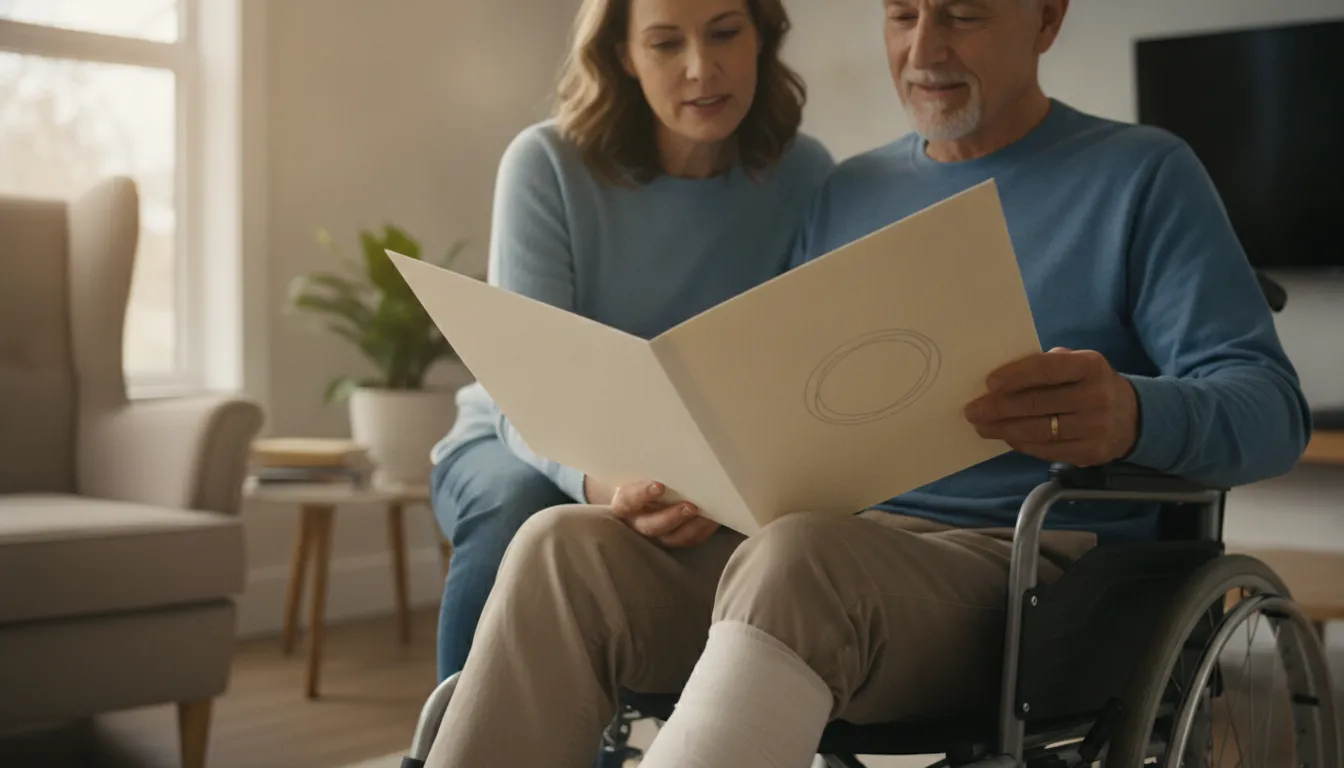
Attorney reviewing medical and employment records with an injured client

How does lost income affect the evaluation?

Work-related losses can include time missed during treatment, reduced hours, changes in duties, and an inability to return to the same work. Evidence may include payroll records, tax documents, employer statements, attendance records, job descriptions, and written restrictions from medical providers. If an injury affects future earning capacity, the analysis may also consider education, experience, transferable skills, physical limitations, and the type of work reasonably available.

Some injuries also make ordinary household tasks difficult. Replacement services, such as help with personal care, transportation, child care, or household responsibilities, should be documented rather than assumed. A recovery journal can connect medical limitations to those changes without exaggerating them.

What reduces the amount ultimately recovered?

The headline value of a claim is not necessarily the amount a person takes home. Medical expenses, case costs, insurance reimbursement claims, and liens may affect the net recovery. Those issues should be identified and addressed before signing a release. For broader guidance about evaluating a Michigan personal injury claim, speak with a lawyer who can review the records and the specific facts rather than relying on generic personal injury settlement amounts.

How can fault and insurance coverage affect compensation?

Liability and available insurance coverage can shape how an injury claim is evaluated, but neither issue can be reduced to a simple formula. The analysis may involve what each person did, the strength of the evidence, the type of claim, and which policies or statutory benefits may apply. Michigan law also treats some benefits differently from damages pursued in a personal injury lawsuit.

How does comparative fault apply in Michigan?

Michigan’s comparative-fault rules can reduce damages when the injured person is found partly responsible. Under MCL 600.2959, damages in a personal-injury action are reduced by the injured person’s percentage of fault. The statute also addresses circumstances in which the person’s fault is greater than the aggregate fault of others, including different treatment of economic and noneconomic damages. The result depends on the facts and the legal claims involved, so a general rule should not be treated as a prediction for a particular case.

In qualifying actions involving multiple parties, MCL 600.6304 directs the factfinder to determine total damages and percentages of fault, including relevant nonparties, subject to statutory provisions and exceptions. Evidence such as photographs, incident reports, medical records, witness accounts, and testimony may affect how responsibility is evaluated. For additional background, see the firm’s Michigan comparative-fault resource, while keeping in mind that a car-accident article may not address every type of personal injury claim.

Why does insurance coverage matter?

Even when another party may be legally responsible, the available coverage can affect the practical path toward recovery. A careful review may identify the responsible party, applicable liability policies, additional insured parties, and exclusions or limits that require attention. These details should be confirmed from the policy and claim documents rather than assumed from an insurer’s initial position.

Car-accident claims also require a clear distinction between Michigan no-fault benefits and a tort claim. PIP medical coverage, work-loss benefits, replacement services, and Property Protection Insurance are separate coverage categories, not one combined settlement benefit. The firm’s Michigan no-fault lawyer resource provides related information. Whether insurance proceeds can address the full impact of an injury may depend on medical needs. Lost income, fault, coverage, and the evidence supporting each part of the claim.

What evidence helps evaluate a Michigan injury claim?

Useful evidence helps an attorney understand what happened, how the injury affected your life, and which losses may need further evaluation. It can inform a discussion about personal injury settlement amounts, but it cannot guarantee a result or establish a universal value. Preserve what you can while following your medical providers’ advice and seeking prompt care for your injuries.

  1. Medical records and treatment information. Keep records of diagnoses, imaging, prescriptions, referrals, therapy, procedures, and restrictions. Follow the treatment plan provided by your clinicians. A consistent medical record can help connect the injury to the event and show how symptoms and care needs developed over time. If future treatment may be necessary, ask your providers what follow-up or evaluation they recommend rather than trying to predict it yourself.
  2. Wage and work-loss proof. Save pay stubs, tax records, employment schedules, disability paperwork, and written information from your employer about missed work or restrictions. If an injury affects your ability to perform your usual duties or earn income in the future, that issue may require additional documentation and professional evaluation. Do not assume that one document will establish every aspect of an income-related claim.
  3. Scene and other physical evidence. Preserve photographs or video of the scene, visible injuries, property damage, hazardous conditions, and anything else that may help explain what occurred. Keep relevant items in their current condition when reasonably possible. Record the date, location, and source of each file so its context is not lost.
  4. Witness information. Write down the names and contact information of people who saw the event or observed your condition afterward. Briefly note what each person personally observed, without asking anyone to guess, exaggerate, or adopt a particular version of events.
  5. Insurer and other communications. Keep letters, emails, text messages, claim numbers, recorded-statement requests, and settlement documents. Avoid making assumptions or signing a release before you understand what it covers. A focused review of a proposed offer should account for its terms and the claims it may release, not only the immediate payment.
  6. A recovery journal. Make dated notes about pain, symptoms, sleep, mobility, appointments, missed activities, household tasks, and help you need from others. Keep the entries accurate and private. This record can help you describe day-to-day effects that may not appear fully in a medical chart.

Evidence is most useful when it is organized and truthful. A Michigan personal injury lawyer can review the available information, identify gaps, and explain which questions require more investigation. For general information about requesting guidance on a specific issue, visit the Atnip & Associates contact page.

How should you review a settlement offer?

A settlement offer should be evaluated against the full impact of the injury, not simply the speed of payment. An insurer’s proposal may resolve some disputed issues, but accepting it usually requires signing a release that can affect future claims. Before responding, review what the offer covers, what it excludes, and whether the available evidence supports the proposed resolution.

Questions to ask when reviewing a personal injury settlement offer
Issue to review Questions to consider
Immediate payment What losses and expenses does the proposed payment address now? Are medical treatment, lost income, property damage, or other documented harms included?
Future needs Has the evaluation considered ongoing treatment, rehabilitation, medication, equipment, impairment, or changes to work and daily life? A claim may not be fully understood while the medical outlook remains uncertain.
Disputed liability What facts does the insurer rely on when assigning responsibility? Review witness statements, records, photographs, reports, and any comparative-fault argument before accepting an adjustment to the claim.
Release language Which people, companies, insurers, and claims would be released? Does the document waive rights connected to injuries or losses that are not yet known?
Net recovery What remains after case expenses, medical liens, reimbursement claims, or other obligations are addressed? The stated offer and the amount ultimately retained may be different.
Professional review Has an attorney reviewed the evidence, the proposed release, and the consequences of signing before you respond? Consider the firm’s guide to reviewing Michigan settlement offers for related considerations.

There is no universal formula for deciding whether an offer is adequate. The right review depends on the injury, available coverage, liability evidence, treatment outlook, and the terms of the release. A lawyer can help identify unresolved issues and explain the consequences of accepting or declining a proposal. The FAQ below addresses common questions about evaluating personal injury settlement amounts.

Frequently Asked Questions

Can anyone tell me exactly what my claim is worth?

No honest evaluation can promise an exact figure before the facts are developed. The analysis may consider the nature and permanence of the injury, medical needs, lost income, effects on daily life, available insurance, and disputed liability. A case-specific review can identify the evidence needed to assess potential compensation without relying on settlement ranges or guarantees.

Does Michigan fault affect a personal injury settlement?

It can. Michigan law provides that damages in a personal-injury action are reduced by the injured person’s percentage of comparative fault, subject to the rules and exceptions in the statute. MCL 600.2959 also addresses situations in which the injured person’s fault is greater than the aggregate fault of others. So the effect should be reviewed based on the facts of the claim.

Do future medical expenses matter in the evaluation?

Yes. A serious injury may require ongoing treatment, rehabilitation, medication, equipment, or additional procedures, and those needs can affect the analysis. Medical records and qualified opinions about prognosis and future care help show how an injury may continue to affect health, work, and daily activities.

Should I accept an insurer’s first offer?

Do not assume that an initial offer reflects the full impact of an injury. Before signing, review the proposed release, disputed liability, future needs, liens or other costs, and the amount you would actually receive after case-related obligations. Because accepting an offer may affect your ability to pursue additional compensation, consider obtaining case-specific legal guidance first.

Schedule a Free Consultation About Your Michigan Injury Claim

Because settlement evaluations depend on the facts, a case-specific review can help you understand the issues that may affect your claim and possible next steps. Call 248-599-1607 to schedule a free consultation with Atnip & Associates, PLLC. The firm can listen to your concerns, discuss the available information, and explain whether further evaluation may be appropriate for your Michigan personal injury claim.

—
title: ‘Head-On Collision Lawyer Michigan: What to Do Next’
metaTitle: ‘Head-On Collision Lawyer Michigan: What to Do Next’
description: >-
Head-on collision lawyer Michigan guidance on medical care, No-Fault benefits,
fault evidence, serious injuries, and choosing counsel after a severe crash.
excerpt: >-
Head-on collision lawyer Michigan guidance on medical care, No-Fault benefits,
fault evidence, serious injuries, and choosing counsel after a severe crash.
subtitle: >-
Head-on collision lawyer Michigan guidance on medical care, No-Fault benefits,
fault evidence, serious injuries, and choosing counsel after a severe crash.
slug: head-on-collision-lawyer-michigan-guide
image: >-
https://zleague-public-prod.s3.us-east-2.amazonaws.com/article_images/a6a9fdab-7864-469e-be3a-503ee208ea0a/head-on-collision-lawyer-michigan-what-to-do-next-717035.webp
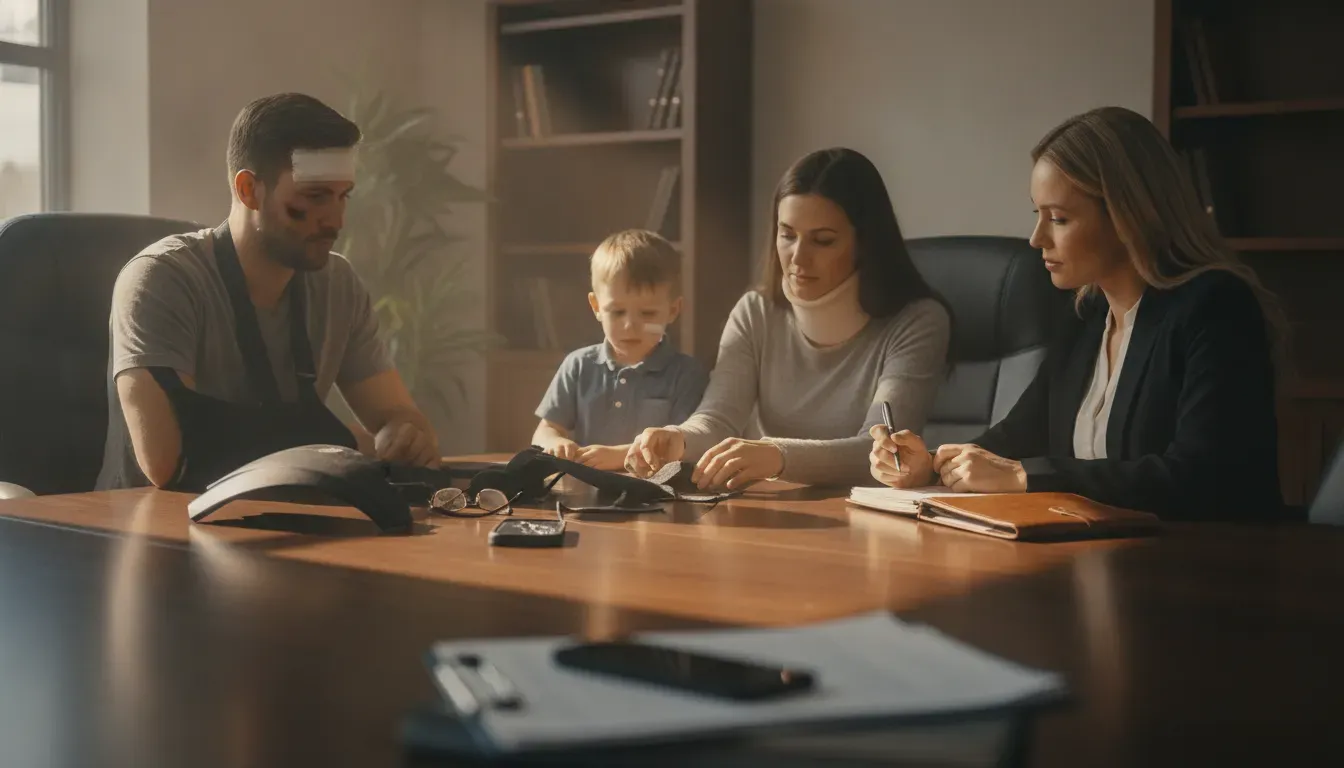
imageAlt: Family consulting a head-on collision lawyer Michigan after a serious crash
targetKeyword: head-on collision lawyer Michigan
—

A head-on crash can leave a Michigan family facing emergency treatment, missed work, vehicle damage, and difficult insurance questions. If you are looking for a head-on collision lawyer Michigan residents can turn to, begin with the practical priorities: get medical care. Preserve information, protect your insurance rights, and avoid guessing about fault before the evidence is reviewed.

Call 248-599-1607 to schedule a free consultation about your Michigan head-on collision.

What should you do immediately after a head-on collision in Michigan?

Your first responsibility is safety, not building a claim. If you can do so without worsening an injury, move away from traffic and follow emergency personnel instructions. Call 911 when anyone may be injured, and accept medical evaluation even if symptoms seem manageable. Head-on impacts can produce injuries that are not obvious at the scene, including concussion symptoms, internal injuries, fractures, and spinal or neck trauma.

When it is safe, make a short record of what happened. Do not speculate that you caused the crash, and do not argue with the other driver. Instead, preserve information that may disappear:

  1. Move to safety and call 911 if anyone may be injured.
  2. Get medical evaluation and follow the treatment plan.
  3. Preserve photographs, witness details, reports, and insurance records.
  4. Speak with a qualified Michigan attorney before signing a release or giving a recorded statement.
  • Ask for the incident or crash report information and the names of responding agencies.
  • Photograph the vehicles, roadway, lane markings, traffic controls, debris, weather conditions, and visible injuries if you can do so safely.
  • Write down the names and contact information of witnesses.
  • Save photographs, dashcam footage, medical discharge paperwork, prescriptions, and insurance correspondence.
  • Notify the appropriate insurer promptly, but avoid a recorded statement or settlement release until you understand what is being requested.

Michigan State Police explains the state crash-reporting process through its Traffic Crash Reporting Unit. A report is important evidence, but it is not always the final answer on legal responsibility. A police report may contain an initial account, while later evidence can clarify lane position, vehicle movement, visibility, and the sequence of impact.

Why are head-on collisions especially serious?

A frontal impact can transfer substantial force to the people inside both vehicles. The injury pattern depends on speed, vehicle design, restraint use, the angle of impact, the location of the occupants, and what happened before and after the collision. A serious crash may involve more than one injury and more than one category of loss.

Common concerns include traumatic brain injury, concussion, spinal cord damage, broken bones, internal injuries, severe burns, amputations, and permanent disfigurement. Some symptoms develop gradually. A person who appears alert immediately after a crash may later experience headaches, confusion, memory problems, dizziness, sleep changes, weakness, or pain. Follow the treatment plan and tell medical providers about all symptoms, even when you are unsure they are related to the collision.

Families may also face consequences beyond the injured person’s medical bills. A serious injury can affect the ability to work, provide care, drive, maintain a household, or participate in ordinary activities. If the crash caused a death, the family may need guidance about wrongful-death rights and survivor benefits. These questions are fact-specific and should be evaluated with current Michigan law and the available insurance coverage.

Atnip & Associates handles serious personal-injury matters with a boutique, attorney-involved approach. The firm’s focus includes motor vehicle accidents and catastrophic injury claims, not just the initial vehicle damage question. Learn more about serious car accident injuries and why documentation matters when an injury changes a person’s life.

How does Michigan No-Fault insurance affect a head-on collision claim?

Michigan’s No-Fault system and a potential claim against the at-fault driver are separate parts of a collision case. No-Fault benefits may apply through the injured person’s auto policy or another policy determined by Michigan’s priority rules. A third-party claim, when available, is directed at the driver or other responsible party whose conduct caused the crash.

The Michigan Department of Insurance and Financial Services explains Personal Protection Insurance, or PIP. It can cover reasonable and necessary medical expenses subject to the coverage selected in the affected policy. PIP may also cover wage loss and replacement services for a limited period. The state’s official Brief Explanation of Michigan No-Fault Insurance describes these coverages and limits. Your own policy, the date of the crash, other available policies, and the facts of the claim all matter.

Do not treat every benefit as one general payment. Medical coverage, work-loss benefits, replacement services, and Property Protection Insurance address different losses and may involve different documentation. An insurer may request medical records, wage information, proof of services, or other support before paying a benefit. A delay or denial does not automatically resolve whether benefits are owed.

Michigan law also has time-sensitive requirements for No-Fault claims. The applicable deadline can depend on the benefit, notice, the policy, and the circumstances. Do not rely on a general internet deadline to protect a specific claim. A head-on collision lawyer Michigan families consult can review the relevant policy documents, notices, bills, wage records, and insurer communications before advising on next steps.

Issue What it may address Records to preserve
PIP medical Reasonable and necessary crash-related medical care, subject to the policy Medical bills, records, referrals, and insurer communications
Work loss Income-related losses covered under applicable No-Fault rules Pay records, employer statements, and work restrictions
Replacement services Help with ordinary tasks when the benefit applies Service details, dates, and supporting records
Property Protection Insurance Separate vehicle or property damage questions Photos, estimates, towing, rental, and repair records

How is fault investigated after a Michigan head-on crash?

Head-on collisions often raise an important question: which vehicle crossed the centerline or entered the other vehicle’s path, and why? The answer may involve a driver decision, a medical event, impairment, distraction, a mechanical failure, a roadway condition, or another contributing factor.

Responsibility should not be assumed from the damage pattern alone.

An investigation may examine:

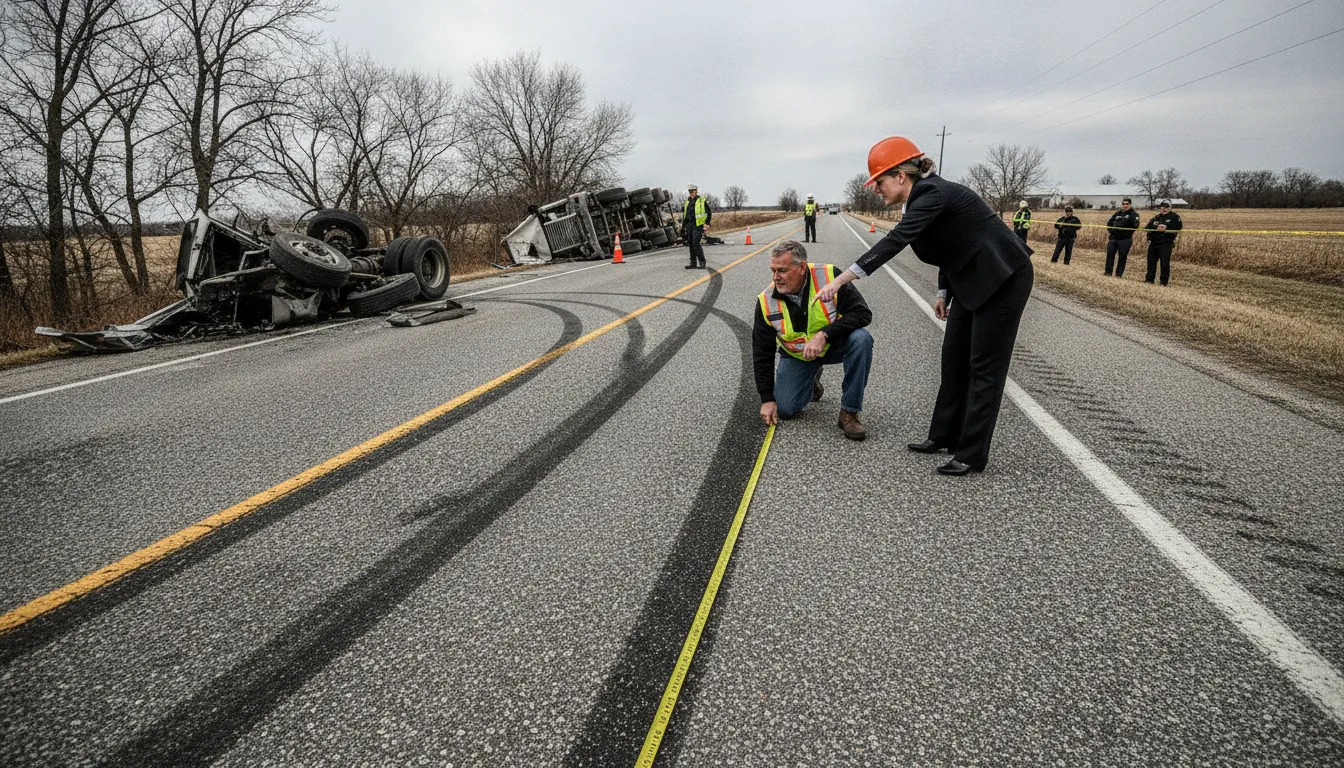
  • Crash-scene photographs, measurements, tire marks, debris fields, and vehicle resting positions.
  • Police reports, witness statements, 911 calls, traffic-camera footage, and nearby security video.
  • Vehicle damage, event-data information, airbag modules, maintenance records, and inspection evidence.
  • Weather, lighting, roadway design, lane markings, construction activity, and visibility.
  • Medical records, toxicology information when available, and testimony about the driver’s condition.

Crash reconstruction professionals may help interpret physical evidence, but expert involvement is not automatic in every matter. The right approach depends on the severity of the injuries, the dispute over fault, the condition of the vehicles, and what evidence remains available. Prompt preservation matters because vehicles may be repaired, video may be overwritten, and physical debris may be removed.

Michigan’s comparative-fault rules can affect a recovery when more than one person or entity is alleged to have contributed to an injury. The Michigan Legislature’s text of MCL 600.2959 is the authoritative source for the statute. Applying it to a specific crash requires reviewing the type of damages, the evidence, and the current law rather than reducing the analysis to a simple percentage example.

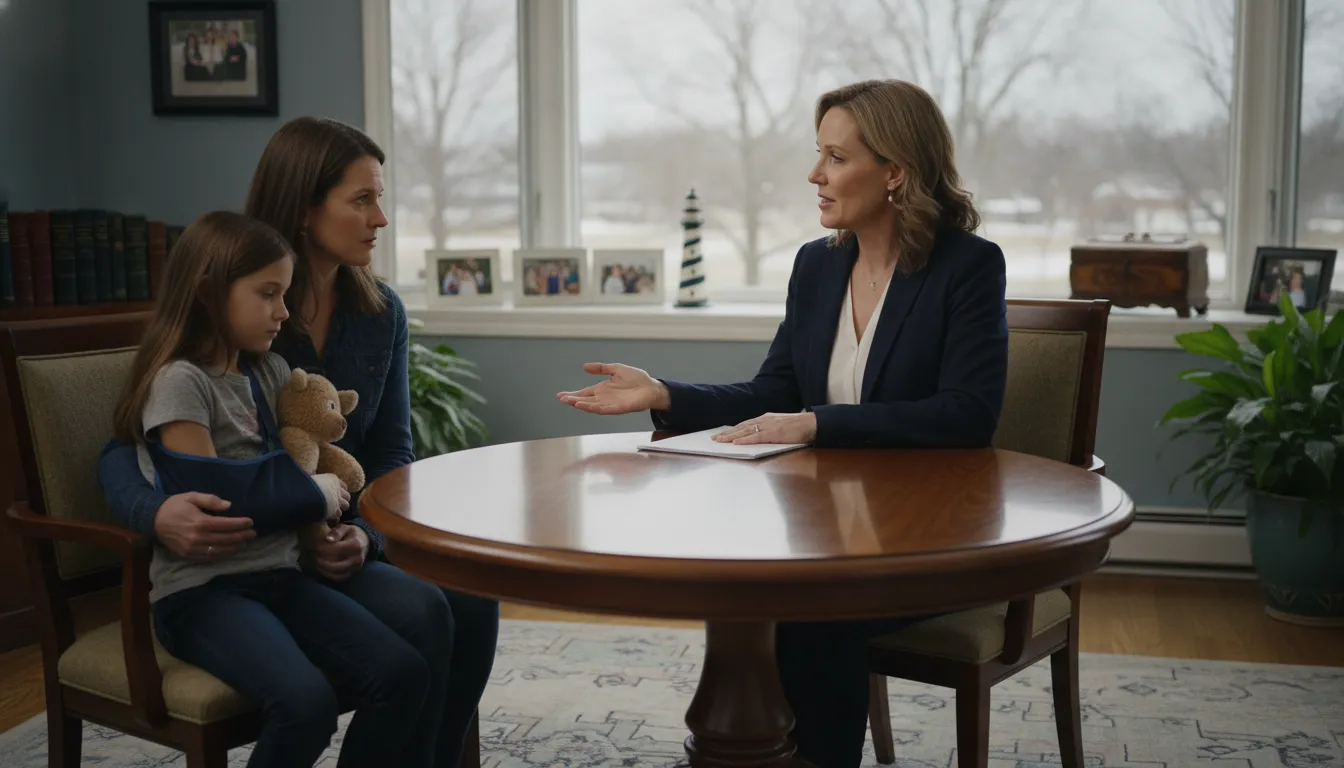
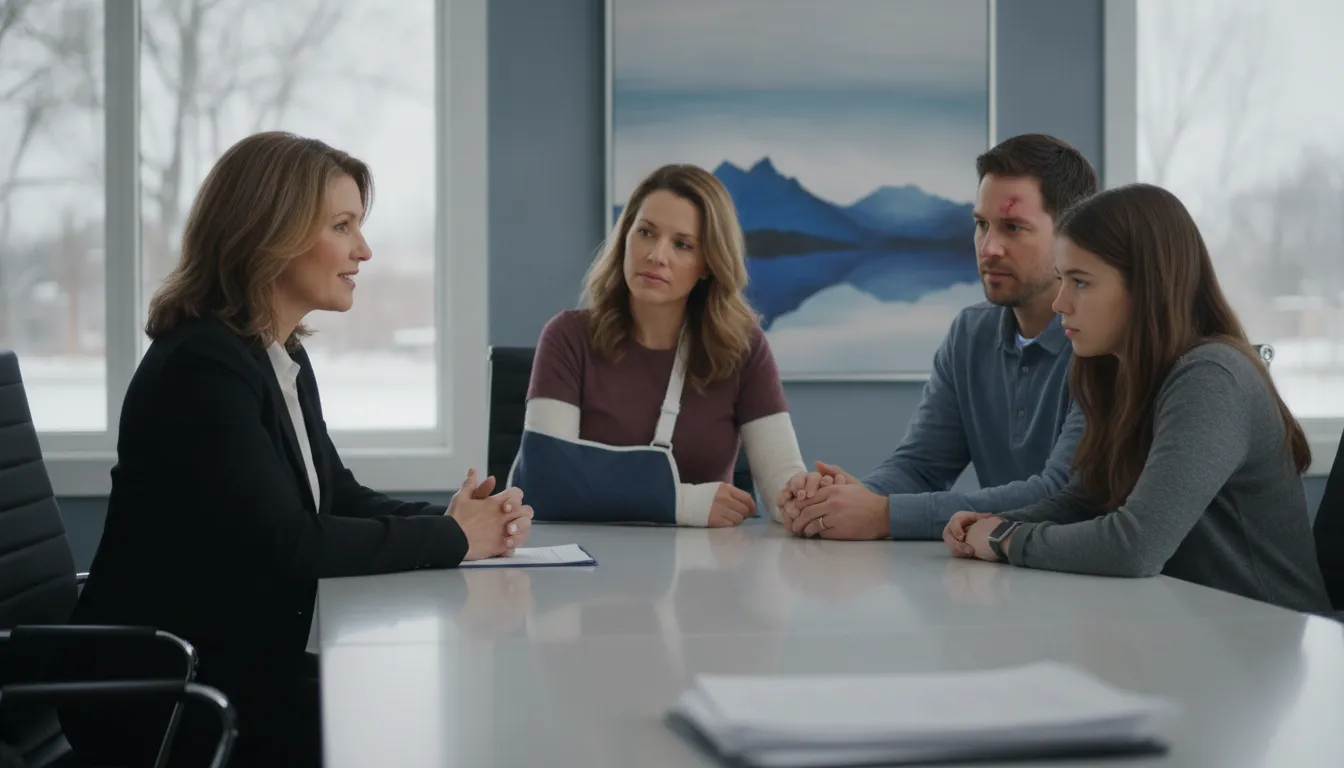
Attorney reviewing head-on collision evidence with a Michigan family

What compensation may be involved after a serious head-on collision?

A collision claim can involve several categories of loss, but the available recovery depends on the facts and the applicable insurance and liability rules. Potential issues may include medical treatment, rehabilitation, attendant care, wage loss, replacement services, property damage, future care, reduced earning capacity, and the personal effects of a serious injury. A wrongful-death matter can raise different questions for surviving family members.

No attorney can responsibly promise a settlement, verdict, or recovery amount before investigating the crash and understanding the medical outlook. Serious injury cases often require a clearer picture of prognosis and future needs. Medical records, treating-provider opinions, employment information, life-care analysis, and other evidence may be necessary to explain how the injury affects the person’s life.

For a third-party claim, Michigan law may require analysis of whether an injury meets the serious-impairment-of-body-function standard or another applicable threshold. The Michigan Legislature’s text of MCL 500.3135 should be reviewed with the facts of the claim. A diagnosis by itself does not answer every legal question, and a legal threshold should not be treated as a prediction of a particular outcome.

Property Protection Insurance is another distinct issue. Vehicle damage, deductibles, comparative responsibility, and the circumstances of the crash can affect how property losses are handled. Keep repair estimates, photographs, towing records, rental-car records, and communications with insurers.

When should you speak with a head-on collision lawyer Michigan families trust?

There is no need to wait until every medical record is collected before requesting a consultation. Early guidance can help preserve evidence, identify the policies that may apply, organize communications, and reduce the risk of an avoidable mistake. It may be especially important to speak with counsel when:

  • The crash caused hospitalization, surgery, a serious fracture, brain injury, spinal injury, or permanent impairment.
  • The other driver or an insurer disputes how the collision occurred.
  • You received a request for a recorded statement, release, or quick settlement.
  • Your PIP medical, wage-loss, or replacement-services benefits were delayed or denied.
  • You are unable to work or your family must provide substantial care.
  • A loved one died, or several vehicles, policies, or potentially responsible parties are involved.

Choosing counsel is not only about a firm’s name. Ask how the firm investigates serious crashes, who will be involved in the case, how it handles No-Fault issues, and how it explains fees and expenses. Atnip & Associates brings personal-injury litigation experience and insurance-defense insight to complex Michigan claims. Its attorneys can evaluate both first-party insurance issues and a potential third-party liability claim when the facts support that review.

For a broader overview of Michigan vehicle-accident representation, see the firm’s motor vehicle accident resources. Readers dealing with long-term impairment can also review the firm’s information about catastrophic injury claims.

Call 248-599-1607 before signing a release or accepting an insurance decision you do not understand. Atnip & Associates offers a free consultation, with no fee unless the firm wins.

What should you bring to a Michigan collision consultation?

You do not need a perfect file to begin. Bring whatever is readily available, including the crash report or incident number, insurance cards, policy information. Photographs, medical records, bills, wage information, witness contacts, repair estimates, and letters or emails from insurers. If you cannot gather everything, explain what is missing.

Be candid about prior injuries, medical conditions, symptoms, work history, and what you remember. Do not exaggerate, but do not minimize pain or limitations either. If you are unsure about a detail, say so. A consultation is a chance to identify questions and preserve options, not a test of your memory immediately after trauma.

Keep a simple recovery journal if your medical team agrees. Note appointments, symptoms, medication effects, tasks you cannot perform, time missed from work, and help provided by family members. These notes do not replace medical records, but they can help you and your providers discuss how the injury affects daily life.

Frequently asked questions about Michigan head-on collision claims

Do I need a lawyer after a head-on collision in Michigan?

You are not required to hire a lawyer, but a consultation can be useful when injuries are serious. Fault is disputed, benefits are delayed, or a third-party claim may be available. An attorney can review the evidence and explain options without promising a particular result.

How much does a head-on collision lawyer cost in Michigan?

Atnip & Associates describes its personal-injury representation as a contingency-fee arrangement, meaning there is no fee unless the firm wins. The consultation can address the written fee agreement, case expenses, and questions about how the arrangement applies to your matter.

Can I recover if I may have contributed to the crash?

Possibly, depending on the evidence, the type of claim, the percentage of responsibility, and the damages involved. Michigan comparative-fault law is fact-specific. Do not concede fault in an insurance statement before the crash evidence and applicable law are reviewed.

What if the other driver had no insurance?

Possible options depend on the applicable No-Fault rules, your policy, other available coverage, and the facts of the crash. Preserve your policy documents and notify the insurer as required, but request legal guidance before assuming that an uninsured-driver issue has only one solution.

Talk with a Michigan personal injury attorney

After a head-on collision, you and your family deserve clear information about medical care, insurance benefits, evidence, and possible legal claims. Atnip & Associates, PLLC serves injured people throughout Michigan with personalized attention and serious-injury experience. Call 248-599-1607 to schedule a free consultation. For others, it is just another case. For us, it is personal.

A sudden injury, unexplained fear, or sharp change in an older adult’s condition can leave a family unsure what to do first. You do not need to prove abuse before raising a concern, but it helps to act promptly. Focus on the resident’s immediate safety, and share what you observed with the appropriate authority.

Call 248-599-1607 to schedule a free consultation.

For families looking up “state of Michigan report nursing home abuse,” start by contacting the public agency that fits the concern. Use emergency services if someone is in immediate danger. Report other care concerns to the state agency responsible for facility oversight or adult protection.

  • Call 911 if the resident faces immediate danger or needs urgent medical care.
  • For non-emergency concerns, make a clear report to the appropriate state agency.
  • Write down dates, observations, and steps taken so you can explain the concern accurately.

Different concerns may call for different reporting channels. Understanding who handles each kind of report can help you take the next step without delaying attention to the resident.

Where Can You Report Nursing Home Abuse in Michigan?

If a resident may be in immediate danger or needs urgent medical care, call 911 or seek emergency care first. For a concern about care at a nursing home, Michigan families can contact the state agency that oversees facility care. If the concern involves abuse, neglect, or exploitation of a vulnerable adult, they can also report it to Adult Protective Services (APS). These are distinct routes, and the right next step depends on the situation. A state of Michigan report nursing home abuse guide can help families identify which agency to contact.

Concern Starting point
Immediate danger or urgent medical need Call 911 for emergency response and urgent care.
Care or services at a covered nursing home Contact LARA’s Bureau of Survey and Certification.
Suspected abuse, neglect, or exploitation of a vulnerable adult Contact Michigan Adult Protective Services.
  • Immediate danger or urgent medical need: Call 911. Do not wait for an administrative complaint process when a resident needs immediate help.
  • Care or services at a nursing home: Contact the Michigan Department of Licensing and Regulatory Affairs (LARA), Bureau of Survey and Certification (BSC). BSC accepts concerns involving nursing homes and other covered health facilities. This includes suspected abuse, neglect, poor care, unsafe conditions, staffing problems affecting care, and resident rights. Use the official BSC complaint information or call 1-800-882-6006. Michigan law identifies this toll-free complaint line. The BSC online complaint form is another reporting option.
  • Suspected abuse, neglect, or exploitation of a vulnerable adult: Call Michigan APS at 1-855-444-3911. The MDHHS Adult Abuse and Neglect page says reports can be made any time, day or night. APS focuses on the vulnerable adult, while BSC reviews concerns about care and services provided by covered facilities.

A single incident may raise both a resident-safety concern and a facility-care concern. Families may need to contact both agencies. APS reporting does not replace a BSC complaint about nursing home care, and BSC does not replace emergency services. MDHHS says APS staff investigate allegations within 24 hours after a report is received. That is a response timeframe, not a promise about findings or resolution. Michigan law requires a toll-free nursing home complaint line that is accessible 24 hours a day. A response must start within 24 hours for complaints identified as priority. Ask LARA how it classifies a report; not every complaint is necessarily a priority.

BSC handles complaints about state-licensed or federally certified nursing homes and other covered providers. It does not handle every long-term-care setting or every kind of dispute. For example, its complaint page directs concerns about adult foster care or assisted living elsewhere, and billing or insurance complaints are handled through another route. If you are unsure which agency applies, use the official pages above to confirm the appropriate reporting channel. Neither route should be treated as a guarantee of a particular investigation finding or outcome.

When you report, describe what you observed or were told as clearly as you can, and identify the resident and facility if known. You do not need to decide on your own whether the conduct meets a legal definition before raising a concern. The family can also read the firm’s guide to Michigan nursing home abuse legal options.

How Do You File a Complaint with Michigan LARA?

For concerns about care or services in a licensed or federally certified nursing home. You can submit information to the Michigan Department of Licensing and Regulatory Affairs (LARA), Bureau of Survey and Certification (BSC). BSC reviews concerns about suspected abuse or neglect, mistreatment, poor care, unsafe conditions, staffing impacts on care, and resident rights. A report is not a finding about what happened.

You can use the BSC online complaint intake form. LARA also lists a phone option at 800-882-6006. Review the current BSC complaint instructions for the available reporting routes and facility types before submitting.

Before you begin, collect what you can from the form’s requested details. You do not need to fill gaps by guessing. Useful information includes:

  • The facility’s name, street address, city, and facility type.
  • The incident date and year, approximate time of day, and location within the facility, such as a floor, room, or dining area.
  • A clear description of the concern, including what you observed or learned and any relevant details about the resident.
  • Your name and contact details, plus your preferred way for BSC to contact you.

Use specific, factual language. Separate what you saw from what others told you. Mark any uncertain dates or details as estimates. The intake form requests reporter and contact information. Michigan law also contemplates anonymous complaints and generally restricts disclosure of names, subject to exceptions. These include consent, a hearing or court case, or disclosure deemed essential to the investigation. If disclosure is essential, the statute gives the complainant a chance to withdraw before it occurs. This is not an absolute promise of anonymity. Ask LARA about current privacy options if you are concerned.

LARA says the BSC receipt notice is sent within 7-10 business days. This confirms receipt, not a finding. It is not a promise about review time or results. Keep your submission and confirmation. The complaint line is open 24 hours a day. For a complaint classified as priority, the state must start a response within 24 hours. Not every complaint is priority, and an investigation may take longer. Call 911 in an emergency.

Some issues fall outside BSC’s scope. These include billing or insurance matters, complaints about a health professional’s license, and complaints involving adult foster care or assisted living facilities. For those concerns, follow the agency or complaint process listed in LARA’s instructions.

What Should You Do First to Protect the Resident?

If the resident may be in immediate danger, focus on getting help and moving them to safety if you can do so without creating another risk. A suspected abuse or neglect report matters, but completing paperwork should not delay urgent medical care. If there is a medical emergency or an immediate threat, call 911 or seek emergency help first. A state complaint, a call to an attorney, or a conversation with facility leadership is not a substitute for emergency response.

When the immediate danger has passed, speak calmly with the resident in a private, comfortable setting if possible. Listen without pressing them to repeat details or suggesting what they should say. Ask what they need right now, and whether they feel safe where they are. If they cannot communicate easily, note what you observe and share health concerns with an appropriate medical professional. Avoid confronting a person you suspect may be involved if that could increase risk to the resident.

Simple Steps for Preserving What You Observe

  1. Get immediate medical help or contact 911 if needed.
  2. Write a dated, factual note of what you saw or heard.
  3. Keep relevant messages and records intact.
  4. Report the concern to the appropriate agency.

Social worker listening to an older resident and family member

As you arrange care and consider reporting, keep a straightforward record of what you personally observed and what the resident told you. These notes can help you explain the concern accurately to the appropriate agency or care professional. They are a practical aid, not a special legal requirement. A simple checklist may include:

  • The date, approximate time, and place of each event or observation.
  • What you saw or heard, using the resident’s own words when you can remember them, and separating those words from your interpretation.
  • Any visible injury, change in condition, or unmet need, along with steps taken to obtain care.
  • The names or descriptions of people present and anyone else who may have witnessed the event.
  • Relevant messages, care-related paperwork, or photographs that can help explain the concern, if taking or keeping them is appropriate and lawful.

Keep original messages and records intact. Note when and how you received them. Do not alter facility records, access accounts without permission, or photograph other residents or private information. If you are unsure whether an image is appropriate, leave it out and describe what you observed. Record who you speak with, when you contacted them, and any next step they described. If the resident’s condition changes or a new urgent risk appears, seek medical or emergency help rather than wait for an administrative review.

Once urgent needs are addressed, you can make a separate report to the appropriate agency and seek guidance about longer-term options. Keep those steps distinct: documentation may help communicate what happened, but only the relevant authorities can assess a complaint, and a lawyer’s review does not replace emergency care.

How Can a Long-Term Care Ombudsman Help?

The ombudsman program supports health, safety, well-being, and resident rights in licensed nursing homes, homes for the aged, and adult foster care homes. Its services are free.

A key part of the program’s role is that ombudsmen act at the resident’s direction and take action only with the resident’s consent. A family member can share concerns or ask how to connect, but should not assume the ombudsman can act without the resident’s permission. If the resident can express their wishes, include them in decisions about what to raise and what help they want. This resident-led approach matters when relatives and the resident see a situation differently. Focus the conversation on what the resident says they need, what they want addressed, and whether they agree to involve the ombudsman.

An ombudsman can be a useful person to discuss a care concern with and to help the resident assert their rights. To find the contact serving the facility’s area, use the Michigan program’s local ombudsman contact finder. You can also read more about examples of nursing home neglect to help describe the issue clearly, without treating an unverified concern as a proven violation.

The ombudsman serves a different purpose from a state regulatory complaint. If you believe a nursing home has violated care or safety requirements, make a report to the appropriate state agency as well. An ombudsman conversation does not replace that step or guarantee that an agency investigation will occur. Describe what you observed, when it happened, and how it affected the resident. For concerns about Michigan nursing home abuse legal options, a separate civil legal consultation may help explain possible next steps, but it is not a substitute for urgent safety action or official reporting.

If the resident faces immediate danger or needs urgent medical care, call 911 first. You can seek emergency help while also contacting an ombudsman and filing a regulatory report; these channels can address different parts of the problem.

What Happens After You Report a Nursing Home?

After filing, keep any confirmation or reference information. BSC says it sends a receipt notice within 7 to 10 business days, based on the contact method selected. Check the details you provided and use the BSC complaint page for current process information.

A receipt notice confirms that the complaint was received; it is not a finding that abuse or neglect occurred. The allegations remain unproven unless and until the agency determines otherwise through its process. Although BSC says allegations involving federally certified facilities are investigated under federal protocol, families should not assume a particular investigation schedule, specific steps, or outcome. The agency’s review depends on the facts and applicable process.

Save a copy of what you submitted and any confirmation, letter, email, or other communication from the agency. Keep a simple log of later calls or messages, including the date, who contacted you, and what was discussed. If you receive a request for additional information, respond with factual details you can support and keep a copy of what you send. Continue to record new observations separately from your original report, so the sequence of events remains clear.

If you do not receive a receipt notice within the stated window, review the method you used and your contact preferences. Use current BSC instructions to ask about the submission. Keep reporting urgent changes in the resident’s condition to the appropriate medical or emergency service; a complaint receipt is not a substitute for immediate care. If circumstances change while you wait, write down what happened and when, and ask BSC how to provide relevant new information. Avoid treating a new observation as proof of an earlier allegation.

Confirm that the concern involves a nursing home within BSC’s scope. A licensed or federally certified nursing home complaint is different from a concern about assisted living or an adult foster care home. Do not assume the BSC nursing-home route accepts those matters. Atnip’s overview of abuse and neglect in assisted living provides context about that distinct setting. Concerns in those settings may require a different reporting route, so check with the responsible agency rather than treating the facility types as interchangeable.

Likewise, a complaint about understaffing is a concern to describe in terms of its effect on care, not an automatic conclusion of neglect. Read more about how staffing problems can affect resident care. Keep your account focused on what you observed, when it happened, and how it affected the resident.

How to Report Nursing Home Abuse to the State of Michigan

For a private civil claim, a resident must have suffered harm and facts must support a potential legal duty and failure. Reporting does not prove abuse, negligence, or responsibility. It also does not determine whether a family has a claim.

A Michigan attorney can review the resident’s circumstances, available records, and reported injury to explain possible legal options. That review may include when the change or injury occurred. It may also consider what care was expected, what documentation exists, and whether a facility response is available. The answer depends on the specific facts. A consultation is not a guarantee that a claim can be brought or that any particular result will follow.

If you are weighing this separate path, our overview of a nursing home negligence lawsuit and guide to the nursing home lawsuit process explain more about civil legal questions. These resources are not substitutes for immediate medical care or an official report. If safety is still at issue, contact emergency services or the appropriate state agency first.

Atnip & Associates represents Michigan families in personal injury matters. The firm offers a free consultation and uses a contingency fee, so attorney fees are not owed unless it obtains a recovery. Each matter is evaluated on its facts. No particular result or case acceptance is promised. For others, it’s just another case. For us, it’s personal.

Frequently Asked Questions

Can you report nursing home abuse anonymously in Michigan?

Michigan law contemplates anonymous nursing home complaints and generally restricts disclosure of a complainant’s name, but includes exceptions, such as when disclosure is considered essential to the investigation. The online intake form requests contact information. Ask LARA about current privacy options and how any report may be handled before filing; do not assume absolute confidentiality.

What concerns can be reported to LARA about a nursing home?

LARA’s Bureau of Survey and Certification accepts complaints about care or services at covered nursing homes. Examples include suspected abuse, neglect, poor care, unsafe conditions, staffing concerns that affect care, and resident rights. A complaint is not a finding that a violation occurred.

What information should I have when I make a complaint?

The form asks for the facility name and address, incident date, approximate time and location, plus information about the resident and complainant. Share what you know. Separate direct observations from what others said, and do not guess to fill gaps.

Should I contact Adult Protective Services too?

If you suspect abuse, neglect, or exploitation of a vulnerable adult, Michigan MDHHS says to report it to APS at 1-855-444-3911 any time, day or night. A nursing-home care complaint to LARA and an APS report can address different concerns. Call 911 first for immediate danger or urgent medical needs.

Talk with a Michigan Personal Injury Attorney About Your Options

If you are weighing a possible civil claim, Atnip & Associates offers a free consultation about the facts and next steps. It does not replace urgent medical care or an official complaint. The firm evaluates matters individually and does not promise a particular result.

Schedule a free consultation or call 248-599-1607.

After a serious crash or other life-changing injury, a Midland-area family may be trying to manage medical care, missed work, insurance calls, and an uncertain future at the same time. A practical first step is learning what to preserve, what to ask, and when a Michigan personal injury lawyer may help protect your options.

Call 248-599-1607 to schedule a free consultation and take the first step toward protecting your rights and your financial future.

What should a Midland family do after a serious injury?

A Midland family should focus first on safety and medical care, then preserve information about what happened before memories, records, or physical evidence disappear. Avoid guessing about fault, signing a broad release, or giving a recorded statement before you understand what is being requested. Early legal guidance can help organize the next decision.

  • Get emergency care and follow the treating provider’s instructions.
  • Report a serious motor-vehicle crash to law enforcement and request the report when it becomes available.
  • Photograph vehicles, visible injuries, property damage, road conditions, and other relevant surroundings when it is safe.
  • Save insurance letters, claim numbers, medical bills, wage information, and messages about the incident.
  • Write down what you remember, including the time, location, weather, witnesses, and conversations.

The Michigan State Police Traffic Crash Reporting Unit FAQ explains the state’s crash-reporting process and how individuals can obtain a UD-10 report. If someone is in immediate danger, call 911 first.

When should you speak with a Midland personal injury lawyer?

Consider speaking with a lawyer as soon as practical when an injury is serious, fault is disputed, a loved one died, more than one insurer is involved, or treatment and income loss may continue. A consultation does not require you to predict the value of a claim. It gives your family a chance to understand the issues before making major decisions.

Legal guidance may be especially useful when:

  • The collision caused a traumatic brain injury, spinal cord injury, amputation, severe fracture, or other long-term impairment.
  • An insurance company asks for a recorded statement, medical authorization, or settlement release.
  • The injured person cannot work, needs ongoing care, or provides care for a family member.
  • There are questions about a commercial vehicle, rideshare trip, defective roadway, or multiple potentially responsible parties.
  • A family is considering a wrongful-death claim after losing a spouse, parent, child, or other loved one.

Atnip & Associates, PLLC focuses on serious personal injury and catastrophic injury matters for Michigan individuals and families. The firm’s Michigan personal injury practice areas page provides additional context about the types of cases the firm handles.

What should you bring to a free consultation?

Bring the information you have, even if it is incomplete. A lawyer can help identify what is missing. The most useful materials usually show the event, the injuries, the financial effect, the insurance communications, and the people or organizations connected to the incident. Do not delay a consultation because you do not yet have every document.

  1. Insurance cards, policy information, claim numbers, adjuster contact details, and letters or emails from insurers.
  2. Medical records, discharge instructions, bills, prescriptions, appointment notes, and a list of providers.
  3. Photographs, videos, crash-report information, witness names, and any available surveillance details.
  4. Pay stubs, employer communications, tax records, or other information showing missed work or changed job duties.
  5. A short timeline of symptoms, treatment, conversations, and daily tasks that became difficult.
  6. Questions about fees, communication, evidence, insurance, likely next steps, and who will work on the case.
Michigan family organizing accident evidence with a personal injury attorney

If a family member cannot attend, ask whether another trusted person may participate. For a serious injury, a relative may be helping with transportation, records, bills, or communication. The goal is to give the attorney a clear picture of what the family is facing, not to present a perfect case file.

How can you preserve evidence after an accident?

Evidence preservation means keeping original information in a safe place and recording details while they are fresh. Save photos in their original form, keep relevant text messages and emails, and avoid deleting posts or making public statements about the incident. Tell your lawyer if a vehicle, helmet, damaged object, or other physical evidence may be repaired, discarded, or sold.

A simple evidence plan can include:

  • Creating one secure folder for photographs, reports, bills, correspondence, and notes.
  • Keeping a symptom and treatment journal that separates what happened from your later understanding of it.
  • Listing witnesses and noting how each person may have observed the event.
  • Asking businesses or property owners about preserving surveillance when relevant, without confronting anyone.
  • Keeping copies of every insurance communication and noting the date, sender, and subject.

For a serious vehicle injury, the firm’s guide to looking up a Michigan accident report may help you locate the next record to request. If you are unsure whether a photograph, message, or object matters, keep it and ask during the consultation.

How should you handle insurance communications?

Insurance communications deserve careful attention because different benefits, policies, and claims may be involved. Be truthful, but do not speculate about fault or minimize an injury. Ask for requests in writing when possible, keep copies, and do not sign a release without understanding what claims and future needs it may affect.

Coverage or issue What to organize Why it matters
PIP medical Treatment records, bills, explanations of benefits, and insurer correspondence Medical coverage questions may involve treatment, medical necessity, and payment disputes.
Work loss or replacement services Employer records, missed-work dates, wage information, and household tasks affected These are separate benefit questions from PIP medical coverage and need their own documentation.
Property Protection Insurance Vehicle or property damage photographs, estimates, and repair records Property damage is a separate coverage category from medical and income-related benefits.
Liability claim Crash facts, witnesses, medical course, and communications about fault The claim may involve a different insurer and different questions than first-party benefits.

The Michigan Department of Insurance and Financial Services Auto Insurance Reform FAQ describes Michigan’s no-fault coverage framework and cautions that agency information is not a substitute for legal advice. Atnip & Associates also explains Michigan PIP coverage and benefits after a car accident in separate resources.

If an insurer denies or delays a claim, save the denial and the policy language cited. The State of Michigan’s insurance complaint information may explain an administrative option, while a lawyer can help evaluate whether a legal claim or another response is appropriate.

What types of serious cases may require legal guidance?

Personal injury law can involve more than a single car crash. The right questions depend on how the injury occurred, who may be responsible, which insurance policies apply, and whether the person will need long-term support. A family should receive advice tied to its facts rather than assume that a general online checklist answers every case.

Atnip & Associates may assist with matters involving:

  • Motor-vehicle collisions, including severe car, truck, motorcycle, and rideshare injuries.
  • Catastrophic injuries such as traumatic brain injuries and spinal cord injuries.
  • Wrongful death claims arising from fatal negligence.
  • Dog bites, premises incidents, and other serious injury claims.
  • Complex Michigan insurance disputes connected to a serious injury.

For a long-term injury, families can review the firm’s catastrophic injury lawyer guide, Michigan traumatic brain injury resource, and spinal cord injury resource. After a death, the wrongful death attorney guide offers another starting point. Michigan’s wrongful-death statute is available through the Michigan Legislature. The legal analysis depends on the facts and should be discussed with counsel.

Does Atnip & Associates have a Midland office?

Atnip & Associates represents clients throughout Michigan, including families in and around Midland, but this article does not claim that the firm maintains a Midland office. The firm has Michigan office locations in Rochester and Sanford. A family can ask during a consultation how meetings, records, and case work will be handled for its location.

The firm’s Michigan areas served page explains its statewide focus. Atnip & Associates is a boutique plaintiff-side firm that emphasizes compassionate, personalized advocacy and attorney involvement in serious injury and wrongful-death matters. The firm’s positioning is simple: For others, it’s just another case. For us, it’s personal.

Fees and expenses should be explained during the consultation. Atnip & Associates describes its arrangement as no fee unless the firm wins, subject to the written agreement and the facts of the case. No lawyer can guarantee a settlement, verdict, or recovery.

Call 248-599-1607 to schedule a free consultation. Atnip & Associates can help you understand the next step without promising an outcome that no lawyer can guarantee.

Frequently Asked Questions About Midland Personal Injury Lawyers

Should I talk with a lawyer before accepting an insurance settlement?

Consider a consultation before accepting a settlement when injuries are serious, treatment is ongoing, future needs are uncertain, or a release is involved. Once a release is signed, it may affect claims that have not yet been fully evaluated.

What if I do not know who was at fault?

You do not need to resolve fault before asking for legal guidance. Preserve the available evidence, avoid guessing in insurance communications, and provide the known facts to an attorney who can identify the issues that require further investigation.

Can Atnip & Associates review a wrongful-death matter?

Atnip & Associates handles serious personal injury and wrongful-death matters. A family should schedule a consultation promptly so the firm can discuss the facts, potential claims, evidence, and applicable Michigan requirements.

How much does a personal injury consultation cost?

Atnip & Associates offers a free consultation and describes its fee arrangement as no fee unless the firm wins, subject to a written agreement. Ask about fees, expenses, and case responsibilities before deciding whether to hire a lawyer.

What should I do if the insurer keeps calling?

Keep a record of the calls and request written details about what the insurer needs. Be truthful, but do not speculate or sign a release before you understand the request. A consultation can help you decide how to respond.

Can a Michigan firm help if I live near Midland?

Yes, Atnip & Associates represents clients statewide, including Midland-area families, without claiming a Midland office. Ask the firm about consultation logistics and how the case team will work with you from your location.

Talk With A Michigan Personal Injury Lawyer

If you or someone you love suffered a serious injury, you do not have to make every legal and insurance decision alone. Gather what you can, protect your medical care and records, and ask questions before signing documents that may affect your future.

Schedule a free consultation with Atnip & Associates or call 248-599-1607. There is no fee unless we win, and every case depends on its own facts.

.

A head-on crash can leave a family managing emergency treatment, damaged transportation, missed work, and difficult insurance questions. The first decisions matter. Seek medical care, preserve photographs and witness information, and save the crash report and insurance documents. Avoid guessing about fault before the available evidence is reviewed.

Call 248-599-1607 to schedule a free consultation and take the first step toward protecting your rights.

After a serious crash, a head on collision lawyer Genesee County can help assess evidence, Michigan no-fault benefits, potential liability, and the medical records needed to explain the injury. Michigan drivers select among PIP medical coverage options, so the policy and any coordination with health insurance should be examined carefully. The Michigan Department of Insurance and Financial Services explains those options at its official guidance.

Even when pain or concussion symptoms are delayed, prompt documentation can help connect treatment to the collision. Understanding what to do in the hours and days afterward begins with practical steps that protect both health and evidence.

What Should You Do After a Head-On Collision in Genesee County?

A head-on collision can leave people disoriented, injured, and unsure what to do next. If you can act safely, move away from traffic and follow emergency personnel instructions. Call 911 for immediate help. And do not attempt to move someone who may have a serious spinal or other life-threatening injury unless there is an immediate danger, such as fire.

Seek medical attention even when symptoms seem manageable. A collision can produce injuries that are not obvious at the scene. Tell the medical team about every symptom and follow their instructions. Keep records of evaluations, diagnoses, treatment, and follow-up care. Evidence, medical records, insurance policies, and deadlines can all affect a claim, so prompt attention matters.

Damaged vehicles after a serious head-on collision on a Michigan roadway

Preserve what you can from the scene

Only if it is safe and does not interfere with emergency care. Take photographs or video of the vehicles, roadway, traffic controls, weather conditions, visible injuries, debris, and surrounding area. Do not enter active lanes or handle hazardous materials. Note the names and contact information of witnesses. If nearby businesses, homes, intersections, or public areas may have security or traffic cameras, identify those locations promptly. Crash investigations may include debris, traffic-camera footage, security-camera footage, and eyewitness statements.

Do not repair, sell, or dispose of the vehicle before asking how its condition should be documented and preserved. Important evidence may include damage patterns, deployed safety equipment, event data, and physical debris. If the vehicle must be moved or stored, keep receipts and ask the towing or storage company not to alter or discard relevant materials.

Obtain reports and be careful with early statements

Request the crash report and keep copies of all paperwork, photographs, medical records, bills, and insurance correspondence. This Michigan accident report guidance can help you locate the report. Give accurate information to first responders and medical providers, but avoid guessing about fault or minimizing an injury. A serious collision may involve separate insurance and liability issues, and the available evidence may develop over time.

Save messages, call logs, and letters from insurers. Before giving a recorded statement or signing a release, consider getting advice about what it addresses. A prompt conversation with a Michigan motor vehicle accident attorney can help identify evidence that may disappear and clarify practical next steps. If you are tracking symptoms after a blow to the head, this resource on documenting concussion symptoms may also be useful. These general steps are educational, not individualized legal advice.

How Does Michigan No-Fault Insurance Apply After a Head-On Crash?

Michigan no-fault insurance and a head-on collision can involve more than one type of claim. The injured person’s own auto policy may be relevant even when another driver appears responsible for the crash. At the same time, a separate third-party liability claim may depend on evidence showing that another driver’s conduct caused the injuries. The specific policies, medical records, crash facts, and applicable law control the analysis.

What may PIP cover after a serious collision?

Personal Injury Protection, commonly called PIP, is intended to address certain losses for people injured in an auto accident. Depending on the applicable policy and Michigan law, PIP may cover reasonable and necessary medical expenses, lost income for up to three years, and replacement services. These benefits are generally evaluated as a first-party claim involving the injured person’s insurer, not as a finding that another driver was at fault.

Michigan drivers can choose a PIP medical coverage level that fits their circumstances. The Michigan Department of Insurance and Financial Services identifies six available options, including unlimited coverage, selected dollar limits, and options involving exclusions or an opt-out in qualifying circumstances. The selected limit represents the maximum an auto insurer will pay per person per accident for covered PIP medical expenses. Review the official Michigan PIP medical coverage choices before assuming that a particular limit or benefit applies.

Michigan PIP questions to review after a serious crash
Question Why it matters
What PIP medical option did the policy select? The selected option can affect available medical coverage.
Does another health plan cover auto accident injuries? Health coverage may affect an exclusion or coordination question.
Are benefits delayed or denied? Letters, claim numbers, and bills can help document the dispute.
Is a separate liability claim possible? Fault and injury evidence may support a claim involving another driver.

Exclusions and opt-outs require careful review. Some exclusions depend on whether other health insurance covers auto accident injuries. A PIP medical opt-out may be available in qualifying situations involving Medicare Parts A and B, subject to household coverage conditions. Policyholders may also need information from a health insurer or employer when evaluating how coverage coordinates. Do not assume that an insurance card, employer plan, or verbal explanation answers the question without reviewing the policy documents and enrollment forms.

How is a first-party claim different from a liability claim?

A first-party claim may seek benefits under the injured person’s own auto policy. A third-party claim may be brought against an at-fault driver, subject to the facts, applicable legal requirements, and available insurance. These claims can develop at the same time, but they serve different purposes and require different proof. A serious head-on crash may also involve multiple insurers, disputed fault, or questions about whether auto or health insurance should pay a particular bill.

Michigan’s 2019 no-fault reform created new coverage limits and options, which can make claim evaluation more complicated. PIP benefit denials or delays and coordination disputes between auto and health insurers may need prompt attention. Keep copies of your policy, declarations page, PIP selection forms, medical bills, wage records, insurer correspondence, and claim numbers. A Michigan motor vehicle accident attorney can review how the first-party and potential third-party issues fit together without assuming the outcome.

The amount and availability of benefits cannot be determined from the crash description alone. Evidence, medical documentation, insurance policies, and deadlines can affect a claim. If the crash involved severe injuries, preserving those records early may help clarify what coverage was selected. Which expenses are being submitted, and whether a separate liability analysis is appropriate.

How Is Fault Evaluated in a Genesee County Head-On Collision?

Fault analysis begins with the events that placed the vehicles on the road, not simply where the vehicles came to rest. A review may ask whether a driver crossed the center line, left a travel lane, failed to respond to traffic, or drove while impaired. It may also consider whether a mechanical problem, unsafe vehicle condition, roadway issue, or another person’s conduct contributed to the collision.

In general, a negligence claim requires evidence of a duty, a breach of that duty, a connection between the breach and the injury, and legally recognizable damages. These issues are often described as duty, breach, causation, and damages. The available facts, insurance policies, medical records, and current Michigan law control how those questions apply to an individual claim. A how fault is evaluated in Michigan crashes guide can provide additional context, but it cannot decide what happened in a specific head-on collision.

What evidence can show how the collision happened?

Investigators may compare roadway position, skid marks, vehicle damage, debris patterns, photographs, and available crash reports. Traffic-camera or security-camera footage can help establish timing and lane movement. Witness statements may clarify what a driver was doing before impact, including possible distraction or unusual driving. Cellphone records, vehicle data, maintenance records, and toxicology evidence may also matter when the facts support reviewing them.

Preserving the vehicles can be important, particularly when a tire, steering component, brake system, lighting system, or other condition is disputed. If a commercial vehicle is involved, the investigation may need to examine driver qualifications, company practices, loading, or maintenance. The firm’s truck liability and cargo claims resource discusses issues that can arise in those cases.

Can more than one person share responsibility?

Yes. The evidence may raise questions about whether another driver, an employer, a vehicle owner, a manufacturer, or a roadway condition played a role. An injured person’s actions may also be examined under Michigan’s comparative-responsibility rules. That review should be based on evidence, not assumptions about who appears responsible at the scene. A person can have a serious claim even when the other side disputes part of the account. But the effect of disputed responsibility depends on the facts and applicable law.

When vehicle paths, impact forces, visibility, reaction time, or roadway conditions are contested, crash reconstruction may help test competing explanations. Medical professionals can connect injuries to the collision, while financial experts may assess work limitations and future losses. A serious collision case may therefore require coordinated review rather than a single conclusion drawn from the police report.

Why Do Medical Records Matter in a Severe Injury Claim?

Medical records help show what happened after a head-on collision, how the injuries developed, and what care may be needed next. Seek medical attention promptly, even if symptoms seem manageable. Concussion symptoms vary from person to person, and some appear immediately while others may emerge hours or days after the injury. The CDC lists headaches, dizziness, balance problems, fatigue, nausea, vision problems, memory issues, fogginess, and difficulty thinking clearly among possible symptoms.

Keep a simple symptom diary while you recover. Note headaches, sleep changes, concentration problems, mood changes, pain levels, medication side effects, missed work, and tasks you can no longer perform normally. These notes do not replace professional records, but they can help you and your providers identify changes that might otherwise be overlooked. The CDC cautions that concussion problems may be missed by the injured person, family members, or a healthcare provider. If there is a worsening headache, weakness, numbness, seizure, repeated vomiting, slurred speech, confusion, or loss of consciousness, seek emergency care immediately.

What should the records show?

Save discharge instructions, imaging reports, diagnoses, prescriptions, therapy notes, specialist evaluations, bills, and appointment records. Tell each provider about the collision and describe symptoms accurately. Follow reasonable treatment instructions, and discuss barriers before missing appointments. A consistent record can help distinguish the initial injury from later complications and document whether care is improving, continuing, or becoming more intensive.

Work restrictions and wage loss also belong in the recovery record. Ask providers to document limits on lifting, driving, standing, concentration, or other job duties when medically appropriate. In serious collision cases, potentially relevant damages may include past and future medical expenses, lost wages, diminished earning potential, pain and suffering, and lost quality of life. Those issues are fact-dependent, and future care should be evaluated rather than assumed.

When are medical or financial experts appropriate?

A severe injury claim may require input from medical professionals about diagnosis, treatment, prognosis, and future needs. Financial experts may help evaluate lost income or diminished earning potential when the evidence supports it. A catastrophic injury case can involve complex long-term questions, which are discussed in this Michigan catastrophic injury lawyer resource. You can also learn more about documenting concussion symptoms and traumatic brain injury claims.

The right approach depends on the records, insurance policies, applicable law, and the individual facts. Preserve copies of your medical and employment documentation, and consider obtaining legal guidance before signing releases or making statements about the full extent of your injuries.

What Evidence Should Families Preserve During Recovery?

After a serious collision, families often have to manage medical care, transportation, work disruptions, and insurance paperwork at the same time. A simple evidence system can reduce the risk that important information is lost while everyone is focused on recovery. Preserve original materials when possible, keep copies in a secure folder, and note when each item was received or created.

  1. Organize medical records and care instructions. Keep discharge papers, imaging results, prescriptions, referrals, therapy notes, appointment information, and instructions from every provider. Include a dated symptom and treatment log. If symptoms change, record what happened and communicate with the appropriate medical professional. Evidence and medical records can affect how a claim is evaluated, so do not rely on memory alone. Legal information is educational, and the facts, records, policies, and applicable deadlines control an individual matter.
  2. Save bills and related expenses. Keep itemized medical bills, receipts for prescriptions and equipment, mileage or transportation records, and documentation of services purchased because of the injury. A spreadsheet or folder can help connect each expense to a date and provider without replacing the original documents.
  3. Document missed work and wage loss. Preserve pay stubs, schedules, employer correspondence, leave records, disability paperwork, and any written restrictions. Ask the employer to provide relevant information in writing, but avoid guessing at future losses. A lawyer can help identify what additional documentation may be needed for a fact-specific review.
  4. Preserve insurer communications. Save letters, emails, claim numbers, recorded-statement requests, estimates, payment explanations, and denial or delay notices. Write down the date, time, name, and subject of each call. Do not delete voicemails or change the original wording of messages.
  5. Protect the vehicles, clothing, and other physical evidence. Do not repair, sell, discard, or alter a damaged vehicle or clothing worn during the crash before asking whether an inspection is needed. Photograph damage from several angles. Store damaged personal items safely and separately.
  6. Gather photographs, witness information, and camera locations. Keep scene, roadway, vehicle, injury, and property photographs with their original dates when available. Record witness names and contact information. Note nearby businesses, homes, traffic signals, or other locations that may have traffic-camera or security-camera footage. Crash investigations may include debris, traffic-camera footage, security-camera footage, and eyewitness statements.
  7. Request and preserve reports. Keep the incident number and any police, fire, EMS, or other reports you receive. For practical help locating a report, review this Michigan accident report guidance.

Preservation is not a substitute for medical care or legal advice. If the crash involved severe injuries, disputed facts, or complicated insurance communications, prompt guidance may help the family understand what should be protected next.

When Should You Talk With a Head On Collision Lawyer Genesee County?

You may want to speak with a head on collision lawyer in Genesee County when injuries are serious, fault is disputed. An insurer delays or denies benefits, or the crash has created questions about medical care, lost income, or future needs. You do not need to wait until every record is collected. Evidence, medical records, insurance policies, and deadlines can affect how a claim is evaluated, so an early conversation can help you understand what information matters.

A consultation may be especially useful when more than one insurer is involved. When the other driver may be uninsured or underinsured, or when your own insurer is disputing payment. Michigan motor vehicle cases can involve both a first-party claim against an injured person’s insurer and a third-party liability claim involving the driver alleged to be at fault. The relationship between those claims is fact-dependent. A Michigan motor vehicle accident attorney can review the available information and explain the issues that may require further investigation.

What should you bring to a consultation?

Bring what you have, even if the file is incomplete. Helpful materials may include the crash report, insurance declarations and correspondence, medical records and bills, wage-loss information, photographs, and contact information for witnesses. Keep notes about symptoms, appointments, work restrictions, and communications with insurers. If you do not have these items yet, that should not prevent you from asking questions. The purpose of an initial review is to identify what is known, what is missing, and what should be preserved.

For serious cases, the review may also consider whether crash reconstruction, medical, or financial professionals could assist. Those decisions depend on the available evidence and the nature of the injuries. The goal is not to assume that every claim requires experts, but to avoid overlooking evidence that may become difficult to obtain later.

Does serving Genesee County mean the firm has an office there?

No. A firm can serve injured people in Genesee County and the Flint area without representing that it maintains an office in the county. Service area and office location are different questions. You can schedule a free consultation to discuss the crash, where you are located, and the most practical way to communicate.

Atnip & Associates handles these consultations on a contingency-fee basis, described as no fee unless we win. That explains the fee arrangement, not a promise of a result. The facts, policies, records, and applicable Michigan law control the evaluation of an individual matter.

Call 248-599-1607 to schedule a free consultation.

Frequently Asked Questions

Should I seek medical care after a head-on collision if I feel okay?

Yes. Some injuries, including concussion symptoms, may not appear until hours or days after a crash. A medical evaluation creates a record of your condition and can help identify problems that are easy to overlook. Seek emergency care for danger signs such as a worsening headache, repeated vomiting, confusion, weakness, numbness, seizures, slurred speech, or loss of consciousness. The CDC lists these concussion warning signs.

Does Michigan no-fault insurance cover my medical expenses?

Potentially. Your PIP medical coverage may pay covered, reasonable, and necessary medical expenses, subject to your policy, applicable law, and selected coverage level. Michigan drivers can choose among several PIP medical options, and the policy documents should be reviewed carefully, especially when health insurance coordination or a PIP exclusion is involved. Your insurer and the facts of the crash will affect how benefits are evaluated.

What evidence should I preserve after a serious collision?

Preserve photographs of the vehicles, roadway, debris, injuries, and visible property damage when it is safe to do so. Save witness contact information, medical records, bills, wage-loss documentation, insurer correspondence, and the crash report. Do not repair or dispose of a damaged vehicle before discussing evidence preservation with a qualified professional.

Can concussion symptoms develop after I leave the crash scene?

Yes. The CDC explains that concussion symptoms can appear immediately or develop later, and they may affect how a person feels, thinks, acts, or sleeps. Track changes such as headaches, dizziness, fatigue, memory problems, slowed thinking, or trouble concentrating, and report them to a healthcare provider. Prompt documentation can help your care team understand the injury and its progression.

When should I discuss the collision with a lawyer?

Consider seeking legal guidance once immediate medical needs are addressed, particularly if injuries are serious. Fault is disputed, an insurer delays or denies benefits, or future treatment and work limitations are uncertain. Bring your policy information, crash report, medical records, bills, wage records, photographs, and communications. An evaluation can help identify the evidence and deadlines that may affect your claim.

Schedule a Free Consultation About Your Claim

After a serious head-on collision, a focused review can help organize the evidence, medical records, insurance issues, and liability questions. The right next step depends on the facts and documentation available. To schedule a free consultation about your serious injury claim, call 248-599-1607.

Atnip & Associates, PLLC can listen to what happened and explain potential paths forward in clear, practical terms. You can also contact the firm online.

When a catastrophic injury changes a person’s health, independence, and ability to support a family, the legal questions can feel as overwhelming as the medical ones. A catastrophic injury lawyer Macomb County families trust can help organize the facts, protect important evidence, and evaluate the full effect of an injury without asking a family to make rushed decisions.

Call 248-599-1607 to schedule a free consultation and take the first step toward protecting your rights and your family’s future.

A catastrophic injury claim may involve more than current hospital bills. Depending on the facts, a family may need to document future treatment, rehabilitation, equipment, home changes, lost income, reduced earning capacity, and the personal effects of the injury. Early legal guidance can help preserve evidence and build a qualified, fact-based picture of those needs.

This guide explains the issues families in Macomb County may want to consider after a serious injury. It is general information, not a legal opinion about any particular claim. The right next step depends on the injury, how it happened, available insurance, and the evidence that can be preserved.

  • Focus first on medical care and immediate safety.
  • Keep records that show how the injury affects daily life and work.
  • Avoid giving a recorded statement or signing a release before understanding what it covers.
  • Ask questions about future care, financial losses, and the process during an initial consultation.

What Counts as a Catastrophic Injury?

A catastrophic injury is generally understood as an injury that causes a lasting, major change in a person’s ability to work, care for themselves, communicate, move, or enjoy ordinary life. The label is not determined only by the first hospital bill. Medical prognosis, functional limitations, treatment needs, and the injury’s effect on the family all matter.

Examples may include traumatic brain injuries, spinal cord injuries, paralysis, amputation, severe burns, permanent disfigurement, and other injuries requiring extensive rehabilitation or continuing support. A condition that initially appears less severe can also create substantial long-term problems. Families should avoid assuming that a lack of visible wounds means there is no serious claim.

Atnip & Associates, PLLC handles serious and life-altering injury matters throughout Michigan. Its Michigan catastrophic injury practice provides broader service information, while this guide focuses on the local questions families may face in Macomb County.

What Losses Can a Family Document?

Families should document both losses that have already occurred and losses that may continue into the future. A qualified evaluation may consider medical records, expert opinions, employment information, receipts, and testimony from the injured person and caregivers. The available categories depend on the facts and applicable law, so no list guarantees that a particular item will be recoverable.

Potential areas to discuss with a lawyer include:

  • Emergency care, hospitalization, surgery, medication, and follow-up treatment.
  • Physical, occupational, speech, and cognitive rehabilitation.
  • Wheelchairs, prosthetics, communication devices, accessible transportation, and other equipment.
  • Home modifications, vehicle modifications, and professional or family-provided assistance.
  • Past lost income and a qualified analysis of future earning capacity.
  • Out-of-pocket costs connected to treatment, transportation, care, and daily support.
  • Physical pain, emotional distress, loss of independence, and changes in family and social life when those losses are legally available and supported by evidence.

For a deeper discussion of treatment-related documentation, families can review Atnip & Associates’ guide to long-term catastrophic injury rehabilitation. A separate Michigan life care plan guide explains how future needs may be organized for review by medical and financial professionals.

Area to document Useful records or examples Question for the legal team
Medical care Records, bills, prescriptions, treatment recommendations What care is expected now, and what may be needed later?
Function and independence Therapy notes, assistance logs, equipment recommendations How has the person’s daily routine changed?
Work and income Pay records, job duties, leave documents, vocational information What work can the person perform now or in the future?
Home and transportation Modification estimates, mobility needs, transportation receipts What changes are necessary for safe access and mobility?

How Is Evidence Built After a Serious Injury?

Strong evidence connects the event to the injury and then connects the injury to the losses claimed. That process may involve collecting records from the scene, identifying witnesses, documenting the injured person’s condition over time, and obtaining opinions from appropriate medical, vocational, life-care, or financial professionals.

Families can help preserve information by keeping:

  1. Accident reports, photographs, videos, contact information for witnesses, and insurance correspondence.
  2. Medical records, discharge instructions, therapy notes, medication lists, and appointment calendars.
  3. A dated journal describing pain, symptoms, assistance needs, missed work, and changes in ordinary activities.
  4. Receipts and invoices for transportation, equipment, home changes, care, and other injury-related expenses.
  5. Employment records showing wages, benefits, job duties, time missed, and any changes in work capacity.

The evidence may also show what a family member now does each day, such as helping with bathing, transfers, meals, medication, transportation, or communication. These details should be recorded respectfully and accurately. A family should not exaggerate or minimize the injury to make the claim appear stronger.

What should families avoid while the claim is developing?

Families can protect the record by being careful with documents, conversations, and public posts. The goal is not to hide information. It is to preserve an accurate account while the medical and legal picture develops.

  • Do not discard damaged clothing, equipment, or other items that may help explain what happened.
  • Do not delete photographs, messages, videos, or calendar entries related to the event or recovery.
  • Do not guess when answering questions. Mark an item as uncertain and locate the record if possible.
  • Keep copies of letters, emails, forms, and releases sent by an insurer or another party.
  • Use care with social media posts about the injury, activities, finances, or the claim.

If an insurer requests a statement or a signature, a family can ask what is being requested and discuss it with counsel before responding. Atnip & Associates’ catastrophic injury resource provides broader background, but the family’s own facts should guide the conversation.

In a motor vehicle case, the legal analysis can include both Michigan no-fault benefits and a possible claim against a responsible party. Michigan law addresses personal protection insurance benefits and payment for certain medical services, but the applicable coverage and dispute depend on the policy, accident, treatment, and current law. Families can review the Michigan Legislature’s personal protection insurance statute and medical-services statute as starting points, then seek advice about their own circumstances.

Atnip & Associates also maintains practical information about Michigan attendant care benefits and traumatic brain injury claims. Those pages address narrower issues and should complement, not replace, a case-specific review.

Call 248-599-1607 to schedule a free consultation if you need help understanding what evidence may matter in a catastrophic injury claim.

Why Does Life-Care Planning Matter?

A life-care plan is a structured estimate of the medical and support needs a person may have over time. It is not a guarantee of future costs or a prediction that every listed service will be used. When supported by appropriate records and expert analysis, it can help a family and legal team discuss care, equipment, modifications, and other needs more completely.

Caregiver and injured adult reviewing a long-term care plan at home
Future-needs planning can help families organize care, equipment, and support questions.

Depending on the injury, planning may address:

  • Future physician visits, procedures, medications, and therapy.
  • Assistive technology, mobility equipment, prosthetics, and replacement schedules.
  • Home accessibility, vehicle access, transportation, and personal assistance.
  • Vocational rehabilitation or changes to education and employment plans.
  • Caregiver needs, respite, supervision, and the difference between paid services and family support.

For example, a spinal cord injury may require a different mix of equipment, therapy, attendant care, and home changes than a severe brain injury. The point is not to force every case into a template. It is to identify the person’s actual needs, explain the basis for each item, and update the analysis as medical information develops.

Families may find the firm’s Michigan spinal cord injury claims guide helpful for understanding one type of long-term injury. Its physical and cognitive therapy guide provides additional context about recovery-related documentation.

What Should Families Bring to an Initial Consultation?

An initial consultation is an opportunity to explain what happened, ask questions, and learn how the firm would evaluate the matter. Families do not need a perfect file before calling. A lawyer can identify what is missing, what should be preserved, and which questions require more investigation.

If available, bring or describe:

  • The date, location, and basic description of the event.
  • Names of people, businesses, drivers, insurers, or other parties involved.
  • Accident reports, photographs, video, witness information, and correspondence.
  • Hospital, physician, therapy, and rehabilitation information.
  • Health insurance, auto insurance, disability, or other coverage documents.
  • Work information, income records, and a description of current job duties.
  • A list of current assistance needs, equipment, home changes, and upcoming appointments.

It is also useful to write down the family’s questions. Common questions include who may be responsible, what benefits may be available, how future care is evaluated, how communication will work, and how the fee agreement operates. A consultation does not require a family to promise that it will hire the firm.

Atnip & Associates offers a free consultation and describes its fee arrangement as no fee unless the firm wins. The written fee agreement controls the relationship, including any details about costs and expenses. Families should read it carefully and ask for an explanation of anything unclear.

For families considering a consultation about a spinal cord injury, the firm’s free spinal cord injury consultation resource offers a more specific starting point. Families can also use the firm’s contact page to review available ways to reach the office.

How Can a Macomb County Family Start?

Families can start by protecting health and safety, preserving records, and getting advice before making decisions that could affect a serious claim. The right legal strategy depends on the facts, and a consultation is the place to ask how the injury, evidence, insurance, and future needs fit together.

Macomb County is a service area for Atnip & Associates, PLLC, which also represents clients throughout Michigan. The firm emphasizes personalized attention and direct attorney involvement for serious personal injury matters. Its attorneys’ experience with both plaintiff-side litigation and insurance defense can provide context when a family is evaluating how an insurer may respond, but no lawyer can promise a particular settlement or verdict.

Early questions are often practical: Which records should be requested? Who should be notified? What should the family avoid saying or signing? What care and support may be needed next month or years from now? A focused conversation can help turn those questions into an organized next-step list.

Call 248-599-1607 to schedule a free consultation with Atnip & Associates, PLLC.

Frequently Asked Questions

Does every serious injury qualify as a catastrophic injury claim?

Not necessarily. The legal and medical analysis depends on the injury’s lasting effects, treatment needs, functional limitations, available evidence, and the circumstances of the event. A family should obtain a case-specific review rather than relying on a label or an estimate found online.

Should a family wait until medical treatment is complete before speaking with a lawyer?

There is no universal answer, but families generally do not need to wait to ask questions. Early guidance may help preserve accident evidence, coordinate records, and identify future-needs issues while treatment continues. A lawyer should explain how an early consultation fits the facts of the case.

What is the purpose of a life-care plan?

A life-care plan organizes a person’s projected medical, rehabilitation, equipment, accessibility, assistance, and related needs. It is an evidence-based planning tool, not a guarantee of a particular cost or recovery. The plan should reflect the individual’s condition and be supported by appropriate professional analysis.

Can an attorney help with a catastrophic injury caused by a car accident?

An attorney may evaluate the accident, insurance benefits, potential claims against responsible parties, evidence, and long-term losses. Michigan motor vehicle cases can involve complex no-fault questions, so the answer depends on the policies, medical facts, timing, and responsibility evidence.

How does Atnip & Associates charge for a serious injury case?

Atnip & Associates describes its personal injury representation as no fee unless the firm wins, with the written fee agreement controlling the relationship. Families should review that agreement and ask questions about costs, expenses, and any other terms before signing.

Talk With a Catastrophic Injury Lawyer in Macomb County

A life-altering injury affects more than a single appointment or bill. If your family is trying to understand evidence, future care, insurance, or possible losses, Atnip & Associates, PLLC can discuss the situation in a free consultation. The firm serves Macomb County and families throughout Michigan with compassionate, personalized representation.

Call 248-599-1607 to schedule a free consultation. For others, it is just another case. For us, it is personal.

When cargo shifts, falls, or causes a truck to lose control, the driver may not be the only person or company whose conduct needs to be investigated. Michigan truck accident cargo liability can involve the motor carrier, a shipper, a loading operation, a trailer owner, a maintenance provider, or another business, depending on who controlled the cargo and what caused the crash.

Call 248-599-1607 to schedule a free consultation about your Michigan truck accident.

These cases are fact-specific. An injured person does not automatically have a claim against every company connected to a shipment, and a safety rule violation does not by itself answer every question about responsibility. The goal is to identify each party that may have had a duty, determine whether it was breached, and connect the breach to the crash and injuries.

  • Cargo may shift because it was not blocked, braced, tied down, balanced, or inspected correctly.
  • The party that owned the goods may be different from the party that loaded or secured them.
  • Early records can help show who made loading decisions and whether anyone noticed a problem before the truck left.

This article provides general information, not legal advice for a particular crash. A Michigan truck accident lawyer can review the available facts and explain which claims and deadlines may apply.

What Does Cargo Liability Mean in a Michigan Truck Crash?

Cargo liability in a truck crash usually refers to potential responsibility for injuries or property damage caused by the way freight was loaded, secured, distributed, or transported. It is different from a claim for damage to the freight itself. For example, a pallet that slides during a turn may strike another vehicle, a load that falls from a trailer may create a roadway hazard, or an improperly balanced load may contribute to a rollover.

The phrase “cargo liability” does not identify one legally responsible party. It describes an issue for investigation. The relevant questions may include:

  1. Who selected the equipment and decided how the freight would be arranged?
  2. Who physically loaded, blocked, braced, tied down, or inspected the cargo?
  3. Could a driver or carrier employee see the defect during an ordinary inspection?
  4. Did the carrier have a duty to correct the problem before accepting the load?
  5. Did the cargo condition, a vehicle defect, driver conduct, or several causes contribute to the crash?

Those questions often require more than a police report. A report may describe the scene and the apparent cause, but it may not identify the loading company, the shipper’s instructions, the securement equipment, or records showing what happened before departure.

Who May Be Responsible for Unsafe Truck Cargo?

Potential responsibility depends on the evidence and the role each party played. The following categories are common starting points, not a conclusion that any particular party is liable in a specific case.

The truck driver

A commercial driver may have duties to inspect the vehicle and load, operate the truck safely, and respond to a cargo problem discovered during a trip. If a driver knowingly continues with a load that is visibly unstable, fails to make a required inspection, drives in a way that causes a properly secured load to shift, or ignores a warning, the driver’s conduct may become part of the negligence analysis.

At the same time, a driver may not have loaded the cargo and may not know what happened inside a sealed trailer. Investigators should not assume that the person behind the wheel made every loading decision. The driver’s statements, inspection records, photographs, delivery paperwork, and communications with dispatch can help clarify what the driver knew and when.

The motor carrier or trucking company

The motor carrier may be involved because it employed the driver, owned or leased the equipment, controlled dispatch and inspections, or accepted the load for transportation. Depending on the facts, a carrier investigation may examine training, supervision, routing, delivery pressure, inspection practices, cargo policies, and whether the company had a process for rejecting an unsafe load.

A carrier is not automatically responsible for every cargo problem. The analysis may turn on the carrier’s own negligence, the driver’s conduct within the scope of work, the carrier’s contractual role, and whether the defect was apparent or hidden. A company may also try to characterize a driver as an independent contractor, making the actual relationship and safety responsibilities important evidence.

For background on the broader investigation of a serious commercial crash, see Atnip’s Michigan big truck accident guide.

The shipper or cargo owner

The shipper is the business that tenders the goods for transportation. The cargo owner may be the shipper, a supplier, a manufacturer, or another business. Ownership alone does not establish negligence. The important issue is often whether the shipper controlled loading or created a concealed defect in the load.

In McMaster v. DTE Energy Co., the Michigan Supreme Court addressed a shipper’s duty in a loading-related injury case. The Court adopted the “shipper’s exception” as a guide: a shipper that loads cargo may face responsibility for a hidden loading defect that the carrier or its agents could not discover through ordinary observation. When an unsafe condition is apparent to the carrier, the carrier may still have a duty to inspect and correct it. Read the Michigan Supreme Court opinion in McMaster for the decision and its discussion of the competing duties.

This distinction matters. A shipper may be a relevant party to investigate, but an injured person should not assume that the shipper is liable simply because the shipment came from that business. The loading arrangement, the condition of the cargo, and what the carrier could reasonably observe are central facts.

The loader, warehouse, or distribution center

A warehouse, loading contractor, distribution center, or other facility may have a separate role from the shipper and the carrier. It may have employees who selected the loading pattern, operated a forklift, placed blocking or bracing, installed tiedowns, documented the weight, or sealed the trailer.

Records can show whether a facility followed the shipper’s instructions, changed the loading plan, used damaged equipment, overloaded an axle, or left a defect that was not visible once the trailer was closed. A facility may also have a contract that allocates responsibilities, although a contract does not automatically decide whether a third party has a negligence claim. The conduct, control, and applicable law still matter.

Worker checking a cargo tie-down strap and blocking inside a semi trailer
Securement records and loading practices may help investigators determine how cargo was prepared for transport.

The trailer owner, leasing company, or maintenance provider

Cargo may appear to be the problem when the underlying cause is a damaged trailer floor, failed tie-down anchor, defective door, worn securing device, or other equipment issue. The trailer may be owned by the carrier, leased from another company, or maintained by a third-party vendor. A maintenance provider could be relevant if it performed an incomplete or negligent repair that contributed to the failure.

Maintenance responsibility must be tied to causation. The fact that a company serviced the truck or trailer does not prove that its work caused the crash. Investigators may need work orders, inspection reports, photographs, parts information, prior defect notices, and evidence from the vehicle itself.

A broker, freight intermediary, or other business

A broker or freight intermediary may arrange transportation without owning the truck, loading the goods, or directing the driver. That business is not automatically liable for a crash. It may still require review if it undertook a safety-related role, made representations, selected a carrier in a relevant way, or knew of a risk it failed to address. The precise services and contracts matter.

Because these roles can overlap, the initial investigation should identify every entity named on the bill of lading, rate confirmation, delivery receipt, lease, loading ticket, and insurance documents. A company that is not obvious at the crash scene may have controlled an important part of the shipment.

How Do Federal Cargo-Securement Rules Help Evaluate Fault?

Federal motor-carrier regulations provide a useful safety framework for many commercial truck shipments. Under 49 CFR 393.100, cargo must be loaded and secured to prevent shifting that could affect the vehicle’s stability or maneuverability, and to prevent cargo from leaking, spilling, blowing, or falling from the vehicle. The rules also address the performance of securement systems and the condition of tiedowns.

The precise rule depends on the vehicle, commodity, and operation. For example, 49 CFR 393.102 describes performance criteria for cargo securement systems, while 49 CFR 393.106 addresses the securement of articles of cargo. These rules can help an attorney or expert ask focused questions about tiedown capacity, blocking, bracing, working load limits, and inspection practices.

A regulation is not a substitute for a complete negligence analysis. The investigation still has to address who had responsibility for the load, whether a condition violated a rule, whether the condition caused the collision, and what injuries resulted. Some operations may involve state-specific requirements, intrastate rules, contractual duties, or exceptions. The applicable regulation should be confirmed against the facts and the date of the crash.

What Records Should Be Preserved After a Cargo-Related Crash?

Cargo evidence can disappear quickly. The freight may be unloaded, repacked, returned, discarded, or moved to another facility. The trailer may be repaired or placed back in service. Video systems may overwrite recordings, and electronic records may be retained for limited periods. Preserving evidence early can make it easier to determine what happened.

Depending on the crash, potentially important materials include:

  • Photographs and measurements of the cargo, trailer, tiedowns, blocking, bracing, doors, anchor points, and roadway debris.
  • Bills of lading, shipping instructions, load plans, weight tickets, scale records, delivery receipts, seal numbers, and loading checklists.
  • Driver vehicle inspection reports, cargo inspection records, dispatch messages, route information, and communications about a load problem.
  • Electronic logging device data, onboard camera footage, event data, engine control module information, and GPS or telematics records.
  • Maintenance files, repair orders, inspection histories, defect reports, and records for the truck, trailer, and securement equipment.
  • Contracts and insurance information showing the roles of the carrier, shipper, loader, broker, trailer owner, and other businesses.

Atnip’s guides to Michigan truck driver log evidence and truck black box evidence explain why electronic records can matter in a commercial crash. A broader Michigan serious crash evidence guide covers additional steps injured people and families may consider.

Do not enter an unsafe roadway or trailer to collect evidence. Take photographs only when it is safe and lawful to do so, obtain medical care, and keep copies of documents and communications related to the crash.

Need help identifying and preserving cargo evidence? Schedule a free consultation with Atnip & Associates to discuss the next step for your case.

How Does Michigan Law Affect Shared Responsibility?

More than one party may have contributed to a truck crash. Michigan’s negligence and comparative-fault rules make it important to identify each person’s or company’s conduct rather than focusing only on the driver. A court may consider each party’s duty, breach, causation, and share of fault, subject to the rules that apply.

That does not mean every connected business will pay damages. A party must have a legally relevant duty or basis for responsibility, and the conduct must be connected to the injury. A shipper’s role may differ from a carrier’s inspection duty, while a maintenance provider’s responsibility may turn on whether a defective repair caused a failure.

Truck crashes can also involve more than one type of claim. An injured person may have questions about no-fault benefits, third-party negligence, medical expenses, wage loss, permanent impairment, or catastrophic injuries. The applicable deadlines and proof requirements can differ. A Michigan truck accident lawyer can evaluate the relationship between those issues instead of treating the collision as an ordinary two-car accident.

What Should You Do After a Cargo-Related Truck Crash?

If you or a family member has been injured, practical steps can help protect health and preserve information without requiring you to decide liability on your own.

  1. Seek medical attention and follow the treatment instructions you receive. Tell providers about symptoms that develop later.
  2. Report the collision through the appropriate channels and obtain the crash report when it becomes available.
  3. Photograph visible injuries, vehicles, cargo, debris, road conditions, and identifying information when it is safe to do so.
  4. Keep medical records, bills, wage information, insurance correspondence, photographs, and contact information for witnesses.
  5. Avoid guessing about how the load was secured or accepting a statement that only one person or company can be responsible.
  6. Ask an attorney about preserving the truck, trailer, cargo, electronic data, video, loading records, and other evidence before it is changed or lost.

People who are dealing with life-changing injuries may also want to review Atnip’s information about catastrophic personal injury claims. The right investigation depends on the facts, including the type of cargo, the location of loading, whether the trailer was sealed, the condition of the equipment, and how the collision unfolded.

Call 248-599-1607 to schedule a free consultation before important cargo evidence is lost.

Frequently Asked Questions About Michigan Truck Cargo Liability

Is the trucking company responsible if cargo shifts?

Not automatically. The carrier may be relevant if it controlled the transportation, failed to inspect or correct an apparent defect, or otherwise acted negligently. The shipper, loader, driver, equipment owner, or another party may also need to be investigated. Responsibility depends on the evidence and causation.

Can a shipper be liable for an improperly loaded truck?

Possibly, but the facts matter. In McMaster v. DTE Energy Co., the Michigan Supreme Court explained that a shipper responsible for loading may be liable for a hidden loading defect that the carrier or its agents could not discover through ordinary observation. The carrier may still have duties when a defect is visible or apparent.

What if the truck was carrying cargo for another company?

The cargo owner’s identity is only one part of the investigation. The loader, shipper, carrier, broker, trailer owner, maintenance provider, and driver may have different roles. Bills of lading, loading records, contracts, inspection documents, and electronic data can help identify who made the decisions that matter.

What evidence can show that cargo caused a truck crash?

Photographs, debris patterns, securement equipment, loading diagrams, weight records, inspection reports, video, electronic truck data, witness accounts, and expert analysis may help connect the cargo condition to the crash. The evidence should be preserved before the load is altered, unloaded, repaired, or discarded.

Talk With a Michigan Truck Accident Lawyer

Cargo-related truck crashes can involve overlapping duties and evidence that is controlled by several businesses. If you were injured, a careful investigation may help clarify whether the driver, carrier, shipper, loader, equipment owner, maintenance provider, or another party should be included in the claim.

Call 248-599-1607 to schedule a free consultation. For others, it is just another case. For us, it is personal.

Atnip & Associates, PLLC represents injured people and families in Rochester and throughout Michigan. The firm handles serious personal injury and catastrophic injury matters with personalized attention. Fees are handled through a contingency arrangement, with no fee unless we win.

After a serious trampoline park injury, families often have more questions than answers. Questions about what happened and who knew about a dangerous condition may require careful investigation while memories and records are still available.

A trampoline park accident attorney may examine notice, supervision, equipment condition, safety rules, waiver language, incident records, witness accounts, and medical documentation. The strength of any potential claim depends on the facts, the available evidence, and how Michigan law applies to the circumstances.

Call 248-599-1607 to schedule a free consultation and discuss what happened.

Before deciding what a waiver or insurance response means, it can help to preserve photographs, communications, receipts, witness information, and medical records. A careful review then begins by identifying which evidence may clarify the park’s notice, practices, and response.

What Does a Trampoline Park Accident Attorney Investigate First?

After a serious trampoline park injury, an attorney may begin by building a timeline of what happened. The attorney may also identify evidence that could clarify how the incident occurred. The goal is not to assume that the park, an employee, or another participant is responsible. It is to preserve facts and evaluate whether the available evidence supports a potential claim under Michigan law.

What site, equipment, and conditions matter?

A site investigation may examine the trampoline, padding, nets, flooring, platforms, entry points, and surrounding areas. Photographs, measurements, maintenance information, inspection records, and equipment details can help show the physical conditions at the time of the incident. The attorney may also ask how the area was configured, whether multiple people were using it. What activity was taking place, and whether the conditions changed before they could be documented.

Park rules, posted warnings, staffing levels, employee training, and supervision practices may also matter. These facts do not establish a violation by themselves. They help an attorney compare what the park represented or required with what was happening when the injury occurred.

How do video, records, and witnesses help?

Video or security footage can be especially important because it may show movement, spacing, staff response, and the moments before and after the injury. A Michigan personal injury practice areas overview explains that an investigation may include physical evidence, video or security footage, and eyewitness statements. An attorney may seek to preserve footage before routine recording practices overwrite it while also collecting the park’s incident report. Internal notes, communications, and any report made to a parent or guardian.

Eyewitness accounts can add context that a recording does not capture. Investigators may speak with family members, other visitors, employees, and anyone who saw the condition of the equipment or the park’s response. Names, contact information, photographs, receipts, waiver materials, and messages with the facility can help establish a reliable record.

Medical evidence and expert input

The investigation also connects the event to the injury. Medical records, diagnostic imaging, treatment recommendations, bills, and descriptions of functional limitations may help document what happened medically and how recovery is progressing. For a serious injury, an attorney may coordinate with medical or other experts when appropriate. This can be relevant when the effects involve long-term treatment, rehabilitation, lost income, attendant care, or changes in daily activities. A catastrophic injury claims resource discusses why detailed documentation and expert coordination may be important in complex injury matters.

How Do Michigan Safety Rules Shape the Investigation?

Michigan’s Trampoline Court Safety Act gives an investigation a specific legal starting point. Under MCL 691.1733, a trampoline court operator has several stated safety responsibilities. In plain English, those responsibilities include posting required duties, complying with the ASTM F2970-13 safety standard. Maintaining the trampoline court consistent with that standard, and maintaining required signs or notices. The statute does not mean that every injury proves a violation. It does identify records, conditions, and practices that may deserve careful review.

A trampoline park accident attorney may ask what safety information was posted and whether it was visible, understandable, and maintained at the time of the incident. The investigation may examine whether the court was maintained according to the applicable standard. It may also examine required notices and whether the operator’s policies matched its actual practices. Those questions should be answered with evidence, not assumptions. Photographs, video, inspection records, incident reports, and witness accounts may show how the facility was operating on the relevant date.

Michigan law also addresses the dangers participants may reasonably encounter. MCL 691.1736 provides that a participant accepts the obvious and necessary dangers inherent in participating in trampoline court activities. That language can matter when an operator argues that an injury arose from an ordinary feature of the activity that was apparent to the participant.

But the statute distinguishes those inherent dangers from dangers otherwise attributable to an operator’s breach of common-law duties. In practical terms. An obvious or necessary danger is not the same question as whether the operator may have failed to perform a duty that reasonable safety practices or Michigan law required. The distinction is fact-specific. The analysis may involve the design and condition of the court, posted warnings, supervision, maintenance, and what the operator knew or should have known.

These statutes do not automatically establish liability, and they do not automatically defeat a claim. They provide a framework for organizing the evidence and separating an ordinary activity risk from a potentially preventable condition or operational failure. A careful review of the statute, the available records, and the injury circumstances can help clarify which issues require further investigation.

Which Park Conditions and Records May Matter?

A careful investigation looks beyond the moment of injury. A trampoline park accident attorney may examine what the operator knew, what it should have known, and what steps it took to reduce foreseeable risks. That review does not assume that a park was negligent. It helps determine whether the available evidence supports a claim and whether another explanation better fits the facts.

Attorney discussing a trampoline park injury investigation with a Michigan family

Notice, supervision, and operating rules

Notice can come from many sources. The investigation may consider whether employees or managers received earlier complaints about a damaged mat, exposed padding, unsafe spacing, overcrowding, or repeated collisions. It may also examine the park’s rules for age, skill level, one-person jumping, flips, and use of particular attractions. Staffing records, employee training, shift assignments, and the location of attendants can help show what supervision was available when the incident occurred.

Posted warnings and participant instructions may matter as well. Michigan’s Trampoline Court Safety Act addresses operator duties, including safety standards, maintenance, and signs or notices. The existence of a posted rule is not proof that the operator followed it, and a missing or unclear notice is not automatically proof of liability. The facts, applicable law, and evidence must be evaluated together. A Michigan premises liability guide can provide useful background on how notice and unsafe conditions may be analyzed.

Equipment condition, inspections, and maintenance

Physical evidence can be especially important. Photographs or video may show the condition of trampoline beds, springs, frames, netting, padding, barriers, landing areas, and nearby flooring. An attorney may request inspection checklists, maintenance and repair logs, work orders, manufacturer guidance, incident-related photographs, and records showing when equipment was removed from service. The investigation may also ask whether the park had a process for separating participants by age, size, or experience, and whether that process was followed.

These records may help establish timing and notice, but they do not prove a defect or breach by themselves. An inspection completed before an injury does not answer every question, just as a later repair does not necessarily establish what condition existed earlier.

How do reports and witness evidence help?

Security footage, attraction cameras, phone video, electronic check-in data, and staff communications may show the sequence of events and who was present. Incident reports can identify observations made immediately afterward, including statements about the equipment, rules, supervision, and symptoms. Witness names and contact information should be preserved while memories are fresh. Do not assume that a park will retain video indefinitely. Written requests to preserve relevant footage, records, photographs, and electronic information may be appropriate, particularly in a serious injury case.

Families can also preserve their own photographs, receipts, waiver copies, messages with the park, and notes about what they observed. For more practical guidance, read about preserving accident evidence. Prompt legal advice can help identify evidence that may otherwise be overwritten, discarded, or altered.

What Should You Do After a Trampoline Park Injury?

After an injury, your first priority is health and safety. Evidence can matter later, but do not delay emergency care or necessary treatment to take photographs or gather paperwork. If the situation allows, these steps can help preserve information while the events are still fresh:

  1. Seek medical care and follow the treatment plan. Call 911 or go to an emergency department when symptoms are severe or urgent. Otherwise, arrange an appropriate medical evaluation and tell the provider how, when, and where the injury occurred. Keep discharge instructions, referrals, prescriptions, bills, imaging results, and notes about symptoms or activity limits. A concussion, spinal injury, fracture, or other serious condition may require continuing evaluation even when symptoms change over time. You can review additional guidance about documenting a concussion injury if head or neck symptoms are involved.
  2. Photograph the scene and injuries when it is safe. Take clear photographs of visible injuries, the trampoline or landing area, padding, barriers, lighting, posted rules, and any condition that may help explain what happened. Capture multiple angles, but do not put yourself or someone else at risk to obtain a picture. Preserve the original files and note when and where each image was taken.
  3. Preserve the waiver, receipt, and communications. Save the signed or electronically accepted waiver, admission receipt, reservation details, park rules, emails, text messages, and messages exchanged with employees or management. Do not assume a waiver decides the matter by itself. Its scope and enforceability can depend on the facts and Michigan law. A Michigan premises liability guide can provide general context about injury investigations on another party’s property.
  4. Request incident information and identify witnesses. Ask the park how to obtain an incident report and record the names or contact information of employees and other people who saw the incident or its immediate aftermath. Avoid arguing about fault or speculating about the cause. A request for information does not establish that the park or another person was legally responsible.
  5. Keep a continuing record of the impact. Track medical appointments, symptoms, limitations, transportation, help needed at home, missed work or school, and out-of-pocket costs. Keep copies of wage-loss documentation and related communications. These records may help explain how the injury affected daily life, but they should be accurate and updated rather than exaggerated.
  6. Protect digital evidence. Do not delete, crop, filter, overwrite, or alter photographs, videos, texts, social-media posts, location data, or other files connected to the incident. Preserve the original device or file when possible. Before posting publicly, remember that partial or speculative statements may later be misunderstood. Prompt advice can help protect evidence because preservation needs and potential deadlines depend on the circumstances.

How Are Serious Trampoline Injuries Documented?

Serious injury documentation begins with a clear medical record, but it should not end there. Emergency department records, imaging, specialist evaluations, diagnoses, treatment plans, and follow-up notes can help show what happened medically and how the injury affects daily life. A patient or family should tell healthcare providers about all symptoms, even when they appear minor at first, and follow the recommended treatment plan when possible.

A pediatric study of qualifying trampoline injuries from 2009 through 2018 reported fractures as the most common diagnosis, followed by strains or sprains and contusions or abrasions. The study also reported head and neck injuries in 21.9 percent of cases. These statistics provide general context, not a diagnosis for any individual. A person with possible head trauma may need careful assessment and follow-up. Read about documenting a concussion injury and traumatic brain injury documentation. The study is available through PubMed.

For a serious trampoline injury, useful documentation may include:

Evidence category. What it may help show.
Medical records. Diagnosis, treatment, restrictions, and recovery needs.
Park records. Rules, inspections, maintenance, notice, and incident response.
Daily-life records. Symptoms, missed work or school, care needs, and functional limits.
  • Medical diagnoses, test results, prescriptions, therapy records, and restrictions on activity, lifting, driving, school, or work.
  • Symptoms over time, including pain, weakness, dizziness, headaches, sleep changes, memory concerns, or difficulty concentrating.
  • Medical expenses, transportation costs, and other out-of-pocket costs connected to treatment.
  • Lost work, reduced earning ability, missed school, or changes in ordinary responsibilities, supported by appropriate employment or school records.
  • Attendant care, replacement services, and help provided by family members when an injured person cannot safely complete usual tasks.

Documentation may also need to address future needs. A continuing treatment plan, rehabilitation recommendation, or specialist opinion may help explain whether care, equipment, assistance, or home changes could be needed later. Those possibilities depend on the injury and the available medical evidence. In some cases, medical or other experts may help evaluate the injury, functional limitations, and long-term needs. This can be particularly important in catastrophic injury claims involving lasting impairment.

Keep copies of records, bills, work documentation, and a simple symptom journal. Preserve photographs and communications about the incident as well. A Michigan premises liability guide offers additional information about preserving evidence. A serious injury attorney can review the available documentation and identify what additional records may be appropriate without assuming that any particular claim or outcome is guaranteed.

Can a Waiver Prevent a Michigan Trampoline Injury Claim?

A signed waiver can be important evidence, but it is not necessarily the final answer after a trampoline park injury. Its effect may depend on the exact language, the circumstances surrounding the signing, and the facts of the accident. A Michigan premises liability guide can provide general background, but waiver questions usually require a careful review of the specific document and incident.

What does the waiver actually cover?

An attorney may examine whether the waiver clearly describes the risks at issue. A document that discusses ordinary jumping risks may not address every condition or event that contributed to an injury. The analysis can include whether the language covers the particular activity, equipment, area of the facility, and type of harm involved.

The review may also consider who signed the waiver and when. For example, the signer may have been the injured adult, a parent or guardian, or another person completing registration. The wording, the participant’s age, the presentation of the document, and whether the park’s conduct matched its written rules can all matter. These details do not establish a legal result by themselves, but they can help identify the questions that need answers.

How does Michigan law distinguish ordinary risks from possible negligence?

Michigan’s Trampoline Court Safety Act addresses the dangers participants accept. Under MCL 691.1736, a participant accepts the obvious and necessary dangers inherent in trampoline court use. The same provision distinguishes those dangers from conditions otherwise attributable to an operator’s breach of common-law duties. The statute should be read in its full context, including the operator duties and safety requirements described in MCL 691.1733.

That distinction matters because an injury may involve more than the ordinary possibility of landing awkwardly or losing balance. Depending on the evidence, questions could include whether the condition involved supervision, maintenance, equipment, posted notices, or another operational issue. The existence of a waiver does not automatically prove that every condition was an obvious or necessary danger. Conversely, an injury occurring at a trampoline park does not automatically establish that the operator breached a duty.

What should you do with the document?

Keep the complete waiver, including electronically accepted terms, attachments, receipts, emails, and any rules shown during registration. Do not assume a summary or screenshot contains the whole agreement. Preserve the incident report, communications with the facility, photographs, witness contacts, and medical records as well. A trampoline park accident attorney can compare those materials with the waiver’s wording and investigate whether the document addresses the events that actually occurred. Because enforceability and scope depend on Michigan law and the facts, prompt, fact-specific legal advice can be more useful than relying on a categorical answer.

Call 248-599-1607 before the FAQ to schedule a free consultation about your Michigan trampoline park injury.

Frequently Asked Questions

Can you sue a trampoline park for an injury?

Possibly, depending on what caused the incident and what the evidence shows. An investigation may examine supervision, staffing, safety rules, equipment condition, maintenance, warnings, incident records, and whether the park knew or should have known about a dangerous condition. Medical records, photographs, video, witness information, and expert opinions may also help evaluate the claim. A serious injury does not automatically establish liability, so the facts should be reviewed carefully.

Can you sue a trampoline park if you signed a waiver?

Signing a waiver does not automatically answer the legal question. Its scope and enforceability may depend on the wording, the circumstances of signing, and Michigan law. The analysis may distinguish between obvious, necessary risks and a danger attributable to an operator’s breach of a legal duty. Preserve the waiver and related registration records, and have them reviewed with the rest of the evidence.

What injuries are common at a trampoline park?

Trampoline-park injuries can include fractures, sprains, strains, bruises, abrasions, and head or neck injuries. One published pediatric study reported fractures in 34% of qualifying cases, strains or sprains in 33%. Contusions or abrasions in 14%, and head or neck injuries in 21.9% of cases. The injury type and severity should be documented through appropriate medical evaluation, treatment records, and information about functional limitations.

Is it worth pursuing a personal injury claim?

That depends on the injury, available evidence, insurance issues, anticipated medical needs, lost income, and the potential defenses. A fact-specific review can help a family understand whether further investigation is appropriate and what documentation may matter. Keep medical records, bills, work-loss information, photographs, communications, and witness contacts, and avoid discarding or altering potentially relevant evidence.

Schedule a Free Consultation About Your Michigan Injury

A serious trampoline park injury can leave families sorting through medical records, safety concerns, and questions about what happened. A fact-specific review may help clarify which evidence matters and what options may be available under Michigan law. Call 248-599-1607 to schedule a free consultation about your injury. Atnip & Associates, PLLC can listen to your concerns, explain the next steps, and help you understand how the circumstances may affect your claim.

Choosing a sexual assault lawyer in Michigan is a deeply personal decision. You may be trying to understand your options while protecting your privacy, managing the effects of trauma, or deciding whether you are ready to discuss what happened. A thoughtful consultation should give you information and control, not pressure you into a decision before you are ready.

Call 248-599-1607 to schedule a free consultation and talk through your options.

  • Ask how the lawyer handles communication, privacy, and sensitive records.
  • Bring only the information you feel able to share at the first meeting.
  • Discuss the possible legal paths, costs, deadlines, and next steps in plain language.

Atnip & Associates, PLLC represents survivors in Michigan sexual assault matters, including cases involving institutions and Catholic boarding schools. The firm approaches each potential case individually. The information below is educational and is not a substitute for advice about your circumstances.

How can a sexual assault lawyer help during an initial consultation?

A first consultation with a sexual assault lawyer is an opportunity to explain what you are comfortable sharing, learn which facts may matter, and ask how the firm would protect your privacy. The lawyer may discuss possible civil claims, evidence, responsible parties, fees, and practical next steps without requiring you to decide immediately whether to move forward.

The first meeting should begin with your needs, not an interrogation. You can ask the attorney to explain the process before you describe personal details. You can also say when you need a break, ask whether a support person may attend, or explain that you prefer to start with a written summary.

Depending on the situation, the lawyer may ask about:

  • When and where the conduct occurred, using only the level of detail you can provide.
  • The identity of the person or organization involved.
  • Whether you reported the conduct or spoke with a medical, counseling, school, workplace, or other professional.
  • How the experience has affected your health, relationships, education, work, finances, or daily life.
  • Any communications, records, witnesses, or other information that may help establish what occurred or its effects.

These questions do not mean you are expected to remember everything perfectly. Trauma can affect memory and the ability to organize a chronology. A lawyer should listen carefully, avoid blaming questions, and explain why a particular fact may be relevant rather than treating uncertainty as a reason to dismiss your experience.

What should you look for when choosing a sexual assault lawyer in Michigan?

When comparing lawyers, focus on experience with sensitive civil matters, the quality of the consultation, communication practices, and whether the firm will explain options honestly. The right fit is not simply the firm with the biggest advertisement. It is the attorney and team you trust to understand your goals, respect your boundaries, and handle the legal work carefully.

Question to consider Why it matters
Does the attorney handle civil sexual assault or institutional abuse matters? These cases can involve sensitive evidence, complicated factual histories, and more than one potentially responsible party.
Who will communicate with you? Clear expectations about attorney access, updates, and preferred communication methods can reduce stress.
How does the firm approach privacy? You should understand how information is collected, stored, shared, and used during an evaluation.
Will the lawyer explain uncertainty? A responsible attorney should identify questions and risks instead of promising a particular result.
How are fees and case expenses handled? You deserve a clear explanation of any contingency fee arrangement, expenses, and what happens if the firm does not take the case.

Before selecting counsel, consider reading Atnip & Associates’ sexual assault practice information and learning about Heather Atnip’s background. Those pages can help you prepare questions, but a website cannot determine whether a particular firm is right for your situation.

Atnip & Associates, PLLC is a boutique Michigan plaintiff-side firm. Its stated approach emphasizes direct attorney involvement, personalized attention, and careful preparation rather than treating clients as case numbers. You can learn more about the firm through its About Atnip & Associates page and review its Michigan practice areas. The firm also draws on insurance-defense experience when evaluating how opposing parties and insurers may respond. Those features may be relevant to survivors who want a team that will explain the process and remain attentive to the human impact of the case.

What should you bring to a confidential consultation?

You do not need a complete case file to meet with a lawyer. Bring what you already have and feel comfortable sharing. A short timeline, contact information for important witnesses, and copies of relevant communications may help the attorney understand the situation, but missing documents should not prevent you from asking for guidance.

Useful materials may include:

  1. A brief timeline of the conduct and important events that followed.
  2. Names and contact information for people who may have relevant information.
  3. Police, school, workplace, medical, counseling, or organization records you already possess.
  4. Texts, emails, direct messages, photographs, journals, notes, or other digital material that may be relevant.
  5. Information about medical care, counseling, medication, work changes, education changes, or other effects.
  6. Letters, calls, forms, or other communications from an insurer, institution, investigator, or government agency.
  7. A list of questions about privacy, fees, communication, timing, and possible legal routes.
Notebook and folder prepared for a private sexual assault lawyer consultation in Michigan
A simple written list can help you guide a private consultation at your own pace.

Preserve original digital material when possible. Avoid editing screenshots or deleting messages simply because they are painful to revisit. If you are unsure what to keep, ask the lawyer how to preserve it safely. Do not obtain records through unauthorized access, contact a suspected offender to create evidence, or place yourself in danger to gather information.

You may also choose to bring a trusted support person, if the firm permits it and you believe that would help. Ask in advance how the presence of another person could affect privacy or the legal relationship. If an in-person meeting feels difficult, ask whether another meeting format is available.

Schedule a free consultation with Atnip & Associates, PLLC to discuss what information may matter in your situation.

Is a consultation with a sexual assault lawyer confidential?

A prospective client should ask the lawyer to explain how confidentiality applies before sharing sensitive information. The rules governing communications with a lawyer can depend on the circumstances, including whether the firm is formally representing you and whether another person participates in the conversation. A careful firm should explain its intake process and any limits rather than making an absolute promise without knowing the facts.

During the first contact, ask:

  • Who will receive and review the information you provide?
  • How will records, messages, and identifying details be stored?
  • Can you use a preferred name during the initial intake?
  • What information would the firm need before deciding whether it can evaluate the matter?
  • What happens to your information if the firm cannot take the case?
  • May a support person, advocate, or interpreter participate?

Privacy planning can be especially important when the other person or institution is connected to your family, school, workplace, faith community, or local community. Tell the intake team about practical safety concerns, such as shared devices, shared accounts, mail access, or a risk that someone monitors your communications. A lawyer can then discuss safer ways to communicate.

For general information about victim rights and support resources, you can review Michigan Legal Help’s victim-rights resource. The State of Michigan’s VOICES4 sexual assault resource also provides information for survivors. These resources do not replace individualized legal advice, and you can seek immediate emergency help by calling 911 if you are in danger.

Do you need physical evidence or a police report to speak with a lawyer?

No single piece of evidence determines whether you should ask for a legal evaluation. A survivor may have questions even when there was no forensic examination, no police report, no criminal prosecution, or a long period between the conduct and the decision to seek help. Whether a civil claim is possible depends on the complete facts, available evidence, applicable law, and timing, so an attorney should evaluate the situation rather than an online checklist.

Potentially relevant information can take many forms. It may include messages, admissions, calendars, photographs, medical or counseling records, school or employment records, prior reports, witness accounts, changes in behavior, or documentation of financial and health effects. Evidence does not need to be dramatic to be worth discussing. A pattern of smaller records may help establish context when reviewed together.

At the same time, do not assume every record will be available or admissible. A lawyer may need to investigate how information was created, who controls it, whether it can be obtained lawfully, and whether privacy protections apply. The purpose of a consultation is to identify those questions and discuss a responsible path forward, not to promise that a claim will succeed.

Atnip & Associates’ Michigan sexual assault civil-claim guide addresses the broader distinction between civil and criminal processes. This consultation guide has a narrower purpose: helping you decide how to prepare for a conversation with counsel and what questions to ask before taking the next step.

What happens after you meet with a sexual assault lawyer?

After the consultation, the lawyer may need additional information before deciding whether the firm can represent you. You should receive a clear explanation of what happens next, who will contact you, and whether you should preserve or avoid taking any particular action. The firm may also explain that no attorney-client relationship exists until the necessary engagement documents are completed.

Possible next steps can include:

  1. Reviewing the information and identifying unanswered factual or legal questions.
  2. Checking for conflicts of interest and confirming whether the firm can take the matter.
  3. Discussing potential defendants, available evidence, and practical safety or privacy concerns.
  4. Explaining possible civil procedures, expected responsibilities, and communication practices.
  5. Reviewing the fee agreement and case expenses before representation begins.
  6. Creating a plan to preserve records and investigate the matter if the firm accepts the case.

Timing can matter in legal matters, but online articles cannot determine a deadline for an individual survivor. Deadlines may depend on factors such as the date and nature of the conduct, the survivor’s age at the time, the identity of the potential defendant, the type of claim, and changes in Michigan law. Ask a lawyer about timing promptly instead of relying on a general deadline stated online.

If Atnip & Associates accepts a matter, the firm may investigate records, identify potentially responsible parties, work with appropriate professionals, and pursue a civil claim when supported by the facts and the client’s goals. The firm represents survivors in sensitive matters, including Catholic boarding school sexual assault cases, but every case requires its own review. Representation is not a promise of a particular settlement, verdict, or other result.

Call 248-599-1607 to schedule a free, confidential consultation with Atnip & Associates, PLLC.

Frequently asked questions about choosing a sexual assault lawyer

Do I have to decide during the first consultation?

No. A consultation is a chance to ask questions and understand possible options. Ask the lawyer what information is needed, when you should expect a follow-up, and whether you can take time to consider the discussion before deciding.

What if I cannot describe everything that happened?

You can tell the lawyer what you are able to explain and say when a question is too difficult. A written timeline or a trusted support person may help, if the firm permits it. You should not feel required to provide a perfectly complete account in one meeting.

Can a lawyer help if the alleged assault involved a school or religious organization?

Possibly. A civil evaluation may consider the conduct of the individual and whether an institution or organization may have separate legal responsibility. The answer depends on the facts, available evidence, the entity involved, and applicable law. Ask whether the lawyer has experience evaluating institutional matters.

What does no fee unless we win mean?

Atnip & Associates describes its representation as contingency based, commonly expressed as no fee unless we win. Ask for the written fee agreement and a clear explanation of case expenses, what the firm advances, and what happens if the firm does not accept or does not recover compensation. Terms should be discussed directly with the firm.

How can I protect my privacy before contacting a law firm?

Consider whether your phone, email, browser history, or mail can be accessed by someone else. Tell the intake team about safety concerns and ask what communication methods are available. Do not use a shared device or account for sensitive communication if doing so could place you at risk.

Call 248-599-1607 to schedule a free, confidential consultation with Atnip & Associates, PLLC.

Talk with a Michigan sexual assault lawyer about your options

You deserve a careful conversation in which your questions are taken seriously and your choices remain yours. Atnip & Associates, PLLC provides personalized legal guidance for survivors throughout Michigan, including people considering claims involving institutions or Catholic boarding schools. The firm can review the information you are ready to share, explain possible next steps, and discuss whether its representation may fit your needs.

Schedule a free consultation online or call 248-599-1607 to begin the conversation. A consultation does not guarantee that the firm will accept a matter or that any particular outcome will occur.

A collision with a tractor-trailer, semi, delivery truck, or another large commercial vehicle can leave a family facing serious injuries and difficult questions. The driver may not be the only person or business involved. Trucking records, multiple insurance policies, vehicle data, and long-term medical needs can all affect what happens next.

A lawyer for big truck accident injuries can help investigate the crash, preserve evidence. Identify potentially responsible parties, review available insurance coverage, and evaluate damages tied to the injury. In Michigan, the right legal path depends on the facts, the policies involved, and the nature of the injuries. This guide explains the issues to consider before deciding whether to seek counsel.

If you are still receiving treatment, dealing with an insurer, or trying to understand how your family will manage after a serious crash. Start by protecting your health and preserving information about what happened. The differences between a truck claim and an ordinary car claim often begin at the investigation stage.

Call 248-599-1607 to schedule a free consultation

Why are big-truck crash claims different from car-accident claims?

A commercial truck crash can involve more than the impact between two vehicles. The truck’s size and weight may contribute to severe consequences. Its operation can involve a driver, a motor carrier, maintenance providers, cargo interests, and more than one insurer. That does not mean every truck crash creates the same claim. It means the investigation may need to examine more than a typical passenger-car collision.

Issue Why it may matter
Vehicle and operation A commercial vehicle can involve carrier records, equipment information, and operational questions beyond a typical car claim.
Driver hours Hours-of-service records may be relevant when fatigue or scheduling is part of the factual investigation.
Insurance More than one policy or insurer may evaluate the same crash from different perspectives.
Injury impact The size and weight of a truck can contribute to severe injuries that require a long-term damages review.

Federal motor-carrier rules can also add another layer of questions. The Federal Motor Carrier Safety Administration explains that hours-of-service rules address the maximum time a commercial driver may remain on duty. The rules include driving time and specify rest periods intended to help drivers stay awake and alert. In general, carriers and drivers operating commercial motor vehicles must comply with the hours-of-service regulations in 49 CFR 395. These rules do not, by themselves, prove that a driver or company caused a particular crash. They can make operational records relevant when fatigue or scheduling is part of the factual investigation.

The evidence can therefore include records that are not usually central to a basic car claim. Depending on the facts, counsel may seek driver and carrier records, vehicle information, inspection or maintenance material, dispatch information, and communications. A truck accident investigation should be focused, timely, and tied to the actual issues in dispute.

For a comparison point, see Atnip’s Michigan car-accident claims resource. The firm’s Michigan truck accident attorneys page provides a separate path for people seeking representation. This article remains an educational overview, not a determination of liability in any individual case.

What evidence can matter after a commercial truck crash?

Evidence can disappear, become harder to interpret, or be viewed differently as an insurance claim develops. Begin with the information you can safely preserve. Keep photographs and videos of the vehicles, roadway, signs, visible injuries, and surrounding conditions. Save contact information for witnesses, the crash report, medical records, bills, work records, and communications from insurers. Do not delay necessary medical care while trying to assemble a perfect file.

Commercial truck cases may require a broader scene investigation than a routine collision. The available evidence may include crash debris, traffic-camera footage, security footage, eyewitness statements, and information used in crash reconstruction. NHTSA’s Large Truck Crash Causation Study describes a database of 1,000 serious large-truck crashes with more than 1,000 data elements per crash. The study also discusses the value of collecting information at the scene immediately after a crash.

Those observations support the practical importance of timely preservation, but they do not decide the cause of your collision. As a practical starting point, you can:

  1. Seek appropriate medical care and follow the treatment plan.
  2. Photograph the vehicles, roadway, visible injuries, and surrounding conditions when it is safe.
  3. Save witness details, reports, medical records, bills, and insurer communications.
  4. Avoid signing a release or giving a recorded statement before understanding the request.
Attorney and investigator examining a commercial truck crash scene
Early legal guidance can help a family organize crash and injury information.

Some evidence is especially vulnerable to loss or alteration. Driver logs, electronic records, and vehicle-system data may require prompt preservation requests and careful interpretation. Learn more about evidence after a truck accident, truck driver logs and electronic records, and truck black-box data. These narrower resources address specific evidence topics without replacing a case-specific review.

An attorney may also compare the police report with photographs, medical records, witness accounts, and physical evidence. Atnip describes independent investigation as including accident reconstruction, medical-record analysis, witness interviews, and coordination with appropriate experts. The purpose is to develop a reliable account of the collision and its effects, not to assume that an early report answers every question.

Who may be responsible for a Michigan truck accident?

Responsibility depends on what caused the crash and who had a legal duty related to that cause. The truck driver may be a focus of the investigation, but a claim may also require examining the motor carrier. A maintenance provider, a cargo or loading operation, or another involved party. Those possibilities are not conclusions. They are questions that must be tested against records, witness accounts, physical evidence, and applicable Michigan law.

A commercial carrier may have responsibilities connected to the driver’s work, vehicle upkeep, scheduling, supervision, or safety practices. Maintenance or loading issues may also matter if evidence shows that they contributed to the collision or worsened the injuries. A driver may dispute the account, and a company or insurer may present a different explanation. The investigation should identify each theory that the evidence supports rather than naming every possible party automatically.

Truck claims commonly require proof of injury or damages, proof of negligence, and a reasoned determination of responsibility. In a Michigan third-party claim, the nature of the injury can also matter. Serious impairment of body function or permanent disfigurement may be relevant legal issues, depending on the facts and the claim being pursued. A lawyer can explain which elements apply after reviewing the crash and medical information.

If a truck was being used for work, the relationship between the driver and company may also require attention. A related resource explains company-vehicle accident guidance, including issues that may arise when a work vehicle is involved. A serious truck crash can raise more than one liability theory, but the available evidence must support each one.

How do Michigan no-fault and liability insurance claims interact?

Insurance after a Michigan truck crash can involve more than one claim. A first-party claim generally concerns benefits under the injured person’s own auto policy or another applicable policy. A third-party claim generally seeks damages from a person or business alleged to have caused the crash. The claims can involve different legal questions, different insurers, and different evidence. One claim does not automatically resolve the other.

Michigan no-fault personal protection insurance, commonly called PIP, may involve reasonable and necessary medical expenses, wage loss subject to legal and policy limits, replacement services, and attendant care. Available benefits and policy choices can differ. The applicable policy, the date and circumstances of the crash, coordination with other coverage, and the person’s medical and work records all matter. Avoid assuming that a general description of PIP predicts what an insurer must pay in your case.

A serious injury may also lead to a liability claim against an at-fault driver or other responsible party. Depending on the facts, that claim can involve proving negligence, responsibility, a legally significant injury, and damages. The available insurance may include the injured person’s coverage and commercial policies connected with the truck or business. Multiple carriers may evaluate the same event from different perspectives.

Atnip’s Michigan no-fault insurance benefits resource provides more background on first-party and third-party issues. An attorney can help organize notices, medical documentation, wage information, and insurer communications. Because insurance rights and deadlines are fact-specific, seek advice promptly rather than relying on a general article to make a filing decision.

What damages may follow a serious truck crash?

The effect of a large-truck collision may continue long after emergency treatment. Some people face a traumatic brain injury, spinal cord damage or paralysis, severe burns, amputation, permanent disfigurement, or another life-changing condition. Others may experience less visible cognitive, emotional, or physical limitations that affect work and daily activities. Medical evaluation and an honest record of changes over time are important.

Potential damage categories can include past and future medical expenses, lost wages, diminished earning potential. Pain and suffering in a serious-injury case, lost quality of life, and property damage. A claim does not automatically include every category, and the amount or availability of damages cannot be predicted from the fact of a crash alone. Medical records, work history, expert analysis, and the applicable law may all affect the evaluation.

Future needs deserve careful attention when an injury is catastrophic. A family may need ongoing treatment, rehabilitation, assistive equipment, home modifications, attendant care, or changes in living arrangements. A medical or financial expert may help explain those needs, but an expert opinion must be based on the person’s actual condition and likely future circumstances. Do not minimize an injury simply because its full effect is not clear in the first days after a collision.

Atnip’s catastrophic injury claims resource discusses serious injuries and the broader needs that can follow them. If a crash caused cognitive effects, the firm’s information on brain injuries after a truck crash may also be relevant. These resources are not a promise of compensation. They are starting points for understanding why a full damages review may be necessary.

When should you speak with a lawyer for big truck accident injuries?

Consider speaking with counsel promptly when the crash involved a commercial vehicle, serious injury. Disputed responsibility, a fatality, multiple insurers, or a possible long-term change in health or work. Early advice can help protect evidence before records are lost and can give a family a clearer way to organize medical, employment, and insurance information. It does not mean that a lawsuit must be filed or that an outcome can be predicted.

A consultation may be useful if an insurer asks for a recorded statement, offers a release. Questions the need for treatment, delays benefits, or suggests that another person is responsible. Read communications carefully and avoid guessing about facts you do not know. Do not sign a settlement or release before understanding what rights it may affect. A lawyer can explain options after learning the facts and reviewing the available documents.

When evaluating representation, ask who will communicate with you, how the investigation will be handled, what information the firm needs, and how fees and case costs work. Atnip & Associates emphasizes direct attorney consultation, regular updates, independent evidence development, and assistance understanding insurance benefits and recovery needs. The firm also has attorneys with insurance-defense backgrounds, which can inform their understanding of insurer evaluation processes and anticipated defense arguments. That experience is not a guarantee of a particular result.

Atnip represents people and families injured by negligence throughout Michigan, with offices in Rochester Hills and Escanaba. The firm’s truck-accident practice is one place to learn more about Michigan truck accident attorneys. The firm describes its fee arrangement as no upfront legal fees and no fee unless it wins, subject to the written agreement and case-specific terms.

Call 248-599-1607 to schedule a free consultation

Frequently Asked Questions

When should I hire a truck accident lawyer?

Consider a consultation as soon as practical after a commercial truck crash, particularly when there is a serious injury. Disputed fault, a fatality, multiple insurers, or evidence that may be difficult to preserve. A consultation does not commit you to filing a lawsuit. It can help you understand what information to protect and what questions to ask before responding to an insurer.

Can I afford a truck accident lawyer?

Many personal injury firms, including Atnip & Associates, handle qualifying matters through a contingency fee arrangement. The firm describes this as no upfront legal fees and no fee unless it wins, subject to the written agreement and case-specific terms. Ask how fees, litigation expenses, and other costs are handled before signing an agreement.

How long does a truck accident lawsuit take?

There is no reliable universal timeline. The duration can depend on the severity of the injuries, treatment progress, evidence collection. The number of parties and insurers, the issues in dispute, and whether the matter resolves through negotiation or requires litigation. A lawyer can discuss likely stages after reviewing the facts, but should not promise a particular schedule.

How much are most truck accident settlements?

Settlement values vary widely and cannot be responsibly predicted from a general average. The nature and duration of the injuries, medical needs, lost income, evidence of responsibility, available insurance, and other legal and factual issues can affect a claim. Be cautious of anyone promising a specific recovery before investigating your case.

Talk With a Michigan Truck Accident Attorney

A commercial truck crash can leave you managing treatment, work disruption, insurance questions, and uncertainty about what comes next. You do not have to sort through those issues without information. Atnip & Associates, PLLC provides personalized personal injury guidance to individuals and families throughout Michigan, including people dealing with serious and catastrophic injuries.

For others, it’s just another case. For us, it’s personal. To discuss your situation and learn whether a consultation may help, schedule a free consultation or Call 248-599-1607 to schedule a free consultation. No fee unless we win, subject to the written fee agreement and your specific matter.

ARCHIVES

RECENT POSTS