

When a serious crash involves a driver without insurance, or a driver whose policy cannot cover the full harm caused. The accident can create an insurance problem on top of the physical and financial consequences. Michigan’s no-fault system typically helps cover medical expenses and economic losses through your own insurer. But those benefits are not the same as compensation available through a liability claim. A car accident lawyer can help review the available coverage and preserve evidence that may matter.
Call 248-599-1607 to schedule a free consultation – and take the first step toward protecting your rights and your financial future.
Michigan uninsured motorist claims may allow an injured person to seek damages under their own policy when the at-fault driver has no liability insurance. Underinsured motorist coverage may help address the gap when the driver has insurance, but not enough to cover the injury-related losses. These coverages are optional, and the policy language controls important details.
With an estimated 21% of Michigan drivers lacking required no-fault insurance, knowing what protection you purchased matters. If you have suffered a catastrophic injury in a Michigan car accident, the stakes are even higher. The first step is understanding what uninsured motorist coverage is and how it fits within Michigan’s insurance system.
Michigan Uninsured Motorist Claims: What Is Uninsured Motorist Coverage in Michigan?
Uninsured motorist (UM) coverage is optional protection that may help when a negligent driver causes a crash but has no liability insurance to pay for the harm they caused. In practical terms. UM coverage can allow an insured person to pursue damages they otherwise would have been entitled to recover from the at-fault driver if that driver had carried insurance. The particular policy language controls what coverage is available and how a dispute is handled.
This protection matters in Michigan because an estimated 21% of Michigan drivers do not maintain the no-fault insurance required by law. That estimate means an injured person cannot always rely on the at-fault driver’s insurance to address the full consequences of a serious collision. Reviewing how uninsured motorist coverage may help after a crash can be a useful starting point, but your own policy must be examined carefully.
What can UM coverage address?
UM coverage is not a guarantee of payment, and it does not automatically make every loss recoverable. Depending on the policy and the facts of the collision, it may address damages that are not fully covered by Michigan’s no-fault benefits. Those damages include:
- Medical expenses that exceed available or applicable personal protection insurance (PIP) benefits.
- Lost wages or other economic losses beyond what PIP benefits cover.
- Non-economic damages, such as pain and suffering, when Michigan law and the policy allow those damages to be pursued.
Those categories are examples, not a promise that a claim will be accepted or paid. The policy may contain notice requirements, exclusions, definitions, and limits that affect the analysis.
How is UM different from Michigan no-fault PIP?
Michigan’s no-fault system generally begins with your own insurer. PIP benefits typically cover medical expenses and certain economic losses regardless of who caused the crash. UM coverage serves a different purpose. It is tied to the liability of the uninsured at-fault driver and may address damages that basic no-fault benefits do not fully cover. In other words, PIP is generally first-party coverage for specified benefits. While UM is coverage that may stand in for compensation the at-fault driver’s liability insurance would have provided.
Before making a statement to an insurer or accepting a proposed resolution, preserve the policy, declarations page, crash report, medical records, and wage documentation. An attorney can evaluate the facts and the policy terms together, particularly when injuries are serious or the insurer disputes liability or damages.
What Is Underinsured Motorist Coverage and How Is It Different?
Underinsured motorist (UIM) coverage applies when the driver who caused the crash has automobile insurance, but the available liability limits are not high enough to cover your damages. Instead of protecting you from a completely uninsured driver, UIM coverage helps address the shortfall after the at-fault driver’s policy has been used.
For example, imagine that your medical expenses, lost income, pain and suffering, and other legally recoverable damages total $500,000. If the at-fault driver carries only the Michigan minimum liability limits of $50,000 per person and $100,000 per accident. That driver’s insurer may contribute only the applicable policy limit. UIM coverage could then address the remaining $450,000 gap, subject to your own policy’s limits, terms, and applicable legal requirements.
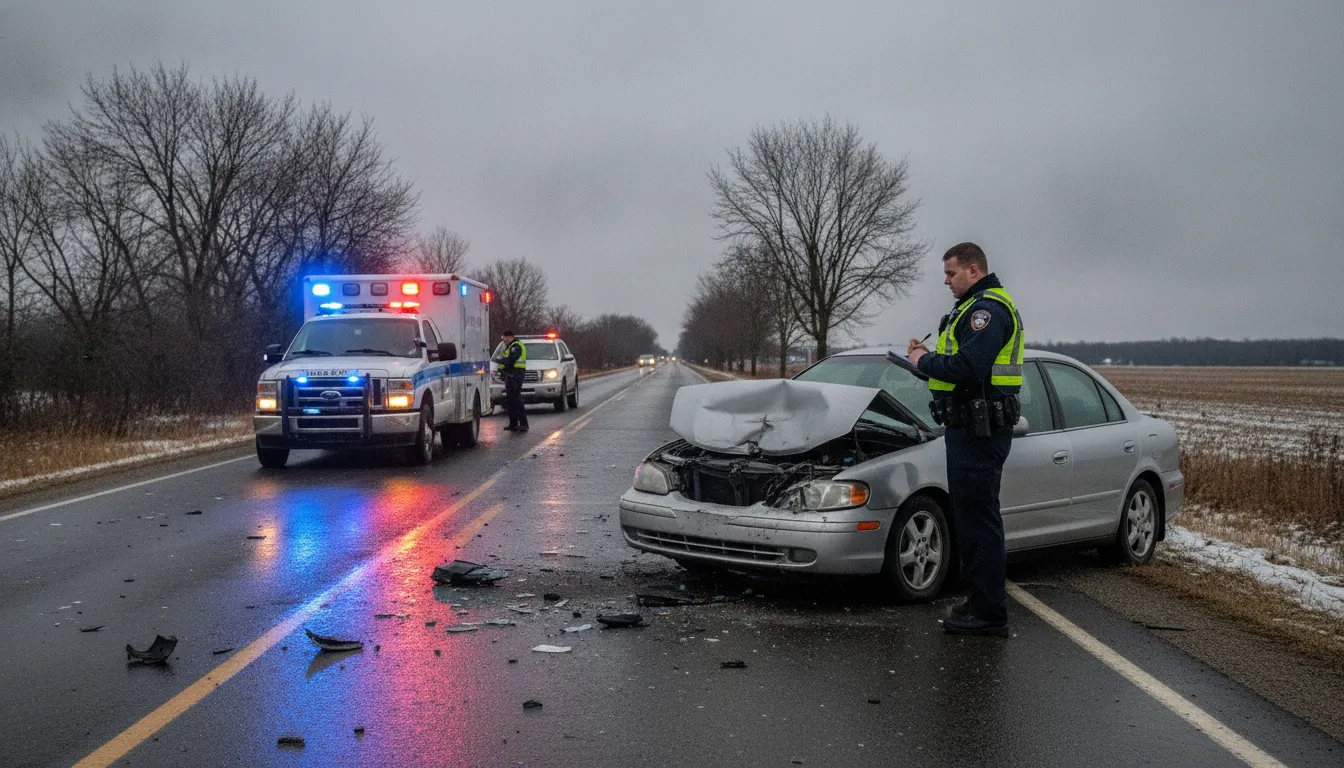
Michigan’s minimum liability limits can be inadequate when a crash causes a serious or catastrophic injury. A severe injury may involve emergency treatment, surgery, rehabilitation, years of medical care, permanent limitations, and substantial time away from work. The fact that the other driver has insurance does not necessarily mean that the policy can fully compensate you.
UIM coverage versus UM coverage
| Feature | Uninsured Motorist (UM) | Underinsured Motorist (UIM) |
|---|---|---|
| When it applies | At-fault driver has no liability insurance | At-fault driver has insurance but limits too low |
| Common scenarios | Hit-and-run, uninsured driver, phantom vehicle | Minimum-limit driver, policy exhausted by bills |
| Who you claim against | Your own insurance company under your policy | |
| Coverage limit | Up to your selected UM limit | UIM limit minus at-fault driver’s liability limit |
Uninsured motorist (UM) coverage and UIM coverage respond to different insurance problems:
- UM coverage: applies when the at-fault driver has no insurance, including many hit-and-run situations when the driver cannot be identified.
- UIM coverage: applies when the at-fault driver has insurance, but the liability limits are too low to cover the full value of your claim.
Both types of coverage are claims against your own automobile policy, not automatic guarantees of payment. The policy language, available limits, evidence of damages, and coordination with the at-fault driver’s insurer all matter. Before accepting a settlement or signing a release, review the policy carefully and consider obtaining legal advice. A settlement that exhausts the other driver’s coverage may affect your ability to pursue the remaining UIM benefits. Serious injuries from these crashes can be life-altering, which is why our firm handles wrongful death claims and catastrophic injury cases across Michigan.
What Does Michigan Law Require for UM/UIM Coverage?
Michigan law does not require every driver to purchase uninsured motorist (UM) or underinsured motorist (UIM) coverage. Instead, under MCL 500.3163, an auto insurer must offer this coverage to its policyholders. You may accept it, or reject it in writing. That distinction matters when evaluating Michigan uninsured motorist claims after a serious crash.
UM/UIM coverage is therefore optional, but it is not automatically irrelevant if you do not remember choosing it. Insurance applications and policy renewals can contain multiple coverage selections, and many drivers do not realize that they declined UM/UIM protection. The Michigan Department of Insurance and Financial Services identifies uninsured motorist coverage as an optional automobile coverage, rather than a mandatory part of the state’s no-fault system. Review the Michigan auto insurance guide for the distinction between required and optional coverages.
Where should you look for UM/UIM coverage?
Start with the declarations page for the policy that covered you when the collision occurred. Look for separate entries labeled “uninsured motorist,” “underinsured motorist,” “UM,” or “UIM.” Check both the coverage limits and whether the coverage applies to bodily injury. If you cannot find a clear answer, request the complete policy, including endorsements, from the insurer or agent. Do not assume that a missing label means you have no potential claim.
The declarations page is an important starting point, but it is not always the final answer. A coverage dispute may turn on the policy’s definitions, exclusions, notice provisions, arbitration language, and other terms. Michigan Supreme Court precedent recognizes that the specific language of the insurance contract can govern disputes about UM coverage and the amount recoverable. Read the Michigan Supreme Court decision addressing policy language before treating a denial or limitation as conclusive.
Because the insurer that issued your policy may also be the company evaluating your claim. Preserve the policy documents and obtain advice before signing a release or accepting a payment. A careful review can help determine whether the written rejection was valid, what limits apply, and how the policy responds to the facts of the crash. This is where understanding how uninsured motorist coverage may apply after a crash becomes critical to protecting your rights.
What Damages Are Recoverable in a Michigan UM/UIM Claim?
UM/UIM coverage is intended to provide access to damages you may have been entitled to recover from the at-fault driver. Even when that driver had no insurance or not enough coverage. The exact benefits depend on the language of your policy and the facts of the crash. Because Michigan is a no-fault state, your PIP benefits may address certain medical expenses and economic losses, while a UM/UIM claim may address additional losses and noneconomic harm.
Depending on the policy, evidence, and legal requirements that apply, several types of damages may be recoverable. Depending on your specific situation, these include:
- Excess medical expenses: Reasonable and necessary medical bills or related treatment costs that are not fully covered by available PIP benefits or other insurance.
- Lost wages and earning capacity: Income lost during recovery, and in appropriate cases, the reduced ability to earn income in the future.
- Replacement services: The cost of obtaining necessary help with household or personal activities when injuries prevent you from performing them.
- Pain and suffering: Physical pain, discomfort, and the limitations caused by the injury.
- Emotional distress: Psychological effects such as anxiety, trauma, or the emotional burden associated with a serious collision.
- Loss of enjoyment of life: The ways an injury interferes with activities, relationships, independence, and routines that previously brought meaning or enjoyment.
UM coverage generally addresses damages that could have been recovered from an at-fault driver who carried no liability insurance. A policy may impose conditions, exclusions, limits, or procedures that affect what can be claimed, so the declarations page and complete policy should be reviewed carefully. The available amount is not determined by medical bills alone. Documentation of treatment, wage loss, daily limitations, and the injury’s effect on your life can all matter.
Can passengers bring a UM/UIM claim?
Yes, a passenger injured in a vehicle with UM coverage may also have a claim, depending on the policy and the circumstances. Coverage questions can become complicated when the injured passenger is riding in the insured vehicle, another vehicle, or a vehicle involved in a hit-and-run. Learn more about uninsured motorist coverage for passengers and the issues that may affect a passenger’s rights.
Before accepting an insurer’s valuation, compare the proposed payment with the full scope of your losses and the policy’s requirements. A careful review can help identify damages that were overlooked or improperly treated as part of basic PIP benefits. If the injury resulted in the loss of a loved one, an experienced attorney can help you pursue the compensation your family deserves through a wrongful death claim in Michigan.
Steps to Take After a Hit-and-Run or Accident With an Uninsured Driver
A hit-and-run or crash involving an uninsured driver can leave you managing injuries, vehicle damage, and difficult insurance questions at the same time. These steps can help protect your health, preserve evidence, and support a potential UM claim.
- Get to safety and call 911. Move away from traffic if you can do so safely. Request medical assistance for anyone who is injured and ask police to respond. Even if your symptoms seem minor, accept an evaluation when recommended. Some crash-related injuries become more noticeable later.
- Gather evidence at the scene. Take photographs or video of the vehicles, damage, roadway, debris, traffic controls, and visible injuries, if doing so is safe. Get names and contact information for witnesses. If you have a dashcam, save the relevant recording before it is overwritten. In a hit-and-run, write down everything you remember about the other vehicle, driver, direction of travel, and time of the crash.
- Report the accident to police and obtain the case number. Give a factual account without guessing about details you do not know. Ask how to obtain the report and record the incident or case number. The police report may help document the hit-and-run, identify a driver later, and establish when and where the accident occurred.
- Notify your own insurance company about a possible UM claim. Tell the insurer promptly that you may need to make a claim under your uninsured motorist coverage. Michigan law requires notice to your insurer within one year of the accident for a potential UM or UIM claim, according to Michigan UM/UIM claims guidance. Do not assume that waiting for the police investigation or your medical treatment eliminates this deadline. You can also review our guide to filing Michigan uninsured motorist claims.
- Preserve every relevant record. Keep medical records, bills, prescription information, wage-loss documentation, repair estimates, photographs, the police report, witness communications, and all letters or emails from insurers. Avoid deleting texts, dashcam files, or social media posts related to the crash. A complete timeline can be important when the insurer questions the claim.
- Speak with an experienced Michigan personal injury attorney before giving a recorded statement. Your insurer may ask for a recorded account or request documents before it evaluates the claim. An attorney can help you understand the policy, prepare for communications, and identify issues involving fault. Coverage, or damages before you make statements that could be taken out of context.
Prompt action matters, but you do not have to navigate the insurance process alone. Keep copies of everything you send and receive, and ask questions before signing a release or accepting a settlement offer.
How an Experienced Michigan Attorney Can Help With Your UM/UIM Claim
After a serious crash, your own insurer may become the company evaluating a claim under your uninsured or underinsured motorist policy. That does not mean the process is simple or automatic. Insurance companies have adjusters, claims professionals, and defense counsel whose job is to examine coverage, challenge damages, and limit the amount paid. Their evaluation is not necessarily the final word on what your policy provides or what your injuries are worth.
Interpreting the policy and proving the claim
An attorney can review the policy language, declarations page, endorsements, exclusions, notice provisions, and any consent-to-settle requirements that may affect the claim. UM/UIM disputes often turn on the specific wording of the policy, so a careful review matters. Counsel can also organize the evidence needed to prove liability and damages, including medical records. Wage information, testimony about daily limitations, and documentation of future needs when the injury is severe.
Negotiating with the insurer
Your lawyer can communicate with the insurer and respond to requests for information without leaving you to manage a complicated dispute while recovering. That includes presenting a supported demand, addressing arguments about fault or preexisting conditions, and explaining why the available coverage should apply to the losses caused by the crash. An attorney can also help protect your position when the insurer makes an offer that does not fairly account for the full impact of your injuries.
Preparing for arbitration or litigation
If negotiations do not resolve the claim, preparation should not begin at the last minute. An experienced attorney can assess the policy’s dispute-resolution provisions, preserve evidence, develop the damages case, and prepare for arbitration or litigation when appropriate. The goal is to make informed decisions based on the policy, the evidence, and the actual consequences of the injury, not pressure or guesswork.
At Atnip & Associates, our attorneys bring experience from both personal injury litigation and insurance defense. We understand how insurers evaluate and defend claims from the inside, while still giving injured people direct, personalized attention. If you need help with a Michigan car accident claim, our boutique firm will treat your situation as personal, not as a file in a volume system. Schedule a free consultation to discuss your options. There is no fee unless we win.
Frequently Asked Questions
What is the difference between uninsured and underinsured motorist coverage?
Uninsured motorist coverage may apply when the at-fault driver has no liability insurance. Underinsured motorist coverage may help when that driver has insurance, but the available liability limits are not enough to address your covered damages. The exact protection depends on your policy language and applicable limits.
How can I tell whether I have UM or UIM coverage?
Review your auto policy declarations page for uninsured motorist and underinsured motorist coverage, including the limits and any selections or exclusions. Michigan insurers must offer uninsured motorist coverage as an optional add-on, but Michigan law does not require every driver to purchase it. If the paperwork is unclear, request a complete copy of the policy and ask an attorney to review it.
Can passengers make an uninsured motorist claim?
A passenger injured in a crash may have potential claims under applicable insurance policies, including coverage connected to the vehicle or the passenger’s household. The answer depends on who was injured, the vehicles involved, the available policies, and the policy terms. Passengers should preserve medical records and avoid assuming that the driver’s insurance analysis answers every coverage question.
What should I do after a hit-and-run crash?
Move to safety, call 911 when appropriate, obtain medical care, and report the incident to law enforcement. Record the time, location, vehicle description, witnesses, photographs, and any available video. Notify your insurer promptly, preserve damaged property and records, and have the policy reviewed before accepting a coverage decision. UM disputes are often controlled by the specific language of the insurance policy, as recognized in Michigan case law.
Schedule a Free Consultation About Your UM/UIM Claim
Understanding how your policy may respond after a crash can help you make informed decisions about your next steps. Schedule a free consultation with Atnip & Associates, PLLC to discuss your situation with a Michigan personal injury attorney. There is no fee unless we win. Call 248-599-1607 to schedule your consultation.
