

Evidence hidden in a truck’s digital log often settles disputes about who caused a serious Michigan crash. These files tell the truth even when the trucking company tries to hide it.
Call Atnip & Associates at 248-599-1607 or contact the firm for a free consultation.
Getting truck black box evidence michigan is key because these digital recorders save technical facts like speed and braking patterns in the seconds before a deadly crash. According to the National Highway Traffic Safety Administration, thousands of people die in truck accidents every year. Most of those killed in these collisions are people in smaller passenger vehicles rather than the truck drivers themselves. This digital data provides clear facts that help prove fault under Michigan laws to ensure fair payments for victims and their families after a crash. Because trucking companies may erase this data within weeks, our legal team acts fast to send a legal notice to the carrier to protect your rights.
Many families worry about how they can prove a truck driver was negligent when there are no witnesses. We often explain What truck black box evidence can reveal in Michigan to help clients understand their rights. The path to holding the carrier at fault begins with
Truck Black Box Evidence Michigan: What truck black box evidence can reveal in Michigan
When a large truck is involved in a crash, the electronic systems inside the vehicle can tell a detailed story. Most commercial trucks use an Electronic Control Module (ECM) to track the engine and other parts. People often call this system a “black box.” This tool can provide truck accident evidence that is hard to find anywhere else. For many victims, truck black box evidence in Michigan gives a clear look at how the truck was moving in the moments before a wreck.
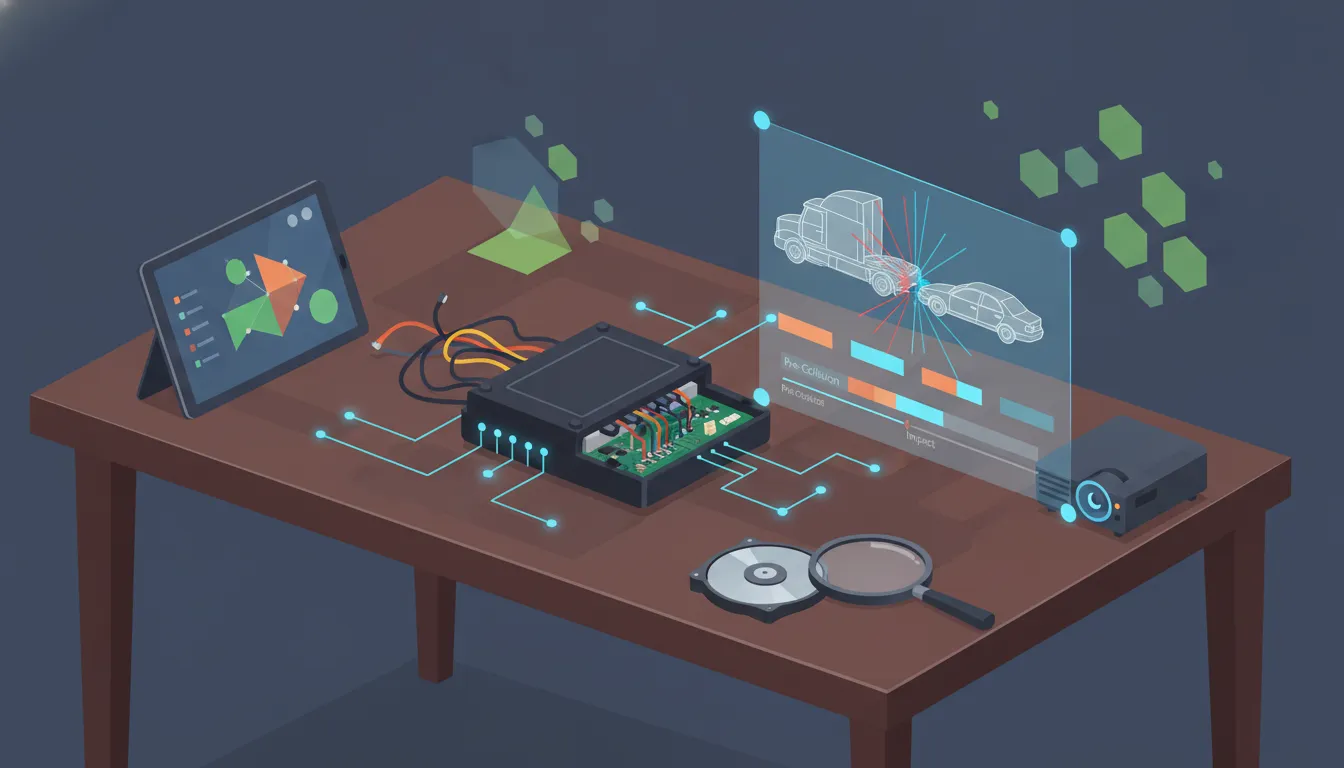
Technical data from the electronic control module
The ECM acts like a brain for the truck. It tracks how the engine runs and how the driver handles the vehicle. In many cases, it records data from the five to ten seconds before a hit. This shows if the driver was doing their job or if they were taking a break. It records things like the throttle position and the engine speed. These facts help tell if the truck was under control.
This data can also show how fast the truck was going and if the driver tried to stop. Based on federal safety data, thousands of trucks are in fatal wrecks each year. Getting this data is a key part of trucking accident investigations. Without it, it can be hard to prove what the driver did right before the crash. The ECM makes it harder for a trucking company to hide the truth.
A black box can also show if the truck had mechanical issues. It may record if the truck was too heavy or if certain safety tools were broken. For example, it might show if the headlights were on or if the seatbelts were in use. This data helps lawyers see if the truck was safe to be on the road. It can also find out if the truck driver followed all safety rules before the crash happened.
How black boxes record truck speed and braking
Speed is a big factor in most semi-truck wrecks. The black box records the truck’s speed at the time of the hit. It can also show if the driver was speeding in the seconds before the crash. This is vital because high speeds make it much harder for a heavy truck to stop. Data from these devices shows if a driver was careful or if they were taking risks on the road.
The system also tracks steering and braking. It can show if the driver tried to swerve to avoid a hit. It also records if the driver pressed the brake pedal and how hard they pushed it. This info can prove if a driver was distracted or if they tried to stop the accident. It helps experts know if the driver saw the danger in time to act.
Under Michigan law, you must provide proof of fault to get help with pain and suffering after a crash. Black box data provides the clear facts needed to build a strong claim. It can stop a case from being one person’s word against another. The data gives a solid record that everyone can trust when looking at the crash.
Why expert analysis is needed for truck data
While a black box holds a lot of info, it is not always easy to read. The data is technical and needs an expert to explain it. Accident reconstruction experts use this data to build a model of the crash. They can see how the truck moved and how it hit other cars. This helps them show exactly how the wreck took place in a way that is easy to see.
Without an expert, the data might not be useful in court. The NHTSA reports that many truck crashes cause serious harm to people in smaller cars. Using data to show what happened is key to getting justice for those who are hurt. Experts can link the data to the scene of the crash to tell the full story.
You must act fast to save this evidence. Trucking firms often wipe this data after a few weeks. If the truck is fixed or put back on the road, the data could be lost forever. A law firm can send a letter to make sure the company keeps the black box. Quick action makes sure that the truth about the crash is not lost or hidden by the trucking firm.
How can black box data help show what caused a crash?
When a semi-truck crashes, the scene is often messy and unclear. Truck black box evidence in Michigan gives lawyers a clear way to see what happened. These tools, called Electronic Control Modules, act as a digital witness that does not forget or lie. This data helps experts build a clear picture of the crash and is vital for cases about truck accident evidence.
Facts over human memory
People often have other stories after a bad crash. A truck driver might say they were not speeding, but black box data provides facts that do not change. It can disprove false claims made by the driver or the trucking company. This fact-based proof is hard to argue with in a courtroom.
In many trucking accident cases, the data shows exactly what the truck was doing. It records if the driver used the brakes or steered to avoid a hit. This helps clear up any doubt from witness statements. Since 2022, data shows that most fatal truck crashes happen on weekdays, and having a digital record helps prove the facts of the hit.
Rebuilding the moments before impact
The Electronic Control Module keeps track of several key data points. It records the speed of the truck and how hard the driver hit the brakes. It also tracks steering moves and if safety tools like lights were on. This technical data helps experts see if a machine failure or driver error caused the crash.
Data can even show if the truck was too heavy or had bad parts. This is why you must act fast to save files that companies might delete. Based on data from the NHTSA, a large truck is any vehicle over 10,000 pounds. These heavy vehicles can cause great harm, so knowing their exact speed at impact is vital.
Proving fault in Michigan truck cases
In Michigan, you must show who was at fault to win a claim for pain and suffering. This is part of the law under MCL 500.3135. Black box data is a key tool to prove that the driver’s choices led to the crash. Without this proof, it can be hard to meet the legal bars needed for a claim.
Michigan also uses a rule called comparative fault. This means your pay can be cut if you are partly to blame for the crash. Black box data helps set the right fault levels for each party by giving a fair look at how the crash happened. This helps ensure that the legal process is fair for the injured person and their family.
How is truck black box evidence preserved and obtained?
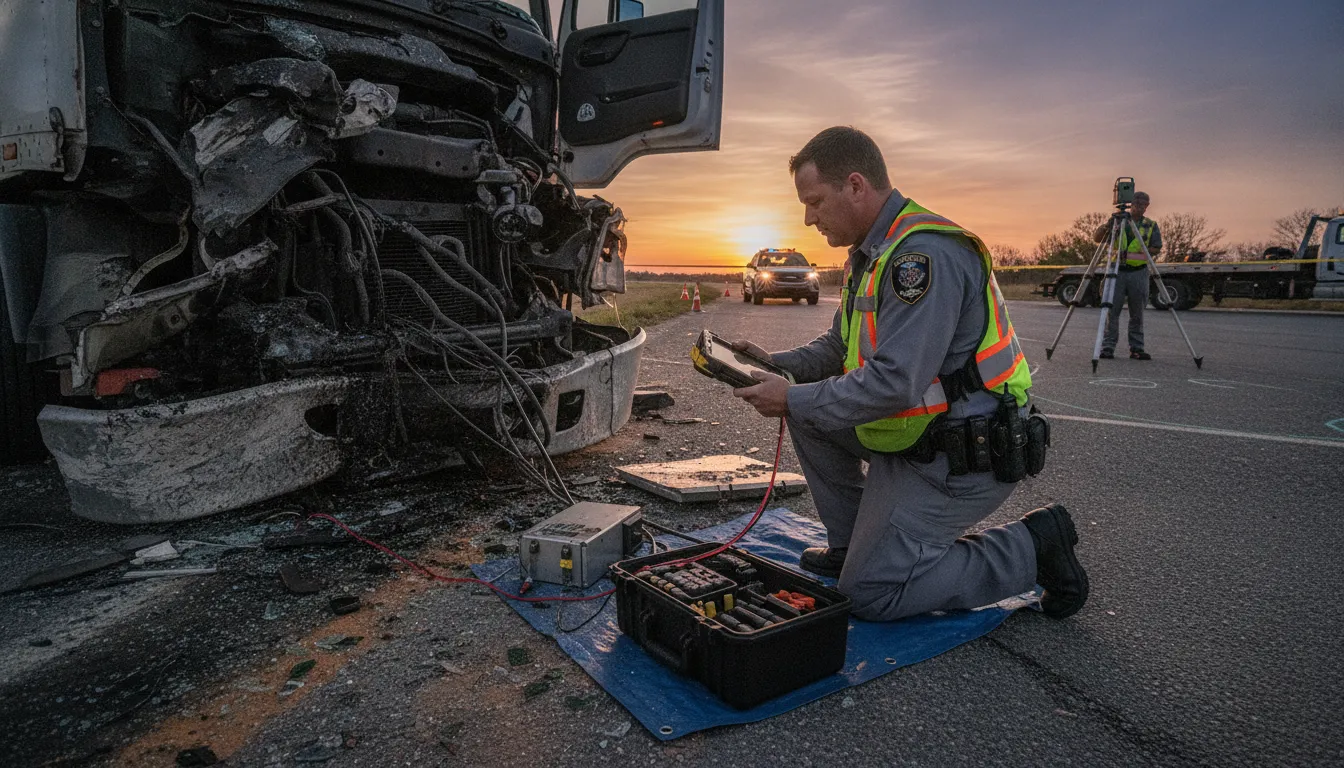
Truck black box data is fragile. It can be lost or changed if you do not act fast. To build a strong case for truck accident evidence, you must secure the data soon after the wreck. This data gives a clear picture of what the truck was doing in the seconds before a crash.
Protecting data from loss
Many large truck accidents in the U.S. lead to complex legal fights over who is at fault. Trucking firms may overwrite or delete black box data during their normal work. If the truck goes back on the road, new data will replace the old records. You need to start legal steps to keep this evidence safe from being lost forever.
The legal path to retrieval
Getting this data is not a simple task. It requires a formal process to ensure the courts can use it. Your legal team must use specific tools to make the trucking firm hand over the hardware or the digital files. This often involves filing a lawsuit so you can use the power of the court to get the proof you need.
- Send a preservation letter. This is a formal notice to the trucking firm. It tells them they must not destroy or change any data related to the truck. This letter is the first step in avoiding the loss of key proof.
- File for discovery. Once a legal case starts, you can use discovery rules to ask for the data. This makes the trucking firm give you access to the logs and other digital files.
- Hire an expert. A qualified expert must download the data using specialized tools. The accuracy of black box data for reconstructing a crash depends on how quickly it is secured.
- Keep a clear log. Every person who handles the data must be tracked. This ensures the proof is not tampered with. It proves to the court that the data is the same as it was at the crash scene.
- Analyze the findings. An expert looks at the speed, braking, and steering data. This helps show if the driver’s actions caused the commercial truck accidents.
Why expert help matters
Downloading data from a truck is much harder than getting it from a car. You need a team that knows how to work with the systems used by big truck brands. They must also know how to prevent the loss or destruction of evidence. Having the right pros on your side helps ensure you get a full and fair look at the facts.
Black box data compared with other truck crash evidence
When you are hurt in a large truck crash, finding out what happened is the first step to getting help. Black box data is key, but it is not the only piece of the puzzle. In Michigan, you must show who was at fault to seek a third-party claim for pain and suffering under MCL 500.3135. To do this, legal teams look at many types of proof to build a full picture of the wreck.
The power of digital records
A truck’s black box, or Electronic Control Module (ECM), gives a clear look at the truck’s speed and braking just before a crash. While these records are firm facts, they work best when matched with dashcam video or GPS logs. Dashcams can show road conditions and light signals that the ECM does not track. Using these tools together helps show if a driver made an unsafe move on the road.
Physical and human evidence
Physical proof at the scene, such as tire marks and vehicle damage, tells part of the story. Experts use these marks to check the tech data from the truck. Human witness words also add context that machines cannot feel or see. When you look at truck accident evidence, you see how each piece helps the others to form a strong case.
Comparing key evidence sources
Each source of proof has its own strengths and limits. No single file can tell the whole story of a crash. This table shows how different types of trucking accident investigations use varied data to find the truth.
| Evidence Type | What It Shows | Key Strength |
|---|---|---|
| Black Box (ECM) | Speed, braking, and steering moves | Technical facts |
| Dashcam Video | Road conditions and signals | Live visual proof |
| Logbooks (ELD) | Driver hours and rest breaks | Shows driver tiredness |
| Scene Evidence | Skid marks and point of hit | Checks digital data |
| Fleet Records | Truck repair and shop history | Finds part failures |
Why multiple sources matter
Trucking firms often have large teams to protect their interests after a crash. They may try to say the crash was your fault to cut what they owe. Under Michigan comparative fault rules, your payout can go down if you are partly to blame. This is why having many types of proof is so vital. One source might show the truck was speeding, while another shows the driver was too tired to act.
How truck data fits into a Michigan accident claim
Michigan law for truck crashes is complex. You must know how the state handles injury cases. There are two main paths for people who get hurt. One path gives you basic help for bills and lost pay. The other path lets you seek more for your pain. Truck data is key to winning these cases.
Fatal crashes often involve other cars. In 2022, seventy percent of people killed in truck wrecks were in other cars. These crashes cause deep loss for families. A joint look at all data is the only way to find the truth. Our firm treats every case as personal to help you heal.
No-fault versus third-party claims
In Michigan, most drivers have no-fault insurance. This covers costs for care after a wreck. It pays these bills no matter who caused the crash. But these benefits have limits. They do not pay for your pain or loss of life quality. To get that, you must file a third-party claim.
You must prove another person was at fault for a third-party claim. Michigan law says you must show the other driver was at fault. You also need to show a serious injury. This is called the serious impairment threshold. ECM data shows if a truck driver was speeding or braking. This hard proof helps you meet the legal bar for your case.
Third-party claims cover more than just medical bills. They can help with the mental toll of a crash. When you face life-long harm, you need every bit of help. High-quality truck accident evidence makes your claim much stronger. We work fast to save this data before it is lost.
The role of comparative fault
Michigan uses a rule called comparative fault. This rule means the court looks at what all drivers did. Your payment can go down if you were partly at fault. For example, if you were 20 percent at fault, you get 20 percent less money. A black box can prove you did nothing wrong.
The truck’s black box gives a clear look at the crash. It shows exactly what the truck was doing at the time. This data can stop the other side from blaming you. It provides a true record that is hard to fight in court. Accurate data helps ensure you get the full amount you need to heal.
Without this data, it is just your word against the driver. Trucking firms often have big legal teams to fight back. They may try to say you caused the crash. Objective data from the truck stops these claims cold. It helps the jury see the facts of the case.
Finding the parties at fault
Many people may be at fault in a truck crash. It is not just about the driver. The trucking company might have skipped safety checks. A mechanic could have made a mistake. Even the person who loaded the truck could be to blame. Finding these parties takes deep work.
A fast look at the truck data can point to the right people. If the data shows a part failed, the maker may be liable. If the driver worked too many hours, the company is at fault. These trucking accident checks look for every source of help. Our team works to find every party at fault.
Trucking firms must keep good logs. Black box data can show things they might try to hide. For instance, it can show if a driver was too tired. It can also show if the truck was too heavy. We use this data to build a strong case for you. Our firm knows how to fight for your rights.
What are the limits of truck black box evidence?
While truck black box evidence is very helpful, it is not a perfect record of every crash. Many people think these tools show a full picture of what happened, but that is not always true. These systems have technical and legal limits that can change how your case moves forward. In Michigan, you must show proof of fault to seek money for pain and suffering under MCL 500.3135. This means your lawyer needs more than just a data sheet to win your claim.
Technical data varies by truck
Not all trucks use the same type of black box. Some newer semi-trucks record many types of data, like how hard the driver hit the brakes or the angle of the steering wheel. Older trucks might only record a few basic things. The year and brand of the truck matter a lot. For example, some units only log data when a “hard brake event” occurs. If the crash did not trigger a high enough force, the box might not save any data at all. This lack of data can make truck accident evidence harder to find.
There is also no single rule for what a black box must record. The data fields can be quite different from one truck to the next. One might show engine speed and oil pressure, while another shows GPS location and lane drift. This is true for all large trucks, which include vehicles with a weight rating over 10,000 pounds, as defined by the NHTSA. If the truck does not have a sensor for a specific part, those details will be missing. You cannot assume every truck on the road tracks the same points.
The risk of lost or erased data
Time is a major limit for black box evidence. These systems often work on a loop. This means old data gets erased to make room for new data as the truck keeps driving. If a trucking firm does not pull the data right away, it may be lost for good. In some cases, the data is only stored for a few weeks or until a certain number of miles are driven. This is why you must act fast to save the evidence before it vanishes.
Sometimes, the box itself gets hurt in the crash. High heat, fire, or heavy impact can break the sensors or the memory chip. If the parts are broken, getting the data out may be too hard or not possible. Even if the box is fine, the cables and ports needed to download the data can be crushed. When this happens, the data is often lost for the case. Trucking firms might also overwrite data if a lawyer does not send a notice to save it right away.
Why experts are needed to read the data
Black box data is not easy to read. It often looks like a long list of numbers and codes. You need a trained expert to download and explain what those numbers mean. A simple number on a screen does not tell the whole story. For instance, a speed reading might be wrong if the truck tires were the wrong size or if the sensors were not set right. This is called a calibration issue. Experts must check these facts to ensure the data is right.
Experts also look at the context of the data. A black box might show that a driver braked hard, but it will not show why. It cannot see if a car cut the truck off or if there was ice on the road. Lawyers and courts should not treat data as a final answer. Instead, they must look at it alongside witness stories, police reports, and scene photos. Data is a tool, but it still needs a human touch to be useful in a Michigan crash claim. Without expert help, the raw data can be confusing or even misleading.
What should you do after a Michigan truck crash?
A crash with a semi-truck is a major event that can leave you in shock. Your body might hide pain for hours or days because of the stress. Do not wait for the pain to get worse before you see a doctor. Go to a clinic right away to find any hidden wounds.
Doctors can find things like brain harm or inside bleeding that you cannot see. Getting help fast is good for your health and your legal rights. It shows the crash caused your wounds. At Atnip & Associates, we want you to have the best care. We also know that a doctor’s record is the base of your claim for help.
Seek medical care right away
Even if you feel okay, you must get a full checkup. Truck crashes involve a huge force that the human body is not built to take. Small aches can turn into life-long issues if you do not treat them now. A doctor can give you a plan to heal and proof of your hurts for your case.
This proof is vital when you ask for money to cover your bills. Insurance firms often try to say that wounds were already there. A quick visit to the ER or your doctor proves the crash caused the harm.
Gather facts and photos at the crash site
If you can move safely, start to record the scene. Use your phone to take photos of the truck and your car from many angles. Show where the crash happened on the road. Photos of skid marks, broken glass, and road signs are also helpful.
- Take photos of all vehicle damage.
- Show the road state and traffic signs.
- Get names of the driver and people who saw it.
- Do not sign any papers from the truck company.
Try to talk to people who saw the crash. Ask for their names and how to reach them later. Do not talk about whose fault it was with the truck driver or their company. Just get their insurance info and license plate numbers. These facts are part of the truck accident evidence we will use to fight for you. Under Michigan law, you must prove fault to get money for your pain, so every detail counts.
Secure the truck black box evidence
The most vital proof is often hidden inside the truck. Most large trucks carry a device known as an Electronic Control Module (ECM). Many people call this a “black box.” It tracks how the truck was moving in the seconds before the crash. It can show if the driver was speeding or if they hit the brakes at all.
This truck black box evidence michigan experts use can be lost fast. Trucking firms often keep their trucks on the road. If the truck keeps driving, the black box may write over the data from your crash. This is why you need a lawyer to act quickly. We can send a legal notice to the truck company to stop them from losing this proof.
Reach out to a lawyer who cares
Truck crashes are not like small car bumps. They involve big companies with lots of money and lawyers. You should not face them alone while you try to heal. A lawyer can take over the talk with insurance firms for you. We can hire experts to read the black box data and show what really happened.
At our firm, we treat you like a person, not a file. We will guide you through each step and make sure you know your rights. We work on a fee that is paid only if we win. Taking quick steps now can protect your rights for years to come.
Questions about preserving digital truck evidence? Schedule a free consultation with Atnip & Associates.
Frequently Asked Questions
Can a black box prove who is at fault?
Yes, black box data is a key tool to show fault because it gives real facts about speed and braking before a crash. This info can show if a driver was at fault for the accident. Based on Michigan law, you must prove fault to seek money for pain and suffering. Real data from the truck computer helps prove these claims. It does not rely only on what people say they saw, which makes the case much stronger.
What data does a truck black box record?
A truck black box tracks many details such as how fast the truck was going and when the driver hit the brakes. It also records steering moves and can even show if the lights were on at the time of the crash. Per truck crash data, these tools grab info from the seconds right before an impact. This proof helps experts show how the wreck happened. It is hard to argue with facts from the truck itself.
Are truck companies required to preserve black box data in Michigan?
Truck firms must keep some records, but data is often lost because the black box may write over old info during a normal trip. You must act fast to save this proof or the firm might delete or record over the data. Sending a legal notice right away is the best way to protect your rights. Based on legal research, quick action is vital. It stops the firm from wiping out key proof after a crash.
How do black boxes affect comparative fault in Michigan?
Michigan law uses a comparative fault rule, which means your payout may be less if you helped cause the crash. Black box data helps by giving fair proof of what happened instead of just hearing what people recall. Under Michigan fault rules, this data can change how much each side is blamed. It helps make sure the truck driver is held to blame for their part of the crash since this proof is much better.
Talk with a Michigan truck accident lawyer
Truck data can help explain a devastating collision, but preserving and interpreting it may require prompt, coordinated work. Atnip & Associates provides compassionate, personalized guidance to injured people and families throughout Michigan. For others, it is just another case. For us, it is personal.
Call 248-599-1607 or schedule a free consultation to discuss the evidence that may matter in your claim. There is no fee unless we win.
