

—
title: ‘Head-On Collision Lawyer Michigan: What to Do Next’
metaTitle: ‘Head-On Collision Lawyer Michigan: What to Do Next’
description: >-
Head-on collision lawyer Michigan guidance on medical care, No-Fault benefits,
fault evidence, serious injuries, and choosing counsel after a severe crash.
excerpt: >-
Head-on collision lawyer Michigan guidance on medical care, No-Fault benefits,
fault evidence, serious injuries, and choosing counsel after a severe crash.
subtitle: >-
Head-on collision lawyer Michigan guidance on medical care, No-Fault benefits,
fault evidence, serious injuries, and choosing counsel after a severe crash.
slug: head-on-collision-lawyer-michigan-guide
image: >-
https://zleague-public-prod.s3.us-east-2.amazonaws.com/article_images/a6a9fdab-7864-469e-be3a-503ee208ea0a/head-on-collision-lawyer-michigan-what-to-do-next-717035.webp
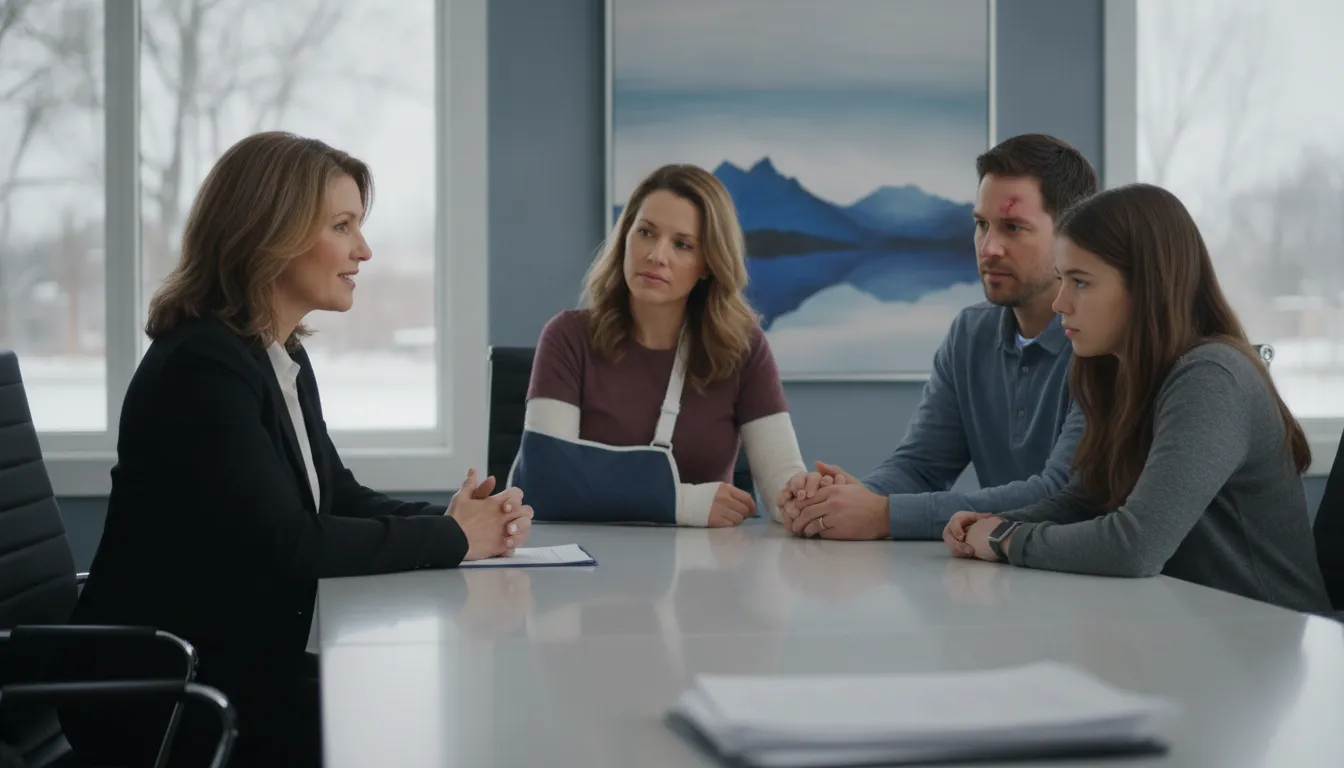
imageAlt: Family consulting a head-on collision lawyer Michigan after a serious crash
targetKeyword: head-on collision lawyer Michigan
—
A head-on crash can leave a Michigan family facing emergency treatment, missed work, vehicle damage, and difficult insurance questions. If you are looking for a head-on collision lawyer Michigan residents can turn to, begin with the practical priorities: get medical care. Preserve information, protect your insurance rights, and avoid guessing about fault before the evidence is reviewed.
Call 248-599-1607 to schedule a free consultation about your Michigan head-on collision.
What should you do immediately after a head-on collision in Michigan?
Your first responsibility is safety, not building a claim. If you can do so without worsening an injury, move away from traffic and follow emergency personnel instructions. Call 911 when anyone may be injured, and accept medical evaluation even if symptoms seem manageable. Head-on impacts can produce injuries that are not obvious at the scene, including concussion symptoms, internal injuries, fractures, and spinal or neck trauma.
When it is safe, make a short record of what happened. Do not speculate that you caused the crash, and do not argue with the other driver. Instead, preserve information that may disappear:
- Move to safety and call 911 if anyone may be injured.
- Get medical evaluation and follow the treatment plan.
- Preserve photographs, witness details, reports, and insurance records.
- Speak with a qualified Michigan attorney before signing a release or giving a recorded statement.
- Ask for the incident or crash report information and the names of responding agencies.
- Photograph the vehicles, roadway, lane markings, traffic controls, debris, weather conditions, and visible injuries if you can do so safely.
- Write down the names and contact information of witnesses.
- Save photographs, dashcam footage, medical discharge paperwork, prescriptions, and insurance correspondence.
- Notify the appropriate insurer promptly, but avoid a recorded statement or settlement release until you understand what is being requested.
Michigan State Police explains the state crash-reporting process through its Traffic Crash Reporting Unit. A report is important evidence, but it is not always the final answer on legal responsibility. A police report may contain an initial account, while later evidence can clarify lane position, vehicle movement, visibility, and the sequence of impact.
Why are head-on collisions especially serious?
A frontal impact can transfer substantial force to the people inside both vehicles. The injury pattern depends on speed, vehicle design, restraint use, the angle of impact, the location of the occupants, and what happened before and after the collision. A serious crash may involve more than one injury and more than one category of loss.
Common concerns include traumatic brain injury, concussion, spinal cord damage, broken bones, internal injuries, severe burns, amputations, and permanent disfigurement. Some symptoms develop gradually. A person who appears alert immediately after a crash may later experience headaches, confusion, memory problems, dizziness, sleep changes, weakness, or pain. Follow the treatment plan and tell medical providers about all symptoms, even when you are unsure they are related to the collision.
Families may also face consequences beyond the injured person’s medical bills. A serious injury can affect the ability to work, provide care, drive, maintain a household, or participate in ordinary activities. If the crash caused a death, the family may need guidance about wrongful-death rights and survivor benefits. These questions are fact-specific and should be evaluated with current Michigan law and the available insurance coverage.
Atnip & Associates handles serious personal-injury matters with a boutique, attorney-involved approach. The firm’s focus includes motor vehicle accidents and catastrophic injury claims, not just the initial vehicle damage question. Learn more about serious car accident injuries and why documentation matters when an injury changes a person’s life.
How does Michigan No-Fault insurance affect a head-on collision claim?
Michigan’s No-Fault system and a potential claim against the at-fault driver are separate parts of a collision case. No-Fault benefits may apply through the injured person’s auto policy or another policy determined by Michigan’s priority rules. A third-party claim, when available, is directed at the driver or other responsible party whose conduct caused the crash.
The Michigan Department of Insurance and Financial Services explains Personal Protection Insurance, or PIP. It can cover reasonable and necessary medical expenses subject to the coverage selected in the affected policy. PIP may also cover wage loss and replacement services for a limited period. The state’s official Brief Explanation of Michigan No-Fault Insurance describes these coverages and limits. Your own policy, the date of the crash, other available policies, and the facts of the claim all matter.
Do not treat every benefit as one general payment. Medical coverage, work-loss benefits, replacement services, and Property Protection Insurance address different losses and may involve different documentation. An insurer may request medical records, wage information, proof of services, or other support before paying a benefit. A delay or denial does not automatically resolve whether benefits are owed.
Michigan law also has time-sensitive requirements for No-Fault claims. The applicable deadline can depend on the benefit, notice, the policy, and the circumstances. Do not rely on a general internet deadline to protect a specific claim. A head-on collision lawyer Michigan families consult can review the relevant policy documents, notices, bills, wage records, and insurer communications before advising on next steps.
| Issue | What it may address | Records to preserve |
|---|---|---|
| PIP medical | Reasonable and necessary crash-related medical care, subject to the policy | Medical bills, records, referrals, and insurer communications |
| Work loss | Income-related losses covered under applicable No-Fault rules | Pay records, employer statements, and work restrictions |
| Replacement services | Help with ordinary tasks when the benefit applies | Service details, dates, and supporting records |
| Property Protection Insurance | Separate vehicle or property damage questions | Photos, estimates, towing, rental, and repair records |
How is fault investigated after a Michigan head-on crash?
Head-on collisions often raise an important question: which vehicle crossed the centerline or entered the other vehicle’s path, and why? The answer may involve a driver decision, a medical event, impairment, distraction, a mechanical failure, a roadway condition, or another contributing factor.
Responsibility should not be assumed from the damage pattern alone.
An investigation may examine:
- Crash-scene photographs, measurements, tire marks, debris fields, and vehicle resting positions.
- Police reports, witness statements, 911 calls, traffic-camera footage, and nearby security video.
- Vehicle damage, event-data information, airbag modules, maintenance records, and inspection evidence.
- Weather, lighting, roadway design, lane markings, construction activity, and visibility.
- Medical records, toxicology information when available, and testimony about the driver’s condition.
Crash reconstruction professionals may help interpret physical evidence, but expert involvement is not automatic in every matter. The right approach depends on the severity of the injuries, the dispute over fault, the condition of the vehicles, and what evidence remains available. Prompt preservation matters because vehicles may be repaired, video may be overwritten, and physical debris may be removed.
Michigan’s comparative-fault rules can affect a recovery when more than one person or entity is alleged to have contributed to an injury. The Michigan Legislature’s text of MCL 600.2959 is the authoritative source for the statute. Applying it to a specific crash requires reviewing the type of damages, the evidence, and the current law rather than reducing the analysis to a simple percentage example.
What compensation may be involved after a serious head-on collision?
A collision claim can involve several categories of loss, but the available recovery depends on the facts and the applicable insurance and liability rules. Potential issues may include medical treatment, rehabilitation, attendant care, wage loss, replacement services, property damage, future care, reduced earning capacity, and the personal effects of a serious injury. A wrongful-death matter can raise different questions for surviving family members.
No attorney can responsibly promise a settlement, verdict, or recovery amount before investigating the crash and understanding the medical outlook. Serious injury cases often require a clearer picture of prognosis and future needs. Medical records, treating-provider opinions, employment information, life-care analysis, and other evidence may be necessary to explain how the injury affects the person’s life.
For a third-party claim, Michigan law may require analysis of whether an injury meets the serious-impairment-of-body-function standard or another applicable threshold. The Michigan Legislature’s text of MCL 500.3135 should be reviewed with the facts of the claim. A diagnosis by itself does not answer every legal question, and a legal threshold should not be treated as a prediction of a particular outcome.
Property Protection Insurance is another distinct issue. Vehicle damage, deductibles, comparative responsibility, and the circumstances of the crash can affect how property losses are handled. Keep repair estimates, photographs, towing records, rental-car records, and communications with insurers.
When should you speak with a head-on collision lawyer Michigan families trust?
There is no need to wait until every medical record is collected before requesting a consultation. Early guidance can help preserve evidence, identify the policies that may apply, organize communications, and reduce the risk of an avoidable mistake. It may be especially important to speak with counsel when:
- The crash caused hospitalization, surgery, a serious fracture, brain injury, spinal injury, or permanent impairment.
- The other driver or an insurer disputes how the collision occurred.
- You received a request for a recorded statement, release, or quick settlement.
- Your PIP medical, wage-loss, or replacement-services benefits were delayed or denied.
- You are unable to work or your family must provide substantial care.
- A loved one died, or several vehicles, policies, or potentially responsible parties are involved.
Choosing counsel is not only about a firm’s name. Ask how the firm investigates serious crashes, who will be involved in the case, how it handles No-Fault issues, and how it explains fees and expenses. Atnip & Associates brings personal-injury litigation experience and insurance-defense insight to complex Michigan claims. Its attorneys can evaluate both first-party insurance issues and a potential third-party liability claim when the facts support that review.
For a broader overview of Michigan vehicle-accident representation, see the firm’s motor vehicle accident resources. Readers dealing with long-term impairment can also review the firm’s information about catastrophic injury claims.
What should you bring to a Michigan collision consultation?
You do not need a perfect file to begin. Bring whatever is readily available, including the crash report or incident number, insurance cards, policy information. Photographs, medical records, bills, wage information, witness contacts, repair estimates, and letters or emails from insurers. If you cannot gather everything, explain what is missing.
Be candid about prior injuries, medical conditions, symptoms, work history, and what you remember. Do not exaggerate, but do not minimize pain or limitations either. If you are unsure about a detail, say so. A consultation is a chance to identify questions and preserve options, not a test of your memory immediately after trauma.
Keep a simple recovery journal if your medical team agrees. Note appointments, symptoms, medication effects, tasks you cannot perform, time missed from work, and help provided by family members. These notes do not replace medical records, but they can help you and your providers discuss how the injury affects daily life.
Frequently asked questions about Michigan head-on collision claims
Do I need a lawyer after a head-on collision in Michigan?
You are not required to hire a lawyer, but a consultation can be useful when injuries are serious. Fault is disputed, benefits are delayed, or a third-party claim may be available. An attorney can review the evidence and explain options without promising a particular result.
How much does a head-on collision lawyer cost in Michigan?
Atnip & Associates describes its personal-injury representation as a contingency-fee arrangement, meaning there is no fee unless the firm wins. The consultation can address the written fee agreement, case expenses, and questions about how the arrangement applies to your matter.
Can I recover if I may have contributed to the crash?
Possibly, depending on the evidence, the type of claim, the percentage of responsibility, and the damages involved. Michigan comparative-fault law is fact-specific. Do not concede fault in an insurance statement before the crash evidence and applicable law are reviewed.
What if the other driver had no insurance?
Possible options depend on the applicable No-Fault rules, your policy, other available coverage, and the facts of the crash. Preserve your policy documents and notify the insurer as required, but request legal guidance before assuming that an uninsured-driver issue has only one solution.
Talk with a Michigan personal injury attorney
After a head-on collision, you and your family deserve clear information about medical care, insurance benefits, evidence, and possible legal claims. Atnip & Associates, PLLC serves injured people throughout Michigan with personalized attention and serious-injury experience. Call 248-599-1607 to schedule a free consultation. For others, it is just another case. For us, it is personal.
