

Physical proof can disappear within hours after a serious collision on a busy Michigan road. Preserving Michigan car accident evidence early can help document what happened and give insurers, investigators, and attorneys reliable facts to evaluate.
Schedule a free consultation with Atnip & Associates if you need help preserving evidence and understanding your options after a serious Michigan crash.
Michigan car accident evidence may include time-stamped scene photos, vehicle damage, witness contact information, medical records, torn clothing, and digital data from dashcams or event data recorders. Preserve what you safely can, keep original files, and seek prompt medical care. A lawyer can help identify evidence that may require a formal preservation request.
The moments after a collision are chaotic. Safety and medical care come first. Once those immediate needs are addressed, the following steps can help preserve facts that may matter to an insurance claim or legal case.
Michigan car accident evidence to preserve first
Proof is the linchpin of any car accident case. You must act fast to protect your legal rights after a crash. Michigan car accident evidence can vanish in just a few hours. Rain can wash away skid marks. Cars are towed and repaired. If you are hurt but stable, start saving proof right away. Gathering facts now will help you deal with insurance companies later.
Record the crash site with photos
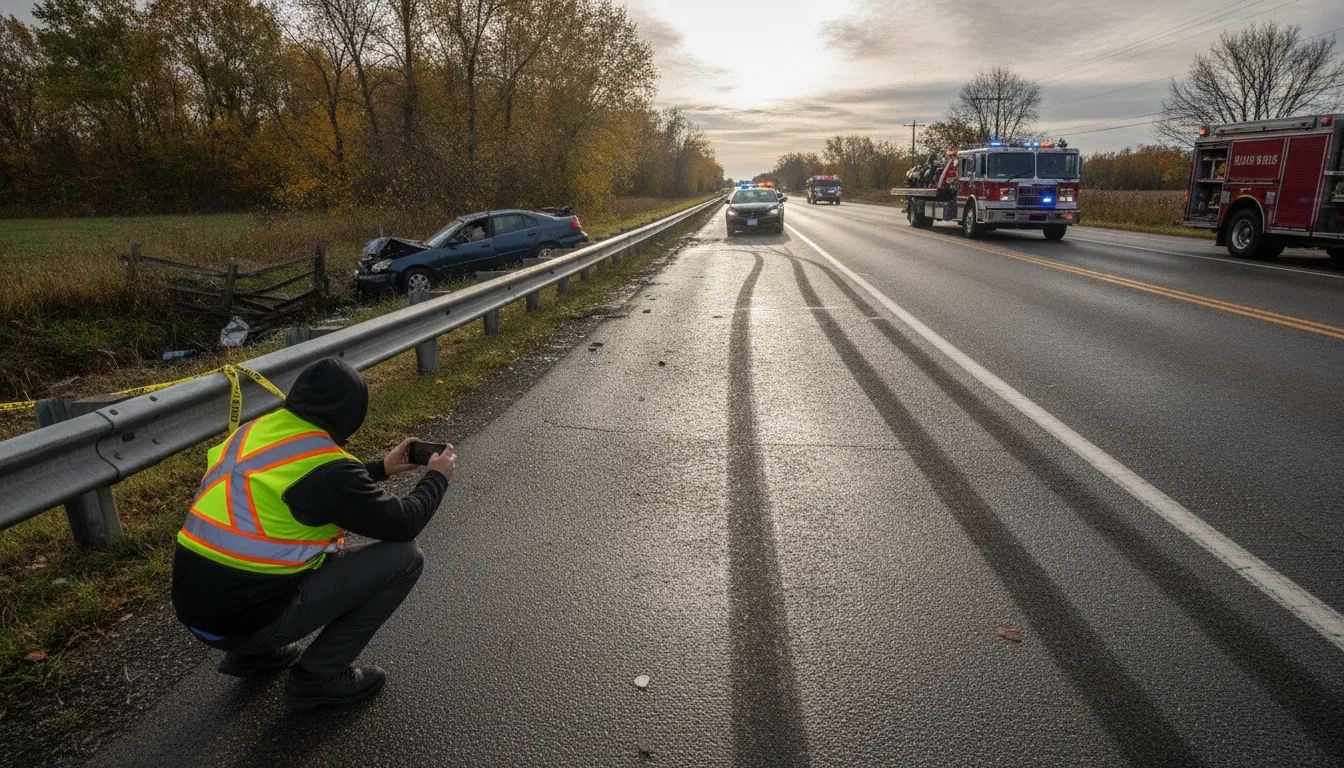
Use your phone to take clear photos of the whole scene. Capture the damage to all cars from many angles. Look for skid marks on the road. These marks help experts show how fast cars were moving. They show when a driver tried to brake or if they did not stop at all. Also, take shots of traffic lights, stop signs, and any road hazards like deep potholes or poor signs.
Time-stamped images provide a clear record of the area. They reduce disputes about the weather or light at the time of the crash. If any car has a dashcam, save that video now. Video is some of the most reliable proof for strengthening a car accident claim. Do not forget to back up your files to the cloud so you do not lose them.
Find witnesses and other drivers
Talk to anyone who saw the crash happen. Get their names and phone numbers. Witnesses offer a fair view of the event. This helps show who was at fault. Also, get the insurance and car info from every driver involved. Ask for their names, addresses, and license plate numbers. If another driver admits fault, make a quick note of what they said right then.
Avoid posting about the crash on social media. Insurance firms often watch these sites to downplay your pain. They might use your posts or photos against you later. Even a simple photo of you smiling can be used to say you are not hurt. Keep the details of the crash between you, the police, and your lawyer.
Secure medical and public records
Call the police so they can write a formal report. This report is a key record that captures basic facts. Review it later to make sure it is right. You also need to seek medical care right away. Even minor aches can be signs of a major injury. Prompt care keeps insurers from saying your injuries were caused by something else.
Doctors must write down your injuries and how they relate to the crash. This proof is vital for legal steps leading to fair payment. Keep every bill and record from your first clinic visit. These immediate steps after a car accident help prove your case later. Be sure to tell your doctor about any old injuries that the crash made worse.
Record where you were sitting in the car during the hit. Forces affect people in different ways based on their seat position. Mention if you used a seat belt or if air bags went off. This info helps experts show how the crash happened. Modern cars also have a black box that saves data on speed and braking. This data is a great way to prove what happened before the impact.
Save any physical items from the crash as well. Torn clothing or broken glasses can show the force of the hit. Keep a daily log of your pain and how it affects your life. Write down which tasks you can no longer do at home or work. This log is great proof of the money losses and pain you have faced.
What photos and videos should you save?
Visual records are often the most vital michigan car accident evidence you can gather. While memories can fade or change over time, a clear image or film captures the scene exactly as it was. This proof helps experts and lawyers piece together the chain of events that led to the crash. You should aim to capture as much detail as possible from many angles to show the full scope of the impact.
Capturing vehicle damage and position
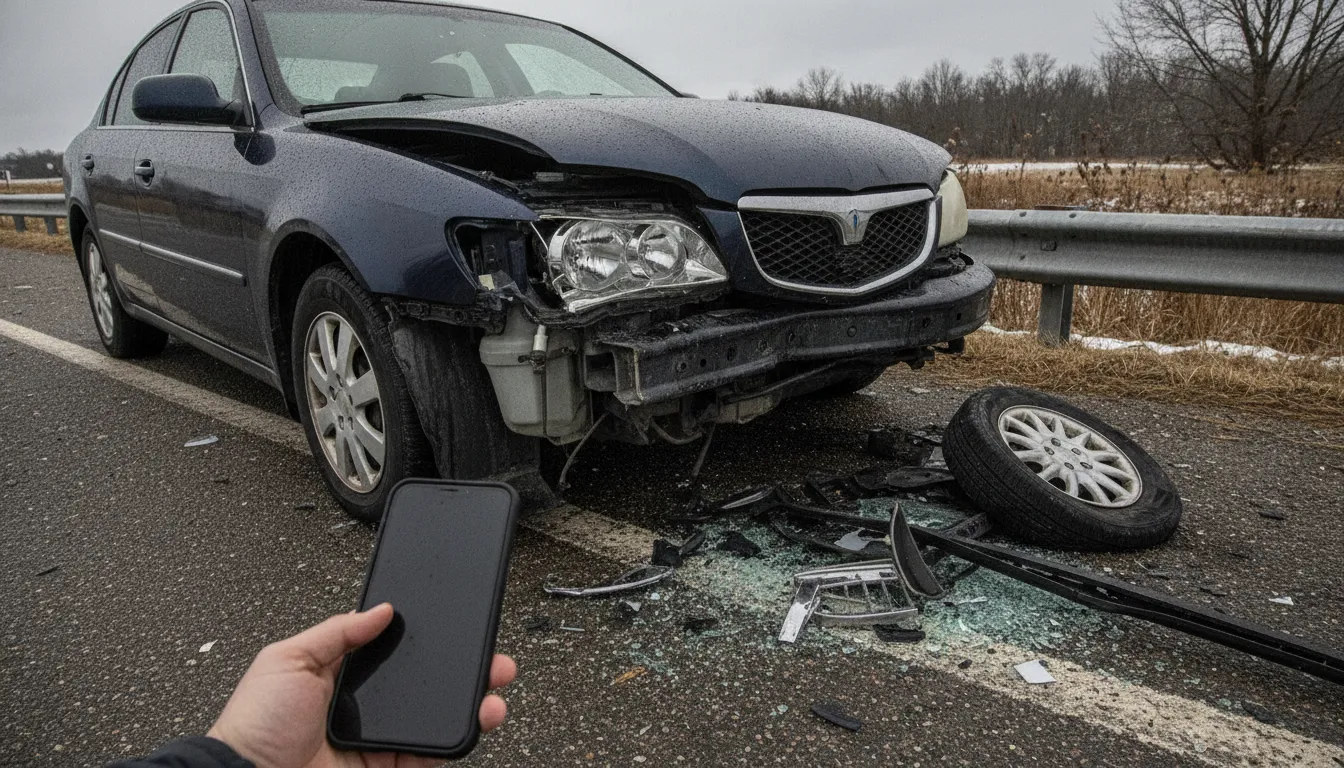
Start by taking wide shots of the entire scene to show where each car ended up. These photos help show the path each driver took and where the impact happened. You should also take close up shots of the damage on all vehicles involved. High quality images of dents, broken glass, and paint scrapes can reveal the force of the hit. This documentation of the collision nature is a key part of building your legal case.
Be sure to look for skid marks, broken parts, or debris on the ground. These small details help a reconstruction team find the speed of the cars before the crash. If there are gouges in the road or fluid leaks, take photos of those as well. These marks tell a story about how the cars moved after they hit each other. Taking these immediate steps after a car accident ensures that fleeting proof is not lost.
Documenting road and environment factors
The area around the crash site can be just as important as the cars themselves. Take photos of any traffic signs, lights, or road markings near the scene. If a stop sign was hidden by a tree or a light was out, that could be a huge factor in your claim. Also, capture the weather and light conditions at the time of the event. Clouds, rain, or a low sun can all play a role in how a crash occurs.
Look for hazards like deep potholes or poor road design that may have caused the driver to lose control. If you think the road itself was unsafe, take clear photos of the problem area. These environmental factors can sometimes shift some of the blame to a city or road agency. Showing exactly what the driver saw before the impact can help prove they were not at fault for the crash.
Recording injuries and safety devices
If you have visible injuries, you should document them with photos as soon as you can. Cuts, bruises, and swelling change quickly, so early photos are very helpful. You may also want to take photos of the inside of the car. Look for deployed airbags, bent steering wheels, or broken seats. It is also wise to record the seat position of each person who was in the car during the hit.
Showing that you used a seat belt or that a car seat was in place adds to your credibility. It proves that you took steps to stay safe before the accident happened. These photos link your injuries to the force of the crash in a way that words alone cannot. When you combine this with documentation for medical expenses, you create a strong record of your losses and pain.
Securing video and digital files
Video can be even more powerful than photos because it shows motion. If you have a dashcam in your car, save that footage right away. You should also look around to see if nearby stores or homes have security cameras. This video might show the whole crash from a bird’s eye view. If someone else saw the crash and has video on their phone, ask if they can send it to you.
Always keep the original files for all your photos and videos. These files contain metadata, which is hidden data like the date, time, and GPS location. This data proves when and where you took the photo, which keeps the other side from saying it was faked. You should back up these files to a cloud drive or a second device. This ensures you do not lose your most important michigan car accident evidence if your phone gets lost or broken.
Documents and records that can support a claim
Keeping a clear record is one of the best ways to build your case. When you seek michigan car accident evidence, you need more than just a story. You need proof that shows what happened and how much you have lost. Insurance firms often look for any reason to pay less. Having the right files can help you show the full truth of your case. A strong paper trail makes it hard for them to ignore the facts of your crash.
Health and money records
Your health records are the core of your claim. These files show your wounds and the care you need to get better. It is vital to have clear notes from your doctor about your hurts and findings. These records link your pain directly to the crash. Without them, it is hard to prove that the accident caused your health issues. Be sure to ask for records from the first hospital visit and all follow-up care.
Many people find it helpful to keep a daily log or journal. Write down your pain levels and how the injury limits your life. Mention if you cannot sleep or if you feel a lot of stress. These notes show the human side of your loss. They help prove that the crash changed your life in ways that bills alone cannot show.
You also need to track every cent you spend. Save all your health bills and receipts for medicine or gear like crutches or braces. If you cannot work, get letters from your boss and pay stubs to show your lost pay. This proof of health costs helps your lawyer add up the exact cost of the crash. Keeping these items in one folder makes it easy to share them with your legal team later. Do not forget to track small costs like travel to your doctor.
Formal reports and letters
A police report is often the first formal record of what took place. It lists basic facts and initial words from the scene. It might even say if the other driver got a ticket. While the report is just a start, it helps set a timeline for the event. You should also keep a list of everyone who was there. This includes other drivers and people who saw the crash. Note their names and phone numbers. If they saw what happened, their words could be key to your case.
You should also save every letter or email from your insurance firm. These notes show how they handle your claim and if they try to deny your benefits. If they call you, write down the time and what was said. Do not rely on your memory alone. Having a log of these facts helps your lawyer find the truth if the case goes to court.
Car and tech proof
Some proof comes from the cars themselves. Repair price quotes show how hard the impact was. A high bill for body work shows that the crash was severe. Many new cars also have a black box that records speed and braking data. This tech can give a clear picture of the moments before the crash. It can show if a driver tried to stop or was going too fast.
If you have photos or dashcam video, keep those files in a safe cloud drive. These visuals offer an unbiased view of the scene. They show the road state, weather, and where the cars ended up. Having this proof ready can help your lawyer prove fault and get you the support you need.
| Category | Evidence Type | Why It Matters | Action to Take |
|---|---|---|---|
| Health | Doctor notes | Proves injury links | Ask for full files |
| Money | Pay stubs | Shows lost income | Save recent stubs |
| Formal | Police report | Sets the timeline | Get a formal copy |
| Tech | Repair bills | Shows impact force | Keep all invoices |
| Digital | Dashcam video | Shows crash cause | Save to the cloud |

Steps to preserve evidence after a Michigan crash
The time after a car accident in Michigan can be chaotic. While your health must always come first, the window to save vital facts is small. Taking clear steps to protect proof can help you seek fair payment for your losses later on. This prep work helps your case if you need to file a claim.
Prioritize safety and health
Do not risk your safety to get photos or talk to witnesses. If you are hurt, wait for help to arrive. A formal medical check is also a key part of your proof. It links your injuries to the crash. This stops insurance companies from saying your pain came from something else. It also finds injuries that you may not feel right away.
Secure the scene and records
- Call the police right away. A formal report from a police officer acts as a neutral record of the crash. It notes basic facts and statements from both sides at the time of the event.
- Capture photos and video. Take clear pictures of vehicle damage, skid marks, and road signs. Use time-stamped images to show the exact conditions. This helps find hazards like potholes or bad lights that may have caused the hit.
- Identify and talk to witnesses. If you can, get the names and phone numbers of people who saw what happened. Independent accounts are vital for strengthening a car accident claim by showing who was at fault.
- Document your medical journey. Keep every bill and record from your hospital visits. The precise documentation of injuries by a doctor is a key duty. This work supports your legal path to getting help for your harm.
- Save physical and digital proof. Do not wash torn clothes or fix your car right away. Also, save dashcam files. Back up any phone photos to a safe cloud drive so you do not lose them if your phone breaks.
- Maintain a daily journal. Write down your pain levels. Note how the injury stops you from living your normal life. These notes are a strong way to show the non-financial impact the crash has had on you and your family.
Consult with a professional
A serious crash involves complex laws and many forms of data. Talking to a lawyer early helps ensure that big pieces of proof are not lost. This includes a vehicle’s “black box” data. These tools can show speed and steering moves before the hit. Having this proof helps documentation for medical expenses and other claims by proving how the event took place.
Why does evidence matter in a Michigan car accident?
Evidence is the main part of any car crash case. In Michigan, you need proof to get help with your bills and to hold the other driver liable. Without solid facts, insurance firms may try to deny your claim or pay you less than you need. Gathering proof right away helps you build a strong case for the future. Clear facts allow your lawyer to fight for the full amount you are owed under the law.
Documents for no-fault claims
Michigan uses a no-fault law for auto crashes. This means your own insurance often pays for your care and lost pay. To get these benefits after a serious crash, you must prove your losses. You should keep all your medical bills, pay stubs, and mileage logs to show what the crash cost you. These papers show the direct impact the accident had on your life and your wallet.
You will also need proof of your medical costs to get your PIP benefits. This includes bills from the ER, tests like X-rays, and proof of any therapy you need. Insurance adjusters look for gaps in your care. Seeing a doctor right away creates a clear trail of your injuries from the start. This trail makes it harder for the insurance firm to say your pain came from something else.
Keeping a personal log is another way to help your no-fault claim. You can write down how you feel each day and what tasks are now hard for you to do. This log serves as proof of the daily impact of your injuries. It helps your team explain why you need extra help around the house or at work.
Evidence to show fault
Fault still matters in Michigan if your injuries are very bad. If the other driver caused the crash, you might be able to sue them for pain and suffering. Photos of the cars, road signs, and skid marks help show how the crash took place. These images give vital facts for people who study how crashes happen. They capture the scene before cars are moved or the weather changes the road.
Police reports are also key documents to have. They serve as a formal record of the crash and list the basic facts. While you should check the report for errors, it gives a starting point for any claim. It often lists the names of all drivers and the insurance firms involved in the wreck. This report is often the first thing an adjuster will read.
Witness info is also a key part of strengthening a car accident claim. People who saw the crash can give a fair view of what they saw. You should get their names and phone numbers before they leave the scene. Their words can help show who was at fault when the police arrive. This outside view can be the factor that tips a case in your favor.
Medical records and injury proof
The way a doctor records your injuries can change the outcome of your case. A full record of your injuries is the base for any legal steps to get paid. Doctors must note how your injuries match the way the crash happened. This helps prove that the collision was the true cause of your pain. Clear notes from a medical expert can stop an insurance firm from denying your claim.
Your seat position in the car at the time of the crash is also vital. Different forces act on you based on where you sat. This info helps experts build back the scene and explain why you got hurt. Be sure to tell your doctor if you were the driver or a passenger when the cars hit. This detail helps show the force of the impact on your body.
You should also keep any items that were damaged in the crash. This includes torn clothes, broken glasses, or a crushed car seat. These physical items show the force of the collision in a way that words cannot. They act as visual proof of the force of the crash and the danger you faced. These items tell a story that is hard to deny in court.
Frequently Asked Questions
What evidence should be collected at a Michigan car accident scene?
If you are physically able, capture photos of vehicle damage, road signs, and any visible marks like skid marks on the road. Collect the names and phone numbers of everyone who saw the crash. You should also get a police report, as it serves as a formal record of the event. According to the customer voice guide, saving physical proof like torn clothing or broken glasses can also help show the force of the hit.
How are vehicles preserved as evidence in serious Michigan accidents?
In a serious crash, you should keep your vehicle in its damaged state until an expert can look at it. Fixing your car too soon can destroy proof of how fast the cars were moving and where they hit. Attorneys may seek a court order to keep cars in a secure lot to prevent any loss of data. This step ensures that the crush depth and scrape marks remain available for a team to study for your legal case.
Can black box data be used as evidence in Michigan truck accidents?
Yes, most modern vehicles have an Event Data Recorder or black box that saves tech data. This device can show how fast a car was going and when the driver used the brakes or steered. This digital record provides a neutral look at the moments before a crash. Because this data can be erased or saved over, you must act fast to secure it. This information is often used by experts to build a clear picture of how a collision happened.
How can evidence help a car accident claim in Michigan?
Evidence serves as the linchpin of your case by linking the crash to your injuries. It stops insurance firms from saying your pain was caused by something else or downplaying your losses. High-quality proof helps your lawyer calculate the exact amount of money you need for health care and lost pay. Researchers note that precise documentation of injuries is a key duty that supports your legal path to getting paid fairly for your harm.
Ready to protect your legal claim after a crash?
Facts fade fast after a crash. If you do not act now to save photos and witness names, you may lose the proof you need to win your case. This proof is key to getting the money you need for your medical bills and lost pay. Insurance firms often hope that key facts will go missing so they can pay you less. By moving fast, you give yourself the best chance to build a strong claim for your future.
You can learn more by reading about the first steps after a car accident. Do not let time run out on your legal rights while you heal. Our team is here to help you gather the facts and deal with the insurance firm for you. We can help you set up a plan to protect your case from day one.
Ready to protect your rights? Contact Atnip & Associates, PLLC to schedule a free consultation.
