

Crash data shows that about one-third of all Michigan traffic wrecks happen at road crossings. If you are hurt, getting your bills paid depends on showing who caused the wreck. Proving fault requires a clear look at local right-of-way rules.
Call 248-599-1607 to schedule a free consultation and protect your rights.
- Understanding responsible parties under Michigan law
- Gathering proof like police reports and witness statements
- Working with Michigan car accident attorneys to handle insurers
To find who is at fault in an intersection accident Michigan law looks at which driver had the legal right-of-way or violated a traffic signal. Under MCL 257.649, drivers nearing a crossing must yield to any vehicle already inside, and left-turning vehicles must yield to oncoming traffic. If you run a red light, you are likely responsible, but insurance companies often try to argue that both drivers share blame. Michigan comparative fault rules can reduce your payout by your percentage of fault, making it vital to show you did nothing wrong. Our dedicated lawyers can help you gather clear proof like dashcam video, witness statements, and police reports.
If you are recovering from a serious crash, you likely have many questions about how state laws apply to your case. To understand how courts and insurers make this decision, we must examine Who Is at Fault in an Intersection Accident in Michigan? Here’s how
Who Is at Fault in an Intersection Accident in Michigan?
If you want to know who is at fault in an intersection accident Michigan rules can seem hard to grasp. Most of the time, the driver who broke a traffic law or did not use proper care is at fault. This includes drivers who run red lights, fail to yield, or make bad turns. Finding the careless driver is key to getting the help you need.
Common causes of intersection crashes
Crashes at crossings are common across the state. State crash data shows that nearly one-third of all Michigan car accidents occur at intersections. These side-impact or head-on crashes often cause serious harm. Drivers often cause them by speeding, looking at a phone, or failing to look closely. Some of the most common causes of these collisions include:
- Running red lights or stop signs: A driver who enters a crossing against a signal is almost always at fault.
- Failing to yield: Many drivers fail to yield the right-of-way when making turns or going into a busy street.
- Distracted driving: Drivers who look at their phones or screens often do not see traffic signals change.
The role of right-of-way rules
Michigan traffic laws set clear rules for who must yield at a crossing. Under Michigan law, a driver coming to a crossing must yield to a car in the intersection. If two cars reach the crossing at the same time, the driver on the left must yield to the driver on the right. A driver who speeds also forfeits their right-of-way, and anyone who breaks these rules is often found at fault.
Finding who has the right-of-way is not always simple, mainly when traffic lights are broken. If a traffic signal is dark, you must treat the crossing like a four-way stop. You must stop fully and yield to other cars before you can go.
Proving fault after a collision
Proving fault in these cases needs strong proof, but insurance firms often try to shift the blame to avoid paying your claim. To protect your rights, you should learn how fault is proved in a Michigan car accident. Our team can help you gather police reports, witness statements, and dashcam video to build a strong case. We deal with the insurance firms so you can focus on healing.
At Atnip & Associates, we take your case to heart. We look at the crash scene, get traffic camera footage, and talk to witnesses. We will stand up to the insurance firms to make sure you get the care and support you need.
Michigan Right-of-Way Rules at Intersections
To understand who is at fault in an intersection accident in Michigan, you must first know the right-of-way rules. Michigan law lays out clear steps for drivers when they approach a crossing. These rules help prevent crashes and keep traffic moving. Under MCL 257.649, drivers must yield to others in clear ways based on who got to the crossing first.
Who must yield first?
The first rule of intersection safety is simple. When you approach a crossing, you must yield to any car that is already there. If another driver is already in the intersection, they have the right-of-way. You cannot push your way through or expect them to stop for you. You must wait until the crossing is clear before you proceed.
The rule when cars arrive together
Sometimes, two cars arrive at a crossing at about the same time. This is where many drivers get confused and make mistakes. If two cars enter an intersection from different roads at the same time, the driver on the left must yield. The driver on the right has the right-of-way. If you are on the left, you must let the other car go first.
If a driver fails to follow these rules and causes a crash, they may be held at fault. If you were hurt because someone did not yield, our team can help. An attorney in our motor vehicle accident practice area will review your case and explain your rights. Proving fault in these cases requires looking at who had the legal right-of-way.
How speed and broken lights change the rules
Right-of-way rules do not always hold if a driver is breaking the law. For example, a driver who travels at an unlawful speed forfeits their right-of-way. This means if a driver is speeding, they lose the legal right to go first. Speeding makes it harder to stop and can lead to severe crashes at crossings.
There are also special rules for when a traffic light goes dark or stops working. In Michigan, drivers must treat a broken signal as a stop sign. You must come to a full stop before entering the intersection. Then, you must yield to any cars that are an immediate hazard and proceed only when it is safe.
To keep things simple, keep these key right-of-way rules in mind:
- Yield to any vehicle that has already entered the crossing.
- Yield to the driver on your right if you both arrive at the same time.
- Stop and yield to hazards if a traffic light is broken or dark.
- Remember that speeding drivers lose their legal right-of-way.
Why the Turning Driver Is Usually at Fault in a Left-Turn Crash
The duty to yield right of way
When two cars crash as one makes a left turn, the turning driver is usually blamed. This is because Michigan law places a strict duty on turning drivers. Drivers who want to turn left must wait for a safe gap in oncoming traffic before they cross the lane.
Under state law MCL 257.649, drivers must yield to cars that are already close enough to pose a danger. Oncoming traffic that is traveling straight through has the right of way. If you turn in front of them, you may cause severe intersection crashes. Insurance adjusters will almost always assume the turning driver is to blame.
When the oncoming driver is negligent
But the left-turning driver is not always at fault. There are times when the oncoming driver causes the crash. For example, if the straight-through car ran a red light, that driver is negligent. In that case, the turning driver had no way to stop the crash.
Speeding is another key factor. Under Michigan law, a driver who travels at an unlawful speed forfeits the right of way they would otherwise have. If the oncoming car was speeding, you might not be able to judge its distance safely. In these cases, the speeding driver is to blame because they made a danger that you could not avoid.
A starting point rather than a final verdict
When police and insurers look at who is at fault in an intersection accident Michigan courts use these rules as a starting point. The law treats the turning driver’s fault as a strong presumption, not an automatic guilty verdict. If you can prove the other driver was reckless, you can overcome this starting assumption.
A skilled lawyer can help you find this proof. Your legal team can get traffic camera footage, request black box data, and track down witnesses. This proof can show that you had the right to turn and that the other driver was the one who caused the crash.
To build a strong case, you must gather clear proof. Helpful proof includes:
- Dashcam video that shows the oncoming driver ran a red light.
- Statements from people who saw the crash and can verify the other car was speeding.
- Cell phone records that show the straight-through driver was distracted.
- Black box data from the cars that records the speed of both cars.
What Happens When a Driver Runs a Red Light or Stop Sign?
When a driver runs a red light or ignores a stop sign, they put everyone on the road in deep danger. These actions often lead to serious intersection crashes that cause severe harm or death. In most cases, the driver who disobeyed the traffic signal is the one who must pay for the damage.
Who is at fault in an intersection accident Michigan?
Under Michigan law, the driver who failed to obey a stop sign or red light is almost always at fault. Every driver must stop at these traffic control signs. When a driver runs a signal, they violate their basic duty to keep others safe on the road. This action makes them liable for any injuries that occur during the crash.
When a driver runs a traffic signal, police officers and insurance adjusters look at specific factors to assign blame. These factors help determine who must pay for the damage.
- Whether the driver stopped at the line.
- If the driver sped up to beat a yellow light.
- Whether the driver was distracted by a phone.
Right-of-way laws and traffic signals
Michigan right-of-way laws are very clear about intersections. Under MCL 257.649, a driver must yield to any vehicle that has already entered the intersection. A driver who runs a red light or ignores a stop sign violates this rule.
If you are already in the intersection, other cars must let you pass. A driver who crashes into you because they failed to stop is at fault. This remains true even if the other driver had a green light but sped through the area at an unlawful speed.
Stop signs require a full stop. A rolling stop is still a violation of the law. A driver who does not come to a complete stop is breaking the law and is at fault for any crash they cause. This is a common issue in many intersection accidents.
Proving negligence in a traffic signal crash
To win a car accident claim, you must prove that the other driver was negligent. In Michigan, violating a traffic law is strong evidence of negligence. Proving liability when a driver runs a stop sign can be simple if you have the right proof.
Police reports, witness statements, and dashcam videos are all key pieces of evidence. This proof shows that the other driver did not stop. Our legal team can help you gather this evidence to build a strong claim. We will work to show that the other driver caused the crash and is responsible for your bills.
Dashcam Footage, Witnesses, and the Police Report: How Fault Is Proven
Gathering objective scene evidence
Deciding who is at fault in an intersection accident Michigan depends on the clear facts from the scene. After a crash, drivers often tell different stories about who had the right-of-way. This is where objective proof becomes vital.
Dashcam video is often the most important proof in these claims because it shows a clear view of the event. It can capture speed, lane choices, and light colors right when the crash occurs. Our legal team uses this footage to protect our clients when insurance companies try to blame them. This visual record makes it much harder for insurance adjusters to deny what truly happened.
Under Michigan law MCL 257.649, a driver who travels at an unlawful speed forfeits their right-of-way. A dashcam can show if the other car was speeding before the impact. Video footage is highly reliable because it does not forget details or change its story. It offers the solid facts needed to resolve he-said, she-said disputes.
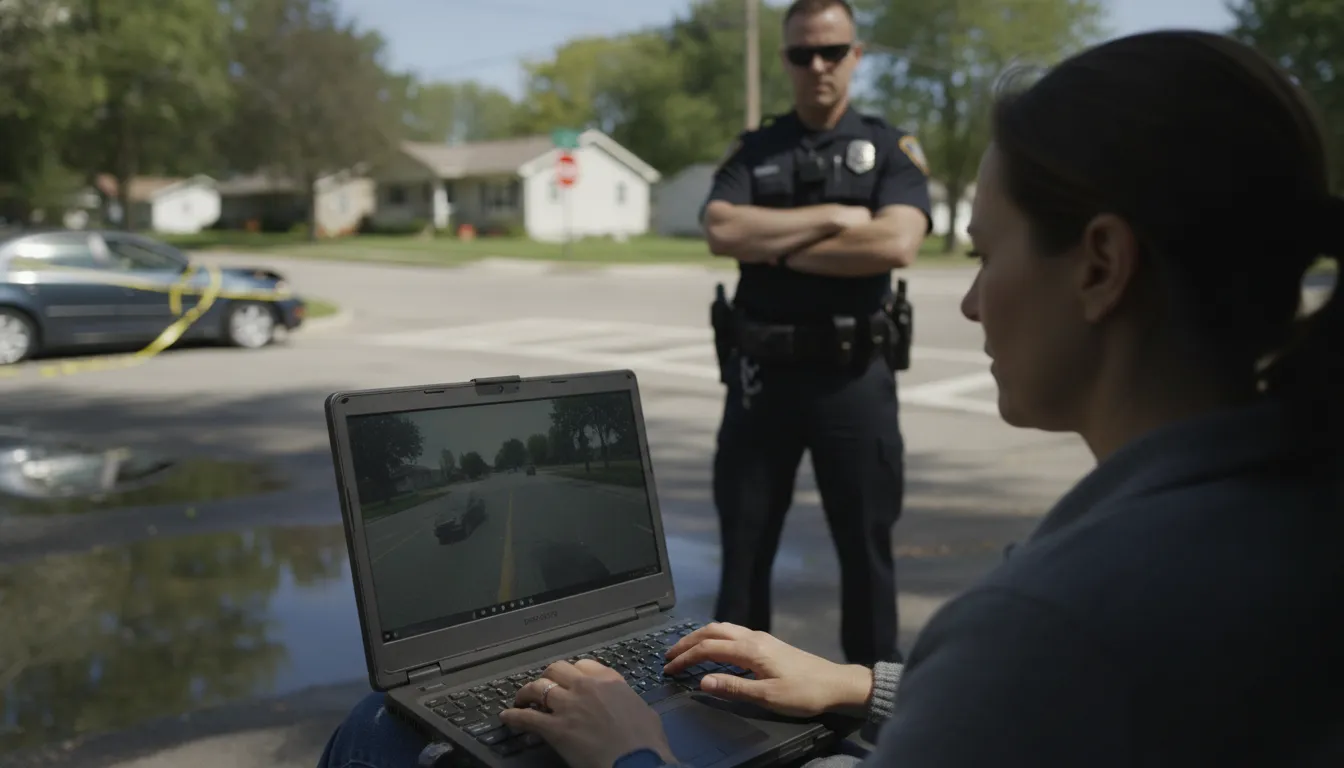
Local business security cameras and city traffic-light cameras can also capture the crash. Like dashcams, these devices provide an objective view that is hard to dispute. They record the exact second a light turned red, which helps clarify the timeline of events. An attorney can work to get these recordings before the owners delete them.
Relying on official records and eyewitnesses
Other types of proof also help build a strong claim. The police report is an official record that insurance companies trust. When officers arrive, they write down what they see, draw diagrams, and note any traffic violations. If a driver was on their phone, this report helps establish liability in Michigan car accidents.
Physical evidence on the road also speaks volumes. Skid marks, paint transfers, and vehicle damage help show how the crash occurred. For example, severe front-end damage on one car and side-impact damage on another can show who had the right-of-way. This physical proof supports the witness accounts and the police report.
Witnesses also play a major role by giving an unbiased view of what happened. They can confirm who had the green light or who ran a stop sign. But human memory can fade, and different people may see the same crash in different ways. Getting witness statements early helps keep their memories clear and useful.
The table below compares the main types of evidence used to prove fault after a crash at an intersection. Each source of proof has its own level of reliability and shows different key details.
| Evidence Type | Reliability | What It Shows |
|---|---|---|
| Dashcam Footage | High | Shows actual speed, lane use, and traffic light colors. |
| Witness Testimony | Variable | Offers third-party views, but human memories can conflict. |
| Police Report | High | Details scene observations, diagrams, and traffic citations. |
| Signal-Camera Data | High | Verifies traffic flow and light timing at the time of impact. |
What If Both Drivers Share Fault for the Collision?
The law of modified comparative fault
When you need to find who is at fault in an intersection accident Michigan law looks at the actions of each driver. In many crashes, blame is not simple. One driver might speed, while the other runs a stop sign. This means the state must use a rule called modified comparative fault under MCL 600.2959.
Under this system, you can still seek payment even if you share some of the blame. But the court will reduce your payout based on your fault. If you are found to be ten percent at fault, you lose ten percent of your award. Your final check drops by your exact share of the blame.
The fifty-one percent bar for serious injury claims
While you can recover some damages when you share blame, there is a strict limit. If your share of the fault is more than fifty percent, you face a major hurdle. Under MCL 500.3135, a driver who is mostly at fault cannot recover any non-economic damages. These damages cover your pain, suffering, and mental anguish after a wreck.
This means if you are fifty-one percent or more at fault, you get nothing for your pain. Your own No-Fault policy will still cover medical bills. But you can get nothing from the other driver for your mental distress. The fight over fault is key.
A clear example of shared blame
To see how these rules work, let us look at a made-up crash where Driver A runs a red light and hits Driver B. But Driver B was speeding and looking at a phone. Because of these actions, both drivers made errors. They both share blame for the wreck.
A court decides Driver A is sixty percent at fault for running the red light. Driver B gets forty percent of the blame for speeding. This type of fault determination in multi-vehicle accidents is often complex. Because Driver B’s fault is under the limit, they can still seek a payout.
If Driver B has $100,000 in pain and suffering damages, the payout drops by forty percent. Driver B would collect $60,000 from Driver A. If Driver A has serious injuries, Driver A gets nothing for pain because their fault is over the threshold.
What Damages Can You Recover After an Intersection Accident?
Determining who is at fault in an intersection accident Michigan drivers face two paths to recover. First, you get benefits from your own insurer. Second, you can sue the other driver.
Your own no-fault PIP benefits
Under Michigan no-fault insurance rules, your own company pays for certain losses. This is true no matter who caused the crash. These are called Personal Injury Protection (PIP) benefits. Your PIP coverage pays for your medical bills. It also pays for some of your lost wages if you cannot work. Read our guide on how medical bills are paid after a car accident to learn more.
These benefits provide needed support as you heal. They cover all needed medical care with no dollar limit in many cases, depending on your policy. This includes hospital stays, surgery, physical therapy, and home care. PIP also covers up to three years of lost income to help your family. Since these benefits come from your own policy, you can get them without waiting to prove fault.
Pain and suffering from a third-party claim
Sometimes, your PIP benefits do not cover all your losses. You may need to sue the other driver. This is a third-party claim. A third-party claim lets you seek recovery for noneconomic damages, which cover pain, suffering, and mental distress. But you cannot get these damages if you are mostly to blame. Under Michigan law, if you are more than 50% at fault, you cannot get any noneconomic damages.
Third-party claims are different because fault matters. You must prove the other driver caused the crash to win. For example, a driver who runs a red light is likely at fault. If you share some blame, your recovery drops by your percentage of fault. If your fault is over 50%, you get nothing.
The serious injury threshold
To sue the at-fault driver for pain and suffering, your injuries must meet a certain legal standard. Under MCL 500.3135, you must show that the crash caused a serious injury. Michigan law defines this as death, permanent serious disfigurement, or a serious impairment of a body function. A serious impairment means your injury has changed your normal way of living. A lawyer can help you find out if your injuries meet this legal standard.
Proving a serious impairment can be hard. You need medical proof to show how your injuries affect your daily life. Doctor notes, medical records, and therapy reports are vital to your case. Insurance adjusters often try to downplay injuries to avoid paying claims. A seasoned personal injury lawyer can build a strong case to show the true impact of the crash on your life.
Call 248-599-1607 to schedule a free consultation today for a free consultation about your intersection accident claim and the injuries you are dealing with.
Frequently Asked Questions
How is fault determined in a Michigan left-turn accident?
Under Michigan law, the driver turning left is mostly at fault for a crash. This is because they must yield to oncoming cars that are going straight. However, under MCL 257.649, a driver who is speeding forfeits their right-of-way. In those cases, both drivers may share some blame.
How does comparative negligence affect intersection claims in Michigan?
Michigan uses a system called comparative fault to handle crashes. This means you can still get money even if you were partly to blame for the wreck. Under MCL 600.2959, the court will lower your pay by your share of fault. If you are more than half at fault, you cannot get pain and suffering damages.
Can I prove fault in an intersection collision without witnesses?
Yes, you can prove who caused a crash even if no one else saw it. You can use tools like dashcam videos, police reports, and traffic cameras to show what happened. Physical clues like tire marks and car damage also help. A skilled attorney can gather this proof to build your case and show who was truly at fault.
What are the rules at a four-way stop in Michigan?
At a four-way stop, the first car to stop has the right to go first. If two cars stop at the same time, the driver on the left must yield to the driver on the right. Under MCL 257.649, all drivers must yield the right-of-way to any car that has already entered the intersection.
Ready to Talk to a Michigan Car Accident Lawyer?
A serious crash at a Michigan intersection can disrupt your daily life in an instant, leaving you with pain, medical bills, and lost income. If you wait too long to seek legal help, critical evidence like traffic camera footage can be lost and witness memories will quickly fade. Working with a lawyer right away gives your legal team the time they need to investigate the accident and build a strong case. We will handle every detail of your injury claim, and you will pay us nothing at all unless we win money for you.
Ready to take action? Call 248-599-1607 to schedule a free consultation today to schedule a free consultation with our compassionate Michigan legal team.
