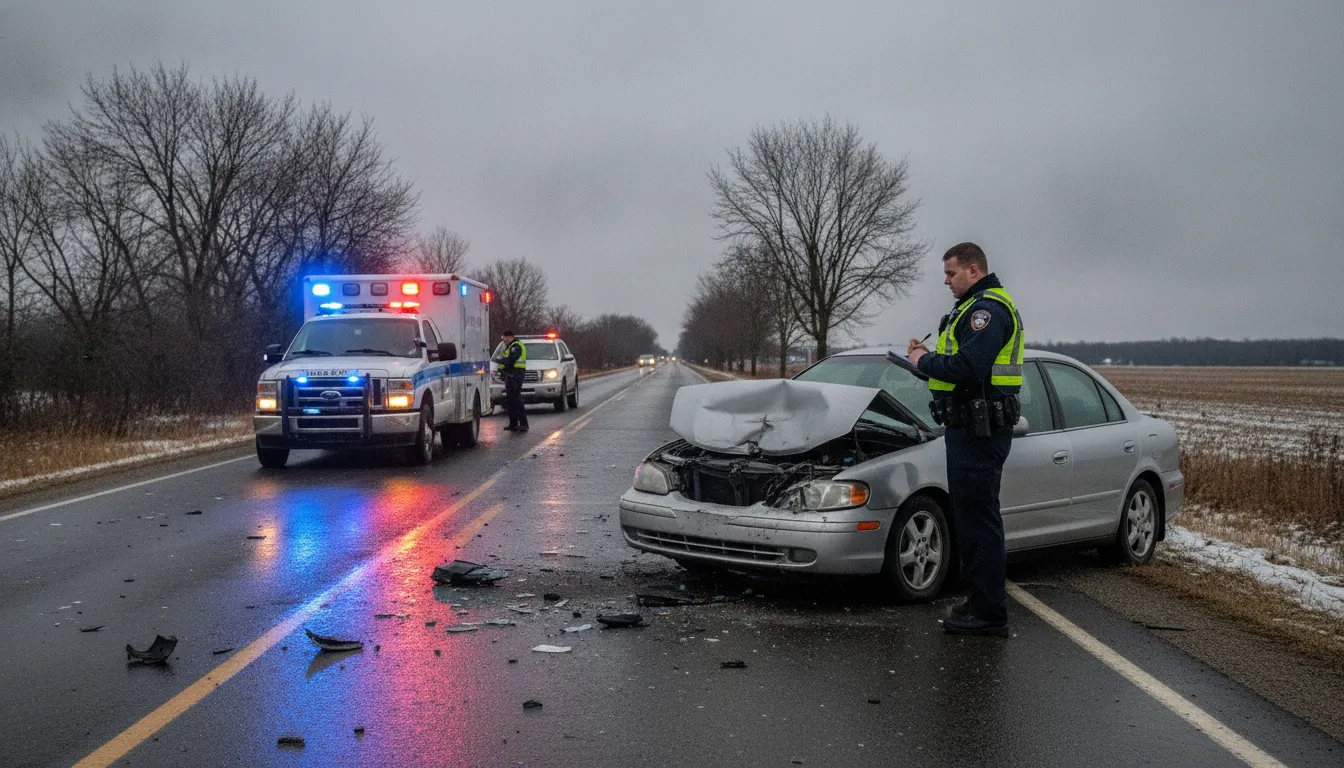
People search for a Michigan no fault lawyer when a crash creates two problems at once. One is a first-party claim with your own insurer. The other is whether a serious injury can support a claim against the at-fault driver. Many people can open a straightforward claim without counsel. The decision changes when benefits are cut, a deadline is close, or the injury is changing daily life.
Call 248-599-1607 to schedule a free consultation about a Michigan no-fault claim.
This guide is a decision tool, not a repeat of the general overview already published on the Michigan no-fault lawyer page. It covers the signs that hiring is worth a conversation, how to judge the lawyer in front of you, and which papers to bring. It is general information about Michigan law, not advice for a specific crash or policy.
When does a Michigan no-fault lawyer earn the call?
Michigan requires security for personal protection insurance, property protection insurance, and residual liability insurance while a registered vehicle is driven on a highway. That rule is in MCL 500.3101. Those three pieces do different jobs, and insurers often treat them as separate files.
| Situation after the crash | Why a lawyer is often worth calling | What can usually wait |
|---|---|---|
| The insurer has not answered, or it paid and then stopped. | A denial, a partial payment, or silence can start a clock on what you can still recover. | A claim that is being paid on time, with records the insurer already has. |
| Medical bills are nearing the PIP limit you chose. | Policies issued or renewed after July 1, 2020, can cap PIP medical benefits. A lower cap changes the plan. | Confirming the limit printed on the declarations page, if nothing has been denied. |
| The injury is affecting work, driving, or home life. | Pain and suffering is limited. A serious-impairment question needs medical proof, not a guess. | A short clinic visit with a full return to normal activity. |
| The crash is near the one-year mark, or notice was never sent. | Written notice and lawsuit timing under MCL 500.3145 are easy to miss and hard to undo. | A crash from last week, if notice is already in writing and benefits are flowing. |
| A family member died, or the injured person cannot manage the claim. | Survivor’s benefits, a guardian, and the other driver’s claim can run on different tracks. | Asking the insurer for a claim number and a copy of the policy. |
If none of those rows describes your file, start with the forms and the medical records. If one of them does, a consult is a reasonable next step even if you are not ready to hire anyone.
What should you ask before you hire?
The live overview already explains what no-fault counsel does in general. Use a consult to test the fit for your file. A useful meeting is specific. Ask who will actually handle the claim, and how often you will hear from that person. Ask whether the firm regularly handles first-party PIP disputes, third-party injury claims, or both. Ask what they need from you in the first two weeks.
Fee structure belongs in that same conversation. Atnip & Associates handles injury matters on a contingency fee: there is no upfront attorney fee, and the firm is paid from a recovery. The percentage and the treatment of costs should be in the written agreement, not in a slogan. For a fuller look at that model, read the firm’s no-win, no-fee guide.
Heather J. Atnip leads the firm and has spent more than 20 years on catastrophic injury and wrongful death cases, including time on the insurance side of claims. That background is relevant when you are choosing counsel, because no-fault files are often won or lost on the insurer’s forms, not in a courtroom speech. Still, ask how this case would be staffed. A famous name on the website is not the same as a lawyer who has read your policy.
- Ask which benefits are already open, and which have been denied in writing.
- Ask whether the injury facts could meet the serious-impairment threshold, and what records would decide it.
- Ask what the one-year notice and lawsuit dates are on your facts.
- Ask who returns calls, and whether you can reach a person before a deadline.
- Ask for the fee percentage, the cost policy, and the ending-the-relationship terms in writing.
How do PIP choices change the lawyer’s job?
Before the 2019 reforms, Michigan policies were built around unlimited PIP medical coverage. For policies issued or renewed after July 1, 2020, drivers choose a level. The Michigan DIFS PIP chart lists unlimited coverage and caps of $500,000, $250,000, and $50,000 per person per accident. Some lower options, including a Medicare opt-out, are available only when eligibility rules are met. If no option is chosen, DIFS says unlimited coverage is the default.
That choice is why two crashes with similar injuries can need different legal work. A household with unlimited PIP may be fighting a utilization review or a late payment. A household with a $250,000 or $50,000 cap may be planning for bills the auto policy will never pay. The firm’s PIP benefits guide covers the benefit types in more detail. A lawyer’s job here is to match the denial to the coverage that was actually purchased, not to assume the old unlimited system still applies.
Wage loss and replacement services sit beside the medical cap. They are not the same benefit, and a denial of one does not automatically decide the other. Bring the declarations page, the denial letter, and the wage proof to the consult so the lawyer is not guessing from a phone summary.
Which claim is separate from your own PIP file?
Your own insurer pays covered PIP benefits without a fault fight. A claim against the other driver is different. Under MCL 500.3135, a person remains subject to tort liability for noneconomic loss only if the injured person suffered death, serious impairment of body function, or permanent serious disfigurement. The statute describes serious impairment as an objectively manifested impairment of an important body function that affects the person’s general ability to lead a normal life.
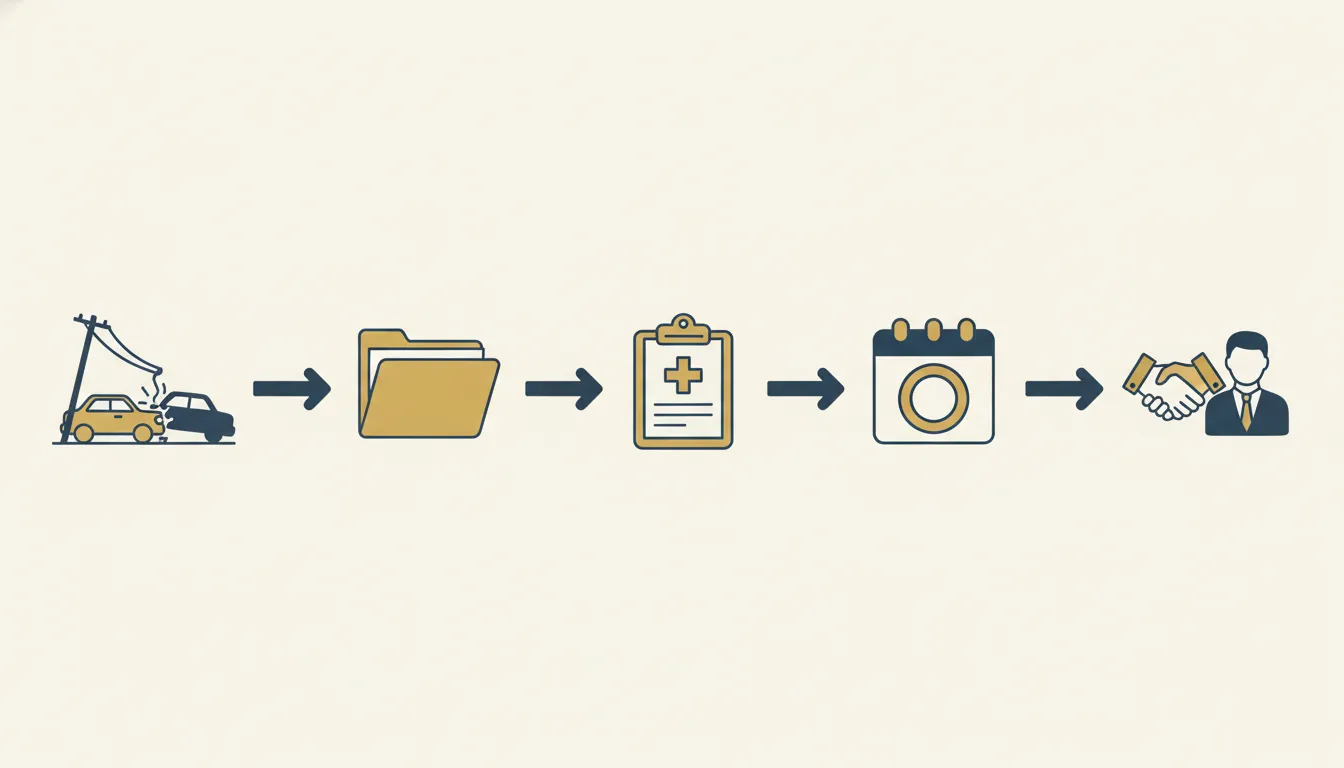
That threshold is the point where many families decide to hire. An insurer for the at-fault driver will often argue that the injury is real but not serious enough. The records that matter are the ones that show what the person could do before the crash and what they cannot do now. Pain alone, without that proof, is a weak file.
Property damage is a third track. Mini-tort can allow a claim of up to $3,000 for certain vehicle damage. The DIFS auto insurance FAQ describes that claim when the other driver is 50 percent or more at fault. It does not pay the rest of a totaled car, and it is not the same as a serious-injury claim. The firm’s mini-tort guide walks through that smaller claim. Residual bodily injury limits are separate again. DIFS lists a default of $250,000 per person and $500,000 per accident, with a lowest published option of $50,000 and $100,000, on its bodily injury coverage page.
What deadlines should drive the hiring decision?
Michigan’s notice rule is the deadline families most often learn about too late. Under MCL 500.3145, a PIP lawsuit may not start later than one year after the accident unless written notice was given in that year, or the insurer already paid PIP benefits for the injury. If notice was given or a payment was made, a later suit still cannot reach back more than one year before it is filed. The notice has to name the claimant and the injured person. It also has to give the time, place, and nature of the injury.
A lawyer is especially useful when that year is close and nobody can find a written notice, or when the insurer paid for a while and then stopped. Do not treat a phone call to a claims line as the notice the statute describes. Keep the letter, the fax confirmation, or the portal receipt.
Other dates matter too, but they are not a reason to invent a deadline from memory. A claim against a government vehicle, a hit-and-run, or an out-of-state driver can follow a different rule. Say so in the consult instead of assuming the ordinary one-year PIP rule covers every defendant. If the other driver had no insurance, the uninsured motorist guide is the place to start, because that claim depends on your own policy language.
What should you bring to the consultation?
A consult goes faster when the lawyer can see the file instead of reconstructing it. You do not need a perfect binder. You do need the documents that show coverage, injury, and notice.
- The crash report, photos, and the other driver’s insurance information, if you have them.
- Your declarations page, especially the PIP medical level and bodily injury limits.
- Denial letters, explanation-of-benefits pages, and any written notice you already sent.
- Medical records and a short list of how work, sleep, driving, or home tasks have changed.
- Wage records if time off work is part of the claim.
The broader practice context sits on the firm’s motor vehicle accidents page and its no-fault insurance overview. Those pages explain the system. This one is about the hiring decision inside that system. If a prior post already answered a background question, use it rather than expecting one consult to reteach the whole statute.
Bring a short timeline too. Write the crash date, the first medical visit, the date notice went out, and every date a payment stopped. A Michigan no fault lawyer can spot a missing notice faster from that timeline than from a stack of unexplained bills. If a family member is calling for the injured person, bring a signed authorization or be ready to get one. Insurers often will not discuss the file with a spouse or adult child who has no paperwork.
Ask what the firm will not do. Some offices will not handle a small mini-tort by itself. Some will not file suit against a government defendant. Knowing that limit in the first meeting is better than learning it after a deadline. If the fit is wrong, you still leave with the dates and the coverage level written down.
Contact Atnip & Associates to review a denial, a deadline, or a serious-injury question.
Keep copies of anything you send. A portal screenshot, a fax receipt, or a certified-mail stub is more useful later than a memory of a phone call. If the insurer asks for a recorded statement, you can wait until you understand the coverage and the deadline. You do not have to guess at medical opinions during that call.
Frequently asked questions
Do I need a Michigan no-fault lawyer for every crash?
No. A paid, documented claim with a clear policy and a short recovery often does not need counsel. Call when benefits stop, a written denial arrives, the one-year date is close, or the injury is changing daily life.
Will a lawyer take the case if PIP is still being paid?
Sometimes. Ongoing PIP payments do not decide whether a serious-injury claim against the other driver is worth investigating. They also do not guarantee that later bills will be paid if the medical cap is low.
Can I hire counsel only for the insurance denial?
Yes. First-party PIP disputes and third-party injury claims are different matters. Ask the firm which one it is proposing to handle, and get that scope in the fee agreement.
What if I already talked to the insurer alone?
That does not bar you from hiring later. Bring what you signed and what you said, if you remember it. Do not guess at a recorded statement. The lawyer needs the version the insurer has.
Is the free consultation a promise to take the case?
No. A free consult is a review of the deadline, the coverage, and the injury facts. The firm can decline a file, and you can decide not to sign. Call 248-599-1607 if you want that review scheduled.