Category: Catastrophic Injury

After a serious crash or other life-changing injury, a Midland-area family may be trying to manage medical care, missed work, insurance calls, and an uncertain future at the same time. A practical first step is learning what to preserve, what to ask, and when a Michigan personal injury lawyer may help protect your options.

Call 248-599-1607 to schedule a free consultation and take the first step toward protecting your rights and your financial future.

What should a Midland family do after a serious injury?

A Midland family should focus first on safety and medical care, then preserve information about what happened before memories, records, or physical evidence disappear. Avoid guessing about fault, signing a broad release, or giving a recorded statement before you understand what is being requested. Early legal guidance can help organize the next decision.

  • Get emergency care and follow the treating provider’s instructions.
  • Report a serious motor-vehicle crash to law enforcement and request the report when it becomes available.
  • Photograph vehicles, visible injuries, property damage, road conditions, and other relevant surroundings when it is safe.
  • Save insurance letters, claim numbers, medical bills, wage information, and messages about the incident.
  • Write down what you remember, including the time, location, weather, witnesses, and conversations.

The Michigan State Police Traffic Crash Reporting Unit FAQ explains the state’s crash-reporting process and how individuals can obtain a UD-10 report. If someone is in immediate danger, call 911 first.

When should you speak with a Midland personal injury lawyer?

Consider speaking with a lawyer as soon as practical when an injury is serious, fault is disputed, a loved one died, more than one insurer is involved, or treatment and income loss may continue. A consultation does not require you to predict the value of a claim. It gives your family a chance to understand the issues before making major decisions.

Legal guidance may be especially useful when:

  • The collision caused a traumatic brain injury, spinal cord injury, amputation, severe fracture, or other long-term impairment.
  • An insurance company asks for a recorded statement, medical authorization, or settlement release.
  • The injured person cannot work, needs ongoing care, or provides care for a family member.
  • There are questions about a commercial vehicle, rideshare trip, defective roadway, or multiple potentially responsible parties.
  • A family is considering a wrongful-death claim after losing a spouse, parent, child, or other loved one.

Atnip & Associates, PLLC focuses on serious personal injury and catastrophic injury matters for Michigan individuals and families. The firm’s Michigan personal injury practice areas page provides additional context about the types of cases the firm handles.

What should you bring to a free consultation?

Bring the information you have, even if it is incomplete. A lawyer can help identify what is missing. The most useful materials usually show the event, the injuries, the financial effect, the insurance communications, and the people or organizations connected to the incident. Do not delay a consultation because you do not yet have every document.

  1. Insurance cards, policy information, claim numbers, adjuster contact details, and letters or emails from insurers.
  2. Medical records, discharge instructions, bills, prescriptions, appointment notes, and a list of providers.
  3. Photographs, videos, crash-report information, witness names, and any available surveillance details.
  4. Pay stubs, employer communications, tax records, or other information showing missed work or changed job duties.
  5. A short timeline of symptoms, treatment, conversations, and daily tasks that became difficult.
  6. Questions about fees, communication, evidence, insurance, likely next steps, and who will work on the case.
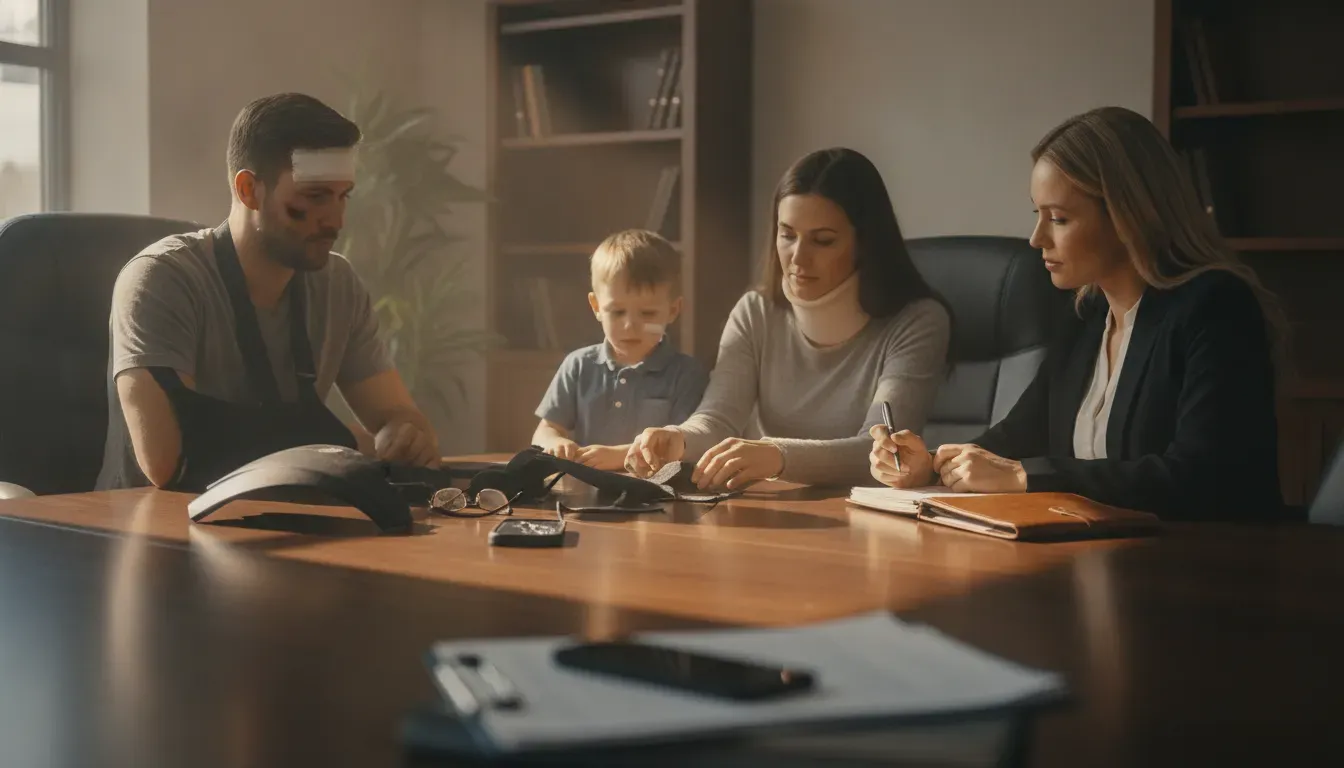
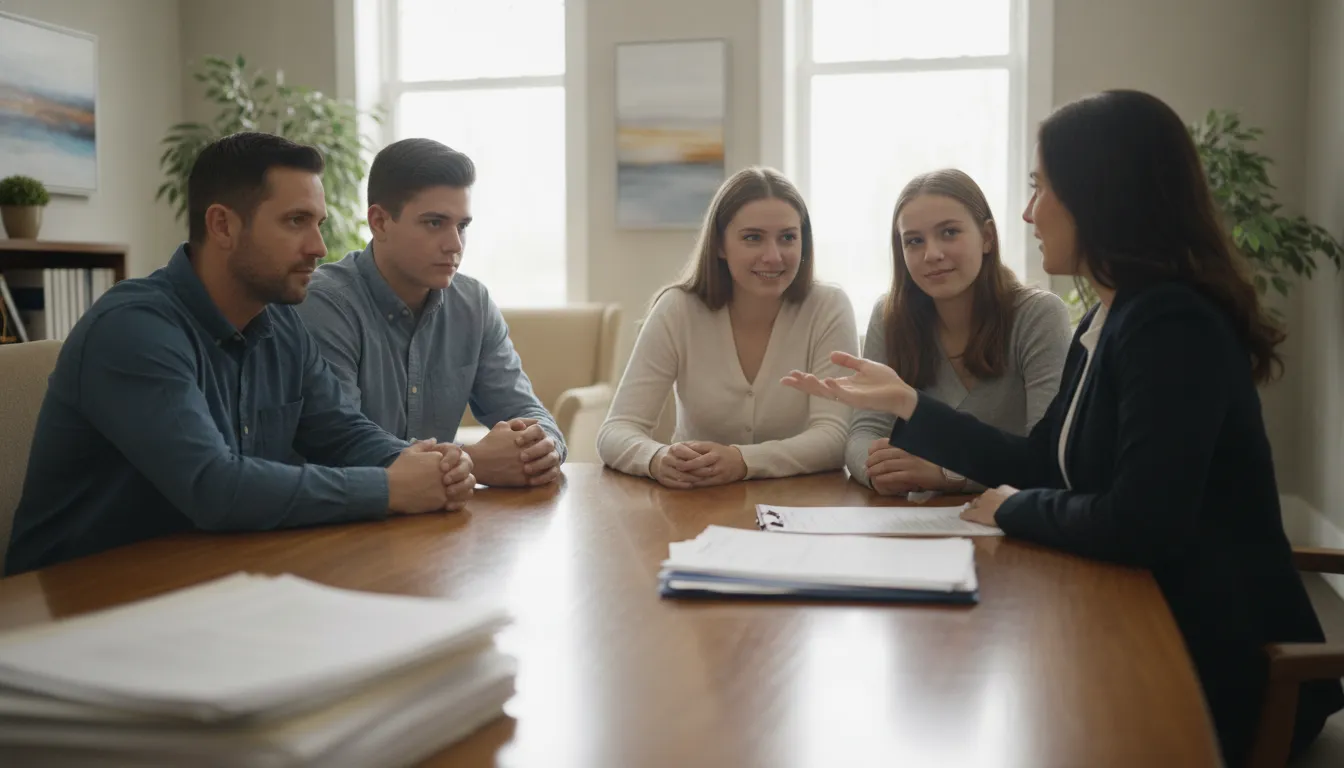
Michigan family organizing accident evidence with a personal injury attorney

If a family member cannot attend, ask whether another trusted person may participate. For a serious injury, a relative may be helping with transportation, records, bills, or communication. The goal is to give the attorney a clear picture of what the family is facing, not to present a perfect case file.

How can you preserve evidence after an accident?

Evidence preservation means keeping original information in a safe place and recording details while they are fresh. Save photos in their original form, keep relevant text messages and emails, and avoid deleting posts or making public statements about the incident. Tell your lawyer if a vehicle, helmet, damaged object, or other physical evidence may be repaired, discarded, or sold.

A simple evidence plan can include:

  • Creating one secure folder for photographs, reports, bills, correspondence, and notes.
  • Keeping a symptom and treatment journal that separates what happened from your later understanding of it.
  • Listing witnesses and noting how each person may have observed the event.
  • Asking businesses or property owners about preserving surveillance when relevant, without confronting anyone.
  • Keeping copies of every insurance communication and noting the date, sender, and subject.

For a serious vehicle injury, the firm’s guide to looking up a Michigan accident report may help you locate the next record to request. If you are unsure whether a photograph, message, or object matters, keep it and ask during the consultation.

How should you handle insurance communications?

Insurance communications deserve careful attention because different benefits, policies, and claims may be involved. Be truthful, but do not speculate about fault or minimize an injury. Ask for requests in writing when possible, keep copies, and do not sign a release without understanding what claims and future needs it may affect.

Coverage or issue What to organize Why it matters
PIP medical Treatment records, bills, explanations of benefits, and insurer correspondence Medical coverage questions may involve treatment, medical necessity, and payment disputes.
Work loss or replacement services Employer records, missed-work dates, wage information, and household tasks affected These are separate benefit questions from PIP medical coverage and need their own documentation.
Property Protection Insurance Vehicle or property damage photographs, estimates, and repair records Property damage is a separate coverage category from medical and income-related benefits.
Liability claim Crash facts, witnesses, medical course, and communications about fault The claim may involve a different insurer and different questions than first-party benefits.

The Michigan Department of Insurance and Financial Services Auto Insurance Reform FAQ describes Michigan’s no-fault coverage framework and cautions that agency information is not a substitute for legal advice. Atnip & Associates also explains Michigan PIP coverage and benefits after a car accident in separate resources.

If an insurer denies or delays a claim, save the denial and the policy language cited. The State of Michigan’s insurance complaint information may explain an administrative option, while a lawyer can help evaluate whether a legal claim or another response is appropriate.

What types of serious cases may require legal guidance?

Personal injury law can involve more than a single car crash. The right questions depend on how the injury occurred, who may be responsible, which insurance policies apply, and whether the person will need long-term support. A family should receive advice tied to its facts rather than assume that a general online checklist answers every case.

Atnip & Associates may assist with matters involving:

  • Motor-vehicle collisions, including severe car, truck, motorcycle, and rideshare injuries.
  • Catastrophic injuries such as traumatic brain injuries and spinal cord injuries.
  • Wrongful death claims arising from fatal negligence.
  • Dog bites, premises incidents, and other serious injury claims.
  • Complex Michigan insurance disputes connected to a serious injury.

For a long-term injury, families can review the firm’s catastrophic injury lawyer guide, Michigan traumatic brain injury resource, and spinal cord injury resource. After a death, the wrongful death attorney guide offers another starting point. Michigan’s wrongful-death statute is available through the Michigan Legislature. The legal analysis depends on the facts and should be discussed with counsel.

Does Atnip & Associates have a Midland office?

Atnip & Associates represents clients throughout Michigan, including families in and around Midland, but this article does not claim that the firm maintains a Midland office. The firm has Michigan office locations in Rochester and Sanford. A family can ask during a consultation how meetings, records, and case work will be handled for its location.

The firm’s Michigan areas served page explains its statewide focus. Atnip & Associates is a boutique plaintiff-side firm that emphasizes compassionate, personalized advocacy and attorney involvement in serious injury and wrongful-death matters. The firm’s positioning is simple: For others, it’s just another case. For us, it’s personal.

Fees and expenses should be explained during the consultation. Atnip & Associates describes its arrangement as no fee unless the firm wins, subject to the written agreement and the facts of the case. No lawyer can guarantee a settlement, verdict, or recovery.

Call 248-599-1607 to schedule a free consultation. Atnip & Associates can help you understand the next step without promising an outcome that no lawyer can guarantee.

Frequently Asked Questions About Midland Personal Injury Lawyers

Should I talk with a lawyer before accepting an insurance settlement?

Consider a consultation before accepting a settlement when injuries are serious, treatment is ongoing, future needs are uncertain, or a release is involved. Once a release is signed, it may affect claims that have not yet been fully evaluated.

What if I do not know who was at fault?

You do not need to resolve fault before asking for legal guidance. Preserve the available evidence, avoid guessing in insurance communications, and provide the known facts to an attorney who can identify the issues that require further investigation.

Can Atnip & Associates review a wrongful-death matter?

Atnip & Associates handles serious personal injury and wrongful-death matters. A family should schedule a consultation promptly so the firm can discuss the facts, potential claims, evidence, and applicable Michigan requirements.

How much does a personal injury consultation cost?

Atnip & Associates offers a free consultation and describes its fee arrangement as no fee unless the firm wins, subject to a written agreement. Ask about fees, expenses, and case responsibilities before deciding whether to hire a lawyer.

What should I do if the insurer keeps calling?

Keep a record of the calls and request written details about what the insurer needs. Be truthful, but do not speculate or sign a release before you understand the request. A consultation can help you decide how to respond.

Can a Michigan firm help if I live near Midland?

Yes, Atnip & Associates represents clients statewide, including Midland-area families, without claiming a Midland office. Ask the firm about consultation logistics and how the case team will work with you from your location.

Talk With A Michigan Personal Injury Lawyer

If you or someone you love suffered a serious injury, you do not have to make every legal and insurance decision alone. Gather what you can, protect your medical care and records, and ask questions before signing documents that may affect your future.

Schedule a free consultation with Atnip & Associates or call 248-599-1607. There is no fee unless we win, and every case depends on its own facts.

When a catastrophic injury changes a person’s health, independence, and ability to support a family, the legal questions can feel as overwhelming as the medical ones. A catastrophic injury lawyer Macomb County families trust can help organize the facts, protect important evidence, and evaluate the full effect of an injury without asking a family to make rushed decisions.

Call 248-599-1607 to schedule a free consultation and take the first step toward protecting your rights and your family’s future.

A catastrophic injury claim may involve more than current hospital bills. Depending on the facts, a family may need to document future treatment, rehabilitation, equipment, home changes, lost income, reduced earning capacity, and the personal effects of the injury. Early legal guidance can help preserve evidence and build a qualified, fact-based picture of those needs.

This guide explains the issues families in Macomb County may want to consider after a serious injury. It is general information, not a legal opinion about any particular claim. The right next step depends on the injury, how it happened, available insurance, and the evidence that can be preserved.

  • Focus first on medical care and immediate safety.
  • Keep records that show how the injury affects daily life and work.
  • Avoid giving a recorded statement or signing a release before understanding what it covers.
  • Ask questions about future care, financial losses, and the process during an initial consultation.

What Counts as a Catastrophic Injury?

A catastrophic injury is generally understood as an injury that causes a lasting, major change in a person’s ability to work, care for themselves, communicate, move, or enjoy ordinary life. The label is not determined only by the first hospital bill. Medical prognosis, functional limitations, treatment needs, and the injury’s effect on the family all matter.

Examples may include traumatic brain injuries, spinal cord injuries, paralysis, amputation, severe burns, permanent disfigurement, and other injuries requiring extensive rehabilitation or continuing support. A condition that initially appears less severe can also create substantial long-term problems. Families should avoid assuming that a lack of visible wounds means there is no serious claim.

Atnip & Associates, PLLC handles serious and life-altering injury matters throughout Michigan. Its Michigan catastrophic injury practice provides broader service information, while this guide focuses on the local questions families may face in Macomb County.

What Losses Can a Family Document?

Families should document both losses that have already occurred and losses that may continue into the future. A qualified evaluation may consider medical records, expert opinions, employment information, receipts, and testimony from the injured person and caregivers. The available categories depend on the facts and applicable law, so no list guarantees that a particular item will be recoverable.

Potential areas to discuss with a lawyer include:

  • Emergency care, hospitalization, surgery, medication, and follow-up treatment.
  • Physical, occupational, speech, and cognitive rehabilitation.
  • Wheelchairs, prosthetics, communication devices, accessible transportation, and other equipment.
  • Home modifications, vehicle modifications, and professional or family-provided assistance.
  • Past lost income and a qualified analysis of future earning capacity.
  • Out-of-pocket costs connected to treatment, transportation, care, and daily support.
  • Physical pain, emotional distress, loss of independence, and changes in family and social life when those losses are legally available and supported by evidence.

For a deeper discussion of treatment-related documentation, families can review Atnip & Associates’ guide to long-term catastrophic injury rehabilitation. A separate Michigan life care plan guide explains how future needs may be organized for review by medical and financial professionals.

Area to document Useful records or examples Question for the legal team
Medical care Records, bills, prescriptions, treatment recommendations What care is expected now, and what may be needed later?
Function and independence Therapy notes, assistance logs, equipment recommendations How has the person’s daily routine changed?
Work and income Pay records, job duties, leave documents, vocational information What work can the person perform now or in the future?
Home and transportation Modification estimates, mobility needs, transportation receipts What changes are necessary for safe access and mobility?

How Is Evidence Built After a Serious Injury?

Strong evidence connects the event to the injury and then connects the injury to the losses claimed. That process may involve collecting records from the scene, identifying witnesses, documenting the injured person’s condition over time, and obtaining opinions from appropriate medical, vocational, life-care, or financial professionals.

Families can help preserve information by keeping:

  1. Accident reports, photographs, videos, contact information for witnesses, and insurance correspondence.
  2. Medical records, discharge instructions, therapy notes, medication lists, and appointment calendars.
  3. A dated journal describing pain, symptoms, assistance needs, missed work, and changes in ordinary activities.
  4. Receipts and invoices for transportation, equipment, home changes, care, and other injury-related expenses.
  5. Employment records showing wages, benefits, job duties, time missed, and any changes in work capacity.

The evidence may also show what a family member now does each day, such as helping with bathing, transfers, meals, medication, transportation, or communication. These details should be recorded respectfully and accurately. A family should not exaggerate or minimize the injury to make the claim appear stronger.

What should families avoid while the claim is developing?

Families can protect the record by being careful with documents, conversations, and public posts. The goal is not to hide information. It is to preserve an accurate account while the medical and legal picture develops.

  • Do not discard damaged clothing, equipment, or other items that may help explain what happened.
  • Do not delete photographs, messages, videos, or calendar entries related to the event or recovery.
  • Do not guess when answering questions. Mark an item as uncertain and locate the record if possible.
  • Keep copies of letters, emails, forms, and releases sent by an insurer or another party.
  • Use care with social media posts about the injury, activities, finances, or the claim.

If an insurer requests a statement or a signature, a family can ask what is being requested and discuss it with counsel before responding. Atnip & Associates’ catastrophic injury resource provides broader background, but the family’s own facts should guide the conversation.

In a motor vehicle case, the legal analysis can include both Michigan no-fault benefits and a possible claim against a responsible party. Michigan law addresses personal protection insurance benefits and payment for certain medical services, but the applicable coverage and dispute depend on the policy, accident, treatment, and current law. Families can review the Michigan Legislature’s personal protection insurance statute and medical-services statute as starting points, then seek advice about their own circumstances.

Atnip & Associates also maintains practical information about Michigan attendant care benefits and traumatic brain injury claims. Those pages address narrower issues and should complement, not replace, a case-specific review.

Call 248-599-1607 to schedule a free consultation if you need help understanding what evidence may matter in a catastrophic injury claim.

Why Does Life-Care Planning Matter?

A life-care plan is a structured estimate of the medical and support needs a person may have over time. It is not a guarantee of future costs or a prediction that every listed service will be used. When supported by appropriate records and expert analysis, it can help a family and legal team discuss care, equipment, modifications, and other needs more completely.

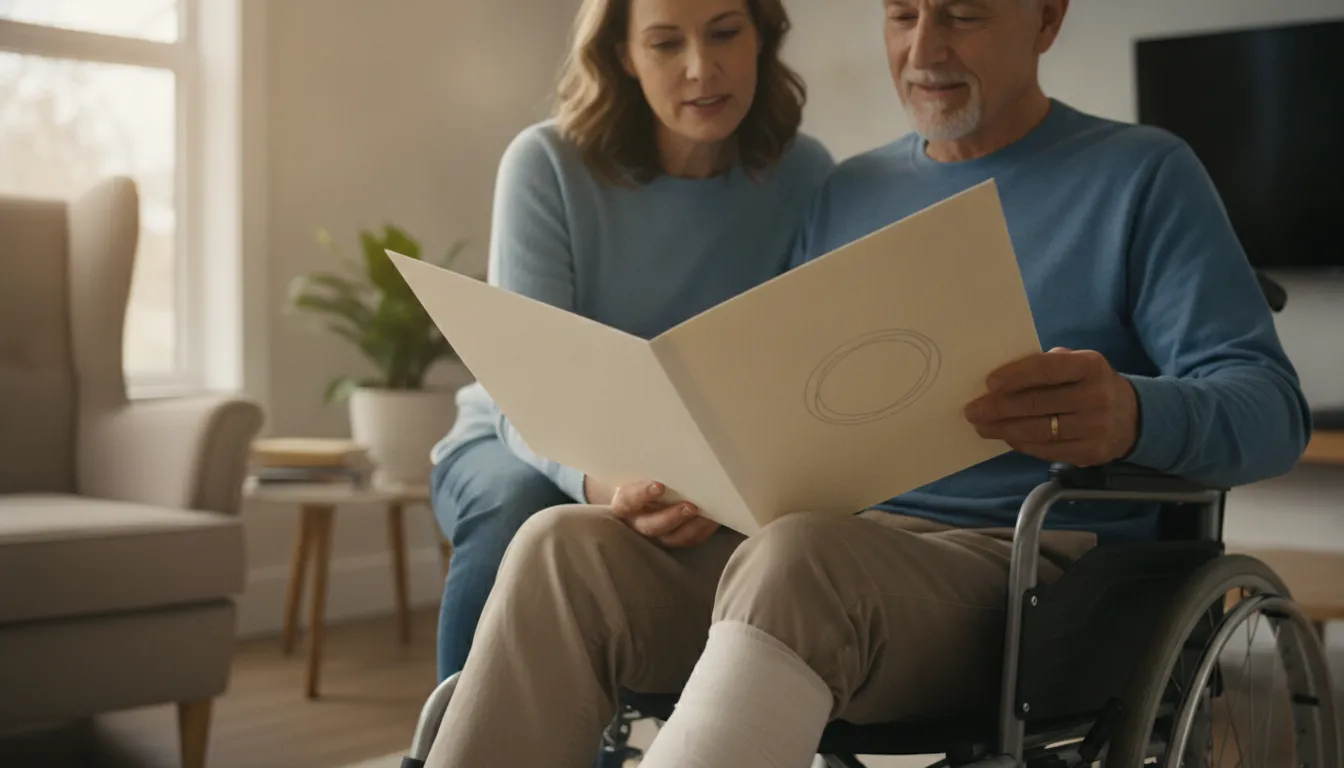
Caregiver and injured adult reviewing a long-term care plan at home
Future-needs planning can help families organize care, equipment, and support questions.

Depending on the injury, planning may address:

  • Future physician visits, procedures, medications, and therapy.
  • Assistive technology, mobility equipment, prosthetics, and replacement schedules.
  • Home accessibility, vehicle access, transportation, and personal assistance.
  • Vocational rehabilitation or changes to education and employment plans.
  • Caregiver needs, respite, supervision, and the difference between paid services and family support.

For example, a spinal cord injury may require a different mix of equipment, therapy, attendant care, and home changes than a severe brain injury. The point is not to force every case into a template. It is to identify the person’s actual needs, explain the basis for each item, and update the analysis as medical information develops.

Families may find the firm’s Michigan spinal cord injury claims guide helpful for understanding one type of long-term injury. Its physical and cognitive therapy guide provides additional context about recovery-related documentation.

What Should Families Bring to an Initial Consultation?

An initial consultation is an opportunity to explain what happened, ask questions, and learn how the firm would evaluate the matter. Families do not need a perfect file before calling. A lawyer can identify what is missing, what should be preserved, and which questions require more investigation.

If available, bring or describe:

  • The date, location, and basic description of the event.
  • Names of people, businesses, drivers, insurers, or other parties involved.
  • Accident reports, photographs, video, witness information, and correspondence.
  • Hospital, physician, therapy, and rehabilitation information.
  • Health insurance, auto insurance, disability, or other coverage documents.
  • Work information, income records, and a description of current job duties.
  • A list of current assistance needs, equipment, home changes, and upcoming appointments.

It is also useful to write down the family’s questions. Common questions include who may be responsible, what benefits may be available, how future care is evaluated, how communication will work, and how the fee agreement operates. A consultation does not require a family to promise that it will hire the firm.

Atnip & Associates offers a free consultation and describes its fee arrangement as no fee unless the firm wins. The written fee agreement controls the relationship, including any details about costs and expenses. Families should read it carefully and ask for an explanation of anything unclear.

For families considering a consultation about a spinal cord injury, the firm’s free spinal cord injury consultation resource offers a more specific starting point. Families can also use the firm’s contact page to review available ways to reach the office.

How Can a Macomb County Family Start?

Families can start by protecting health and safety, preserving records, and getting advice before making decisions that could affect a serious claim. The right legal strategy depends on the facts, and a consultation is the place to ask how the injury, evidence, insurance, and future needs fit together.

Macomb County is a service area for Atnip & Associates, PLLC, which also represents clients throughout Michigan. The firm emphasizes personalized attention and direct attorney involvement for serious personal injury matters. Its attorneys’ experience with both plaintiff-side litigation and insurance defense can provide context when a family is evaluating how an insurer may respond, but no lawyer can promise a particular settlement or verdict.

Early questions are often practical: Which records should be requested? Who should be notified? What should the family avoid saying or signing? What care and support may be needed next month or years from now? A focused conversation can help turn those questions into an organized next-step list.

Call 248-599-1607 to schedule a free consultation with Atnip & Associates, PLLC.

Frequently Asked Questions

Does every serious injury qualify as a catastrophic injury claim?

Not necessarily. The legal and medical analysis depends on the injury’s lasting effects, treatment needs, functional limitations, available evidence, and the circumstances of the event. A family should obtain a case-specific review rather than relying on a label or an estimate found online.

Should a family wait until medical treatment is complete before speaking with a lawyer?

There is no universal answer, but families generally do not need to wait to ask questions. Early guidance may help preserve accident evidence, coordinate records, and identify future-needs issues while treatment continues. A lawyer should explain how an early consultation fits the facts of the case.

What is the purpose of a life-care plan?

A life-care plan organizes a person’s projected medical, rehabilitation, equipment, accessibility, assistance, and related needs. It is an evidence-based planning tool, not a guarantee of a particular cost or recovery. The plan should reflect the individual’s condition and be supported by appropriate professional analysis.

Can an attorney help with a catastrophic injury caused by a car accident?

An attorney may evaluate the accident, insurance benefits, potential claims against responsible parties, evidence, and long-term losses. Michigan motor vehicle cases can involve complex no-fault questions, so the answer depends on the policies, medical facts, timing, and responsibility evidence.

How does Atnip & Associates charge for a serious injury case?

Atnip & Associates describes its personal injury representation as no fee unless the firm wins, with the written fee agreement controlling the relationship. Families should review that agreement and ask questions about costs, expenses, and any other terms before signing.

Talk With a Catastrophic Injury Lawyer in Macomb County

A life-altering injury affects more than a single appointment or bill. If your family is trying to understand evidence, future care, insurance, or possible losses, Atnip & Associates, PLLC can discuss the situation in a free consultation. The firm serves Macomb County and families throughout Michigan with compassionate, personalized representation.

Call 248-599-1607 to schedule a free consultation. For others, it is just another case. For us, it is personal.

When cargo shifts, falls, or causes a truck to lose control, the driver may not be the only person or company whose conduct needs to be investigated. Michigan truck accident cargo liability can involve the motor carrier, a shipper, a loading operation, a trailer owner, a maintenance provider, or another business, depending on who controlled the cargo and what caused the crash.

Call 248-599-1607 to schedule a free consultation about your Michigan truck accident.

These cases are fact-specific. An injured person does not automatically have a claim against every company connected to a shipment, and a safety rule violation does not by itself answer every question about responsibility. The goal is to identify each party that may have had a duty, determine whether it was breached, and connect the breach to the crash and injuries.

  • Cargo may shift because it was not blocked, braced, tied down, balanced, or inspected correctly.
  • The party that owned the goods may be different from the party that loaded or secured them.
  • Early records can help show who made loading decisions and whether anyone noticed a problem before the truck left.

This article provides general information, not legal advice for a particular crash. A Michigan truck accident lawyer can review the available facts and explain which claims and deadlines may apply.

What Does Cargo Liability Mean in a Michigan Truck Crash?

Cargo liability in a truck crash usually refers to potential responsibility for injuries or property damage caused by the way freight was loaded, secured, distributed, or transported. It is different from a claim for damage to the freight itself. For example, a pallet that slides during a turn may strike another vehicle, a load that falls from a trailer may create a roadway hazard, or an improperly balanced load may contribute to a rollover.

The phrase “cargo liability” does not identify one legally responsible party. It describes an issue for investigation. The relevant questions may include:

  1. Who selected the equipment and decided how the freight would be arranged?
  2. Who physically loaded, blocked, braced, tied down, or inspected the cargo?
  3. Could a driver or carrier employee see the defect during an ordinary inspection?
  4. Did the carrier have a duty to correct the problem before accepting the load?
  5. Did the cargo condition, a vehicle defect, driver conduct, or several causes contribute to the crash?

Those questions often require more than a police report. A report may describe the scene and the apparent cause, but it may not identify the loading company, the shipper’s instructions, the securement equipment, or records showing what happened before departure.

Who May Be Responsible for Unsafe Truck Cargo?

Potential responsibility depends on the evidence and the role each party played. The following categories are common starting points, not a conclusion that any particular party is liable in a specific case.

The truck driver

A commercial driver may have duties to inspect the vehicle and load, operate the truck safely, and respond to a cargo problem discovered during a trip. If a driver knowingly continues with a load that is visibly unstable, fails to make a required inspection, drives in a way that causes a properly secured load to shift, or ignores a warning, the driver’s conduct may become part of the negligence analysis.

At the same time, a driver may not have loaded the cargo and may not know what happened inside a sealed trailer. Investigators should not assume that the person behind the wheel made every loading decision. The driver’s statements, inspection records, photographs, delivery paperwork, and communications with dispatch can help clarify what the driver knew and when.

The motor carrier or trucking company

The motor carrier may be involved because it employed the driver, owned or leased the equipment, controlled dispatch and inspections, or accepted the load for transportation. Depending on the facts, a carrier investigation may examine training, supervision, routing, delivery pressure, inspection practices, cargo policies, and whether the company had a process for rejecting an unsafe load.

A carrier is not automatically responsible for every cargo problem. The analysis may turn on the carrier’s own negligence, the driver’s conduct within the scope of work, the carrier’s contractual role, and whether the defect was apparent or hidden. A company may also try to characterize a driver as an independent contractor, making the actual relationship and safety responsibilities important evidence.

For background on the broader investigation of a serious commercial crash, see Atnip’s Michigan big truck accident guide.

The shipper or cargo owner

The shipper is the business that tenders the goods for transportation. The cargo owner may be the shipper, a supplier, a manufacturer, or another business. Ownership alone does not establish negligence. The important issue is often whether the shipper controlled loading or created a concealed defect in the load.

In McMaster v. DTE Energy Co., the Michigan Supreme Court addressed a shipper’s duty in a loading-related injury case. The Court adopted the “shipper’s exception” as a guide: a shipper that loads cargo may face responsibility for a hidden loading defect that the carrier or its agents could not discover through ordinary observation. When an unsafe condition is apparent to the carrier, the carrier may still have a duty to inspect and correct it. Read the Michigan Supreme Court opinion in McMaster for the decision and its discussion of the competing duties.

This distinction matters. A shipper may be a relevant party to investigate, but an injured person should not assume that the shipper is liable simply because the shipment came from that business. The loading arrangement, the condition of the cargo, and what the carrier could reasonably observe are central facts.

The loader, warehouse, or distribution center

A warehouse, loading contractor, distribution center, or other facility may have a separate role from the shipper and the carrier. It may have employees who selected the loading pattern, operated a forklift, placed blocking or bracing, installed tiedowns, documented the weight, or sealed the trailer.

Records can show whether a facility followed the shipper’s instructions, changed the loading plan, used damaged equipment, overloaded an axle, or left a defect that was not visible once the trailer was closed. A facility may also have a contract that allocates responsibilities, although a contract does not automatically decide whether a third party has a negligence claim. The conduct, control, and applicable law still matter.

Worker checking a cargo tie-down strap and blocking inside a semi trailer
Securement records and loading practices may help investigators determine how cargo was prepared for transport.

The trailer owner, leasing company, or maintenance provider

Cargo may appear to be the problem when the underlying cause is a damaged trailer floor, failed tie-down anchor, defective door, worn securing device, or other equipment issue. The trailer may be owned by the carrier, leased from another company, or maintained by a third-party vendor. A maintenance provider could be relevant if it performed an incomplete or negligent repair that contributed to the failure.

Maintenance responsibility must be tied to causation. The fact that a company serviced the truck or trailer does not prove that its work caused the crash. Investigators may need work orders, inspection reports, photographs, parts information, prior defect notices, and evidence from the vehicle itself.

A broker, freight intermediary, or other business

A broker or freight intermediary may arrange transportation without owning the truck, loading the goods, or directing the driver. That business is not automatically liable for a crash. It may still require review if it undertook a safety-related role, made representations, selected a carrier in a relevant way, or knew of a risk it failed to address. The precise services and contracts matter.

Because these roles can overlap, the initial investigation should identify every entity named on the bill of lading, rate confirmation, delivery receipt, lease, loading ticket, and insurance documents. A company that is not obvious at the crash scene may have controlled an important part of the shipment.

How Do Federal Cargo-Securement Rules Help Evaluate Fault?

Federal motor-carrier regulations provide a useful safety framework for many commercial truck shipments. Under 49 CFR 393.100, cargo must be loaded and secured to prevent shifting that could affect the vehicle’s stability or maneuverability, and to prevent cargo from leaking, spilling, blowing, or falling from the vehicle. The rules also address the performance of securement systems and the condition of tiedowns.

The precise rule depends on the vehicle, commodity, and operation. For example, 49 CFR 393.102 describes performance criteria for cargo securement systems, while 49 CFR 393.106 addresses the securement of articles of cargo. These rules can help an attorney or expert ask focused questions about tiedown capacity, blocking, bracing, working load limits, and inspection practices.

A regulation is not a substitute for a complete negligence analysis. The investigation still has to address who had responsibility for the load, whether a condition violated a rule, whether the condition caused the collision, and what injuries resulted. Some operations may involve state-specific requirements, intrastate rules, contractual duties, or exceptions. The applicable regulation should be confirmed against the facts and the date of the crash.

What Records Should Be Preserved After a Cargo-Related Crash?

Cargo evidence can disappear quickly. The freight may be unloaded, repacked, returned, discarded, or moved to another facility. The trailer may be repaired or placed back in service. Video systems may overwrite recordings, and electronic records may be retained for limited periods. Preserving evidence early can make it easier to determine what happened.

Depending on the crash, potentially important materials include:

  • Photographs and measurements of the cargo, trailer, tiedowns, blocking, bracing, doors, anchor points, and roadway debris.
  • Bills of lading, shipping instructions, load plans, weight tickets, scale records, delivery receipts, seal numbers, and loading checklists.
  • Driver vehicle inspection reports, cargo inspection records, dispatch messages, route information, and communications about a load problem.
  • Electronic logging device data, onboard camera footage, event data, engine control module information, and GPS or telematics records.
  • Maintenance files, repair orders, inspection histories, defect reports, and records for the truck, trailer, and securement equipment.
  • Contracts and insurance information showing the roles of the carrier, shipper, loader, broker, trailer owner, and other businesses.

Atnip’s guides to Michigan truck driver log evidence and truck black box evidence explain why electronic records can matter in a commercial crash. A broader Michigan serious crash evidence guide covers additional steps injured people and families may consider.

Do not enter an unsafe roadway or trailer to collect evidence. Take photographs only when it is safe and lawful to do so, obtain medical care, and keep copies of documents and communications related to the crash.

Need help identifying and preserving cargo evidence? Schedule a free consultation with Atnip & Associates to discuss the next step for your case.

How Does Michigan Law Affect Shared Responsibility?

More than one party may have contributed to a truck crash. Michigan’s negligence and comparative-fault rules make it important to identify each person’s or company’s conduct rather than focusing only on the driver. A court may consider each party’s duty, breach, causation, and share of fault, subject to the rules that apply.

That does not mean every connected business will pay damages. A party must have a legally relevant duty or basis for responsibility, and the conduct must be connected to the injury. A shipper’s role may differ from a carrier’s inspection duty, while a maintenance provider’s responsibility may turn on whether a defective repair caused a failure.

Truck crashes can also involve more than one type of claim. An injured person may have questions about no-fault benefits, third-party negligence, medical expenses, wage loss, permanent impairment, or catastrophic injuries. The applicable deadlines and proof requirements can differ. A Michigan truck accident lawyer can evaluate the relationship between those issues instead of treating the collision as an ordinary two-car accident.

What Should You Do After a Cargo-Related Truck Crash?

If you or a family member has been injured, practical steps can help protect health and preserve information without requiring you to decide liability on your own.

  1. Seek medical attention and follow the treatment instructions you receive. Tell providers about symptoms that develop later.
  2. Report the collision through the appropriate channels and obtain the crash report when it becomes available.
  3. Photograph visible injuries, vehicles, cargo, debris, road conditions, and identifying information when it is safe to do so.
  4. Keep medical records, bills, wage information, insurance correspondence, photographs, and contact information for witnesses.
  5. Avoid guessing about how the load was secured or accepting a statement that only one person or company can be responsible.
  6. Ask an attorney about preserving the truck, trailer, cargo, electronic data, video, loading records, and other evidence before it is changed or lost.

People who are dealing with life-changing injuries may also want to review Atnip’s information about catastrophic personal injury claims. The right investigation depends on the facts, including the type of cargo, the location of loading, whether the trailer was sealed, the condition of the equipment, and how the collision unfolded.

Call 248-599-1607 to schedule a free consultation before important cargo evidence is lost.

Frequently Asked Questions About Michigan Truck Cargo Liability

Is the trucking company responsible if cargo shifts?

Not automatically. The carrier may be relevant if it controlled the transportation, failed to inspect or correct an apparent defect, or otherwise acted negligently. The shipper, loader, driver, equipment owner, or another party may also need to be investigated. Responsibility depends on the evidence and causation.

Can a shipper be liable for an improperly loaded truck?

Possibly, but the facts matter. In McMaster v. DTE Energy Co., the Michigan Supreme Court explained that a shipper responsible for loading may be liable for a hidden loading defect that the carrier or its agents could not discover through ordinary observation. The carrier may still have duties when a defect is visible or apparent.

What if the truck was carrying cargo for another company?

The cargo owner’s identity is only one part of the investigation. The loader, shipper, carrier, broker, trailer owner, maintenance provider, and driver may have different roles. Bills of lading, loading records, contracts, inspection documents, and electronic data can help identify who made the decisions that matter.

What evidence can show that cargo caused a truck crash?

Photographs, debris patterns, securement equipment, loading diagrams, weight records, inspection reports, video, electronic truck data, witness accounts, and expert analysis may help connect the cargo condition to the crash. The evidence should be preserved before the load is altered, unloaded, repaired, or discarded.

Talk With a Michigan Truck Accident Lawyer

Cargo-related truck crashes can involve overlapping duties and evidence that is controlled by several businesses. If you were injured, a careful investigation may help clarify whether the driver, carrier, shipper, loader, equipment owner, maintenance provider, or another party should be included in the claim.

Call 248-599-1607 to schedule a free consultation. For others, it is just another case. For us, it is personal.

Atnip & Associates, PLLC represents injured people and families in Rochester and throughout Michigan. The firm handles serious personal injury and catastrophic injury matters with personalized attention. Fees are handled through a contingency arrangement, with no fee unless we win.

After a serious trampoline park injury, families often have more questions than answers. Questions about what happened and who knew about a dangerous condition may require careful investigation while memories and records are still available.

A trampoline park accident attorney may examine notice, supervision, equipment condition, safety rules, waiver language, incident records, witness accounts, and medical documentation. The strength of any potential claim depends on the facts, the available evidence, and how Michigan law applies to the circumstances.

Call 248-599-1607 to schedule a free consultation and discuss what happened.

Before deciding what a waiver or insurance response means, it can help to preserve photographs, communications, receipts, witness information, and medical records. A careful review then begins by identifying which evidence may clarify the park’s notice, practices, and response.

What Does a Trampoline Park Accident Attorney Investigate First?

After a serious trampoline park injury, an attorney may begin by building a timeline of what happened. The attorney may also identify evidence that could clarify how the incident occurred. The goal is not to assume that the park, an employee, or another participant is responsible. It is to preserve facts and evaluate whether the available evidence supports a potential claim under Michigan law.

What site, equipment, and conditions matter?

A site investigation may examine the trampoline, padding, nets, flooring, platforms, entry points, and surrounding areas. Photographs, measurements, maintenance information, inspection records, and equipment details can help show the physical conditions at the time of the incident. The attorney may also ask how the area was configured, whether multiple people were using it. What activity was taking place, and whether the conditions changed before they could be documented.

Park rules, posted warnings, staffing levels, employee training, and supervision practices may also matter. These facts do not establish a violation by themselves. They help an attorney compare what the park represented or required with what was happening when the injury occurred.

How do video, records, and witnesses help?

Video or security footage can be especially important because it may show movement, spacing, staff response, and the moments before and after the injury. A Michigan personal injury practice areas overview explains that an investigation may include physical evidence, video or security footage, and eyewitness statements. An attorney may seek to preserve footage before routine recording practices overwrite it while also collecting the park’s incident report. Internal notes, communications, and any report made to a parent or guardian.

Eyewitness accounts can add context that a recording does not capture. Investigators may speak with family members, other visitors, employees, and anyone who saw the condition of the equipment or the park’s response. Names, contact information, photographs, receipts, waiver materials, and messages with the facility can help establish a reliable record.

Medical evidence and expert input

The investigation also connects the event to the injury. Medical records, diagnostic imaging, treatment recommendations, bills, and descriptions of functional limitations may help document what happened medically and how recovery is progressing. For a serious injury, an attorney may coordinate with medical or other experts when appropriate. This can be relevant when the effects involve long-term treatment, rehabilitation, lost income, attendant care, or changes in daily activities. A catastrophic injury claims resource discusses why detailed documentation and expert coordination may be important in complex injury matters.

How Do Michigan Safety Rules Shape the Investigation?

Michigan’s Trampoline Court Safety Act gives an investigation a specific legal starting point. Under MCL 691.1733, a trampoline court operator has several stated safety responsibilities. In plain English, those responsibilities include posting required duties, complying with the ASTM F2970-13 safety standard. Maintaining the trampoline court consistent with that standard, and maintaining required signs or notices. The statute does not mean that every injury proves a violation. It does identify records, conditions, and practices that may deserve careful review.

A trampoline park accident attorney may ask what safety information was posted and whether it was visible, understandable, and maintained at the time of the incident. The investigation may examine whether the court was maintained according to the applicable standard. It may also examine required notices and whether the operator’s policies matched its actual practices. Those questions should be answered with evidence, not assumptions. Photographs, video, inspection records, incident reports, and witness accounts may show how the facility was operating on the relevant date.

Michigan law also addresses the dangers participants may reasonably encounter. MCL 691.1736 provides that a participant accepts the obvious and necessary dangers inherent in participating in trampoline court activities. That language can matter when an operator argues that an injury arose from an ordinary feature of the activity that was apparent to the participant.

But the statute distinguishes those inherent dangers from dangers otherwise attributable to an operator’s breach of common-law duties. In practical terms. An obvious or necessary danger is not the same question as whether the operator may have failed to perform a duty that reasonable safety practices or Michigan law required. The distinction is fact-specific. The analysis may involve the design and condition of the court, posted warnings, supervision, maintenance, and what the operator knew or should have known.

These statutes do not automatically establish liability, and they do not automatically defeat a claim. They provide a framework for organizing the evidence and separating an ordinary activity risk from a potentially preventable condition or operational failure. A careful review of the statute, the available records, and the injury circumstances can help clarify which issues require further investigation.

Which Park Conditions and Records May Matter?

A careful investigation looks beyond the moment of injury. A trampoline park accident attorney may examine what the operator knew, what it should have known, and what steps it took to reduce foreseeable risks. That review does not assume that a park was negligent. It helps determine whether the available evidence supports a claim and whether another explanation better fits the facts.

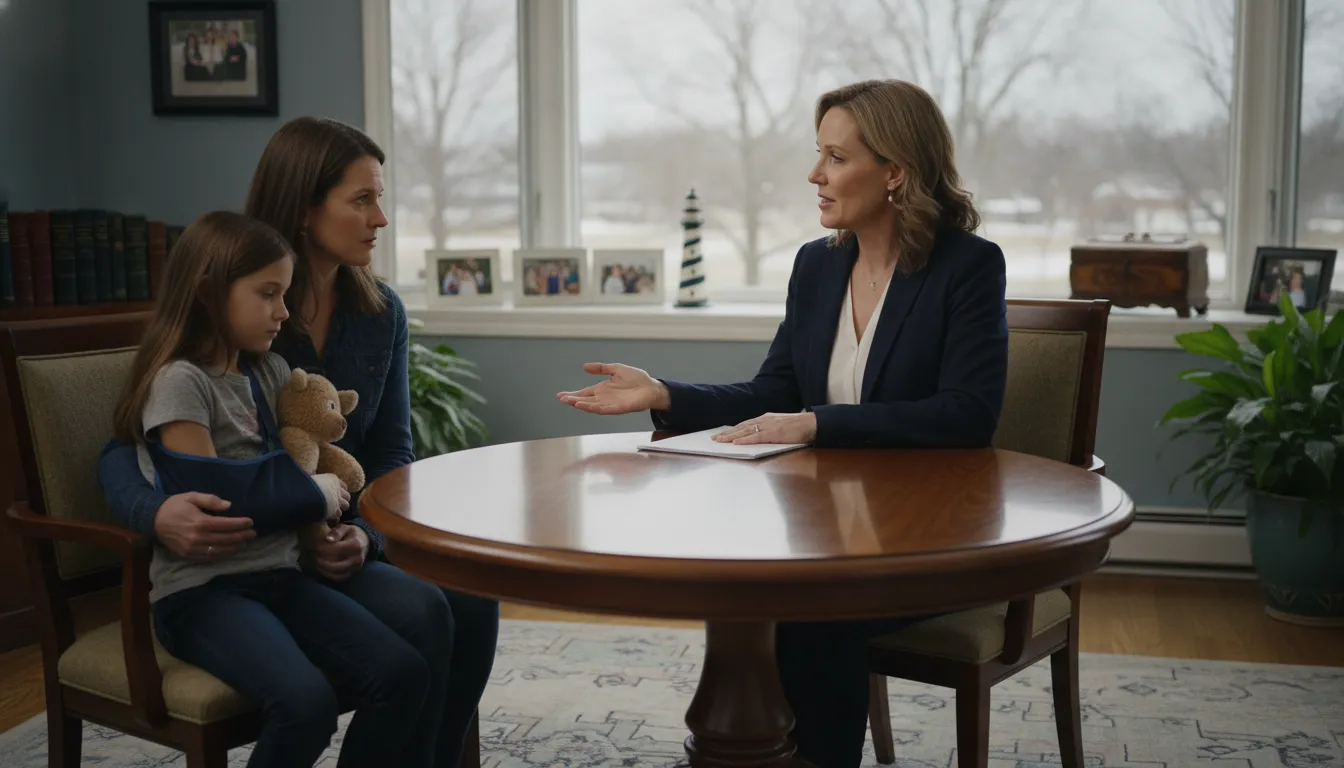
Attorney discussing a trampoline park injury investigation with a Michigan family

Notice, supervision, and operating rules

Notice can come from many sources. The investigation may consider whether employees or managers received earlier complaints about a damaged mat, exposed padding, unsafe spacing, overcrowding, or repeated collisions. It may also examine the park’s rules for age, skill level, one-person jumping, flips, and use of particular attractions. Staffing records, employee training, shift assignments, and the location of attendants can help show what supervision was available when the incident occurred.

Posted warnings and participant instructions may matter as well. Michigan’s Trampoline Court Safety Act addresses operator duties, including safety standards, maintenance, and signs or notices. The existence of a posted rule is not proof that the operator followed it, and a missing or unclear notice is not automatically proof of liability. The facts, applicable law, and evidence must be evaluated together. A Michigan premises liability guide can provide useful background on how notice and unsafe conditions may be analyzed.

Equipment condition, inspections, and maintenance

Physical evidence can be especially important. Photographs or video may show the condition of trampoline beds, springs, frames, netting, padding, barriers, landing areas, and nearby flooring. An attorney may request inspection checklists, maintenance and repair logs, work orders, manufacturer guidance, incident-related photographs, and records showing when equipment was removed from service. The investigation may also ask whether the park had a process for separating participants by age, size, or experience, and whether that process was followed.

These records may help establish timing and notice, but they do not prove a defect or breach by themselves. An inspection completed before an injury does not answer every question, just as a later repair does not necessarily establish what condition existed earlier.

How do reports and witness evidence help?

Security footage, attraction cameras, phone video, electronic check-in data, and staff communications may show the sequence of events and who was present. Incident reports can identify observations made immediately afterward, including statements about the equipment, rules, supervision, and symptoms. Witness names and contact information should be preserved while memories are fresh. Do not assume that a park will retain video indefinitely. Written requests to preserve relevant footage, records, photographs, and electronic information may be appropriate, particularly in a serious injury case.

Families can also preserve their own photographs, receipts, waiver copies, messages with the park, and notes about what they observed. For more practical guidance, read about preserving accident evidence. Prompt legal advice can help identify evidence that may otherwise be overwritten, discarded, or altered.

What Should You Do After a Trampoline Park Injury?

After an injury, your first priority is health and safety. Evidence can matter later, but do not delay emergency care or necessary treatment to take photographs or gather paperwork. If the situation allows, these steps can help preserve information while the events are still fresh:

  1. Seek medical care and follow the treatment plan. Call 911 or go to an emergency department when symptoms are severe or urgent. Otherwise, arrange an appropriate medical evaluation and tell the provider how, when, and where the injury occurred. Keep discharge instructions, referrals, prescriptions, bills, imaging results, and notes about symptoms or activity limits. A concussion, spinal injury, fracture, or other serious condition may require continuing evaluation even when symptoms change over time. You can review additional guidance about documenting a concussion injury if head or neck symptoms are involved.
  2. Photograph the scene and injuries when it is safe. Take clear photographs of visible injuries, the trampoline or landing area, padding, barriers, lighting, posted rules, and any condition that may help explain what happened. Capture multiple angles, but do not put yourself or someone else at risk to obtain a picture. Preserve the original files and note when and where each image was taken.
  3. Preserve the waiver, receipt, and communications. Save the signed or electronically accepted waiver, admission receipt, reservation details, park rules, emails, text messages, and messages exchanged with employees or management. Do not assume a waiver decides the matter by itself. Its scope and enforceability can depend on the facts and Michigan law. A Michigan premises liability guide can provide general context about injury investigations on another party’s property.
  4. Request incident information and identify witnesses. Ask the park how to obtain an incident report and record the names or contact information of employees and other people who saw the incident or its immediate aftermath. Avoid arguing about fault or speculating about the cause. A request for information does not establish that the park or another person was legally responsible.
  5. Keep a continuing record of the impact. Track medical appointments, symptoms, limitations, transportation, help needed at home, missed work or school, and out-of-pocket costs. Keep copies of wage-loss documentation and related communications. These records may help explain how the injury affected daily life, but they should be accurate and updated rather than exaggerated.
  6. Protect digital evidence. Do not delete, crop, filter, overwrite, or alter photographs, videos, texts, social-media posts, location data, or other files connected to the incident. Preserve the original device or file when possible. Before posting publicly, remember that partial or speculative statements may later be misunderstood. Prompt advice can help protect evidence because preservation needs and potential deadlines depend on the circumstances.

How Are Serious Trampoline Injuries Documented?

Serious injury documentation begins with a clear medical record, but it should not end there. Emergency department records, imaging, specialist evaluations, diagnoses, treatment plans, and follow-up notes can help show what happened medically and how the injury affects daily life. A patient or family should tell healthcare providers about all symptoms, even when they appear minor at first, and follow the recommended treatment plan when possible.

A pediatric study of qualifying trampoline injuries from 2009 through 2018 reported fractures as the most common diagnosis, followed by strains or sprains and contusions or abrasions. The study also reported head and neck injuries in 21.9 percent of cases. These statistics provide general context, not a diagnosis for any individual. A person with possible head trauma may need careful assessment and follow-up. Read about documenting a concussion injury and traumatic brain injury documentation. The study is available through PubMed.

For a serious trampoline injury, useful documentation may include:

Evidence category. What it may help show.
Medical records. Diagnosis, treatment, restrictions, and recovery needs.
Park records. Rules, inspections, maintenance, notice, and incident response.
Daily-life records. Symptoms, missed work or school, care needs, and functional limits.
  • Medical diagnoses, test results, prescriptions, therapy records, and restrictions on activity, lifting, driving, school, or work.
  • Symptoms over time, including pain, weakness, dizziness, headaches, sleep changes, memory concerns, or difficulty concentrating.
  • Medical expenses, transportation costs, and other out-of-pocket costs connected to treatment.
  • Lost work, reduced earning ability, missed school, or changes in ordinary responsibilities, supported by appropriate employment or school records.
  • Attendant care, replacement services, and help provided by family members when an injured person cannot safely complete usual tasks.

Documentation may also need to address future needs. A continuing treatment plan, rehabilitation recommendation, or specialist opinion may help explain whether care, equipment, assistance, or home changes could be needed later. Those possibilities depend on the injury and the available medical evidence. In some cases, medical or other experts may help evaluate the injury, functional limitations, and long-term needs. This can be particularly important in catastrophic injury claims involving lasting impairment.

Keep copies of records, bills, work documentation, and a simple symptom journal. Preserve photographs and communications about the incident as well. A Michigan premises liability guide offers additional information about preserving evidence. A serious injury attorney can review the available documentation and identify what additional records may be appropriate without assuming that any particular claim or outcome is guaranteed.

Can a Waiver Prevent a Michigan Trampoline Injury Claim?

A signed waiver can be important evidence, but it is not necessarily the final answer after a trampoline park injury. Its effect may depend on the exact language, the circumstances surrounding the signing, and the facts of the accident. A Michigan premises liability guide can provide general background, but waiver questions usually require a careful review of the specific document and incident.

What does the waiver actually cover?

An attorney may examine whether the waiver clearly describes the risks at issue. A document that discusses ordinary jumping risks may not address every condition or event that contributed to an injury. The analysis can include whether the language covers the particular activity, equipment, area of the facility, and type of harm involved.

The review may also consider who signed the waiver and when. For example, the signer may have been the injured adult, a parent or guardian, or another person completing registration. The wording, the participant’s age, the presentation of the document, and whether the park’s conduct matched its written rules can all matter. These details do not establish a legal result by themselves, but they can help identify the questions that need answers.

How does Michigan law distinguish ordinary risks from possible negligence?

Michigan’s Trampoline Court Safety Act addresses the dangers participants accept. Under MCL 691.1736, a participant accepts the obvious and necessary dangers inherent in trampoline court use. The same provision distinguishes those dangers from conditions otherwise attributable to an operator’s breach of common-law duties. The statute should be read in its full context, including the operator duties and safety requirements described in MCL 691.1733.

That distinction matters because an injury may involve more than the ordinary possibility of landing awkwardly or losing balance. Depending on the evidence, questions could include whether the condition involved supervision, maintenance, equipment, posted notices, or another operational issue. The existence of a waiver does not automatically prove that every condition was an obvious or necessary danger. Conversely, an injury occurring at a trampoline park does not automatically establish that the operator breached a duty.

What should you do with the document?

Keep the complete waiver, including electronically accepted terms, attachments, receipts, emails, and any rules shown during registration. Do not assume a summary or screenshot contains the whole agreement. Preserve the incident report, communications with the facility, photographs, witness contacts, and medical records as well. A trampoline park accident attorney can compare those materials with the waiver’s wording and investigate whether the document addresses the events that actually occurred. Because enforceability and scope depend on Michigan law and the facts, prompt, fact-specific legal advice can be more useful than relying on a categorical answer.

Call 248-599-1607 before the FAQ to schedule a free consultation about your Michigan trampoline park injury.

Frequently Asked Questions

Can you sue a trampoline park for an injury?

Possibly, depending on what caused the incident and what the evidence shows. An investigation may examine supervision, staffing, safety rules, equipment condition, maintenance, warnings, incident records, and whether the park knew or should have known about a dangerous condition. Medical records, photographs, video, witness information, and expert opinions may also help evaluate the claim. A serious injury does not automatically establish liability, so the facts should be reviewed carefully.

Can you sue a trampoline park if you signed a waiver?

Signing a waiver does not automatically answer the legal question. Its scope and enforceability may depend on the wording, the circumstances of signing, and Michigan law. The analysis may distinguish between obvious, necessary risks and a danger attributable to an operator’s breach of a legal duty. Preserve the waiver and related registration records, and have them reviewed with the rest of the evidence.

What injuries are common at a trampoline park?

Trampoline-park injuries can include fractures, sprains, strains, bruises, abrasions, and head or neck injuries. One published pediatric study reported fractures in 34% of qualifying cases, strains or sprains in 33%. Contusions or abrasions in 14%, and head or neck injuries in 21.9% of cases. The injury type and severity should be documented through appropriate medical evaluation, treatment records, and information about functional limitations.

Is it worth pursuing a personal injury claim?

That depends on the injury, available evidence, insurance issues, anticipated medical needs, lost income, and the potential defenses. A fact-specific review can help a family understand whether further investigation is appropriate and what documentation may matter. Keep medical records, bills, work-loss information, photographs, communications, and witness contacts, and avoid discarding or altering potentially relevant evidence.

Schedule a Free Consultation About Your Michigan Injury

A serious trampoline park injury can leave families sorting through medical records, safety concerns, and questions about what happened. A fact-specific review may help clarify which evidence matters and what options may be available under Michigan law. Call 248-599-1607 to schedule a free consultation about your injury. Atnip & Associates, PLLC can listen to your concerns, explain the next steps, and help you understand how the circumstances may affect your claim.

A collision with a tractor-trailer, semi, delivery truck, or another large commercial vehicle can leave a family facing serious injuries and difficult questions. The driver may not be the only person or business involved. Trucking records, multiple insurance policies, vehicle data, and long-term medical needs can all affect what happens next.

A lawyer for big truck accident injuries can help investigate the crash, preserve evidence. Identify potentially responsible parties, review available insurance coverage, and evaluate damages tied to the injury. In Michigan, the right legal path depends on the facts, the policies involved, and the nature of the injuries. This guide explains the issues to consider before deciding whether to seek counsel.

If you are still receiving treatment, dealing with an insurer, or trying to understand how your family will manage after a serious crash. Start by protecting your health and preserving information about what happened. The differences between a truck claim and an ordinary car claim often begin at the investigation stage.

Call 248-599-1607 to schedule a free consultation

Why are big-truck crash claims different from car-accident claims?

A commercial truck crash can involve more than the impact between two vehicles. The truck’s size and weight may contribute to severe consequences. Its operation can involve a driver, a motor carrier, maintenance providers, cargo interests, and more than one insurer. That does not mean every truck crash creates the same claim. It means the investigation may need to examine more than a typical passenger-car collision.

Issue Why it may matter
Vehicle and operation A commercial vehicle can involve carrier records, equipment information, and operational questions beyond a typical car claim.
Driver hours Hours-of-service records may be relevant when fatigue or scheduling is part of the factual investigation.
Insurance More than one policy or insurer may evaluate the same crash from different perspectives.
Injury impact The size and weight of a truck can contribute to severe injuries that require a long-term damages review.

Federal motor-carrier rules can also add another layer of questions. The Federal Motor Carrier Safety Administration explains that hours-of-service rules address the maximum time a commercial driver may remain on duty. The rules include driving time and specify rest periods intended to help drivers stay awake and alert. In general, carriers and drivers operating commercial motor vehicles must comply with the hours-of-service regulations in 49 CFR 395. These rules do not, by themselves, prove that a driver or company caused a particular crash. They can make operational records relevant when fatigue or scheduling is part of the factual investigation.

The evidence can therefore include records that are not usually central to a basic car claim. Depending on the facts, counsel may seek driver and carrier records, vehicle information, inspection or maintenance material, dispatch information, and communications. A truck accident investigation should be focused, timely, and tied to the actual issues in dispute.

For a comparison point, see Atnip’s Michigan car-accident claims resource. The firm’s Michigan truck accident attorneys page provides a separate path for people seeking representation. This article remains an educational overview, not a determination of liability in any individual case.

What evidence can matter after a commercial truck crash?

Evidence can disappear, become harder to interpret, or be viewed differently as an insurance claim develops. Begin with the information you can safely preserve. Keep photographs and videos of the vehicles, roadway, signs, visible injuries, and surrounding conditions. Save contact information for witnesses, the crash report, medical records, bills, work records, and communications from insurers. Do not delay necessary medical care while trying to assemble a perfect file.

Commercial truck cases may require a broader scene investigation than a routine collision. The available evidence may include crash debris, traffic-camera footage, security footage, eyewitness statements, and information used in crash reconstruction. NHTSA’s Large Truck Crash Causation Study describes a database of 1,000 serious large-truck crashes with more than 1,000 data elements per crash. The study also discusses the value of collecting information at the scene immediately after a crash.

Those observations support the practical importance of timely preservation, but they do not decide the cause of your collision. As a practical starting point, you can:

  1. Seek appropriate medical care and follow the treatment plan.
  2. Photograph the vehicles, roadway, visible injuries, and surrounding conditions when it is safe.
  3. Save witness details, reports, medical records, bills, and insurer communications.
  4. Avoid signing a release or giving a recorded statement before understanding the request.
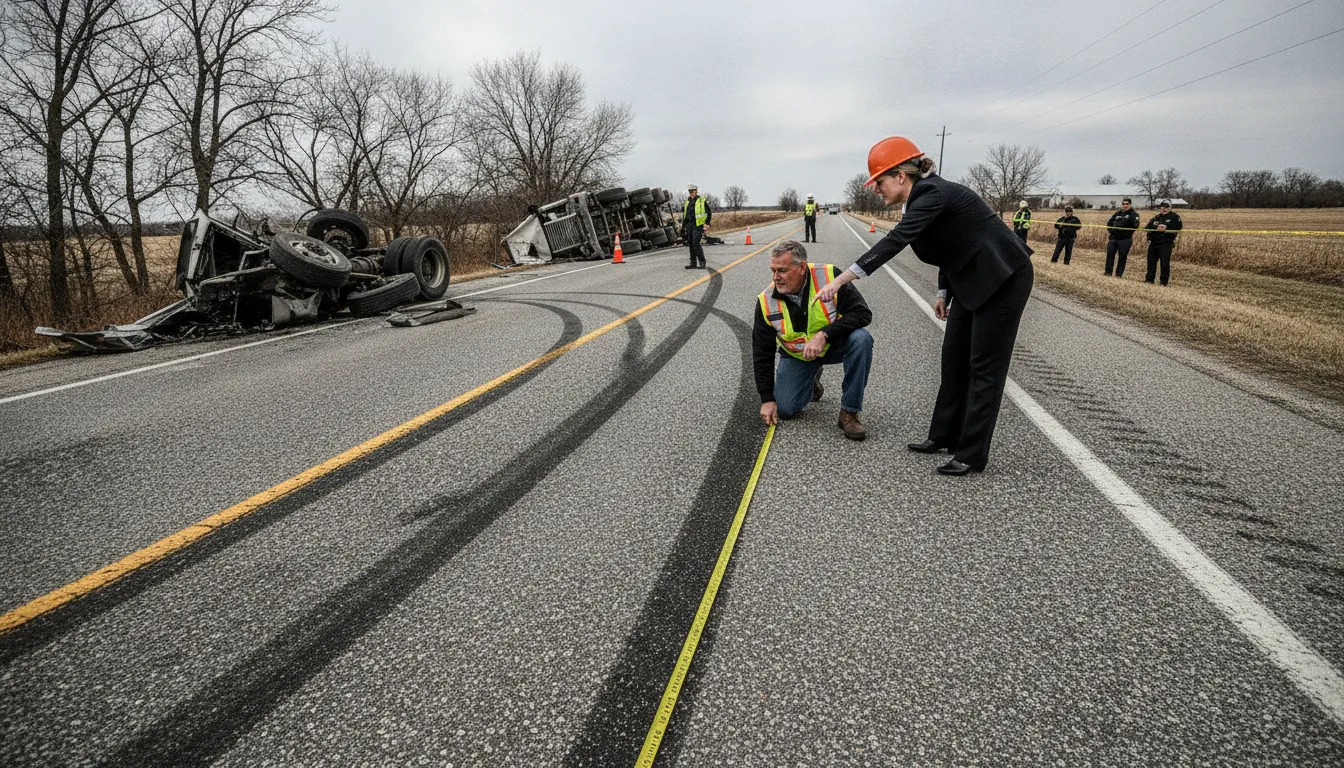
Attorney and investigator examining a commercial truck crash scene
Early legal guidance can help a family organize crash and injury information.

Some evidence is especially vulnerable to loss or alteration. Driver logs, electronic records, and vehicle-system data may require prompt preservation requests and careful interpretation. Learn more about evidence after a truck accident, truck driver logs and electronic records, and truck black-box data. These narrower resources address specific evidence topics without replacing a case-specific review.

An attorney may also compare the police report with photographs, medical records, witness accounts, and physical evidence. Atnip describes independent investigation as including accident reconstruction, medical-record analysis, witness interviews, and coordination with appropriate experts. The purpose is to develop a reliable account of the collision and its effects, not to assume that an early report answers every question.

Who may be responsible for a Michigan truck accident?

Responsibility depends on what caused the crash and who had a legal duty related to that cause. The truck driver may be a focus of the investigation, but a claim may also require examining the motor carrier. A maintenance provider, a cargo or loading operation, or another involved party. Those possibilities are not conclusions. They are questions that must be tested against records, witness accounts, physical evidence, and applicable Michigan law.

A commercial carrier may have responsibilities connected to the driver’s work, vehicle upkeep, scheduling, supervision, or safety practices. Maintenance or loading issues may also matter if evidence shows that they contributed to the collision or worsened the injuries. A driver may dispute the account, and a company or insurer may present a different explanation. The investigation should identify each theory that the evidence supports rather than naming every possible party automatically.

Truck claims commonly require proof of injury or damages, proof of negligence, and a reasoned determination of responsibility. In a Michigan third-party claim, the nature of the injury can also matter. Serious impairment of body function or permanent disfigurement may be relevant legal issues, depending on the facts and the claim being pursued. A lawyer can explain which elements apply after reviewing the crash and medical information.

If a truck was being used for work, the relationship between the driver and company may also require attention. A related resource explains company-vehicle accident guidance, including issues that may arise when a work vehicle is involved. A serious truck crash can raise more than one liability theory, but the available evidence must support each one.

How do Michigan no-fault and liability insurance claims interact?

Insurance after a Michigan truck crash can involve more than one claim. A first-party claim generally concerns benefits under the injured person’s own auto policy or another applicable policy. A third-party claim generally seeks damages from a person or business alleged to have caused the crash. The claims can involve different legal questions, different insurers, and different evidence. One claim does not automatically resolve the other.

Michigan no-fault personal protection insurance, commonly called PIP, may involve reasonable and necessary medical expenses, wage loss subject to legal and policy limits, replacement services, and attendant care. Available benefits and policy choices can differ. The applicable policy, the date and circumstances of the crash, coordination with other coverage, and the person’s medical and work records all matter. Avoid assuming that a general description of PIP predicts what an insurer must pay in your case.

A serious injury may also lead to a liability claim against an at-fault driver or other responsible party. Depending on the facts, that claim can involve proving negligence, responsibility, a legally significant injury, and damages. The available insurance may include the injured person’s coverage and commercial policies connected with the truck or business. Multiple carriers may evaluate the same event from different perspectives.

Atnip’s Michigan no-fault insurance benefits resource provides more background on first-party and third-party issues. An attorney can help organize notices, medical documentation, wage information, and insurer communications. Because insurance rights and deadlines are fact-specific, seek advice promptly rather than relying on a general article to make a filing decision.

What damages may follow a serious truck crash?

The effect of a large-truck collision may continue long after emergency treatment. Some people face a traumatic brain injury, spinal cord damage or paralysis, severe burns, amputation, permanent disfigurement, or another life-changing condition. Others may experience less visible cognitive, emotional, or physical limitations that affect work and daily activities. Medical evaluation and an honest record of changes over time are important.

Potential damage categories can include past and future medical expenses, lost wages, diminished earning potential. Pain and suffering in a serious-injury case, lost quality of life, and property damage. A claim does not automatically include every category, and the amount or availability of damages cannot be predicted from the fact of a crash alone. Medical records, work history, expert analysis, and the applicable law may all affect the evaluation.

Future needs deserve careful attention when an injury is catastrophic. A family may need ongoing treatment, rehabilitation, assistive equipment, home modifications, attendant care, or changes in living arrangements. A medical or financial expert may help explain those needs, but an expert opinion must be based on the person’s actual condition and likely future circumstances. Do not minimize an injury simply because its full effect is not clear in the first days after a collision.

Atnip’s catastrophic injury claims resource discusses serious injuries and the broader needs that can follow them. If a crash caused cognitive effects, the firm’s information on brain injuries after a truck crash may also be relevant. These resources are not a promise of compensation. They are starting points for understanding why a full damages review may be necessary.

When should you speak with a lawyer for big truck accident injuries?

Consider speaking with counsel promptly when the crash involved a commercial vehicle, serious injury. Disputed responsibility, a fatality, multiple insurers, or a possible long-term change in health or work. Early advice can help protect evidence before records are lost and can give a family a clearer way to organize medical, employment, and insurance information. It does not mean that a lawsuit must be filed or that an outcome can be predicted.

A consultation may be useful if an insurer asks for a recorded statement, offers a release. Questions the need for treatment, delays benefits, or suggests that another person is responsible. Read communications carefully and avoid guessing about facts you do not know. Do not sign a settlement or release before understanding what rights it may affect. A lawyer can explain options after learning the facts and reviewing the available documents.

When evaluating representation, ask who will communicate with you, how the investigation will be handled, what information the firm needs, and how fees and case costs work. Atnip & Associates emphasizes direct attorney consultation, regular updates, independent evidence development, and assistance understanding insurance benefits and recovery needs. The firm also has attorneys with insurance-defense backgrounds, which can inform their understanding of insurer evaluation processes and anticipated defense arguments. That experience is not a guarantee of a particular result.

Atnip represents people and families injured by negligence throughout Michigan, with offices in Rochester Hills and Escanaba. The firm’s truck-accident practice is one place to learn more about Michigan truck accident attorneys. The firm describes its fee arrangement as no upfront legal fees and no fee unless it wins, subject to the written agreement and case-specific terms.

Call 248-599-1607 to schedule a free consultation

Frequently Asked Questions

When should I hire a truck accident lawyer?

Consider a consultation as soon as practical after a commercial truck crash, particularly when there is a serious injury. Disputed fault, a fatality, multiple insurers, or evidence that may be difficult to preserve. A consultation does not commit you to filing a lawsuit. It can help you understand what information to protect and what questions to ask before responding to an insurer.

Can I afford a truck accident lawyer?

Many personal injury firms, including Atnip & Associates, handle qualifying matters through a contingency fee arrangement. The firm describes this as no upfront legal fees and no fee unless it wins, subject to the written agreement and case-specific terms. Ask how fees, litigation expenses, and other costs are handled before signing an agreement.

How long does a truck accident lawsuit take?

There is no reliable universal timeline. The duration can depend on the severity of the injuries, treatment progress, evidence collection. The number of parties and insurers, the issues in dispute, and whether the matter resolves through negotiation or requires litigation. A lawyer can discuss likely stages after reviewing the facts, but should not promise a particular schedule.

How much are most truck accident settlements?

Settlement values vary widely and cannot be responsibly predicted from a general average. The nature and duration of the injuries, medical needs, lost income, evidence of responsibility, available insurance, and other legal and factual issues can affect a claim. Be cautious of anyone promising a specific recovery before investigating your case.

Talk With a Michigan Truck Accident Attorney

A commercial truck crash can leave you managing treatment, work disruption, insurance questions, and uncertainty about what comes next. You do not have to sort through those issues without information. Atnip & Associates, PLLC provides personalized personal injury guidance to individuals and families throughout Michigan, including people dealing with serious and catastrophic injuries.

For others, it’s just another case. For us, it’s personal. To discuss your situation and learn whether a consultation may help, schedule a free consultation or Call 248-599-1607 to schedule a free consultation. No fee unless we win, subject to the written fee agreement and your specific matter.

A concussion can be easy to miss after an accident. Symptoms may begin immediately or develop hours or days later, and they can affect concentration, memory, balance, mood, sleep, and everyday tasks. Prompt medical attention should come first, even when the injury does not involve loss of consciousness.

Call 248-599-1607 to schedule a free consultation and discuss your next steps.

Answer: A concussion lawsuit lawyer consultation may help you understand how the accident, medical timeline, symptoms, records, work impact, and insurance issues fit together. It does not replace a medical evaluation, and whether a claim may be appropriate depends on the facts.

Consider keeping a simple record of symptoms, appointments, restrictions, and changes in daily life. That information can help clarify what happened and why the effects matter as you consider whether a legal consultation makes sense.

When should you consider a concussion lawsuit lawyer consultation?

A concussion does not automatically mean that you have a lawsuit. A concussion is a mild traumatic brain injury that affects brain function. Not everyone who experiences a blow to the head or body has one. Symptoms and their effects also vary from person to person. A consultation can still be useful when an accident may have caused your injury. It can help you understand the legal and insurance issues surrounding your recovery.

Consider speaking with a lawyer when any of these circumstances apply:

  • Your symptoms are interfering with work, school, relationships, driving, sleep, or ordinary daily activities.
  • You continue to need medical evaluation, treatment, therapy, medication, or follow-up care, and related bills or wage loss are accumulating.
  • An insurer disputes whether the accident caused your injury, delays benefits, or asks you to provide a statement before you understand your rights.
  • Fault is disputed, the accident involved more than one person or vehicle, or important evidence may be held by another party.
  • Your symptoms suggest that a more serious traumatic brain injury may be possible, or your recovery is taking longer than expected.

Concussion symptoms may appear immediately or hours or days after an injury. They can affect how you feel, think, act, or sleep. Examples include headaches, dizziness, concentration problems, memory problems, irritability, anxiety, and changes in sleep. Symptoms can change during recovery and may last for days, weeks, or longer. The Centers for Disease Control and Prevention explains concussion signs and symptoms. Online information cannot determine whether you have a concussion or what caused your symptoms.

Medical care comes first. Seek appropriate evaluation for suspected concussion symptoms, and follow the recommendations of your healthcare professionals. A legal consultation is a separate review. The lawyer may examine the injury timeline, accident facts, records, treatment, symptoms, effect on work and daily life, and available insurance information. Those details can help clarify whether there may be a claim and what issues require further investigation.

For example, a vehicle injury may involve both a first-party claim against an insurer and a third-party liability claim against an at-fault driver. Michigan no-fault issues can also involve medical expenses and wage-loss documentation. A Michigan traumatic brain injury lawyer may help assess whether the facts warrant a broader TBI claim review. The firm represents injured people and families throughout Michigan, including those dealing with serious injuries, disputed insurance matters, or changing symptoms.

You do not need to decide on litigation before requesting guidance. An initial evaluation considers factors such as injury severity, liability clarity, and available insurance coverage. The purpose is to understand your options based on your facts, not to assume a particular result.

How can delayed concussion symptoms affect a claim?

A concussion does not always announce itself at the moment of an injury. Some symptoms may appear immediately, while others may develop hours or days later. Symptoms can also change during recovery, so a person who initially feels mostly well may later notice problems that affect concentration, memory, mood, sleep, or ordinary activities. The Centers for Disease Control and Prevention explains that concussion symptoms differ from person to person and may affect how someone feels, thinks, acts, or sleeps. Learn more about concussion signs and symptoms from the CDC.

This medical timeline is different from the question of legal proof. Delayed symptoms do not automatically establish that another person was legally responsible, and an early lack of obvious symptoms does not necessarily rule out an injury. A claim may depend on the incident, the sequence of symptoms, medical findings, treatment, insurance issues, and other evidence. A Michigan traumatic brain injury lawyer can review those facts in context rather than relying on one moment in time.

Why a symptom timeline matters

For a consultation, write down what you noticed and when you noticed it. Include changes in headache, dizziness or balance, concentration, memory, thinking clearly, sleep, anxiety, irritability, or emotional responses. Also note how those changes affect work, school, driving, household responsibilities, communication, and relationships. The person experiencing the injury may not recognize every effect, especially when memory or concentration is involved. Observations from a family member, coworker, or another person who regularly sees you may help describe changes in daily life. But they should be accurate and based on what that person actually observed.

Keep medical appointments, discharge instructions, prescriptions, referrals, and follow-up recommendations together. Tell healthcare professionals about symptoms, including symptoms that began later or have changed. Medical symptoms can resemble other health problems, so this information should not be used to diagnose yourself. Prompt evaluation is important after a head injury, even when emergency care does not seem necessary. Legal research is not a substitute for medical care.

Preparing documentation for a consultation

Bring a simple timeline, copies of relevant records if available, and information about missed work, changed duties, or help needed with daily activities. A lawyer may review the injury timeline, treatment, records, work impact, accident facts, and insurance information. If the injury affects longer-term care or daily support, information about those changes may also matter in reviewing potential catastrophic injury claims. Careful documentation does not guarantee a claim or a particular result, but it can help the legal team understand what happened and identify questions for further investigation.

What medical records and evidence matter in a concussion case?

A concussion record is more than a diagnosis written on one date. A lawyer may need to understand what happened, when symptoms began, how they changed, what treatment was recommended, and how the injury affected work and ordinary activities. The Centers for Disease Control and Prevention explains that concussion symptoms can affect how a person feels, thinks, acts, or sleeps, and symptoms may change during recovery. Because symptoms can resemble other health problems, medical documentation should be evaluated by healthcare professionals rather than treated as a self-diagnosis.

Keep copies of records and note information that helps establish a clear timeline, including:

  • Emergency department, urgent care, primary care, and specialist records, including evaluation findings, diagnosis, restrictions, and follow-up recommendations.
  • Medication lists, therapy records, test results, and appointments that show the treatment course and whether symptoms improved, continued, or changed.
  • A symptom journal describing headaches, dizziness, balance problems, concentration or memory difficulties, sleep changes, irritability, anxiety, and trouble thinking clearly.
  • Work records, missed shifts, modified duties, school effects, and specific examples of changes to driving, household tasks, exercise, or personal activities.
  • Incident evidence, such as photographs, video, an accident report, property damage records, and the names and contact information of people who saw what happened or noticed changes afterward.
  • Insurance letters, claim numbers, recorded-statement requests, benefit explanations, bills, and communications about medical expenses or wage loss.

Injured Michigan patient discussing concussion symptoms with a healthcare professional

Not every record will prove that an incident caused every symptom, and missing records do not automatically determine the outcome. They give the legal team material to compare with the incident facts, prior health information, treatment timeline, and insurance position. In a vehicle matter, Michigan claims may involve both first-party benefits through an insurer and third-party liability against an at-fault driver. Medical expenses and wage-loss documentation may also matter in evaluating no-fault issues. A Michigan motor vehicle accident claim can involve different evidence depending on how the injury occurred and which benefits are being requested.

An attorney may compile and analyze medical records, identify and interview witnesses, and coordinate qualified experts when appropriate. If symptoms or functional changes are serious or persistent, a Michigan traumatic brain injury lawyer can review the available information and explain what additional documentation may help. Families managing daily assistance can also review Michigan attendant care benefits. Seek appropriate medical attention for suspected concussion symptoms first. Legal review is individualized and cannot guarantee a finding of causation, compensation, or recovery.

What should you bring to a concussion lawsuit lawyer consultation?

You do not need a perfect file or a complete explanation before speaking with a lawyer. A concussion lawsuit lawyer consultation is an opportunity to organize what happened, understand which information may matter, and identify unanswered questions. Bring what you have, be candid about what you do not know, and let the attorney help determine what additional records or evidence may be needed.

If you were hurt in a crash, the review may involve both insurance benefits and a potential claim against another party. These Michigan motor vehicle accident claims can involve different documents and insurance issues. Consider gathering the following:

  1. Identification and contact details. Bring your name, address, phone number, email address, date of birth, and the best way to reach you. Include the names and contact information for anyone who helped you after the incident.
  2. A simple incident timeline. Write down the date, location, and circumstances of the event. Note what you remember before and after the impact, whether you struck your head or body, when symptoms began, and how they changed. If you are unsure about a detail, label it as uncertain rather than guessing.
  3. Medical records and bills. Bring discharge papers, diagnostic reports, provider information, prescriptions, therapy records, medical bills, and health-insurance correspondence if available. You can also list appointments you have not yet received records for. An attorney may later compile and analyze these materials as part of reviewing the injury.
  4. Symptoms and effects on work or daily life. Keep notes about headaches, dizziness, balance problems, concentration, memory, sleep, mood, or other changes. Record missed work, reduced duties, difficulty completing ordinary tasks, and help you now need from family. These details can be difficult to remember later, so contemporaneous notes may be useful.
  5. Insurance information. Bring auto, health, disability, or other potentially relevant policy information, claim numbers, adjuster contact details, letters, emails, and recorded-statement requests. In Michigan vehicle matters, PIP medical expenses and wage-loss documentation may be relevant.
  6. Photographs, messages, and witness details. Save photographs of the scene, vehicles, visible injuries, or relevant conditions. Preserve texts, emails, social-media messages, incident reports, and other communications. List witnesses and what each person may have observed. Do not delete or alter original files.
  7. Your questions and concerns. Write down what you want to understand, including how the review works, what documents are missing, how communication will occur, and how fees are handled. The firm describes attorney fees as payable only if compensation is recovered, but ask for the agreement and cost terms that apply to your situation.

Do not postpone necessary medical care while collecting paperwork. Seek appropriate medical attention for suspected concussion symptoms first, then gather documents as you are able. For broader information about potential brain-injury issues, review this guide to a Michigan traumatic brain injury lawyer.

What will a Michigan lawyer ask about your concussion?

A consultation usually begins with your account of what happened. The lawyer may ask when and where the incident occurred. They may ask what part of your head or body was struck, whether you felt disoriented, and what you remember before and after the event. If a vehicle was involved, expect questions about the drivers, road conditions, reports, photographs, and anyone who saw what happened. These details can help clarify how the injury occurred and whether liability may be disputed.

You may also be asked when symptoms began and how they have changed. Be as specific as you can about headaches, dizziness, balance problems, concentration or memory difficulties, mood changes, and sleep disruption. A concussion can affect how a person feels, thinks, acts, or sleeps, and symptoms can vary from person to person. Your answers are not a test, and uncertainty is understandable after a head injury. A lawyer is trying to understand the timeline, not blame you for delayed recognition.

The discussion will likely include medical care. Bring up emergency treatment, primary-care visits, specialists, testing, prescribed treatment, follow-up appointments, and any instructions you received. If you have not been evaluated for suspected concussion symptoms, seek appropriate medical attention. Legal guidance is not a diagnosis or a substitute for medical care.

How has the injury affected work and daily life?

Expect practical questions about whether you missed work, reduced your hours, changed your duties, or struggled with tasks you could previously manage. The lawyer may ask about driving, household responsibilities, exercise, school, childcare, relationships, and activities you stopped or modified. Family or coworkers may have noticed changes you did not recognize. This information can help show the injury’s impact and identify witnesses or records worth preserving.

A lawyer may ask about prior health conditions, earlier injuries, medications, or previous symptoms. That line of questioning does not necessarily mean anyone is accusing you of causing the problem or exaggerating it. Complete context helps separate what changed after the incident from what existed before and allows the medical records to be reviewed fairly.

What insurance and evidence questions should you expect?

Bring any insurance information you have, including your automobile policy, the other driver’s insurance details, claim numbers, correspondence, and denial or payment notices. In Michigan vehicle cases, a claim may involve first-party benefits through your own insurer as well as a third-party liability claim against an at-fault driver. No-fault issues can include PIP medical expenses, wage-loss documentation, attendant care, replacement services, coverage priority, and coordination with health insurance.

The firm may review records, investigate the incident, and identify or interview witnesses. The initial evaluation generally considers the injury severity, clarity of liability, and available insurance coverage. You can learn more about Michigan motor vehicle accident claims and the firm’s broader Michigan personal injury practice areas before your conversation. The purpose of a consultation is to understand your circumstances and discuss possible next steps. Not to promise that a claim will be accepted or produce a particular result. If the crash involved a rear impact, you can also review Michigan rear-end collision claims.

How does a legal consultation differ from a medical evaluation?

Medical evaluation and legal consultation serve different purposes
Medical evaluation Legal consultation
Assesses symptoms and recommends appropriate care. Reviews incident facts, records, insurance, and possible claim issues.
Addresses health and safety. Addresses evidence, liability, benefits, and legal options.

A medical evaluation and a legal consultation serve different purposes, even when they concern the same head injury. A healthcare professional evaluates symptoms, examines you, considers possible causes, and recommends appropriate care. A lawyer does not diagnose a concussion or replace that medical process. Instead, a lawyer considers whether the available facts may support an injury claim and what steps could help preserve relevant evidence.

Medical care should come first when there is a suspected concussion. Symptoms can be difficult to distinguish from other health problems. They may affect how a person feels, thinks, acts, or sleeps. The CDC lists danger signs that require emergency attention. These include a worsening headache that does not go away, repeated vomiting, slurred speech or unusual behavior, loss of consciousness, extreme drowsiness, or an inability to wake someone. Read the CDC’s concussion signs and symptoms guidance for more information, and seek urgent care when appropriate.

A legal consultation is generally a fact-and-record review. Depending on the circumstances, the lawyer may ask about:

  • What happened, when it happened, and how the injury occurred.
  • When symptoms began, how they changed, and how they affect work or daily activities.
  • Medical visits, treatment recommendations, medications, and available records.
  • Insurance information, medical expenses, lost income, and communications from insurers.
  • Potential witnesses, photographs, accident reports, and other evidence related to responsibility.

For example, after a vehicle crash, the legal review may involve both first-party insurance issues and possible third-party liability. Michigan no-fault questions can also involve PIP medical expenses, wage-loss documentation, attendant care, replacement services, coverage priority, and coordination with health insurance. These issues are separate from deciding whether a symptom needs medical treatment.

The legal review may also consider injury severity, the clarity of liability, and available insurance coverage. The firm may compile and analyze medical records, identify witnesses, and coordinate qualified experts when appropriate. If your circumstances involve a potentially serious brain injury, you can learn more about working with a Michigan traumatic brain injury lawyer. A consultation cannot promise that a claim will succeed, but it can help you understand how the medical timeline, records, accident facts, and insurance issues fit together.

Call 248-599-1607 to schedule a free consultation before discussing your concussion claim with an insurer.

Frequently Asked Questions

What is the average settlement for a concussion lawsuit?

There is no reliable average that predicts what an individual claim may be worth. An evaluation can consider injury severity, liability, available insurance coverage, medical expenses, lost wages, and how symptoms affect daily life. The facts and supporting records matter more than a headline settlement figure, and no attorney can guarantee a particular recovery.

How long does a concussion settlement take?

The timeline depends on the medical course, the available evidence, the insurance issues, and whether liability or damages are disputed. Because concussion symptoms may change during recovery and may appear hours or days after an injury. A lawyer may need to understand the treatment history before assessing resolution options. A consultation can help identify the next steps without promising a fixed timetable.

How much does a concussion lawsuit lawyer consultation cost?

Atnip & Associates offers a free initial consultation. The firm describes its contingency-fee arrangement as clients paying attorney fees only if compensation is recovered. Ask about the proposed fee agreement and any case-related costs before deciding whether representation is right for you.

When should I seek medical care after a possible concussion?

Legal guidance should not replace medical evaluation. Seek appropriate healthcare for suspected concussion symptoms. The CDC identifies several emergency warning signs. These include a worsening headache that does not go away, repeated vomiting, slurred speech, unusual behavior, loss of consciousness, or an inability to wake someone. Review its concussion safety guidance.

What should I bring to the consultation?

Bring information about when and how the injury occurred, medical visits and treatment, current symptoms. Changes at work or home, insurance communications, and any available accident records or witness details. If you do not have everything, do not delay asking for guidance. The attorney can help identify what additional records or evidence may be useful.

Schedule a free consultation about your concussion claim

A conversation with an experienced Michigan personal injury lawyer can help you understand how your symptoms, medical care, and available records may relate to your legal options. Atnip & Associates, PLLC can listen to what happened and discuss practical next steps based on the facts of your situation. Call 248-599-1607 to schedule a free consultation.

A spinal cord injury can change a person’s health, work, independence, and family responsibilities in ways that are not always clear at first. A consultation gives you a private opportunity to explain what happened, learn what information may matter. You can also understand possible next steps without being pressured to make an immediate decision.

Call 248-599-1607 to schedule a free consultation and take the first step toward understanding your options.

During a free consultation for a spinal cord injury claim, a Michigan personal injury attorney may review your medical treatment and the available evidence about liability. The attorney may also discuss your insurance situation and the injury’s potential long-term effects. You can ask about documents, communication, fees, and whether additional medical or other expert review may be needed.

You do not need to have every record or answer ready before reaching out. It can help to gather what you have, write down your questions, and focus on giving a clear account of your experience. Understanding how the meeting works can make it easier to participate and decide what feels right for you or your family.

  • Explain what happened and how your injury has affected daily life.
  • Bring the records and insurance communications you already have.
  • Ask how fees, evidence, communication, and next steps would work.

What happens during a free consultation for a spinal cord injury claim?

A first meeting should give you a clear place to begin, not pressure you into making an immediate decision. The attorney will listen to what happened, learn how the injury has affected you or your family, and explain what information is needed to evaluate the potential claim. You can also ask questions about the legal process, communication, fees, and possible next steps.

The conversation often begins with your story. Be prepared to describe when and where the incident occurred, who was involved, what you remember, and what happened afterward. The attorney may ask about your goals, including concerns about medical care, household support, work, mobility, and financial stability. Comprehensive information about the accident and medical treatment is the foundation of a spinal cord injury claim. But you do not need to present your story in legal language.

Medical records are an important part of the discussion. The attorney may review emergency treatment, diagnostic testing, surgeries, rehabilitation, prescribed equipment, and follow-up care. Rehabilitation is often tailored to a patient’s specific needs and focused on functional independence, as Mayo Clinic explains. Those changing rehabilitation needs can help show why the effect of a spinal cord injury may not be limited to the initial hospital stay.

The attorney will also discuss evidence related to responsibility. Depending on the circumstances, that may include accident reports, photographs, witness information, insurance communications, property damage, or other records. The purpose is to consider whether the available evidence may support a negligence claim and how the injury connects to the conduct at issue. This is an evaluation, not a final ruling on the case.

Long-term effects deserve careful attention. A spinal cord injury can affect medical needs, independence, employment, family responsibilities, and quality of life. Future care needs and costs generally require careful medical assessment and documentation. In some cases, expert testimony may be needed to explain expected recovery or lasting functional effects. You can describe what doctors and therapists have told you, while recognizing that the legal team may need additional records or expert review before drawing conclusions.

Finally, the attorney should explain what can and cannot be promised at an initial meeting. A consultation may clarify potential options and immediate priorities, but no responsible lawyer can guarantee a settlement, verdict, timeline, or specific result before investigating the facts. Atnip & Associates offers a what to expect during your consultation overview, so you can approach the meeting with informed questions and realistic expectations.

What should you bring to the consultation?

You do not need a perfectly organized file before speaking with a lawyer. Bring what you have, and do not delay a consultation because a record is missing. The goal is to give the attorney a clear starting point for understanding what happened. Bring information about how the injury was diagnosed and treated, and how it may affect daily life over time. Comprehensive information about the accident and medical treatment helps establish the foundation for evaluating a spinal cord injury claim.

If you are able, gather the following items. Digital copies or photographs of documents may be enough for the first meeting:

  • Medical records and diagnosis information: Include emergency-room records, hospital discharge papers, specialist notes, treatment plans, medication lists, and rehabilitation records. Imaging reports, such as MRI or CT results, can also help explain the injury. You can review more detail about documents you should bring after a Michigan accident.
  • Accident or police reports: Bring any report number, exchange-of-information sheet, incident report, or other document describing when and where the event occurred.
  • Photographs and video: Images of the scene, vehicles, visible injuries, property damage, road conditions, or hazards may help preserve details that change with time.
  • Witness details: Write down names, phone numbers, email addresses, and a brief reminder of what each witness may have seen. Do not pressure anyone to give a particular account.
  • Insurance correspondence: Include letters, claim numbers, benefit decisions, recorded-statement requests, settlement offers, and messages from an insurer. Keep envelopes when they show a deadline.
  • Medical bills and related expenses: Bring invoices, receipts, mileage records, equipment costs, and notes about unpaid or disputed bills. A spinal cord injury may involve continuing care, so early documentation can be useful when future needs are assessed.
  • Work and income records: Pay stubs, employer communications, disability paperwork, schedules, and a simple record of missed work can help explain the financial impact. Include changes in job duties or hours if those are relevant.
  • Your questions and timeline: Prepare a short list of questions, along with the dates of major events, treatments, communications, and changes in symptoms or function.

These materials are helpful, not a checklist that determines whether you can speak with an attorney. If gathering everything feels overwhelming, start with the accident report, the names of medical providers, insurance information, and the records you already have. The attorney can explain what additional information may be needed and how it can be obtained.

How does a Michigan attorney evaluate a spinal cord injury claim?

An attorney begins by building a clear account of what happened, what medical care followed, and how the injury has changed the person’s life. The initial review is not a prediction of a settlement or verdict. It is a careful assessment of whether the available evidence may support a negligence claim and what additional information is needed.

Negligence, causation, and responsible parties

The attorney may examine whether another person, business, property owner, employer, or other potentially responsible party failed to act reasonably. That analysis can include roadway conditions, unsafe premises, vehicle conduct, product issues, workplace facts, or other circumstances surrounding the injury. The attorney then considers causation: whether the conduct may have caused the spinal cord injury or made its effects worse. Medical records, imaging, emergency reports, witness accounts, photographs, and other evidence can help connect the event to the diagnosis and treatment.

More than one insurance policy or legally responsible party may be involved. A Michigan plaintiff-side attorney may review available liability coverage, applicable no-fault benefits, employer or commercial policies, and communications from insurers. Coverage questions depend on the facts and policy language, so an early review can help identify important deadlines and preserve potential claims without assuming that coverage guarantees payment.

Current harm and future care

Attorney and client reviewing spinal cord injury claim records

Spinal cord injuries can affect mobility, sensation, employment, independence, relationships, and the ability to participate in ordinary activities. The evaluation therefore considers more than current hospital bills. It may include treatment already received, rehabilitation, medication, equipment, home changes, lost income, family assistance, and other documented effects.

Future needs require particular care. Rehabilitation programs are individualized and may involve a multidisciplinary team addressing medical, physical, and psychological needs. Mayo Clinic explains that spinal cord injury rehabilitation is tailored to the patient’s needs. An attorney may work with treating professionals and qualified life-care, vocational, or economic experts when appropriate. Those experts can help explain expected functional effects, ongoing treatment, accommodations, and the documentation needed to evaluate future care. Detailed expert testimony may be necessary in complex cases, but whether it is appropriate depends on the evidence.

Medical records are central to this process. For an overview of diagnosis and the medical evidence for your claim, readers can review the firm’s related resource. A broader spinal cord injury claim may involve several legal and factual issues, and a Michigan attorney can explain which questions matter most in an individual consultation.

How do contingency fees work in a spinal cord injury case?

After a spinal cord injury, concerns about legal fees should not prevent you from learning about your options. Atnip & Associates offers a free consultation with no financial commitment. If you decide to hire the firm, representation is handled through a contingency-fee arrangement. Meaning you do not pay an upfront legal fee and the firm does not charge an attorney fee unless it wins your case.

This arrangement can allow an injured person or family to pursue a claim while focusing on medical care and day-to-day needs. It also means the fee arrangement should be explained carefully before representation begins.

Topic What to clarify
Initial consultation Whether the meeting is free and carries no obligation to hire the firm.
Attorney fee When a fee is charged and how the contingency arrangement is described in writing.
Case expenses Which investigation, records, court, or expert costs may arise and how they are handled.
No recovery What the agreement says about fees and expenses if the claim does not result in a recovery.

Before representation begins, the written agreement should identify how attorney fees are handled, what case expenses may arise, and when those expenses are paid. The written agreement should identify how attorney fees are handled, what case expenses may arise, and when those expenses are paid.

Case expenses can include costs related to obtaining records, investigating the incident, consulting qualified experts, filing court documents, or preparing evidence. The specific treatment of those expenses depends on the agreement and the facts of the case. Ask for a clear explanation in plain language rather than relying on assumptions. You can also review Atnip’s explanation of the no fee unless we win approach.

Questions to ask about fees and expenses

During a free consultation for spinal cord injury claim, consider asking:

  • Is there any legal fee due before the firm begins work?
  • What types of case expenses might be necessary?
  • Does the firm advance those expenses, and how are they addressed if there is no recovery?
  • How will medical bills, insurance claims, or other liens affect the amount ultimately available?
  • Will the fee agreement explain the fee and expense terms in writing?

It is reasonable to ask these questions before signing anything. A transparent conversation can help you understand the financial side of a potential claim without pressure. Every spinal cord injury case has different evidence, medical needs, and insurance issues. The attorney should explain which costs may apply to your situation and what remains uncertain.

What questions should you ask before hiring a lawyer?

A first meeting should help you understand how the lawyer would approach your claim, what information is still needed, and whether the relationship feels workable. You do not need to make a decision under pressure. Consider asking:

  1. How much experience do you have with spinal cord and catastrophic injury claims? Ask whether the lawyer regularly handles injuries involving paralysis, loss of mobility, extensive rehabilitation, or permanent changes in independence. These cases may require a different level of preparation than a routine injury claim.
  2. Who will handle my case and communicate with me? Find out whether you will work directly with an attorney, who your primary contact will be, and how questions are handled between major case events. Direct communication can matter when medical and family circumstances are changing.
  3. What is your plan for investigating the accident and proving liability? Ask what evidence may need to be preserved, which witnesses should be contacted, and how the lawyer will evaluate whether negligence caused the injury. A consultation can help identify evidence gaps without guaranteeing that a claim will succeed.
  4. How will you evaluate future medical care and daily support? Spinal cord injuries can affect treatment, employment, housing, transportation, and family responsibilities for years. Ask how the legal team will assess future needs and document them. Rehabilitation is often tailored to the individual, and a multidisciplinary team may help explain those needs. Learn more about multidisciplinary spinal cord injury rehabilitation.
  5. Will experts be involved? Ask whether medical, rehabilitation, life-care planning, vocational, or economic experts may be appropriate. Detailed expert testimony can help explain long-term functional effects, expected care, and related losses when the facts support that approach.
  6. How do fees and case expenses work? Request a clear written explanation of the fee agreement, including how expenses such as investigation, court costs, or experts are handled. Atnip & Associates describes its arrangement as no fee unless the firm wins. You can also review the firm’s attorney profiles and team before or after your meeting.
  7. What timeline and next steps should I expect? Ask what happens after the consultation, which decisions are urgent, and what factors could affect the pace of an investigation or claim. Also ask honestly whether the case fits the lawyer’s experience and resources. A candid answer may be more useful than a confident promise.

Bring your questions, listen for specific answers, and choose only when you understand the proposed process. A free consultation for a spinal cord injury claim can give you a clearer starting point, but it does not obligate you to hire the firm.

What happens after the consultation?

After the meeting, you should have a clearer understanding of the information your attorney needs, the questions that still require investigation, and the choices available to you. A consultation does not require you to hire the firm that day. You can take time to consider the discussion, review any written agreement, and decide what feels appropriate for you and your family.

Your first priority remains medical care. Continue following your treatment and rehabilitation plan, and keep your providers informed about changes in symptoms, function, or daily needs. Spinal cord injury rehabilitation is often tailored to the individual and may involve a multidisciplinary team addressing physical, medical, and psychological needs. The course of recovery can affect how future care and support needs are understood, so your legal timeline may depend partly on medical information that develops over time.

What should you do while the claim is being evaluated?

Preserve information that may help explain what happened and how the injury has affected your life. Keep copies of medical records, bills, disability paperwork, photographs, messages, and correspondence with insurers. Do not delete social media posts or other potentially relevant material. If you remember additional details about the accident, write them down while they are fresh, including names of witnesses and the locations of cameras or other evidence.

Be careful when speaking with an insurance company. You generally should not guess about your recovery, minimize your symptoms, or provide a recorded statement before understanding what is being requested and why. Do not sign a release or accept an offer simply because an adjuster presents it as routine. A lawyer can review communications with you and explain how they may affect your rights under the circumstances.

It can also be useful to request and organize records from hospitals, rehabilitation providers, physicians, and therapists. If you need a practical starting point, review this guide to documents you should bring. Medical evidence can help establish the diagnosis, treatment, limitations, and connection between the incident and the injury. A detailed assessment of future care may require additional medical or vocational information rather than a conclusion based only on the first few weeks after the incident.

How do you decide whether to move forward with representation?

Ask the attorney what investigation should happen next, what information is still missing, and how communication will work if you become a client. You may want to discuss potential witnesses, available insurance coverage, the need for experts, and how the firm evaluates long-term effects without assuming a particular outcome. The timeline can vary substantially. It may depend on liability evidence, treatment, medical recovery, insurance issues, and the facts specific to your situation.

If you decide to hire the firm, representation should be documented in a written agreement that explains the fee arrangement and responsibilities. Atnip & Associates describes its representation as contingency-based, with no fee unless the firm wins, subject to the terms of the agreement. You can read more about no fee unless we win before raising any questions about costs.

If you are not ready to make a decision, that is worth saying openly. The purpose of a free consultation is to provide information and help you understand possible next steps, not to pressure you. Atnip & Associates serves injured people and families throughout Michigan from offices in Rochester and Sanford. You can also review what to expect during your consultation as you consider the process.

Call 248-599-1607 to schedule a free consultation.

Frequently Asked Questions

Do I need to pay for a spinal cord injury consultation?

No. Atnip & Associates offers a free consultation with no financial commitment. If you later hire the firm, the representation is handled through a contingency arrangement, meaning the firm does not charge a legal fee unless it wins your case. Ask how case expenses and other costs would be handled before signing a written agreement.

What documents should I bring to the consultation?

Bring any medical records, hospital or rehabilitation information, accident reports, insurance letters, photographs, witness details, and work or income records you have. Do not delay the meeting if some documents are missing. Gathering accident and medical information is an important foundation for evaluating a claim, and an attorney can help identify what still needs to be requested.

How long does a spinal cord injury claim consultation take?

The time depends on the injury, available records, liability questions, and the issues you want to discuss. A thorough meeting may cover medical treatment, how the injury happened, current limitations, expected care, work, and family impact. You should have enough time to ask questions and understand possible next steps rather than feel rushed.

Can I schedule a consultation if I am not ready to file a claim?

Yes. An early conversation can help you understand your options, preserve important evidence, and avoid preventable communication problems with insurers. You are not required to decide during the first meeting. The attorney can explain what additional information may be needed before you choose whether to move forward.

What questions should I ask before hiring a lawyer?

Ask about the lawyer’s experience with spinal cord injuries, who will handle your case, and how communication works. Ask what investigation may be necessary, whether experts could be involved, and how fees and expenses are explained. You should also ask what the next step would be and what information the firm needs from you.

Ready to discuss your Michigan spinal cord injury claim?

A spinal cord injury can raise difficult questions about medical care, work, independence, and your family’s future. A conversation with an attorney may help you understand which information matters and what next steps could fit your circumstances. There is no fee for the initial consultation. Call Atnip & Associates to schedule a free consultation about a possible Michigan spinal cord injury claim.

A dog bite can leave more than a visible wound. Medical treatment, missed work, fear, and insurance questions can affect your family. If you or a loved one was bitten in Saginaw County, early steps can protect your health and preserve important information. Knowing what to document can also make later conversations easier.

Call 248-599-1607 to schedule a free consultation about your dog-bite injury.

Michigan’s dog-bite law may make an owner responsible when a dog bites without provocation in a public place or while someone is lawfully in a private place. A dog bite attorney Saginaw County residents contact can review the incident, evidence, insurance issues, and potential damages, but no claim outcome is guaranteed.

  • Seek appropriate medical care and keep your records.
  • Photograph the injury and preserve information about the dog, owner, and witnesses.
  • Report the incident to the relevant local animal-control authority.

The next decision is how Michigan’s liability rules apply to the location, the events before the bite, and the evidence available to explain what happened.

What Does Michigan Law Require for a Dog Bite Claim?

Michigan uses a strict-liability rule for many dog bite claims. An injured person generally does not have to prove that the owner knew the dog was dangerous or had bitten someone before.

The focus is on what happened during the incident and whether the statutory requirements are met. You can read more about Michigan dog bite laws and how the liability standard works.

Under Michigan Compiled Laws section 287.351, a dog owner may be responsible for damages when the dog bites a person. The person must be in a public place or lawfully in a private place.

The person also must not have provoked the dog. The statute applies even if the dog had not previously shown vicious behavior. The official statute is available through the Michigan Legislature. Reviewing the statutory language can help identify which facts need closer attention.

Public place or lawful presence on private property

The location matters. A bite in a public place can fall within the statute. A bite on private property may also qualify when the injured person was lawfully present.

Lawful presence can include an invitation or another legal reason to be on the property. Not every injury on private property is covered. The details of the visit and property may need to be established.

This issue can overlap with property conditions and the duties of people who control a location. Our overview of Michigan premises liability provides related background.

A dog bite claim must still be evaluated under its own facts. The same legal rule can raise different questions depending on the location, the people involved, and the available evidence.

What does provocation mean?

Provocation is another important part of the analysis. If the evidence shows that the injured person provoked the dog, the strict-liability rule may not apply in the same way.

Provocation is fact-specific. It should not be assumed merely because a dog reacted suddenly or because someone was near the animal. A review may consider the person’s actions, the dog’s actions, warnings, and witness accounts.

Helpful questions include:

  • Where did the bite happen, and why was the injured person there?
  • Did the dog make contact by biting, and what injuries resulted?
  • What occurred immediately before the bite?
  • Who owned, kept, or controlled the dog?
  • Are there photographs, medical records, witness accounts, or incident reports?

These questions are not a way to assign blame to someone who was injured. They help organize the evidence and identify which legal requirements may be disputed.

For a person bitten in or around Saginaw County, speaking with a dog bite case attorney can help clarify how Michigan law relates to the specific location, conduct, injuries, and available evidence.

What Should You Do After a Dog Bite in Saginaw County?

A dog bite can leave you dealing with pain, fear, and uncertainty about what to do next. Focus first on your health and safety.

In Saginaw County, preserve local reporting information and identify where the incident occurred. Those details can help organize the claim.

The Centers for Disease Control and Prevention explains that treatment may range from cleaning and antibiotics to surgery for deep wounds or tissue damage. Prompt medical evaluation also creates a clear record of the injury.

Family discussing dog safety after a Saginaw County dog bite
Preserving clear information and seeking care are practical first steps after a dog bite.
  1. Get medical care promptly. For severe bleeding, deep wounds, facial injuries, signs of infection, or any immediate danger, seek emergency help. Otherwise, contact a healthcare provider as soon as possible and follow the recommended treatment plan. Keep every discharge instruction, prescription, bill, and follow-up appointment record. Medical documentation can help show the nature and progression of the injury, but treatment records alone do not guarantee compensation.
  2. Report the incident to the relevant local animal-control authority. Saginaw County area reporting procedures may depend on where the bite occurred. Contact the appropriate local animal-control authority and ask how to make a report. Do not assume that a verbal report is enough. Request the report number or a copy of any available record, and write down when you made the report and what information you provided. Local procedures can supplement Michigan law, but they do not replace the need to preserve your own evidence.
  3. Photograph the injuries and surrounding circumstances. Take clear photographs as soon as reasonably possible, then continue documenting bruising, swelling, stitches, scarring, and changes during recovery. If clothing, a bicycle, phone, or another personal item was damaged, photograph that as well. Preserve the original files and note the date, time, and location. Do not edit the images in a way that removes their original information.
  4. Collect owner and witness information. If it is safe, obtain the dog’s owner’s name, address, telephone number, and insurance information. Ask whether the dog has current vaccination records, but do not put yourself at risk to approach the owner or animal. Record the names and contact information of witnesses. If someone else called emergency services or helped separate you from the dog, preserve that person’s information too. A short written account of what happened, including where you were and what occurred before the bite, can help protect your recollection.
  5. Preserve medical and other records. Keep medical records, bills, work absence documentation, photographs, animal-control correspondence, and notes about pain or emotional effects in one secure location. Dog bites can involve physical injuries as well as anxiety or fear, so tell your healthcare provider about symptoms that affect daily life. A Michigan dog bite laws resource can help explain the legal framework, while your individual facts determine what may apply.
  6. Save communications and avoid losing context. Keep texts, emails, voicemails, social media messages, photographs, and letters exchanged with the owner, an insurer, witnesses, or an animal-control authority. Do not delete messages or rely only on screenshots when the original conversation is available. Before signing a release or accepting an insurance payment, consider speaking with a personal injury attorney about your claim about the consequences.

These steps help preserve information while you recover. Documentation supports a potential claim, but it does not establish liability or guarantee recovery. Questions about presence, provocation, ownership, and insurance may require review.

How Can a Dog Bite Attorney Saginaw County Help With Insurance and Compensation?

After a dog bite in Saginaw County, the claim may involve the dog owner’s homeowners or renters insurance rather than the owner’s personal funds. That does not mean coverage is automatic.

Policies can contain exclusions, conditions, and liability limits that affect how an insurer responds. A careful review of the policy and incident facts is often necessary before anyone can assess the available options.

Insurance companies may ask for medical records, photographs, bills, employment information, and a description of what happened. Keep copies of what you provide.

Avoid guessing about your recovery or signing a release before you understand which rights and claims it would release. Medical documentation and photographs can help show the injury’s nature and progression. The evidence should accurately reflect your experience.

Issues that can affect a dog bite insurance claim
Issue Why it matters
Policy coverage Homeowners or renters insurance may respond, but the policy’s language determines whether the incident is covered.
Exclusions Breed-related, animal-related, household-member, or other exclusions may limit or prevent coverage, depending on the policy.
Liability limits A policy may cap the amount available, even when the injury and damages are serious.
Proof of injury Medical evaluations, treatment records, photographs, and related documentation help establish the physical effects and prognosis.
Other responsible parties The facts may raise questions about who owned, kept, or controlled the dog and whether another policy could be involved.

Potential damages can include reasonable medical expenses. Examples include emergency care, follow-up treatment, surgery, and future care.

The medical evidence must support those costs. A claim may also address lost wages or other income when the injury prevents work.

Physical pain, visible scarring, nerve damage, property damage, anxiety, post-traumatic stress, and other emotional trauma may be relevant as well. The applicable categories and supported amount depend on the injury, documentation, law, and available coverage.

Michigan’s dog bite laws provide an important starting point. Insurance negotiations involve more than identifying a policy.

If the injuries are severe or the insurer disputes coverage, reviewing the matter with counsel can help protect the record. It can also clarify whether a proposed resolution addresses the full scope of the harm.

A person dealing with lasting or disabling injuries may benefit from catastrophic injury guidance.

When Should You Speak With a Dog Bite Attorney Saginaw County Residents Can Call?

Speaking with a lawyer may help when the injury, liability, or insurance process is complicated. A consultation can help you understand your options.

You do not have to decide whether to file a lawsuit at that time.

A consultation can also help preserve important evidence while memories are fresh. It may help you obtain relevant records or communications before they become harder to obtain.

Consider legal guidance when the injury is serious or worsening

Seek advice promptly if the bite required emergency care, stitches, surgery, antibiotics, or follow-up treatment. Scarring, nerve damage, limited movement, anxiety, and other effects may not be fully apparent on the day of the attack.

Medical professionals should evaluate the injury and prognosis. Keeping medical records, photographs, bills, and treatment instructions can help document what happened and how recovery affects your life.

A lawyer may also be useful when the owner or insurer disputes whether you were lawfully present. The same is true if someone claims that you provoked the dog.

Michigan’s strict-liability rule generally depends on a bite, lawful presence, and lack of provocation. Those issues are fact-specific.

Preserving photographs, witness information, messages, incident reports, and a clear account can help address competing versions. Learn more about dog bite laws while gathering that information.

Get help before an insurance conversation becomes a settlement

Homeowners or renters insurance may cover a dog-bite liability claim, but policy limits and exclusions vary. The process becomes more difficult when an insurer pressures you to give a recorded statement.

Do not sign a release or accept payment before the extent of your injuries is clear. It can also be unclear who owned or harbored the dog, or whether more than one insurer is involved.

Do not assume the first offer reflects every loss. Potential losses may include medical expenses, lost wages, pain and suffering, property damage, or emotional trauma.

Atnip & Associates, PLLC takes a personalized Michigan plaintiff-side approach. Attorneys stay directly involved rather than treating an injured person like a case number.

The firm offers a free consultation to discuss the circumstances and next steps. When appropriate, representation may use a contingency-fee basis.

The arrangement is described as no fee unless we win. Review personal injury claim guidance as you gather information.

Call 248-599-1607 for more information. A consultation does not guarantee a particular result, and reviewing your situation does not obligate you to pursue a claim.

What Can Make a Saginaw County Dog Bite Case More Complicated?

Not every dog bite claim follows the same path. An injury may be harder to evaluate when the victim is a child, the wound affects the face or a nerve, or several policies are involved.

The legal analysis also depends on the specific facts. These include where the bite happened, why the victim was there, and what evidence exists.

Serious physical and emotional injuries

Children may have difficulty describing what happened, identifying the dog, or explaining whether they were invited onto the property. Their medical needs can also change as they grow.

A facial wound may leave visible scarring or disfigurement. Nerve damage can affect sensation, movement, or future treatment needs. Medical records and photographs can document the injury.

Treatment recommendations and follow-up evaluations can help document its potential effects.

The harm is not always visible. A person may develop fear of dogs, anxiety, sleep disruption, or post-traumatic stress after an attack.

PTSD and emotional trauma may be relevant damages. So may medical expenses, lost wages, pain and suffering, and property damage.

Whether a loss is recoverable depends on the evidence, applicable law, and claim facts. A catastrophic injury guidance resource may help explain why long-term consequences require careful evaluation.

Property, insurance, and reporting complications

The location of the attack can raise property or premises questions. The dog owner, the person caring for it, and the person responsible for the property may not be the same.

A review of Michigan premises liability issues may help when unsafe conditions, access, or control of the location are disputed.

Insurance can add another layer. Homeowners or renters insurance may provide liability coverage, but exclusions, policy limits, and the identity of the insured can vary.

Multiple insurers may become involved if the dog was kept at one property or the bite occurred at another. More than one person may also bear responsibility.

A careful review can help identify what was reported and prevent important communications from being overlooked.

Local reporting is another practical consideration. A Saginaw County bite should be reported through the relevant local animal-control authority. Local procedures may supplement state law.

Do not assume that reporting alone decides liability. Preserve the report and related communications, while also recording:

  • Where and when the bite occurred, and who was present.
  • The dog’s owner or keeper, witnesses, and available insurance information.
  • Medical treatment, photographs, property damage, and continuing symptoms.

These complications do not automatically establish fault or determine damages. They show why a dog bite attorney Saginaw County families contact should examine the complete picture before evaluating the claim.

Call 248-599-1607 before the FAQ section to schedule a free consultation and discuss your dog-bite injury.

Frequently Asked Questions

What should I do immediately after a dog bite in Saginaw?

Seek medical care, even if the wound appears minor, and follow the provider’s instructions. Photograph the injury as it changes.

Identify the dog and its owner. Gather witness information and report the incident to the relevant local animal-control authority.

Keep medical records, bills, and communications with the owner or an insurer. These steps help preserve evidence while the facts are still fresh.

What is Michigan’s strict liability law for dog bites?

Under Michigan’s dog-bite statute, an owner may be strictly liable when a dog bites a person in a public place or lawful private setting.

The person must not have provoked the dog. The specific facts matter, including where the bite occurred and why the person was there. Those details should be reviewed with the surrounding evidence rather than in isolation.

Can provocation affect a dog bite claim?

It can. Provocation may affect a strict-liability claim if the evidence supports the owner’s defense. The issue is fact-specific, so a sudden reaction does not by itself establish what occurred.

That does not mean an injured person should assume responsibility or blame themselves. Witness statements, photographs, medical records, and surrounding circumstances can help establish what happened.

Will homeowners or renters insurance pay for a dog bite?

A homeowner’s or renter’s policy may provide liability coverage, but coverage is not automatic. Exclusions, policy limits, the dog’s history, and the facts of the incident can affect whether insurance applies.

A policy can also affect how much coverage is available. Avoid relying on an early settlement offer until you understand the injury’s full medical and personal impact.

How much does a lawyer cost for a dog bite case?

Atnip & Associates offers free consultations. Qualifying personal injury matters may use a contingency-fee arrangement.

The arrangement is described as no fee unless we win. The agreement should explain the fee, case expenses, and your responsibilities before representation begins.

A consultation can also clarify potential insurance sources and next steps.

Schedule a Free Consultation About Your Dog-Bite Injury

A Saginaw County dog-bite injury can involve medical records, insurance questions, and disputed details. A conversation with an experienced Michigan personal injury attorney can help you understand your options.

Call 248-599-1607 to schedule a free consultation. Atnip & Associates offers consultations with no fee unless we win, as described through its contingency-fee arrangement.

After a serious Michigan injury, a family may search for a list of the top 10 personal injury law firms because a ranking seems to make a difficult decision simpler. A numbered list cannot show who will handle your case, how well the firm understands your injuries, or whether its communication style fits your needs.

Call 248-599-1607 to schedule a free consultation and discuss your options.

No universal list identifies the right lawyer for every Michigan family. Compare firms by experience with similar claims, direct attorney involvement, communication, and case resources. Review the fee agreement before choosing representation. Use rankings to find names, not to make the final decision.

This guide offers general educational information, not legal advice for a particular claim. It can help you prepare for conversations with potential counsel, evaluate marketing claims carefully, and focus on the factors that may matter after a life-changing accident.

How Can You Evaluate the Top 10 Personal Injury Law Firms in Michigan?

Evaluate the top 10 personal injury law firms by comparing relevant experience, case fit, direct attorney involvement, communication, resources, and written fee terms. Ask the same questions of each firm, then choose based on informed fit, clear expectations, and an honest discussion of uncertainty rather than a numbered list.

Start with fit rather than prestige. A firm may be well known, heavily advertised, or included on an online list, yet still lack the experience or structure your situation requires. A useful comparison asks whether a lawyer can address the facts, injuries, insurance issues, and long-term consequences involved in your claim.

Michigan families can make a short list and ask each firm the same core questions. The State Bar of Michigan guide to hiring a lawyer recommends asking about similar matters, who will personally handle the case, and how fees and expectations will be discussed.

  • Experience: Does the firm regularly handle the type of accident, injury, and insurance dispute involved?
  • Case fit: Can the attorney identify both strengths and difficult issues without promising an outcome?
  • Attorney involvement: Who will investigate the claim, communicate with the family, and make major decisions?
  • Communication: How will updates be delivered, and who will answer time-sensitive questions?
  • Fees and costs: Does the written agreement explain the fee, expenses, and what happens if there is no recovery?

No online ranking can answer all of these questions. A direct conversation can help you determine whether a firm’s approach is appropriate for your circumstances. You can also review the firm’s personal injury practice areas to see whether its services align with your claim.

Are Online Personal Injury Firm Rankings Reliable?

Online rankings can help you find names, but they are not a complete measure of legal quality. Review each list’s methodology, look for paid or invitation-based placement, and independently compare experience, attorney access, communication, case resources, and written fee terms before treating a ranking as meaningful.

Online rankings can be a starting point, but they are not a universal quality score. A list may be based on advertising, directory data, invitations, reviews, geographic visibility, or a methodology that is not fully explained. Those categories measure different things. Prominent placement may show that a firm has invested in marketing, but it does not establish that the firm is the right match for a catastrophic injury, wrongful death claim, or disputed no-fault matter.

Read the methodology before treating a badge or numbered position as a recommendation. Ask who created the list, whether lawyers paid for placement, what eligibility standards were used, and whether the information is current. Look for details about the practice itself. Does the firm identify its attorneys, explain its experience, and provide a clear way to ask questions?

Family discussing how to choose a personal injury lawyer in Michigan

A ranking can help you discover names, but it should not replace independent review. Check whether each candidate is licensed to practice in Michigan, focuses on the relevant area of law, and is willing to explain the likely process without guaranteeing a result. The State Bar resource also emphasizes discussing case strengths and weaknesses rather than presenting a lawsuit as a sure thing.

For a Michigan family, local familiarity can be useful. The more important issue is whether counsel understands the legal and practical problems your family is facing. A firm serving Rochester, Sanford, and communities throughout Michigan should still explain how its experience relates to your particular claim.

What Experience and Case Fit Should You Compare?

Compare experience that is meaningfully similar to your claim, not merely the number of years a lawyer has practiced. Ask how the firm would investigate the accident, evaluate long-term effects, address insurance issues, and explain difficult facts while acknowledging uncertainty and avoiding promises about the outcome.

Personal injury is a broad field. A lawyer may handle vehicle crashes, premises liability, dog bites, defective products, medical negligence, or wrongful death. Within each area, cases can differ substantially. A serious brain injury claim may require different investigation and medical analysis than a short-term soft-tissue claim. A disputed insurance claim may raise different questions from a straightforward liability case.

Ask each firm to describe experience that is meaningfully similar, not merely a long list of practice areas. Useful questions include:

  1. What facts in my claim require the most investigation?
  2. What medical, employment, or household information may help explain the injury’s impact?
  3. What insurance policies, coverage limits, or benefit disputes might need review?
  4. What legal deadlines or procedural issues should I understand now?
  5. What would make the claim more difficult, and how would the firm address that issue?

Answers should be specific without becoming promises. A responsible attorney can explain possible paths, identify information still needed, and acknowledge uncertainty. The purpose of a consultation is not to obtain a guaranteed prediction. It is to understand whether the firm has the experience and resources to investigate your case carefully.

Atnip & Associates focuses on serious personal injury, catastrophic injury, wrongful death, and complex Michigan insurance matters. Families can review the firm’s Michigan catastrophic injury practice to see the types of issues that may arise when an injury affects long-term health, work, and daily life. For a different fact pattern, the firm’s dog bite legal guidance illustrates why evidence and case analysis depend on the type of incident. Families comparing counsel after a crash can also review the firm’s motor vehicle accident practice.

Questions for comparing Michigan personal injury firms
Factor Question to ask Why it matters
Practice focus How often do you handle claims like mine? Relevant experience may help the attorney recognize important liability, medical, and insurance issues.
Investigation What evidence should be preserved or collected? Early information can shape how a claim is evaluated.
Litigation What happens if the insurer will not resolve the claim fairly? You can understand whether negotiation and litigation are both part of the discussion.
Long-term impact How will ongoing care, work changes, or family needs be considered? Serious injuries may affect more than immediate medical bills.

How Much Direct Attorney Involvement Will You Receive?

Ask who will investigate the claim, communicate with your family, make major decisions, and remain responsible for the case. Direct attorney involvement and a clear staffing plan let you compare a firm’s service model with your expectations before you sign a representation agreement.

A firm’s size and advertising reach do not tell you how the attorney-client relationship will work. Some practices use a high-volume model with substantial delegation. Others maintain a boutique structure with more direct attorney contact. Neither label alone determines quality, but the difference may matter to a family that wants personal attention during a stressful claim.

Ask before signing a representation agreement:

  • Who will be my primary attorney?
  • Will the attorney I meet remain involved throughout the case?
  • Which tasks will be performed by another lawyer, paralegal, or intake team?
  • How will the firm explain settlement offers, filings, deadlines, and major risks?
  • Who should I contact when an insurance company, medical provider, or another party sends a time-sensitive message?

Good communication is more than receiving occasional status updates. You should be able to understand what is happening, what decisions may be required, and what information the firm needs from you. A clear answer about staffing helps you compare a practice’s service model with your family’s expectations.

At Atnip & Associates, the stated approach is personalized advocacy and direct attorney involvement. The firm’s positioning is simple: “For others, it’s just another case. For us, it’s personal.” Families can learn about Atnip & Associates and ask during a consultation how the firm’s attorneys and staff would work with them. This is a comparison point, not a promise that the firm is right for every claim.

What Should You Ask About Fees and Case Costs?

Ask how the contingency fee is calculated, whether it changes if litigation becomes necessary, which costs the firm may advance, and what happens if there is no recovery. The written representation agreement controls the specific terms, so read it carefully and ask questions before signing.

Fee terms should be understandable before you hire a lawyer. Personal injury firms commonly discuss contingency fees, meaning the attorney’s fee is tied to a recovery rather than an hourly bill paid as the case progresses. Atnip & Associates describes its arrangement as no fee unless we win. The written agreement controls the specific terms, and families should read it carefully.

Ask how the fee is calculated, whether the percentage changes if litigation becomes necessary, and what happens if there is no recovery. Also ask about costs. A claim may involve medical records, filing fees, investigation, expert review, depositions, or other expenses. The agreement should explain which costs the firm may advance, how they are deducted, and whether a client could owe any amount if the matter does not result in a recovery.

Use these questions to make the conversation concrete:

  • What is the attorney fee percentage?
  • Is the percentage different before and after a lawsuit is filed?
  • Are case costs deducted before or after the fee is calculated?
  • Which expenses may be advanced by the firm?
  • Will I receive an accounting of fees and expenses?

Fee arrangements differ, so avoid comparing percentages without comparing the services and responsibilities included in each agreement. A firm that explains its terms plainly gives you a better basis for an informed decision.

Call 248-599-1607 to schedule a free consultation and ask about your legal options.

How Can You Make a Careful Choice After Comparing Firms?

Make a careful choice by comparing each firm’s answers about case fit, communication, attorney responsibility, fees, costs, and legal uncertainty. Confirm the written agreement before signing, and do not rely on an unsupported ranking, advertisement, review, or outcome promise when selecting counsel.

After speaking with potential attorneys, write down what each firm said while the conversations are fresh. Compare the answers, not just the advertising. A careful decision may include the following steps:

  1. Confirm case focus. Identify which firms regularly handle the accident, injury, and insurance issues involved.
  2. Assess communication. Note whether the attorney listened, explained uncertainty, and answered questions in understandable terms.
  3. Clarify representation. Confirm who will be responsible for the case and how much direct attorney involvement to expect.
  4. Review the agreement. Understand fees, costs, expenses, and responsibilities before signing.
  5. Trust informed judgment. Choose based on fit and clear information, not an unsupported promise or ranking alone.

Atnip & Associates is a Michigan boutique personal injury firm with offices in Rochester and Sanford and a statewide practice. Its work includes serious personal injury, catastrophic injury, wrongful death, motor vehicle accidents, dog bites, and other complex matters. You can review the firm’s case results and settlements as one part of your research, while remembering that past results do not guarantee a similar outcome.

Choosing counsel is personal. The right next step depends on the facts, the injury, the available insurance, and the family’s goals. General information can help you prepare, but it cannot replace legal advice about your situation.

Families can also review the firm’s practice area overview and attorney and firm information before scheduling a consultation.

Frequently Asked Questions

Who is the largest personal injury law firm?

There is no single answer that determines which firm is best for every client. Firm size may reflect advertising, caseload, geographic reach, or staffing, but it does not establish case fit or the amount of direct attorney involvement you will receive. Compare the experience, communication, resources, and fee terms relevant to your claim.

What is the best personal injury law firm?

The best fit depends on the accident, injury, insurance issues, location, and the relationship you want with counsel. Look for a Michigan attorney who handles similar matters, explains strengths and risks honestly, identifies who will manage the case, and provides a written fee agreement you understand. No lawyer should guarantee a particular result.

How do I choose a personal injury law firm?

Interview more than one candidate when possible. Ask about similar cases, investigation, litigation experience, communication, direct attorney involvement, fees, and costs. Review each answer against your family’s needs instead of relying only on a ranking, advertisement, review, or result.

Are top-10 law-firm lists reliable?

They can help you find names, but they are not a complete measure of quality. Check the list’s methodology and then independently evaluate each firm. A direct consultation can help you determine whether the firm’s experience and service model fit your circumstances.

Schedule a Free Consultation About Your Options

If you are comparing the top 10 personal injury law firms after a serious Michigan injury, a consultation can clarify which questions apply to your circumstances. Atnip & Associates offers a free consultation and explains its approach, possible next steps, and fee arrangement without promising a particular result. For others, it’s just another case. For us, it’s personal.

Call 248-599-1607 to schedule a free consultation.

A dog bite can leave an Oakland County family dealing with urgent medical care, lasting pain, and difficult questions about who will pay. Michigan law may provide an important path forward, but the details matter. They include where the bite occurred, whether the dog was provoked, available insurance, and whether another party may share responsibility.

When you are weighing whether to contact a dog bite lawyer Oakland County, start by getting medical attention, reporting the bite to the local health department, and preserving evidence. Michigan health guidance says animal bites should be reported immediately. A claim may also depend on documenting the injury, identifying the dog and owner, and preserving information about the incident.

Call 248-599-1607 to schedule a free consultation and discuss your next steps.

  • Get prompt medical attention and follow treatment instructions.
  • Report the bite to the local health department and animal control.
  • Preserve photographs, witness information, records, and communications.

Prompt action can protect both your health and the facts needed to evaluate liability, insurance coverage, medical expenses, and possible defenses. The first priority is knowing what to do in the hours and days after the bite.

What should you do after a dog bite in Oakland County?

A dog bite can be frightening, painful, and difficult to think through in the moment. Your first priorities are protecting your health, creating an official record, and preserving information that may help explain what happened. Even a wound that appears minor can require medical evaluation because bites can damage tissue and create a risk of infection.

  1. Get medical attention promptly. Clean and cover the wound as appropriate while arranging medical care, and follow the provider’s instructions for treatment and follow-up. Tell the provider that the injury resulted from a dog bite. Keep copies of medical records, discharge instructions, prescriptions, bills, and photographs of the wound as it changes during healing. If the injury is severe or you are in immediate danger, call 911 or go to the nearest emergency department.
  2. Report the bite. Michigan guidance states that animal bites must be reported immediately to the local health department. This reporting requirement relates in part to public-health and rabies follow-up. You can review the Michigan Department of Health and Human Services guidance on reporting animal bites. Also report the incident to the appropriate animal-control authority and ask how to obtain a report or reference number. Do not assume that someone else will complete the report for you.
  3. Identify the dog and its owner. Write down the owner’s name and contact information, the dog’s description, and where the bite occurred. If there were witnesses, ask for their names and contact information. If the dog belongs to a tenant, business, or property owner, note that relationship without arguing about fault at the scene. Avoid confronting the owner or attempting to handle the dog yourself.
  4. Document the scene and your injuries. As soon as it is safe, photograph the wound, torn or bloodstained clothing, the location. And any visible fencing, gates, warning signs, or other conditions that may help identify where the incident happened. Write a brief timeline while your memory is fresh. Include what the dog was doing, what you were doing immediately beforehand, where you were standing, what was said, and how the bite occurred. Preserve the clothing and other physical items instead of throwing them away or washing them.
  5. Preserve communications and avoid guessing. Save texts, emails, social-media messages, medical correspondence, and any report related to the incident. When speaking with an insurer or the property owner, provide accurate information. Do not speculate about facts you do not know or minimize your injury because it seems manageable at first. A dog-bite lawyer Oakland County residents consult can review the available records and help identify what additional evidence may matter.

These steps do not determine the legal outcome by themselves, and every claim depends on its facts. They can, however, help protect your health and preserve a clear account of the incident while the injury and reporting process are still fresh.

How does Michigan strict liability apply to a dog bite?

Michigan’s dog-bite statute can make an owner’s responsibility different from the traditional negligence questions people often expect. Under Michigan Compiled Laws section 287.351. The owner of a dog that bites a person without provocation may be liable for the damages the injured person suffers when the person is in a public place or lawfully on private property. The rule can apply even when the owner had no reason to know the dog might bite.

That last point matters. A victim generally does not have to prove that the dog had bitten someone before. That the owner knew it was dangerous, or that the owner failed to use reasonable care. The statute expressly says liability may exist regardless of the dog’s former viciousness or the owner’s knowledge of that viciousness. You can read the current text of MCL 287.351 on the Michigan Legislature website.

What conditions still matter?

Strict liability is not an automatic answer to every dog-related injury. The bite must have occurred without provocation. The injured person must also have been in a public place or lawfully present on private property. For example, a delivery worker at a residence, a guest invited into a home. Or a person using a public area may raise different factual questions than someone who entered private property without permission. The details of the interaction, the reason for the person’s presence, and what happened immediately before the bite can all affect the legal analysis.

Provocation is also fact-sensitive. It may involve conduct that caused or encouraged the dog to react, but the label should not be assumed from a short description of the incident. Witness accounts, photographs, animal-control records, medical records, and communications with the owner or insurer may help establish what occurred. A person’s age, the setting, and the sequence of events may also matter when the circumstances are disputed.

How does this apply to an Oakland County claim?

The statewide statute applies in Oakland County, but local circumstances can shape the evidence. A bite at an apartment complex, neighborhood sidewalk, park, business, or private home may involve different witnesses, property records, surveillance footage, and insurance contacts. A local review should therefore apply the same Michigan legal rule to the specific setting and preserve evidence before it disappears.

This article focuses on Oakland County practical guidance, including where a bite occurred and how to document a claim locally. Atnip’s related resource on Michigan dog bite liability law provides broader statewide background. Neither the statute nor a general summary can determine the outcome of an individual claim. A careful evaluation should account for the no-provocation and lawful-presence requirements, the injuries involved, and the available evidence.

Can a landlord be liable for a tenant’s dog bite?

A dog bite involving a rental property can raise questions about more than the dog owner. In some situations, an injured person may also need to examine the landlord’s knowledge of the animal. The landlord’s control over the property, and what the landlord could reasonably have done after learning about a risk. That does not mean a landlord is automatically responsible whenever a tenant’s dog bites someone.

One possible theory, discussed in legal analysis of landlord liability for tenant dog bites, is that a landlord may face potential liability when the landlord knew about the dog’s dangerous propensities and failed to take action. This is a qualified, fact-dependent point, not a blanket Michigan rule that applies to every rental-home incident. The details of the lease, the property relationship, prior complaints, and the landlord’s actual involvement can matter.

What evidence may show that a landlord knew about the risk?

Evidence can include prior written complaints from tenants or neighbors, messages about threats or earlier attacks. Animal-control records, lease provisions concerning pets, inspection notes, and photographs or video showing how the dog was kept. Witnesses may also remember whether the landlord was told that the dog had acted aggressively, escaped, or injured someone before. A person making a claim should preserve these materials rather than relying on memory alone.

It is also important to separate knowledge from control. A landlord who owns, keeps. Or manages the dog may present different facts from a landlord who leases a home to a tenant and has limited involvement with the tenant’s pet. The relevant question is not simply whether the bite occurred on rental property. It is whether the available evidence supports a legally recognized basis for holding that landlord responsible.

How does the property condition fit into the analysis?

The circumstances surrounding the property may require a separate premises-liability review. For example, the location and condition of gates, doors, fencing. Or common areas could affect how the incident happened, although those facts do not by themselves establish landlord liability. Reviewing Michigan premises liability laws can help explain why ownership, possession, notice, and control are important concepts in injury claims.

Because these cases can involve overlapping questions about the dog owner, the landlord, insurance, and the injured person’s lawful presence. An Oakland County dog bite lawyer can review the evidence before an assumption about responsibility becomes fixed. A careful evaluation should identify who knew what, when they knew it, and what the records actually support.

How are medical bills, insurance, and PIP handled after a dog bite?

A dog bite can create expenses before you know how serious the injury will become. Emergency treatment, stitches, follow-up visits, antibiotics, rabies-related evaluation, physical therapy, medication, and counseling may all become part of the picture. Keep every bill, explanation of benefits, prescription record, and mileage note. Do not assume that an insurer’s first position tells you what coverage or legal options are actually available.

In many cases, the dog’s owner may have homeowners insurance or renters insurance that could be relevant to a liability claim. However, coverage is controlled by the specific policy. Some policies may contain exclusions, including exclusions involving particular breeds or circumstances. A claim should be reviewed rather than assuming that insurance will pay, or that it will not. The owner’s insurer may also ask for a recorded statement or request medical records. Consider speaking with a lawyer before making statements that could later be taken out of context.

Potential sources of payment and records to preserve after a dog bite
Possible payer or issue When it may matter What to preserve
Health insurance It may process treatment while the injury claim is investigated, depending on the policy and circumstances. Insurance cards, explanations of benefits, provider bills, payment records, and notices about liens or reimbursement.
Homeowners or renters liability coverage The dog owner’s policy may be relevant to a liability claim, subject to its terms, exclusions, and coverage position. The owner’s name and address, insurer and claim information, policy communications, photographs, and witness contacts.
Medical lien or reimbursement issue A health plan or medical provider may seek repayment from a later recovery, depending on the agreement and applicable rules. Letters, plan documents, lien notices, itemized statements, and correspondence about balances or repayment.
Michigan no-fault PIP review A non-vehicle dog bite does not automatically become a PIP claim. If a motor vehicle was involved, the facts may require a no-fault analysis. The location and sequence of events, vehicle and driver information, auto policies, police or incident reports, and medical records.

The PIP distinction is important. Personal Protection Insurance is generally associated with injuries connected to motor-vehicle accidents. A bite that occurs during an ordinary encounter at a home, apartment, park, or sidewalk will not automatically be treated as a PIP injury. Health insurance, medical liens, and a liability claim may instead be central issues. If the bite occurred in a motor-vehicle context, an attorney should review the precise facts and applicable no-fault rules before anyone assumes which benefits apply.

Michigan law may allow a person bitten without provocation while lawfully on private property or in a public place to seek damages from the dog owner. The statute does not make insurance coverage automatic, and it does not eliminate the need to prove the injury and resulting losses. Preserve photographs as the injury changes, follow medical instructions, and keep a simple timeline of symptoms, missed work, and treatment. The Michigan Legislature’s dog bite statute provides the starting point for the liability analysis, while the medical and insurance records help establish the practical impact of the bite.

Because coverage, medical billing, and PIP questions can overlap, avoid discarding bills or accepting a quick settlement before understanding the full scope of treatment. A careful review can help identify which facts need to be documented and which insurers or benefit administrators should be contacted.

What can a dog bite lawyer Oakland County do for your claim?

A dog bite claim can involve more than identifying the animal’s owner. Medical records, photographs, witness accounts, animal-control reports, insurance policies, and the circumstances of the encounter may all affect how the claim is evaluated. An attorney can organize those details and help you understand which facts matter under Michigan law.

At Atnip & Associates, counsel works directly with clients rather than treating an injury as just another file. That personal involvement is especially important when a bite causes infection, scarring, nerve damage, emotional distress, or other complications that may continue after the first appointment.

Investigating what happened

An attorney can begin by identifying the dog, owner, property, and potential witnesses. Counsel may help preserve photographs of the wound and scene, medical documentation, clothing, messages, surveillance footage, and animal-control records. Evidence can become harder to locate as time passes. A focused investigation also helps separate confirmed facts from assumptions about the dog’s history or the reason the encounter occurred.

Evaluating liability and insurance

Your lawyer can analyze whether the conditions for a Michigan dog-bite claim are present, including whether the bite was unprovoked and whether you were lawfully in the location. If a property owner or landlord may have a separate role. Counsel can evaluate that possibility based on the specific facts, rather than assuming either automatic liability or automatic protection. Related information about Michigan premises liability laws may help explain why property-related claims require their own analysis.

Counsel can also communicate with the dog owner’s homeowners or renters insurer, request relevant coverage information, and help you avoid giving an incomplete or unnecessarily damaging statement. Coverage is not guaranteed, and policy exclusions or competing insurance issues may require careful review. The lawyer’s role is to protect your position while assessing the available paths forward.

Documenting damages and preparing for resolution

Damages may include reasonable medical expenses, future treatment needs, lost income, physical pain, emotional effects, and lasting changes to your daily life when supported by the evidence. An attorney can gather records, track expenses, consult appropriate professionals, and develop a clear account of how the injury has affected you. If negotiations do not resolve the dispute, counsel can prepare the claim for litigation by organizing witnesses, documents, legal theories, and deadlines.

Atnip & Associates brings plaintiff-side experience and insight into how insurers evaluate injury claims. The firm can explain your options in plain language, including how a local accident lawyer can help. Representation is offered on a contingency-fee basis, meaning there is no fee unless the firm wins, subject to the terms of the representation agreement. No lawyer can promise a particular result, but timely, personal guidance can help you make informed decisions about your claim.

Why does local Oakland County context matter in a dog bite claim?

Oakland County is not one uniform setting. Dog-human contact may happen in dense residential neighborhoods, apartment communities, parks, walking paths, or around corporate campuses. Those details can shape what evidence exists and who may have seen the incident. A local focus does not change the statewide Michigan rules that govern liability. But it can make the investigation more practical and responsive to the circumstances of your injury.

For example, evidence may include photographs of the location, the condition of a fence or gate. Leash or warning signs, security footage, messages with the dog owner, and contact information for people who witnessed the attack. Video systems may overwrite recordings, memories can fade, and physical conditions can change. Preserving this information promptly can help create a clearer account of what happened. If the bite occurred in a neighborhood or shared property, identifying the correct property owner, tenant, manager, or other responsible party may also require careful fact gathering.

The setting can matter when a claim involves more than the dog owner. A bite on or near rental property, for instance, may raise questions about who controlled the area and whether someone knew about a dangerous condition or animal. That does not make a landlord automatically responsible. The facts must be evaluated under the applicable legal theory, including Michigan premises liability laws when the circumstances support that analysis.

An attorney familiar with Oakland County logistics can help coordinate evidence collection, communicate with insurers, identify potentially relevant witnesses, and keep the claim connected to Michigan law. Local familiarity should complement, not replace, a careful legal review. Michigan’s dog-bite statute includes important conditions, including that the bite was unprovoked and that the injured person was lawfully present where the bite occurred. The location, what brought you there, and what happened immediately before the bite may therefore deserve close attention.

If you are injured, consider preserving the following before details disappear:

  • Photos of the injury and the surrounding location, taken from several useful angles.
  • Names and contact information for witnesses, property managers, and the dog’s owner.
  • Medical records, bills, prescriptions, and notes about how the injury affects daily activities.
  • Messages, reports, or other records describing the dog, the incident, and any prior concerns.

Oakland County dog bite claim documentation with a Michigan attorney and animal control officer

These steps cannot guarantee a particular result, but they can help counsel assess the claim based on evidence rather than assumptions.

Call 248-599-1607 to schedule a free consultation before you discuss a release or lose important evidence.

Frequently Asked Questions

What should I do immediately after a dog bite in Oakland County?

Seek medical care, report the bite to animal control, and document the scene and your injuries. Michigan guidance also says animal bites should be reported immediately to the local health department. Save photographs, witness contact information, medical records, and bills as you receive them. Michigan Department of Health and Human Services guidance explains the reporting requirement.

What is Michigan’s strict liability dog bite law?

Under Michigan law. A dog owner can be liable for damages when the dog bites without provocation in a public place or while the injured person is lawfully on private property. The statute applies regardless of the dog’s prior viciousness or the owner’s knowledge of it. Whether the no-provocation and lawful-presence requirements are met depends on the facts. See Michigan Compiled Law 287.351.

Can I sue a landlord for a tenant’s dog bite in Michigan?

Possibly, but landlord liability is not automatic. A claim may depend on whether the landlord knew about the dog’s dangerous propensities and failed to take appropriate action. The lease, prior complaints, notices, and the landlord’s response may matter. A lawyer can evaluate this separate theory alongside the claim against the dog owner.

Does homeowners insurance cover dog bites in Oakland County?

Homeowners or renters insurance may provide liability coverage, but the policy language controls. Policies can contain exclusions, including exclusions for particular breeds or circumstances. Do not assume coverage or accept an insurer’s first position without reviewing the policy and the facts. A non-vehicle dog bite generally involves liability insurance, health insurance, and possible medical liens rather than automatic PIP coverage.

Do I need a lawyer to handle a dog bite claim?

Not every claim requires litigation, but legal guidance can help with evidence preservation, liability analysis, insurance communications, and documentation of medical and other losses. Counsel can also assess landlord issues or a motor-vehicle connection that may affect insurance. A consultation can clarify options before you make statements or sign a release.

Schedule a Free Consultation About Your Oakland County Dog Bite Claim

Understanding your options can help you make informed decisions about medical bills, insurance communications, and the next steps for your claim. Atnip & Associates, PLLC provides compassionate, personalized guidance for injured people and families throughout Michigan. Call 248-599-1607 to schedule a free consultation about your Oakland County dog bite claim. For others, it is just another case. For us, it is personal.

ARCHIVES

RECENT POSTS