

If you or a family member has been seriously injured, the Michigan personal injury jury trial process can feel like a second unknown layered on top of recovery. A civil jury trial is one possible way to resolve a dispute when the parties do not reach an agreement; it is not automatic, and many cases end before a jury hears them. Knowing the basic stages can help you ask useful questions and make decisions with your legal team.
Call (248) 599-1607 to discuss your options
What does a personal injury jury decide?
A jury trial is a court proceeding in which jurors hear evidence and decide disputed factual questions. In a personal injury case, those questions may include how an incident happened, whether a person or organization was legally responsible, and what losses were caused by the injury. The judge oversees the proceeding, rules on legal and evidentiary questions, and explains the law the jurors must apply.
The specific questions depend on the claims and defenses in the case. A jury is not asked to decide every disagreement between the parties. Some matters are decided by the judge, some are resolved through agreements, and some may be removed from consideration if the evidence or law does not support them. A verdict also does not mean that a family receives money immediately; additional steps may follow, and the result can be subject to legal challenges.
Trial is different from an insurance claim discussion or a settlement conference. It is a formal process governed by court rules, deadlines, and evidence requirements. Michigan’s Institute of Continuing Legal Education describes its civil litigation materials as addressing Michigan civil procedure before and during trial. The details that apply to an individual case should be confirmed with that person’s lawyer.
What happens before the jury enters the courtroom?
Much of the work that shapes a trial happens before trial begins. Attorneys gather records, investigate disputed events, interview witnesses, and identify evidence that may help explain what happened and how the injury affected the person. Depending on the case, preparation may involve medical records, photographs, incident reports, testimony from people who saw the event, or expert analysis. Not every case requires the same evidence or witnesses.
The parties may exchange information through discovery, which can include written questions, document requests, and depositions. A deposition is sworn testimony taken outside the courtroom, usually with attorneys present. The testimony may help each side understand what a witness knows and identify areas of agreement or dispute. It is important to answer truthfully and carefully. If you do not understand a question, ask for clarification rather than guessing.
Before trial, the court may address motions asking it to decide legal or evidentiary issues. The parties may also submit proposed jury instructions and discuss how the evidence and issues should be presented. The judge sets the schedule and handles disputes within the court’s authority. A case can resolve during this preparation period, including through settlement. Preparing for trial does not mean a trial is certain.
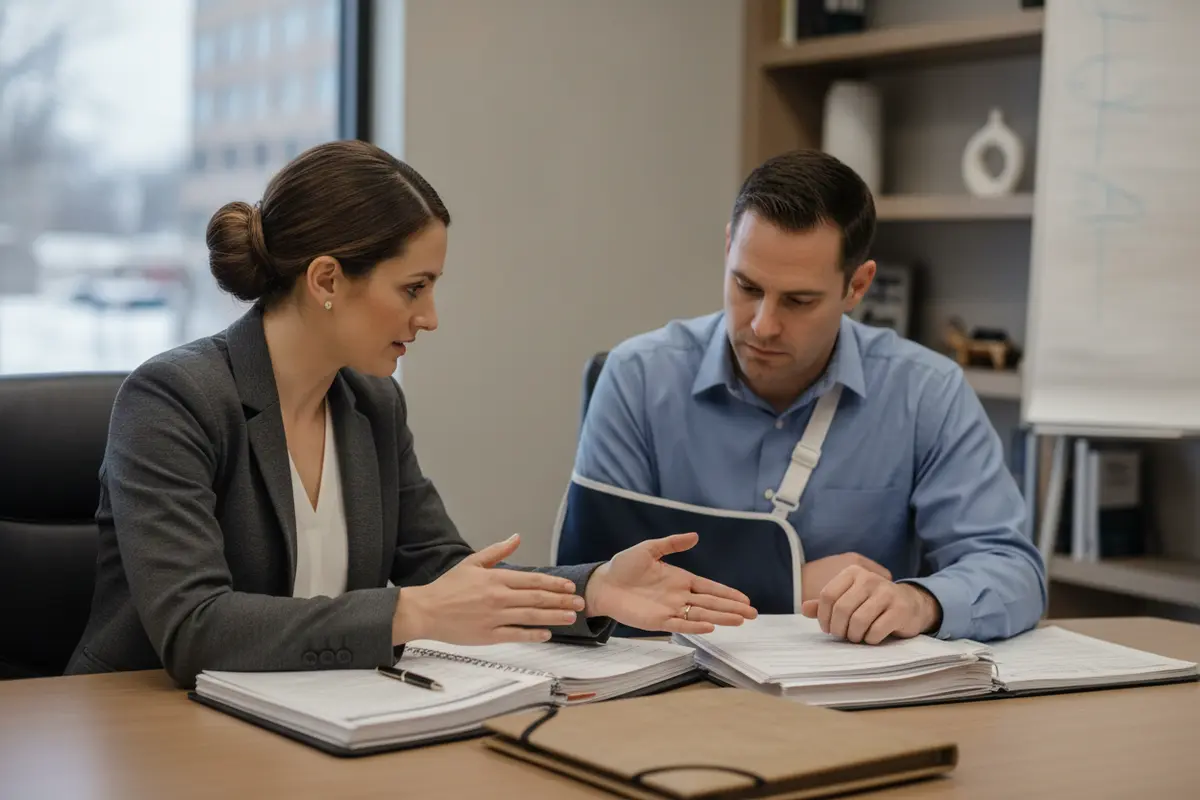
For a family, preparation is not only a matter of organizing papers. It can mean planning transportation, arranging care responsibilities, identifying work or school conflicts, and discussing how testimony may affect the injured person emotionally. Ask the legal team which dates require attendance and what support is permitted in court. Keep a current list of medical providers and important developments, but do not assume every document should be sent directly to the other side without first discussing it with counsel.
How do jury selection and opening statements work?
At the start of trial, the court works with the parties to select jurors. Potential jurors may be asked questions about their experiences, ability to be fair, and possible conflicts. The judge and attorneys use the process to identify whether a person can serve impartially under the applicable rules. A prospective juror’s presence in the courtroom does not mean that person will be seated on the jury.
Once the jury is selected, each side may give an opening statement. An opening is a preview of what the party expects the evidence to show. It is not itself evidence, and it is not the place to introduce facts that will not be supported through testimony or exhibits. The two sides may describe the same event differently because they disagree about what the evidence means.
Families sometimes expect an opening to reveal which side is “winning.” That is not a reliable way to read the case. The jury has not yet heard the evidence, and an attorney’s description remains a statement of what that attorney intends to prove. The evidence and the judge’s instructions—not the confidence of a presentation—form the basis for the jury’s decision.
How does evidence get presented?
During the evidence portion, each side has an opportunity to present witnesses and exhibits, subject to court rules and the judge’s rulings. A witness may testify about what they observed, did, or know. Attorneys may ask questions of their own witnesses and cross-examine witnesses called by the other side. Documents or other exhibits may be shown to the jury when allowed.
In an injury case, evidence may address the circumstances of the incident, the nature of the injury, treatment, limitations, and claimed losses. A treating provider or another qualified witness may be asked to explain medical matters. The parties may disagree about the cause of a condition, the significance of a record, or the extent to which an injury changed someone’s daily life. The fact that a document exists does not automatically mean the jury will see it or give it a particular weight.
Witness testimony can be challenging. The injured person may be asked about the event, prior health, treatment, daily activities, and the effects of the injury. A family member may have relevant observations, depending on the claims and evidence. Listen to each question, answer only what is asked, and do not try to fill in a detail you cannot remember. The lawyer preparing a witness can explain the process and address questions about courtroom procedure, but truthful testimony must remain the witness’s own.
In a Michigan no-fault motor vehicle matter, the issues and benefits involved can differ from a claim against another responsible party. The nature of the claim affects what must be proved and what evidence may matter. A person dealing with a vehicle injury can review the firm’s motor vehicle accident information and discuss how the facts of their own case fit the law. This article is a general overview, not a determination of eligibility or benefits.
What is the difference between a judge and a jury?
The judge and jury have distinct jobs. The judge manages the trial, decides legal questions, rules on objections, and instructs jurors about the law. The jury evaluates admitted evidence and decides the factual questions assigned to it. Jurors are expected to follow the court’s instructions even if they would prefer a different rule.
During testimony, an attorney may object to a question or exhibit. The judge decides whether the objection should be sustained or overruled. An objection is a request for a ruling, not proof that a witness lied or that the evidence is important. A jury may be asked to disregard a question or material if the court rules it out. These interruptions can feel dramatic to observers, but they are part of the court’s process for managing evidence.
| Stage or decision | Who generally handles it? | What it means for the family |
|---|---|---|
| Evidence rulings and courtroom procedure | Judge | The court decides what evidence may be considered and keeps the trial on track. |
| Factual findings assigned to the jury | Jury | Jurors weigh admitted evidence and answer the questions given to them. |
| Legal instructions | Judge | The judge explains the legal standards jurors must use. |
| Settlement decision | The parties, with advice from their lawyers | A settlement requires agreement; no jury verdict is needed if the case resolves. |
How do closing arguments and deliberations work?
After the parties finish presenting evidence, the judge gives the jury instructions on the law and the questions it must answer. The attorneys then make closing arguments. They may explain how they believe the evidence fits the instructions and why the jury should decide the disputed issues in their client’s favor. Like openings, closing arguments are not evidence.
The jurors then deliberate privately. They review the questions they must answer and consider the admitted evidence under the judge’s instructions. The court may provide exhibits or other materials for their review as allowed. Deliberations can take different amounts of time; the length alone does not reliably predict the outcome. Jurors may ask the court questions through the proper process, and the judge addresses them in accordance with the rules.
When the jury reaches a decision, it returns to court and the verdict is recorded. Depending on the case, the jury may answer questions about responsibility and damages. If jurors cannot reach a required decision, the court may declare a mistrial, and the next steps depend on the circumstances. Neither possibility should be treated as certain before it happens.
What can happen after a verdict?
A verdict is an important result, but it may not be the final procedural step. The court enters judgment, and the parties may raise post-trial motions or pursue an appeal when the law permits. An appeal is not simply a new trial where another jury hears the same case. It generally concerns alleged legal error and proceeds under separate rules. Whether any post-trial action is available or worthwhile depends on the record and the particular ruling.
Payment timing and collection can also depend on the case and any post-verdict proceedings. A verdict does not automatically tell a family when funds will be available or what deductions or obligations may apply. Ask counsel to explain the judgment, any remaining steps, and how the result affects the claims in the case. For examples of outcomes the firm has reported, see its verdicts and settlements page; past results do not predict or guarantee another case’s result.
How can a family prepare for a possible trial?
You do not need to become a trial lawyer to take useful steps. Keep communication open with the legal team and ask for a plain-language explanation of what is expected from you. These practical habits can reduce confusion as the case moves forward:
- Keep records organized. Save medical paperwork, correspondence, and case-related documents in a consistent place. Ask before discarding items or changing original files.
- Be accurate. If a date or detail is uncertain, say so. Do not guess or try to make your account sound stronger than it is.
- Follow treatment guidance. Discuss care questions with medical providers. Tell your lawyer about significant changes or barriers to treatment, rather than trying to explain medical issues on your own.
- Plan for attendance. Confirm dates and expected time commitments. Ask about accessibility, transportation, breaks, and who may accompany you.
- Protect privacy thoughtfully. Do not discuss confidential case strategy in public or online. Ask your lawyer what communications or posts could create concerns in your situation.
- Prepare questions. Write down concerns about testimony, courtroom conduct, possible outcomes, and expenses so you can address them during a conversation with counsel.
Families should also make room for the emotional demands of a trial. Hearing testimony about a traumatic event or injury may be difficult. Ask the attorney what to expect and whether the court can accommodate a specific need. No one should promise that the trial will be easy or that a particular outcome will follow from careful preparation. The purpose of preparation is to understand the process and present the case accurately.
How does a trial compare with resolving a case earlier?
A jury trial gives the parties a formal way to present contested evidence and receive a verdict, but it also involves uncertainty, time, preparation, and the emotional demands of testimony. A negotiated resolution can avoid some trial steps, but it requires agreement and may involve different trade-offs. There is no universal answer about which path is best.
Before making a decision, families can ask how the strengths and risks of the evidence affect the available options, what issues remain disputed, what a proposed resolution would cover, and what could happen if the case proceeds. The lawyer should explain the choices in the context of the claims and the client’s goals. A settlement offer is not a verdict, and rejecting or accepting an offer should not be based on a generic example from another case.
People who want to understand the firm’s broader approach can learn about its Michigan personal injury practice or read about Atnip & Associates. The firm lists statewide service information on its Michigan areas-served page. Those pages provide general firm information, not an assessment of whether a particular lawsuit should go to trial.
Call (248) 599-1607 to talk through a Michigan injury case
Frequently asked questions
Does every Michigan personal injury case go to a jury trial?
No. A lawsuit may resolve through an agreement, a court ruling, or another outcome before a jury decides the disputed facts. Whether a case proceeds to trial depends on its facts, legal issues, and the parties’ decisions.
How long does a personal injury jury trial take?
There is no single length that applies to every trial. The number of disputed issues, witnesses, exhibits, court scheduling, and other case-specific circumstances can affect how much time is needed. The lawyer handling the matter can give a more useful estimate once the trial plan is clearer.
Will I have to testify?
An injured person may be asked to testify when their account or the effects of an injury are relevant, but the witnesses needed vary by case. Ask counsel whether your testimony is expected, what subjects may come up, and how preparation works.
Can the jury award a specific amount?
The questions submitted to a jury and the evidence in the case shape what the jury may decide. No one can guarantee an award or predict a precise result from a general article. Discuss the claimed losses, evidence, and legal limits with an attorney familiar with the case.
What should I ask a lawyer about trial?
Ask what factual and legal issues are disputed, what evidence is likely to be presented, what you may be asked to do, what alternatives exist, and what steps could follow a verdict. You can also ask how the lawyer will keep you informed and help plan for the practical demands of trial.
The trial process can be demanding, but understanding the roles of the judge, jury, attorneys, and witnesses makes it easier to prepare and to ask clear questions about your options. A Michigan attorney can apply the law to the specific facts and explain the next steps for your family.
