

A catastrophic injury in Michigan can change a life forever, leading to complex medical needs and significant financial strain. Without a clear plan, navigating long-term care can feel overwhelming and uncertain.
A life care plan in a Michigan catastrophic injury case is a comprehensive document outlining all current and future medical and non-medical needs for an injured individual. Developed by certified experts, it details anticipated costs for doctors, therapies, medications, specialized equipment, home modifications, and even vocational retraining. This plan serves as a vital tool for legal teams to quantify damages and ensure the injured person receives adequate compensation to cover lifelong care. It protects the individual’s right to quality care and financial stability after a life-altering accident in Michigan.
Understanding what goes into these plans is crucial for anyone facing such a challenge. Exploring these concepts is the first step toward securing the care and support your family needs.
Life Care Plan Catastrophic Injury: Understanding Life Care Plans: What Is It and Who Needs It?
A life care plan is a detailed document that outlines the medical and non-medical needs of individuals who have suffered catastrophic injuries. It projects the future costs associated with these needs over their expected lifespan. This comprehensive plan helps ensure that all necessary care, equipment, and services are accounted for, providing a clear financial roadmap for long-term support.
For someone with a catastrophic injury, a life care plan is more than just a list of expenses. It is a critical tool for legal and financial planning. At Atnip & Associates, PLLC, we know that these plans represent a person’s future security. For others, it’s just another case. For us, it’s personal.
What Does a Life Care Plan Include?
A thorough life care plan covers a wide range of needs. It typically includes current and future medical treatments, rehabilitation therapies, medications, and adaptive equipment. It also considers home modifications, transportation needs, and vocational training if the injury impacts the ability to work. The plan accounts for both direct costs and the cost of managing the injury over many years.
Developing a life care plan involves a team of experienced medical professionals, including physicians, therapists, and vocational specialists. These professionals assess the individual’s condition and forecast their needs. They use objective data and established medical standards to create a reliable and defensible document.
Who Benefits from a Life Care Plan?
Life care plans are essential for anyone who has sustained a catastrophic injury, such as a spinal cord injury, traumatic brain injury, severe burns, or amputation. Individuals dealing with complex back and neck injuries that result in lifelong care needs also benefit greatly. These plans ensure that injured individuals receive the support they need as they grow and their medical needs evolve.
The plan is also crucial for families. It removes the burden of predicting future expenses during an already stressful time. For legal teams, it provides a strong basis for settlement negotiations or trial verdicts, ensuring that injury victims receive adequate compensation to cover their long-term care. According to the National Center for Biotechnology Information, life care plans are vital in estimating future medical costs accurately.
Calculating Total Costs
Calculating the total costs in a life care plan involves detailed financial analysis. It considers current expenses and projects future costs, adjusting for inflation and expected changes in medical technology or care requirements. Each item is individually priced based on current market rates for services, equipment, and supplies. This creates a realistic view of future financial needs.
Specialized software and actuarial tables may be used to project costs over decades. This ensures the calculations are robust and accurate. For example, a spinal cord injury might require ongoing physical therapy, durable medical equipment, and personal care assistance. Each of these items has a specific cost that must be factored into the overall financial projection, providing a comprehensive estimate of lifetime care expenses.
The Lifetime Cost of a Catastrophic Injury in Michigan
A catastrophic injury, like a spinal cord injury or traumatic brain injury (TBI), changes life forever. Beyond the immediate medical crisis, these injuries create complex financial burdens. These costs often extend over decades, affecting not only the injured person but also their family.
Understanding the true financial impact requires looking past basic medical bills. It involves considering ongoing care, specialized equipment, home modifications, and lost earning potential. These hidden costs can quickly add up, creating significant financial strain.
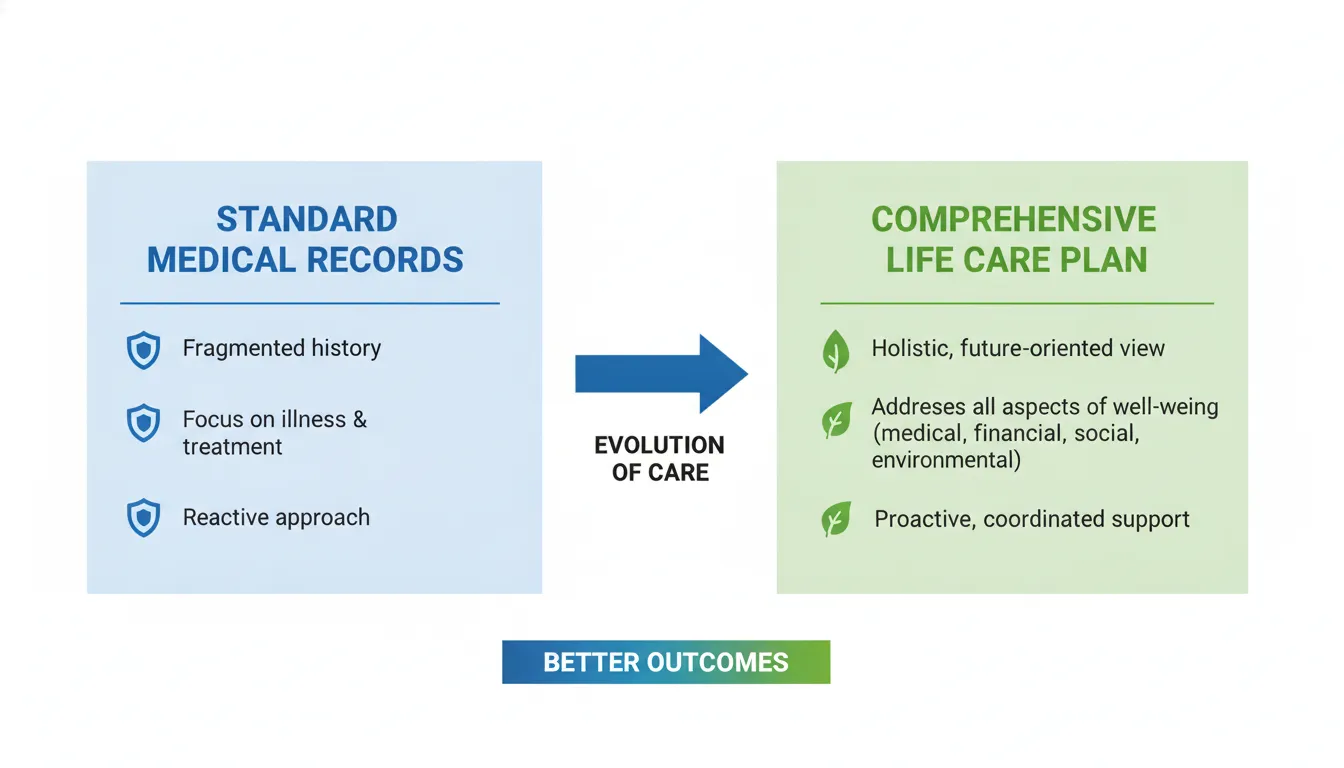
What Standard Medical Records Miss
Standard medical records provide a snapshot of past and current treatment. They document hospital stays, doctor visits, and prescriptions. While important, these records do not show the full financial picture for a catastrophic injury. They often miss future needs that are critical for long-term planning.
For example, a standard record may list a wheelchair purchase but not the need for future repairs or replacement. It might detail therapy sessions but not the cost of ongoing in-home care. This limited view makes it hard to plan for a secure financial future after a severe injury.
The Value of a Comprehensive Life Care Plan
A comprehensive life care plan offers a detailed look at all future needs and costs. It forecasts expenses for medical care, rehabilitation, equipment, and personal assistance over an injured person’s lifetime. This plan is created by experts who assess every aspect of long-term care.
Such a plan is vital in legal cases involving catastrophic injuries. It helps ensure that settlement amounts cover all future expenses, providing financial security. A well-prepared life care plan can make a major difference in the quality of life for someone with a severe injury.
| Feature | Standard Medical Records | Comprehensive Life Care Plan |
|---|---|---|
| Focus | Past and current medical treatment. | Future medical and non-medical needs. |
| Timeframe | Short-term and immediate care. | Long-term, often lifetime projections. |
| Cost Analysis | Itemized bills, current charges. | Projected costs for all future care and services. |
| Included Items | Hospital bills, doctor notes, prescriptions. | Medical care, therapies, equipment, home mods, lost wages, daily assistance. |
| Expert Input | Physicians, nurses for current care. | Life care planners, medical specialists, economists. |
| Use in Litigation | Supports past damages. | Establishes future damages for settlement. |
Michigan’s auto no-fault law has seen changes that make life care planning even more important. After July 1, 2020, people injured in auto accidents may face limits on benefits. This makes it crucial to accurately assess future needs and secure proper compensation to avoid financial hardship. You can read more about how no-fault reform affects those with catastrophic injuries in Michigan to understand your rights. The Michigan Department of Insurance and Financial Services provides details on these changes.
A life care plan provides a clear, documented path for long-term care. It is an essential tool for ensuring that individuals with catastrophic injuries receive the support they need. Understanding the nuances of these plans can help families navigate the complex challenges ahead.
Key Components of a Comprehensive Life Care Plan
A life care plan is a detailed document that outlines the medical and non-medical needs of an individual who has sustained a catastrophic injury or chronic illness. These plans help families and legal teams understand the financial impact and care requirements over a lifetime.
Developing a comprehensive plan ensures that all aspects of a person’s well-being are addressed, from immediate treatment to long-term support. It serves as a roadmap for ongoing care.
Understanding the Elements of a Life Care Plan
A life care plan for catastrophic injury is specific to each individual. It covers many areas of support and care. These include medical care, equipment needs, and home adjustments.
The plan looks at all future needs. These include doctor visits, therapy, and psychological support. The goal is to improve the injured person’s quality of life as much as possible.
-
Physical Therapy and Rehabilitation: Physical therapy helps restore movement, strength, and function after an injury. It is often a key part of recovery, helping patients regain independence. Participating in structured physical and cognitive therapy after an accident is vital for long-term health.
-
Home Modifications: Changes to the home environment can greatly improve safety and accessibility. These might include ramps, widened doorways, or accessible bathrooms. Home modifications help individuals live more comfortably and independently.
-
Medication Management: Managing medications is vital for health and pain control. A life care plan details all necessary prescriptions, dosages, and administration schedules. It ensures that medication needs are met consistently.
-
Surgeries and Medical Procedures: Future surgical needs are often projected in the plan. This includes procedures to address new complications or improve existing conditions. The plan considers both planned and potential future medical interventions.
-
Psychological Counseling: Catastrophic injuries often bring emotional and mental health challenges. Counseling provides support for coping with trauma, depression, and anxiety. Mental health care is a critical part of a holistic recovery process.
-
Occupational Therapy and Adaptive Equipment: Occupational therapy helps individuals adapt to daily tasks and improve their ability to perform activities of daily living. This may involve training in new techniques or using adaptive equipment. Examples include wheelchairs or communication devices. According to the U.S. Bureau of Labor Statistics, occupational therapists help people participate in the things they want and need to do through the therapeutic use of everyday activities.
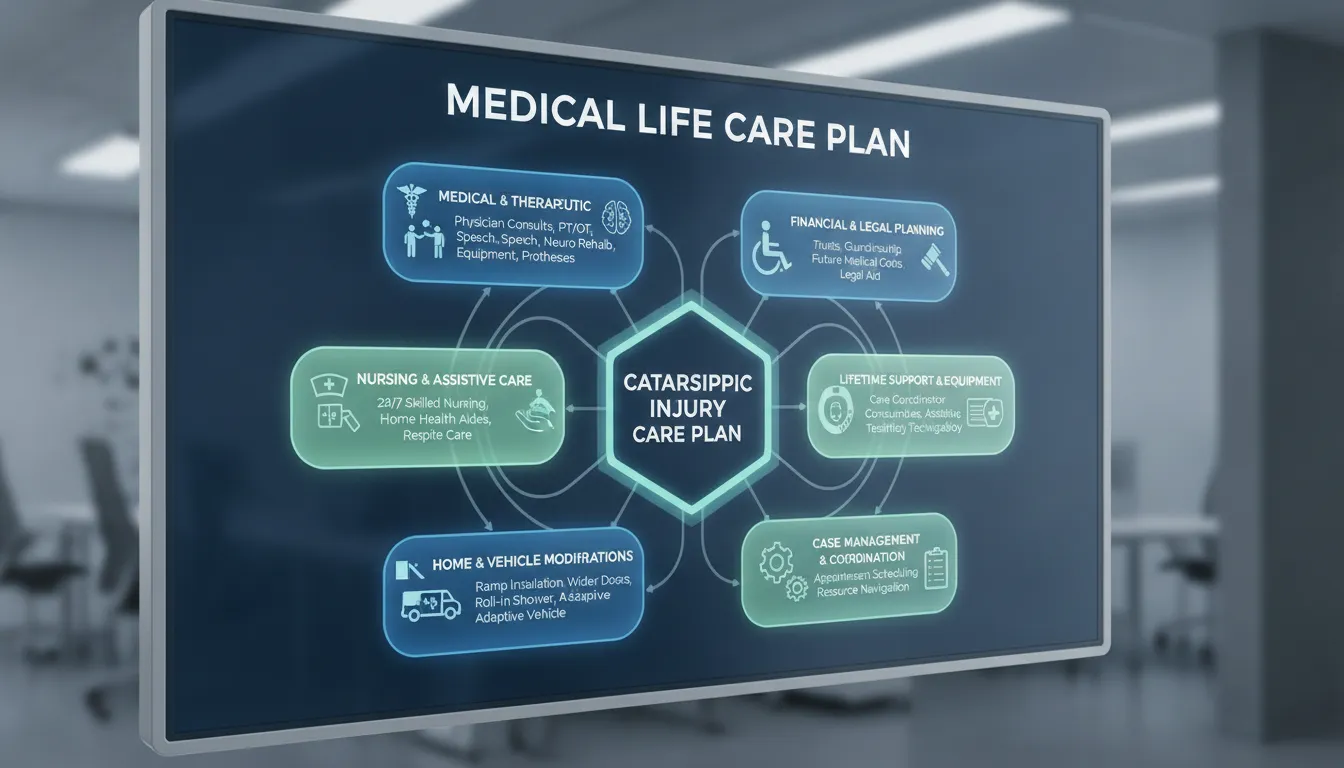
Each component plays a role in supporting the long-term well-being of the injured person. The plan is a living document. It can change as needs evolve over time.
Who Qualifies as a Certified Life Care Planner?
A certified life care planner (CLCP) is a highly trained professional who creates comprehensive plans for individuals with catastrophic injuries or chronic health conditions. These plans detail current and future medical, rehabilitation, and personal care needs. They also estimate the costs associated with these needs over a person’s lifespan. CLCPs help individuals and families navigate complex care requirements.
Professional Backgrounds
Many CLCPs come from healthcare fields. This includes registered nurses (RNs), occupational therapists (OTs), and physical therapists (PTs). Other medical professionals also pursue this certification. Their clinical experience provides a strong foundation for understanding complex medical situations and long-term care needs. This background helps them evaluate treatment options and anticipate future challenges.
Specialized Training and Certification
Becoming a CLCP requires rigorous specialized training. Candidates must complete a 120-hour program focusing on life care planning principles and methods. This training covers areas like medical case management, legal aspects of life care planning, and research methodologies. After completing the training, candidates must pass a certification exam to earn the CLCP designation. This ensures they meet high professional standards.
The International Commission on Health Care Certification (ICHCC) offers the CLCP certification. This credential signifies that a planner has met strict educational and experiential criteria. It shows a commitment to ethical practice and ongoing professional development. CLCPs must also maintain their certification through continuing education to stay current with best practices.
Why Certification Matters
Certification ensures a life care planner has the specific knowledge and skills needed for this work. It helps guarantee the reliability and accuracy of the life care plans they create. For legal cases involving catastrophic injuries, the CLCP credential is often critical. It provides credibility and expertise when presenting future care needs and costs in court. This professional standard helps clients receive fair and accurate assessments of their long-term care requirements.
How a Life Care Plan Affects Your Catastrophic Injury Settlement
Understanding Catastrophic Injury Damages
Catastrophic injuries are life-altering events, often leading to permanent disability. These injuries demand extensive medical care, rehabilitation, and support services. The financial impact can be overwhelming, extending far beyond initial hospital stays. Victims may face ongoing costs for specialized equipment, home modifications, and professional care for decades.
Determining the true value of these long-term damages is complex. It requires looking at future medical needs, lost earning capacity, and the impact on daily life. Without a clear plan, victims risk receiving settlements that don’t cover their full lifetime expenses. Families seeking compensation after a life-altering event in Western Michigan should consult experienced advocates about catastrophic injury claims in Kalamazoo to ensure all future needs are fully protected.
What a Life Care Plan Offers
A life care plan is a comprehensive document that details all current and future medical and non-medical needs for a catastrophically injured person. This plan is developed by a certified life care planner, often a registered nurse or other healthcare professional with specialized training. It provides a roadmap of anticipated care, services, and equipment, all backed by medical standards and cost data.
The plan projects expenses for everything from doctor visits and medications to home health aides, adaptive equipment, and vocational retraining. It helps to ensure that no future need is overlooked. Medicare Secondary Payer (MSP) requirements, for instance, often necessitate detailed projections for future medical care to protect Medicare’s interests.
Preventing Under-Reserving and Poor Settlements
In personal injury litigation, a life care plan is a crucial tool. It provides a credible, evidence-based assessment of lifetime damages. This helps insurance adjusters understand the full scope of financial responsibility, preventing under-reserving, which is when insurers set aside too little money for a claim. For juries, the plan translates complex medical jargon and future needs into understandable financial terms, making it easier to award fair compensation.
The detailed breakdown from a life care plan also guides the creation of structured settlements. These settlements involve periodic payments rather than a lump sum. A well-designed structured settlement, informed by a life care plan. Can ensure that funds are available for specific needs as they arise throughout the victim’s life, providing financial security and peace of mind.
Frequently Asked Questions
What is a life-care plan for catastrophic injuries in Michigan?
A life-care plan is a detailed document outlining the long-term medical, rehabilitation, and personal care needs for someone with a catastrophic injury. It projects future expenses for therapies, equipment, home modifications, and assistive services. This plan serves as a crucial tool for legal settlements and ensuring the injured individual receives necessary support throughout their life in Michigan.
Who creates a life-care plan in a Michigan injury case?
Certified life-care planners, often healthcare professionals with specialized training, create these plans. They assess the injured person’s specific needs, consult with medical experts, and project future costs based on medical records and anticipated care requirements. Their expertise ensures the plan is comprehensive, credible, and defensible in Michigan legal proceedings, providing an accurate forecast of future expenses.
Can a life-care plan be updated after it’s created?
Yes, life-care plans can and often need to be updated. As an individual’s condition evolves, or new treatments become available, the plan may require revisions. These updates ensure the plan remains accurate and reflective of the current and future needs of the person with the catastrophic injury. Changes in medical status or care requirements necessitate periodic review and adjustment, especially in long-term cases.
How does a life-care plan support a personal injury lawsuit?
It translates complex long-term medical needs into concrete, defensible financial figures. This helps lawyers, insurers, and juries understand exactly what is required to support the injured person. Preventing lowball settlement offers and ensuring that the final award is sufficient to cover lifelong care expenses.
What types of injuries require a life-care plan in Michigan?
Typically, any catastrophic injury resulting in long-term or permanent disability. This includes traumatic brain injuries (TBIs), spinal cord injuries, severe amputations, birth injuries, and third-degree burns. Any injury that requires ongoing medical treatment or in-home daily assistance benefits from a life-care plan.
Is the cost of creating a life-care plan worth it?
Yes, absolutely. While hiring a certified life-care planner involves an upfront cost, the resulting plan often uncovers millions of dollars in future expenses that would otherwise be missed. Ensuring the victim does not run out of funds and protecting their long-term quality of life.
Ready to Schedule Your Free Consultation?
Delay in seeking legal counsel after a catastrophic injury can complicate your case and impact your ability to secure deserved compensation. At Atnip & Associates, PLLC, we act quickly to protect your rights, collect vital medical assessments, and build a comprehensive life-care plan to support your financial recovery. Every day counts when building a strong catastrophic injury claim in Michigan.
Contact our experienced Michigan personal injury lawyers today. Schedule a free consultation online or call us directly at 248-599-1607. Remember, there is no fee unless we win your case.